Introduction
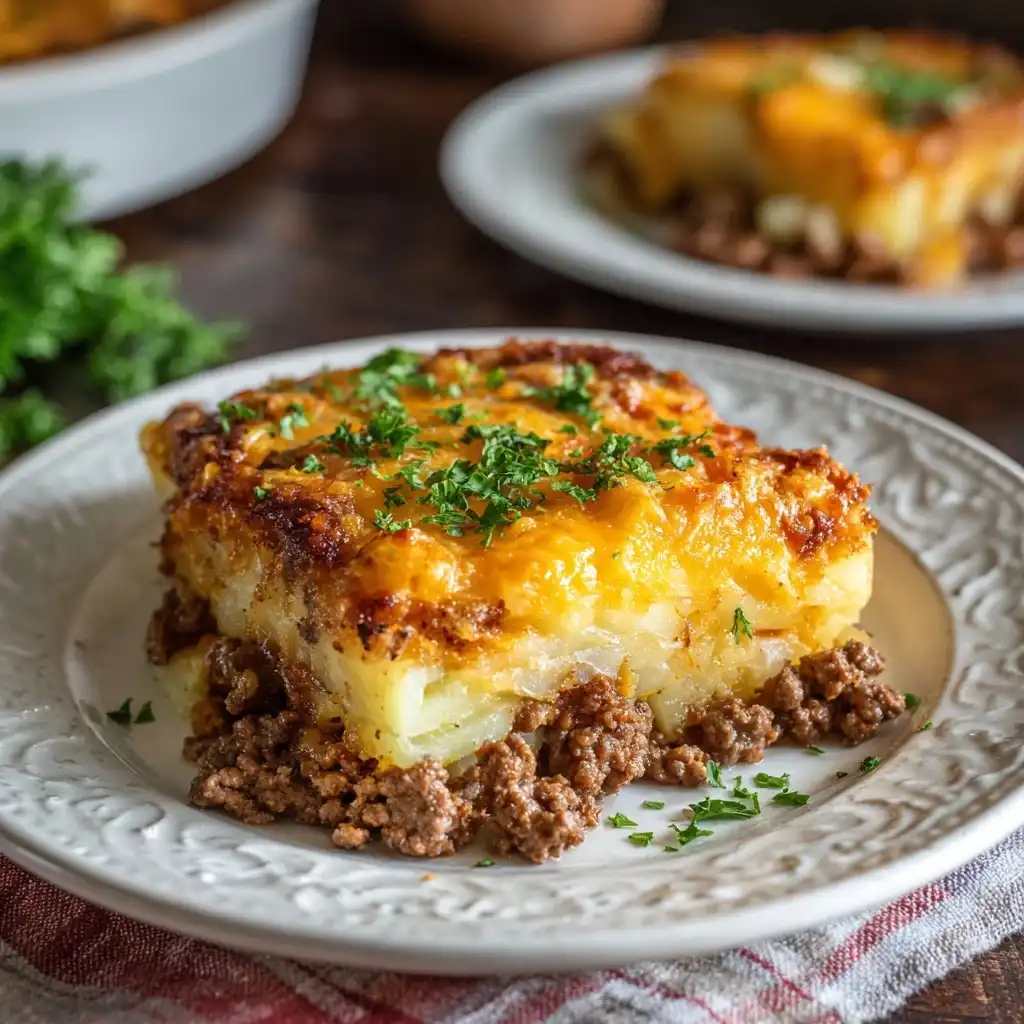
Ground Beef and Potato Casserole is the epitome of hearty, soul-warming comfort food—a timeless, family-friendly dish that transforms humble pantry staples into a rich, savory, oven-baked masterpiece. Whether served on a chilly weeknight, brought to a potluck, or reheated for satisfying leftovers, this casserole delivers robust flavor, creamy texture, and undeniable nostalgia in every bite. Its versatility, ease of preparation, and crowd-pleasing appeal make it a cornerstone recipe in home kitchens across generations—equally cherished by busy parents, college students, meal preppers, and seasoned cooks alike.
The History
The origins of Ground Beef and Potato Casserole are deeply rooted in mid-20th-century American home cooking, emerging alongside the postwar boom in convenience foods, suburban living, and the rise of the casserole culture. Inspired by Depression-era resourcefulness and wartime rationing ingenuity—where stretching meat with starches like potatoes, rice, or noodles was essential—the dish evolved as ground beef became more widely available and affordable after World War II. The 1950s saw the proliferation of community cookbooks, church socials, and women’s magazines (like Good Housekeeping and Ladies’ Home Journal) featuring layered, baked “hot dishes” designed for efficiency and economy. Early versions often included condensed soups (notably cream of mushroom), canned vegetables, and shredded cheddar—hallmarks of the classic “casserole era.” Over time, regional adaptations emerged: Midwest versions leaned into sour cream and onion soup mix; Southern iterations added bell peppers and smoked paprika; and Pacific Northwest takes sometimes incorporated Dijon mustard or roasted garlic. Today’s modern interpretations honor that legacy while embracing cleaner ingredients, global spices, dietary inclusivity, and farm-to-table sensibilities—proving that this beloved casserole is not just a relic, but a living, evolving tradition.
Ingredients Breakdown
Every exceptional Ground Beef and Potato Casserole begins with intentional, high-quality components—each playing a distinct functional and flavorful role:
- Ground Beef (85/15 or 90/10 lean-to-fat ratio): Provides rich umami depth, moisture, and binding structure. The small amount of fat ensures juiciness and prevents dryness during baking. Grass-fed or organic options enhance mineral content and reduce exposure to antibiotics/hormones.
- Russet Potatoes: Chosen for their high starch content, which breaks down slightly when baked, lending natural creaminess and helping unify the layers. Their neutral flavor acts as the perfect canvas for seasonings.
- Yellow Onions & Garlic: A foundational aromatic base. Sautéed until soft and sweet, they build complexity and eliminate raw sharpness. Red onions can be substituted for subtle color and mild bite; shallots add elegance in gourmet variations.
- Tomato-Based Liquid (Crushed Tomatoes, Tomato Sauce, or Low-Sodium Marinara): Adds acidity to balance fat, subtle sweetness, body, and natural preservative properties (lycopene). Avoid overly sugary jarred sauces unless balanced with herbs and vinegar.
- Dairy Elements (Sour Cream, Whole Milk, Evaporated Milk, or Full-Fat Greek Yogurt): Contribute tang, richness, tenderness, and moisture retention. Sour cream also helps tenderize proteins and adds a gentle brightness that cuts through richness.
- Cheese (Sharp Cheddar, Monterey Jack, Gruyère, or Smoked Gouda): Melts into golden, gooey ribbons—enhancing mouthfeel, saltiness, and savory depth (via glutamates). Freshly grated cheese melts more evenly than pre-shredded (which contains anti-caking agents).
- Herbs & Spices (Dried Oregano, Thyme, Smoked Paprika, Black Pepper, and a pinch of Cayenne or Red Pepper Flakes): Provide warmth, earthiness, subtle heat, and aromatic nuance. Fresh thyme or rosemary can be added in the last 10 minutes of baking for an elevated finish.
- Optional Umami Boosters (Worcestershire Sauce, Soy Sauce, Fish Sauce, or Miso Paste): Just ½–1 tsp amplifies savoriness without detectable flavor—deepening the overall taste profile in scientifically proven ways.
- Salt (Kosher or Sea Salt): Critical for seasoning each layer—not just at the end. Salt enhances natural flavors, improves protein texture, and balances acidity.
Notably absent—and intentionally so—are canned cream soups laden with sodium, MSG, and modified starches. Modern, health-conscious versions prioritize whole-food thickeners (like roux, blended cauliflower, or potato starch slurry) and clean-label alternatives.
Step-by-Step Recipe
- Preheat & Prep: Position oven rack in the center and preheat to 375°F (190°C). Grease a 9×13-inch (or 3-quart) baking dish with butter, olive oil, or non-stick spray. Gather all ingredients and mise en place—chop aromatics, grate cheese, measure spices, and slice potatoes uniformly (⅛-inch thick using a mandoline for best results).
- Sauté the Aromatics & Brown the Beef: In a large Dutch oven or heavy-bottomed skillet over medium heat, warm 1 tbsp olive oil. Add diced yellow onion and sauté 4–5 minutes until translucent. Stir in minced garlic and cook 60 seconds until fragrant. Add ground beef, breaking it apart with a wooden spoon. Cook 6–8 minutes until no pink remains and edges begin to crisp. Drain excess fat (leave ~1 tbsp for flavor), then return to pan.
- Build Flavor & Simmer: Stir in tomato sauce (1 cup), crushed tomatoes (½ cup), Worcestershire sauce (1 tsp), dried oregano (1 tsp), smoked paprika (½ tsp), black pepper (½ tsp), and kosher salt (1 tsp). Reduce heat to low, cover, and simmer gently for 12–15 minutes—stirring occasionally—to meld flavors and reduce liquid. Remove from heat and let cool slightly.
- Prepare the Potato Layer: While beef simmers, place sliced potatoes in a large bowl and cover with cold water + 1 tsp vinegar or lemon juice (to prevent oxidation). Drain thoroughly in a colander and pat *extremely* dry with clean kitchen towels—moisture is the enemy of crisp topping and even baking.
- Layer the Casserole: Spread the warm beef mixture evenly into the prepared dish. Arrange overlapping potato slices in concentric circles or parallel rows, slightly overlapping each piece and tucking edges down. Pour sour cream (¾ cup) and whole milk (½ cup) evenly over potatoes. Sprinkle with 1½ cups shredded cheddar (reserve ¼ cup for topping). Dot with 2 tbsp cold butter cut into small pieces for golden, flaky richness.
- Bake Covered, Then Uncover: Cover tightly with aluminum foil (tent slightly to prevent cheese sticking). Bake 60 minutes. Carefully remove foil and sprinkle remaining cheese and optional toppings (e.g., fresh thyme, crumbled cooked bacon, or scallions). Return to oven, uncovered, for 20–25 minutes—or until potatoes are fork-tender, top is golden brown, and edges bubble vigorously.
- Rest Before Serving: Remove from oven and let stand 15 minutes. This crucial step allows residual heat to finish cooking the center, redistributes juices, firms the structure for clean slicing, and prevents scalding bites.
Tips
- Potato Selection Matters: Russets are ideal—but Yukon Golds work beautifully for extra creaminess (reduce milk by 2 tbsp). Avoid waxy varieties like red bliss or fingerlings—they resist tenderness and may turn gummy.
- Dry Potatoes Are Non-Negotiable: Wet slices create steam pockets and soggy layers. After rinsing, spin-dry in a salad spinner, then blot with triple-layered paper towels.
- Browning > Boiling: Never boil potatoes before layering—they’ll disintegrate. Slow oven-baking is what transforms raw spuds into silken, cohesive layers.
- Season in Layers: Salt the beef mixture *and* lightly season potato slices before layering. Underseasoning leads to flat, one-dimensional flavor.
- Don’t Skip the Rest: Cutting too soon releases steam and causes structural collapse—resulting in a watery, separated casserole. Patience yields perfect slices.
- Make-Ahead Magic: Assemble up to 24 hours ahead (unbaked), cover tightly, and refrigerate. Add 10–15 minutes to covered bake time if starting cold. For freezer prep: assemble, wrap in double foil + plastic, freeze up to 3 months. Thaw overnight in fridge before baking.
- Golden Top Hack: If cheese browns too quickly, tent loosely with foil during final 10 minutes. For extra crunch, mix ¼ cup panko with 1 tbsp melted butter and 1 tsp dried parsley—sprinkle over cheese before uncovering.
- Oven Thermometer Check: Many home ovens run hot or cold. Use an inexpensive oven thermometer to verify accuracy—especially critical for consistent potato doneness.
Variations and Customizations
This casserole is a culinary chameleon—adaptable to dietary needs, seasonal produce, global flavors, and pantry constraints:
- Low-Carb/Keto Version: Replace potatoes with thinly sliced rutabaga, turnips, or cauliflower “steaks” (parboil 3 minutes first). Use full-fat dairy, increase cheese, and add almond flour + egg to binder. Net carb count drops to ~8g per serving.
- Gluten-Free: Naturally GF—just verify spice blends and Worcestershire are certified GF (some contain malt vinegar). Thicken with arrowroot instead of flour if adding a roux.
- Vegetarian Adaptation: Swap beef for lentils (1½ cups cooked brown or green), crumbled tempeh, or textured vegetable protein (TVP) rehydrated in veggie broth + soy sauce. Boost umami with sun-dried tomatoes and nutritional yeast.
- Mexican-Inspired: Add cumin (1 tsp), chipotle powder (¼ tsp), corn kernels (½ cup), black beans (rinsed), and top with cotija, pickled red onions, and avocado crema.
- Shepherd’s Pie Twist: Use mashed potatoes instead of slices—top with fluffy, buttery mash swirled with horseradish or Dijon. Add frozen peas and carrots to the beef layer.
- Gourmet French Style: Substitute beef with coq au vin–style braised short ribs, use Gruyère + fontina, deglaze with Pinot Noir, and garnish with pearl onions and thyme sprigs.
- Breakfast Casserole: Use breakfast sausage, add diced ham, fold in scrambled eggs + cheese before potatoes, and top with hash browns instead of slices.
- Spicy Cajun: Season beef with Cajun blend, add diced bell peppers and celery (the “holy trinity”), stir in hot sauce, and finish with green onions and Tabasco drizzle.
- Kid-Friendly Mild: Omit black pepper/cayenne, use mild cheddar, stir in finely grated carrot or zucchini, and serve with ketchup or honey mustard for dipping.
- Instant Pot / Slow Cooker Option: Brown beef and aromatics in IP, add liquids and spices, pressure cook 10 mins. Layer raw potato slices on top, seal, and cook on “Steam” or “Manual” for 15 mins (natural release 10 mins). Broil 3 mins for browning.
Health Considerations and Nutritional Value
A well-balanced Ground Beef and Potato Casserole offers substantial nutritional benefits—far beyond its reputation as “heavy comfort food.” A standard serving (1/8 of a 9×13 recipe, approx. 1.5 cups) provides approximately:
- Calories: 420–480 kcal (adjustable based on cheese/fat choices)
- Protein: 24–28g — supporting muscle maintenance, satiety, and metabolic function (beef contributes all 9 essential amino acids)
- Fiber: 4–6g — primarily from potatoes (with skin-on slices) and added veggies like onions, peppers, or greens
- Vitamins & Minerals: Excellent source of Vitamin B12, iron (heme-iron, highly bioavailable), zinc, potassium (more than a banana per serving), vitamin C (from tomatoes), and resistant starch (formed upon cooling—beneficial for gut microbiota)
- Healthy Fats: Monounsaturated fats (olive oil, cheese), conjugated linoleic acid (CLA) in grass-fed beef, and omega-3s if using pasture-raised beef
Dietary Notes:
- Sodium Control: Reduce by 40% using low-sodium tomato products, omitting added salt in beef layer, and choosing unsalted butter. Rely on herbs, citrus zest, and umami boosters for flavor.
- Heart Health: Opt for leaner beef (93/7), incorporate flaxseed or chia into dairy layer for omega-3s, and add leafy greens (spinach/kale) between layers for folate and nitrates.
- Blood Sugar Friendly: Pair with non-starchy sides (roasted broccoli, garden salad); avoid sugary condiments; consider resistant starch benefits by chilling and reheating leftovers (increases satiety hormone GLP-1).
- Allergen Awareness: Naturally nut-free, soy-free (if avoiding soy-based Worcestershire), and dairy-modifiable (use lactose-free milk, cashew sour cream, or nutritional yeast “cheese” for vegan versions).
- Anti-Inflammatory Focus: Incorporate turmeric (¼ tsp), ginger (grated), extra virgin olive oil, and antioxidant-rich tomatoes—synergistically lowering oxidative stress markers.
Consult a registered dietitian for personalized modifications—especially for renal, diabetic, or gastrointestinal conditions (e.g., low-FODMAP adjustments by swapping onion/garlic for infused oil and using garlic-infused salt).
Ingredients
- 1 tbsp extra-virgin olive oil
- 1 medium yellow onion, finely diced (about 1 cup)
- 4 cloves garlic, minced
- 1.5 lbs (680g) 85/15 ground beef (grass-fed preferred)
- 1 (15 oz) can crushed tomatoes (no salt added)
- ½ cup low-sodium tomato sauce
- 1 tsp Worcestershire sauce (GF verified)
- 1 tsp dried oregano
- ½ tsp smoked paprika
- ½ tsp freshly ground black pepper
- 1 tsp kosher salt (plus more to taste)
- 4 medium russet potatoes (about 2 lbs / 900g), peeled and sliced ⅛-inch thick
- ¾ cup full-fat sour cream
- ½ cup whole milk (or evaporated milk for extra richness)
- 1¾ cups sharp cheddar cheese, freshly grated (divided)
- 2 tbsp unsalted butter, cold and cubed
- Optional garnishes: chopped fresh parsley, chives, crumbled crispy bacon, or sour cream drizzle
Directions
- Preheat oven to 375°F (190°C). Lightly grease a 9×13-inch (3-quart) baking dish with olive oil or butter.
- In a large heavy-bottomed skillet or Dutch oven over medium heat, warm olive oil. Add diced onion and sauté for 4–5 minutes until soft and translucent. Stir in garlic and cook 60 seconds until fragrant.
- Add ground beef, breaking it apart with a wooden spoon. Cook 6–8 minutes, stirring occasionally, until fully browned and no pink remains. Drain excess fat, reserving ~1 tablespoon in pan.
- Stir in crushed tomatoes, tomato sauce, Worcestershire sauce, oregano, smoked paprika, black pepper, and 1 teaspoon kosher salt. Reduce heat to low, cover, and simmer gently for 12–15 minutes, stirring occasionally, until thickened. Remove from heat and let cool slightly.
- While beef simmers, peel and thinly slice potatoes (⅛-inch thick). Place in a large bowl, cover with cold water, and add 1 tsp vinegar or lemon juice. Soak 5 minutes, then drain and rinse under cold water. Transfer to a clean kitchen towel or triple-layered paper towels and pat *thoroughly* dry.
- Spoon the warm beef mixture into the prepared baking dish, spreading evenly. Arrange potato slices in overlapping, concentric circles or parallel rows, pressing gently to fit snugly and tuck edges down.
- In a small bowl, whisk together sour cream and milk. Pour evenly over potatoes. Sprinkle 1½ cups grated cheddar over top. Dot with cold butter cubes.
- Cover tightly with aluminum foil (tent slightly to prevent cheese sticking). Bake for 60 minutes.
- Remove foil carefully. Sprinkle remaining ¼ cup cheddar over top. Return to oven, uncovered, for 20–25 minutes—or until potatoes are completely tender when pierced with a knife, top is deep golden brown, and filling bubbles vigorously around edges.
- Remove from oven and let rest for 15 minutes before slicing and serving. Garnish as desired.
FAQ
- Can I use frozen potatoes?
- No—frozen potatoes release excessive water, resulting in a mushy, separated casserole. Always use fresh, dried, raw potatoes.
- Why did my casserole turn out watery?
- Most commonly due to wet potato slices, undercooked beef mixture (excess liquid not reduced), or skipping the rest period. Ensure thorough drying, simmer beef until thickened, and allow full 15-minute rest.
- Can I prepare this ahead of time?
- Absolutely. Assemble unbaked up to 24 hours in advance, cover tightly, and refrigerate. Add 10–15 minutes to initial covered bake time. For longer storage, freeze assembled (unbaked) casserole up to 3 months—thaw overnight before baking.
- What’s the best cheese for melting and flavor?
- Sharp cheddar offers bold flavor and reliable melt. For ultra-creamy texture, blend with Monterey Jack. For sophistication, add ¼ cup Gruyère. Avoid pre-shredded cheeses with cellulose—they resist melting smoothly.
- How do I know when the potatoes are done?
- Insert a thin knife or skewer into the center—it should slide in and out with zero resistance. Edges should be bubbling steadily, and the top deeply golden—not pale or pale-yellow.
- Can I make it dairy-free?
- Yes. Substitute full-fat coconut milk for dairy milk, unsweetened plain coconut yogurt or cashew sour cream for sour cream, and dairy-free cheddar shreds (look for brands with tapioca starch for better melt). Add 1 tsp nutritional yeast to boost umami.
- Is it safe to leave leftovers at room temperature?
- No. Refrigerate within 2 hours. Store in airtight containers for up to 4 days. Reheat gently in oven (325°F, covered, 20–25 mins) or microwave (in 60-second intervals, stirring halfway) to preserve texture.
- Can I add vegetables?
- Yes—sautéed mushrooms, spinach (wilted and squeezed dry), zucchini (salted, drained, and patted dry), or roasted red peppers integrate beautifully. Avoid high-moisture raw veggies like tomatoes or cucumbers.
- Can I use ground turkey or chicken instead?
- Yes—but add 1 tbsp olive oil or butter when browning, as poultry is leaner. Boost flavor with extra herbs, soy sauce, or fish sauce. Consider mixing ½ lb pork for added juiciness.
- What side dishes pair well?
- Light, acidic, or crunchy contrasts shine: simple green salad with lemon vinaigrette, steamed broccoli with lemon zest, dill pickles, apple-fennel slaw, or crusty whole-grain bread for soaking up juices.
Summary
Ground Beef and Potato Casserole is a time-honored, endlessly adaptable, nutritionally robust dish that marries rustic simplicity with deep, layered flavor—born from frugality, refined by generations, and perfected through mindful technique.
With its tender herb-kissed beef, velvety slow-baked potatoes, golden cheese crown, and smart customization options—from keto and gluten-free to globally inspired and kid-approved—it remains not just a meal, but a meaningful ritual of nourishment, connection, and culinary resilience.