Introduction
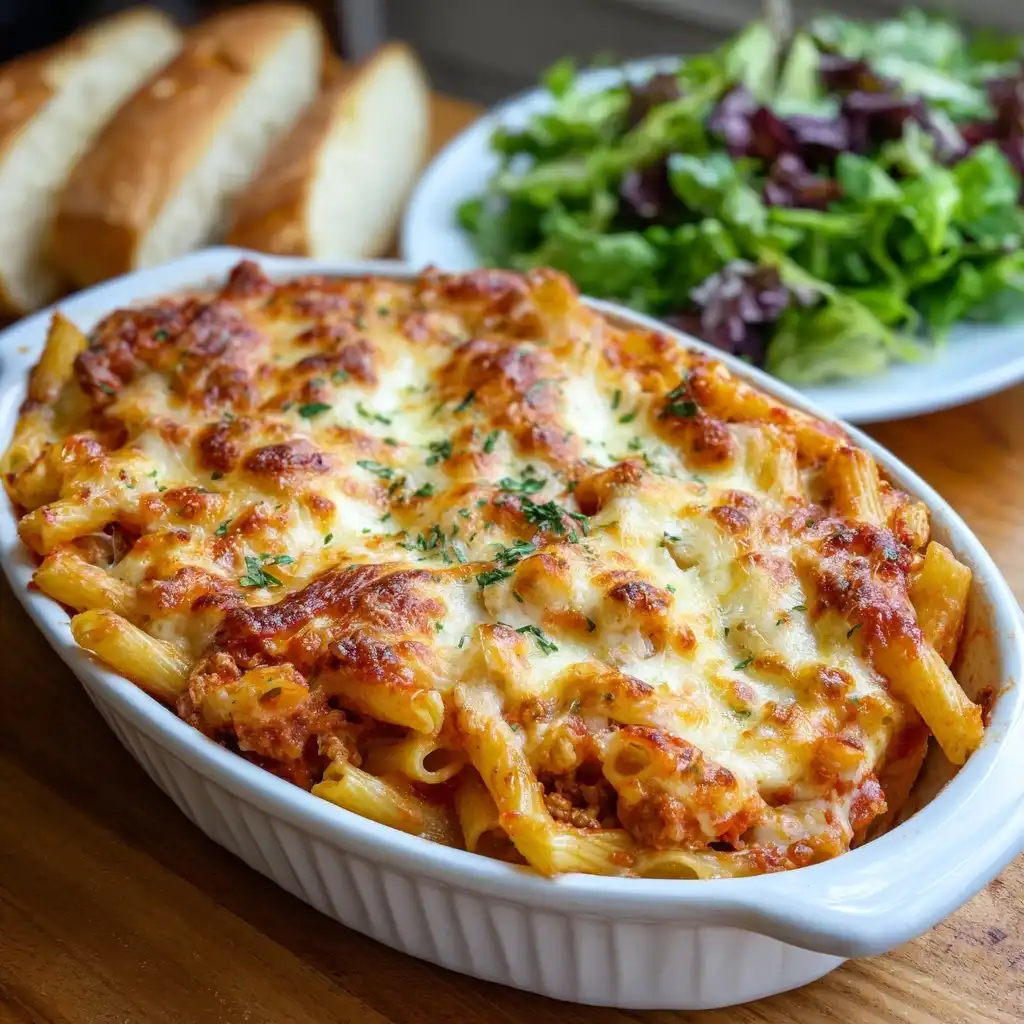
Baked Ziti with Mozzarella is a beloved Italian-American comfort classic—creamy, cheesy, hearty, and deeply satisfying. Unlike traditional pasta al forno recipes from Southern Italy, this American adaptation features tube-shaped ziti pasta baked in a rich tomato-based sauce, generously layered with ricotta, mozzarella, and often Parmesan cheese. Its appeal lies in its simplicity, versatility, and crowd-pleasing warmth—making it a staple for family dinners, potlucks, holiday gatherings, and weeknight meals alike. Whether you’re feeding a hungry crew or meal-prepping for the week, Baked Ziti delivers robust flavor, comforting texture, and nostalgic satisfaction in every forkful.
The History
The origins of Baked Ziti trace back to the culinary traditions of Southern Italy—particularly Campania and Sicily—where baked pasta dishes known as pasta al forno have been prepared for centuries. These rustic casseroles typically featured short, sturdy pasta (like ziti, penne, or rigatoni), slow-simmered tomato sauce, cheese (often ricotta and pecorino), and sometimes ground meat or vegetables—all baked until golden and bubbling. Italian immigrants brought these techniques to the United States in the late 19th and early 20th centuries, adapting them to local ingredients and tastes. In America, the dish evolved: mozzarella became more prominent (thanks to increased availability and affordability), ground beef or Italian sausage was commonly added for heartiness, and the use of whole-milk ricotta and generous layers of shredded mozzarella created the ultra-creamy, stretchy, oven-browned top we now associate with modern Baked Ziti. By the mid-20th century, it had secured its place in American home cooking, appearing in church cookbooks, community recipe collections, and eventually national food magazines—symbolizing both heritage and homegrown innovation.
Ingredients Breakdown
Understanding each ingredient’s role ensures optimal texture, flavor balance, and structural integrity in your Baked Ziti:
- Ziti Pasta: Traditionally, authentic ziti is a smooth, extruded tube pasta—slightly thicker than penne and without ridges. Its hollow shape captures sauce and cheese while holding up beautifully during baking. Most American supermarkets carry “ziti” (sometimes labeled “baked ziti pasta”), though penne or rigatoni make excellent substitutes if needed.
- Tomato Sauce: A robust base made from crushed tomatoes, tomato puree, or high-quality marinara. For depth, many chefs start with sautéed aromatics (onion, garlic, carrots) and build with San Marzano-style tomatoes, simmered with herbs (basil, oregano, parsley), a splash of red wine, and a touch of sugar to balance acidity.
- Ricotta Cheese: The creamy, slightly sweet backbone of the filling. Whole-milk ricotta provides ideal richness and moisture; low-fat versions tend to separate or become grainy when baked. Draining excess whey (by lining a fine-mesh strainer with cheesecloth and letting it sit for 15–30 minutes) prevents a watery casserole.
- Mozzarella Cheese: Fresh mozzarella (low-moisture, shredded or cubed) melts smoothly and creates that iconic stringy, golden-brown crust. Avoid pre-shredded mozzarella with anti-caking agents (like cellulose), which hinder meltability and can yield a greasy or chalky texture.
- Parmesan or Pecorino Romano: Adds salty, nutty umami depth. Grated fresh is non-negotiable—pre-grated cheeses contain starches and preservatives that dull flavor and compromise binding.
- Egg: Acts as a binder for the ricotta mixture, preventing separation and lending structure to the filling. One large egg per 16 oz ricotta is standard; over-beating can introduce air pockets, so fold gently.
- Ground Meat (Optional but Traditional): Italian sausage (sweet or hot), ground beef, or a blend adds protein and savory depth. Browning thoroughly and draining fat prevents greasiness. Vegetarian versions substitute sautéed mushrooms, lentils, or crumbled tempeh.
- Aromatics & Herbs: Onion, garlic, and sometimes carrot or celery form the aromatic base (soffritto). Fresh basil (added at the end) and dried oregano or fennel seed (for sausage versions) round out complexity.
- Olive Oil & Seasoning: Extra-virgin olive oil enriches the sauce and helps prevent sticking; kosher salt and freshly cracked black pepper are essential for layering seasoning throughout—not just at the end.
Step-by-Step Recipe
- Preheat & Prep: Preheat oven to 375°F (190°C). Grease a 9×13-inch baking dish (preferably ceramic or glass) with olive oil or non-stick spray. Set aside.
- Cook the Pasta: Bring a large pot of well-salted water (2 Tbsp kosher salt per gallon) to a rolling boil. Add ziti and cook for 2 minutes *less* than package instructions for “al dente”—it will finish cooking in the oven. Drain thoroughly, rinse briefly under cool water to stop cooking (optional, but helps prevent clumping), then toss with 1–2 tsp olive oil to prevent sticking.
- Prepare the Sauce: In a large skillet or Dutch oven, heat 2 tbsp olive oil over medium heat. Sauté 1 finely diced yellow onion and 3 minced garlic cloves until soft and fragrant (~4–5 min). Add 1 lb browned, drained ground meat (if using) and stir to combine. Pour in 28 oz crushed San Marzano tomatoes, 1/2 cup tomato puree, 1/4 cup dry red wine (optional), 1 tsp dried oregano, 1 tsp dried basil, 1/2 tsp red pepper flakes (optional), and 1 tsp sugar. Simmer uncovered for 20–25 minutes, stirring occasionally, until thickened and glossy. Season with salt and black pepper to taste. Remove from heat and let cool slightly.
- Make the Ricotta Mixture: In a large bowl, combine 16 oz whole-milk ricotta (drained), 1 large egg, 1/2 cup grated Parmesan, 1/4 cup chopped fresh parsley, 1/4 tsp freshly grated nutmeg (optional but traditional), and 1/2 tsp salt. Fold gently with a spatula until uniform—do not overmix. Stir in 1 cup of shredded low-moisture mozzarella.
- Assemble the Layers: In the prepared baking dish, spread 1 cup of warm tomato sauce on the bottom. Add half the cooked ziti in an even layer. Spoon half the ricotta mixture over the pasta and spread gently. Top with another 1 cup of sauce. Repeat layers: remaining ziti, remaining ricotta mixture, and remaining sauce. Finish with a generous 2 cups of shredded mozzarella and 1/4 cup grated Parmesan.
- Bake Covered: Cover tightly with aluminum foil (tent slightly to prevent cheese from sticking). Bake for 25 minutes.
- Bake Uncovered: Remove foil and bake for another 15–20 minutes, until the top is deeply golden, bubbly at the edges, and the center registers 165°F on an instant-read thermometer.
- Rest Before Serving: Let the baked ziti rest for 15–20 minutes before cutting. This allows the layers to set, prevents sauce from gushing out, and improves slice integrity.
Tips
- Undercook the Pasta: Always undercook by 2 minutes—it absorbs liquid and swells further in the oven. Overcooked pasta turns mushy and breaks down during baking.
- Drain Ricotta Thoroughly: Excess whey dilutes flavor and creates steam pockets, leading to separation or a soggy bottom layer.
- Cool Sauce Slightly Before Layering: Adding piping-hot sauce to ricotta can cause curdling. Let it cool to warm (not hot) before assembling.
- Use Room-Temperature Ingredients: Cold ricotta or chilled pasta can create uneven baking and temperature shock in the oven.
- Foil Tenting Is Crucial: Tightly covering traps steam for gentle, even cooking—but tenting the foil prevents melted cheese from adhering. If cheese sticks, lightly oil the underside of the foil.
- Rotate the Dish Midway: Ovens often have hot spots—rotate the pan 180° halfway through uncovered baking for uniform browning.
- Don’t Skip the Rest: Cutting too soon releases steam and destabilizes the structure. Fifteen minutes makes a dramatic difference in clean slices and cohesive texture.
- Freeze Smart: Assemble unbaked ziti, cover tightly with foil + plastic wrap, and freeze up to 3 months. Thaw overnight in fridge before baking (add 10–15 extra minutes covered).
- Reheat Gently: To reheat leftovers, cover with damp parchment + foil and bake at 325°F for 20–25 min—or microwave individual portions at 50% power in 90-second intervals.
- Boost Umami: Stir 1 tsp fish sauce or 1 tbsp Worcestershire into the sauce for depth (undetectable but transformative); or add 1/4 cup finely grated aged provolone to the cheese blend.
Variations and Customizations
Baked Ziti is wonderfully adaptable—here are time-tested, chef-approved variations to suit dietary needs, seasonal produce, and adventurous palates:
- Vegan Baked Ziti: Substitute gluten-free or regular ziti with 1 cup blended silken tofu + 1/4 cup nutritional yeast + 2 tbsp lemon juice + 1 tsp garlic powder for the ricotta layer; use cashew mozzarella shreds or almond-based cheese; replace meat with lentils or textured vegetable protein (TVP); enhance sauce with miso paste and sun-dried tomato paste.
- Gluten-Free Baked Ziti: Use certified GF ziti (brown rice, corn, or quinoa blends work best). Ensure all sauces and cheeses are GF-certified (some ricottas contain thickeners with gluten). Add 1 tbsp xanthan gum to ricotta mix for improved binding.
- Lighter Version: Replace half the ricotta with low-fat cottage cheese (blended smooth); use part-skim mozzarella and reduce total cheese by 1/3; bulk up sauce with sautéed spinach, zucchini ribbons, or roasted eggplant.
- Meatless Mediterranean: Skip meat entirely. Add 1 cup crumbled feta, 1/2 cup kalamata olives, 1/4 cup chopped fresh mint, and roasted red peppers to the ricotta mixture. Use a basil-tomato sauce with lemon zest.
- Spicy Arrabbiata Style: Amp up the red pepper flakes to 1 tsp, add 1 minced chipotle in adobo, and stir in 1/4 cup chopped fresh jalapeños to the sauce. Top with pickled cherry peppers before baking.
- Smoky Chipotle-BBQ Fusion: Swap half the tomato sauce for smoky BBQ sauce; add 1 tsp chipotle powder and 1/2 tsp smoked paprika to the meat mixture; fold in 1/2 cup roasted corn and black beans; top with sharp cheddar + Monterey Jack blend.
- Breakfast Baked Ziti: Use leftover ziti, replace tomato sauce with creamy herb-infused béchamel, add scrambled eggs and crumbled breakfast sausage, and top with Gruyère and chives.
- Seafood Baked Ziti: Replace meat with 1 cup cooked, flaked white fish (cod or haddock) and 1/2 cup shrimp. Use a light white wine–tomato sauce with saffron, lemon zest, and dill in the ricotta mix.
- “Everything Bagel” Twist: Mix everything bagel seasoning into the mozzarella topping; add cream cheese swirls to the ricotta layer; finish with toasted sesame and poppy seeds.
- Stuffed Ziti Roll-Ups: Cook ziti until pliable, flatten each tube slightly, fill with ricotta mixture, roll up, and arrange seam-side down in dish before saucing and baking.
Health Considerations and Nutritional Value
A standard 1-cup serving (about 1/8 of a full 9×13 recipe) contains approximately 420–480 calories, with variations depending on cheese quantity, meat choice, and pasta type. Here’s a balanced nutritional overview and mindful adjustments:
- Protein: ~22–28g per serving—primarily from ricotta, mozzarella, and meat. Ricotta offers high-quality whey and casein proteins; lean turkey or plant-based proteins help reduce saturated fat.
- Carbohydrates: ~45–55g—mainly from refined pasta. Opt for whole-wheat, legume-based (lentil, chickpea), or ancient grain ziti to boost fiber (6–9g/serving vs. 2g in white pasta) and lower glycemic impact.
- Fat: ~18–24g, with 9–12g saturated fat (mostly from full-fat cheeses and meat). Reducing cheese by 25%, choosing part-skim mozzarella, and using leaner meats (93% lean beef or ground chicken) cuts saturated fat significantly without sacrificing mouthfeel.
- Sodium: Can range from 600–950mg/serving—largely from cheeses, canned tomatoes, and processed meats. Use no-salt-added tomatoes, low-sodium ricotta, and limit added salt; enhance flavor with herbs, citrus zest, garlic, and umami-rich ingredients like sun-dried tomatoes or mushrooms instead of salt.
- Vitamins & Minerals: Rich in calcium (from dairy), lycopene (bioavailable in cooked tomatoes), vitamin A (from cheese and tomatoes), and B vitamins (especially B12 and riboflavin). Adding spinach, kale, or grated carrots boosts folate, iron, and antioxidants.
- Digestive Notes: High-fat, high-cheese dishes may trigger reflux or bloating in sensitive individuals. Allowing ample resting time aids digestion; pairing with a bitter green salad (arugula, radicchio) and apple cider vinegar dressing supports gastric motility.
- Portion Mindfulness: Serve with a vibrant side salad, roasted vegetables, or garlic-rubbed grilled zucchini to increase volume and nutrient density without adding significant calories.
Ingredients
- 1 pound (16 oz) dried ziti pasta (or penne/rigatoni)
- 2 tablespoons extra-virgin olive oil, plus more for greasing
- 1 medium yellow onion, finely diced
- 4 garlic cloves, minced
- 1 pound mild Italian sausage or 85% lean ground beef (optional)
- 28-ounce can crushed San Marzano tomatoes (or high-quality crushed tomatoes)
- 1/2 cup tomato puree or passata
- 1/4 cup dry red wine (optional, but recommended)
- 1 teaspoon dried oregano
- 1 teaspoon dried basil
- 1/2 teaspoon red pepper flakes (adjust to taste)
- 1 teaspoon granulated sugar
- Kosher salt and freshly ground black pepper, to taste
- 16-ounce container whole-milk ricotta cheese (well-drained)
- 1 large egg
- 1/2 cup freshly grated Parmesan cheese, plus extra for topping
- 1/4 cup chopped fresh flat-leaf parsley
- 1/4 teaspoon freshly grated nutmeg (optional but traditional)
- 3 cups shredded low-moisture mozzarella cheese (about 12 oz), divided
Directions
- Preheat oven to 375°F (190°C). Lightly grease a 9×13-inch baking dish with olive oil or nonstick spray.
- Bring 4–5 quarts of water to a rolling boil in a large pot. Add 2 tablespoons kosher salt. Add ziti and cook for 2 minutes less than package directions for al dente. Drain thoroughly in a colander, rinse briefly with cool water, then toss with 1 teaspoon olive oil. Set aside.
- In a large skillet or Dutch oven, heat 2 tablespoons olive oil over medium heat. Add diced onion and sauté until translucent, about 4 minutes. Add minced garlic and cook 1 minute more, until fragrant.
- If using meat, increase heat to medium-high, add ground sausage or beef, and break apart with a wooden spoon. Cook until no pink remains and fat is rendered, about 6–8 minutes. Drain excess fat thoroughly using a slotted spoon or paper towels.
- Add crushed tomatoes, tomato puree, red wine (if using), oregano, dried basil, red pepper flakes, sugar, 1 teaspoon salt, and 1/2 teaspoon black pepper. Stir well, bring to a gentle simmer, then reduce heat to low. Cook uncovered for 20–25 minutes, stirring occasionally, until sauce is thickened and reduced by about 1/4. Taste and adjust seasoning. Remove from heat and let cool for 10 minutes.
- In a large mixing bowl, combine drained ricotta, egg, 1/2 cup grated Parmesan, parsley, nutmeg (if using), and 1/2 teaspoon salt. Gently fold with a spatula until smooth and uniform. Stir in 1 cup of the shredded mozzarella.
- To assemble: Spread 1 cup of the warm (not hot) tomato sauce evenly across the bottom of the prepared baking dish. Add half the cooked ziti in an even layer. Spoon half the ricotta mixture over the pasta and spread gently with an offset spatula. Top with another 1 cup of sauce. Repeat layers: remaining ziti, remaining ricotta mixture, remaining sauce. Sprinkle remaining 2 cups mozzarella evenly over the top, followed by 1/4 cup additional grated Parmesan.
- Cover tightly with aluminum foil, tenting slightly to prevent cheese from sticking. Place on a baking sheet (to catch any potential spills) and bake for 25 minutes.
- Remove foil and continue baking uncovered for 15–20 minutes, until top is golden brown, edges are bubbling vigorously, and internal temperature reaches 165°F when checked with an instant-read thermometer inserted into the center.
- Remove from oven and let rest, uncovered, for 15–20 minutes before slicing and serving. This step is critical for texture and presentation.
- Serve warm, garnished with additional fresh basil or parsley, extra grated Parmesan, and a drizzle of high-quality olive oil if desired.
FAQ
- Can I make Baked Ziti ahead of time?
- Yes! Assemble up to 24 hours in advance, cover tightly, and refrigerate unbaked. Add 5–10 extra minutes to the covered baking time if starting cold. You can also fully bake, cool completely, and refrigerate for up to 4 days—reheat covered at 325°F until warmed through (30–40 minutes).
- Why is my Baked Ziti watery?
- Common causes include: under-drained ricotta, overcooked pasta, hot sauce layered into cold ricotta (causing separation), insufficient sauce reduction, or using pre-shredded cheese with anti-caking agents. Always drain ricotta, undercook pasta, cool sauce slightly, and simmer sauce until thick and glossy.
- Can I freeze Baked Ziti?
- Absolutely. For best results, freeze unbaked: assemble, cover tightly with foil + plastic wrap, label, and freeze up to 3 months. Thaw overnight in the refrigerator before baking (add 10–15 minutes covered). Fully baked ziti also freezes well—cool completely, wrap in foil + freezer-safe wrap, and freeze up to 2 months. Reheat from frozen at 325°F, covered, for 1 hour + 15 minutes, then uncover for final browning.
- What’s the difference between ziti and penne?
- Ziti is traditionally smooth, straight, and slightly longer (6–8 inches) with square-cut ends; penne is diagonally cut, shorter, and often ridged (“penne rigate”). Ridges hold sauce better, but smooth ziti offers a more delicate bite and better layering integrity in baked dishes. Either works—but true ziti yields the most authentic texture.
- Can I use cottage cheese instead of ricotta?
- Yes—with caveats. Blend low-fat or full-fat cottage cheese until perfectly smooth (a blender or food processor is essential). Strain if watery. Flavor and texture differ slightly (cottage cheese is tangier and less creamy), but it’s a viable, higher-protein, lower-fat alternative. Add 1 tbsp lemon juice and 1 tsp garlic powder to brighten flavor.
- My cheese isn’t melting properly—what went wrong?
- Pre-shredded cheeses contain cellulose and starches that inhibit melting. Always grate your own low-moisture mozzarella and Parmesan. Also ensure the casserole reaches proper internal temperature (165°F)—underbaking prevents full cheese integration.
- How do I prevent the top from burning before the center is hot?
- Rotate the pan halfway through uncovered baking. If browning too fast, loosely tent with foil again for the last 5–8 minutes. Using a light-colored metal or ceramic baking dish (vs. dark nonstick) also promotes even heating.
- Is Baked Ziti safe for pregnant people or immunocompromised individuals?
- Yes—if made with pasteurized dairy (check labels on ricotta, mozzarella, and Parmesan) and fully cooked meat (165°F internal temp). Avoid raw eggs in the ricotta mixture unless using pasteurized eggs. When in doubt, substitute the egg with 1 tbsp cornstarch mixed with 1 tbsp milk for binding.
- Can I make it without eggs?
- Yes. Eggs act as binder, but alternatives include: 1 tbsp cornstarch + 1 tbsp milk; 1/4 cup mashed potato or cauliflower; or 2 tbsp ground flaxseed + 5 tbsp water (let sit 5 min to gel). Texture will be slightly looser but still cohesive.
- What wine pairs best with Baked Ziti?
- A medium-bodied, high-acid red complements the tomato richness—Chianti Classico, Montepulciano d’Abruzzo, or Barbera d’Alba. For white lovers, try a crisp, unoaked Vermentino or dry Rosé. Non-alcoholic option: sparkling pomegranate-cranberry spritzer with basil.
Summary
Baked Ziti with Mozzarella is a timeless, customizable Italian-American casserole that balances tender pasta, robust tomato sauce, creamy ricotta, and gooey, golden mozzarella—layered, baked, and rested to perfection. With thoughtful prep, smart substitutions, and attention to detail—from draining ricotta to undercooking pasta—it transforms humble pantry staples into a showstopping, soul-warming centerpiece worthy of any table.
Whether you’re honoring tradition, adapting for dietary needs, or experimenting with bold new flavors, this recipe serves as both foundation and canvas—deliciously reliable, endlessly expressive, and deeply rooted in the joy of shared, homemade nourishment.