Introduction
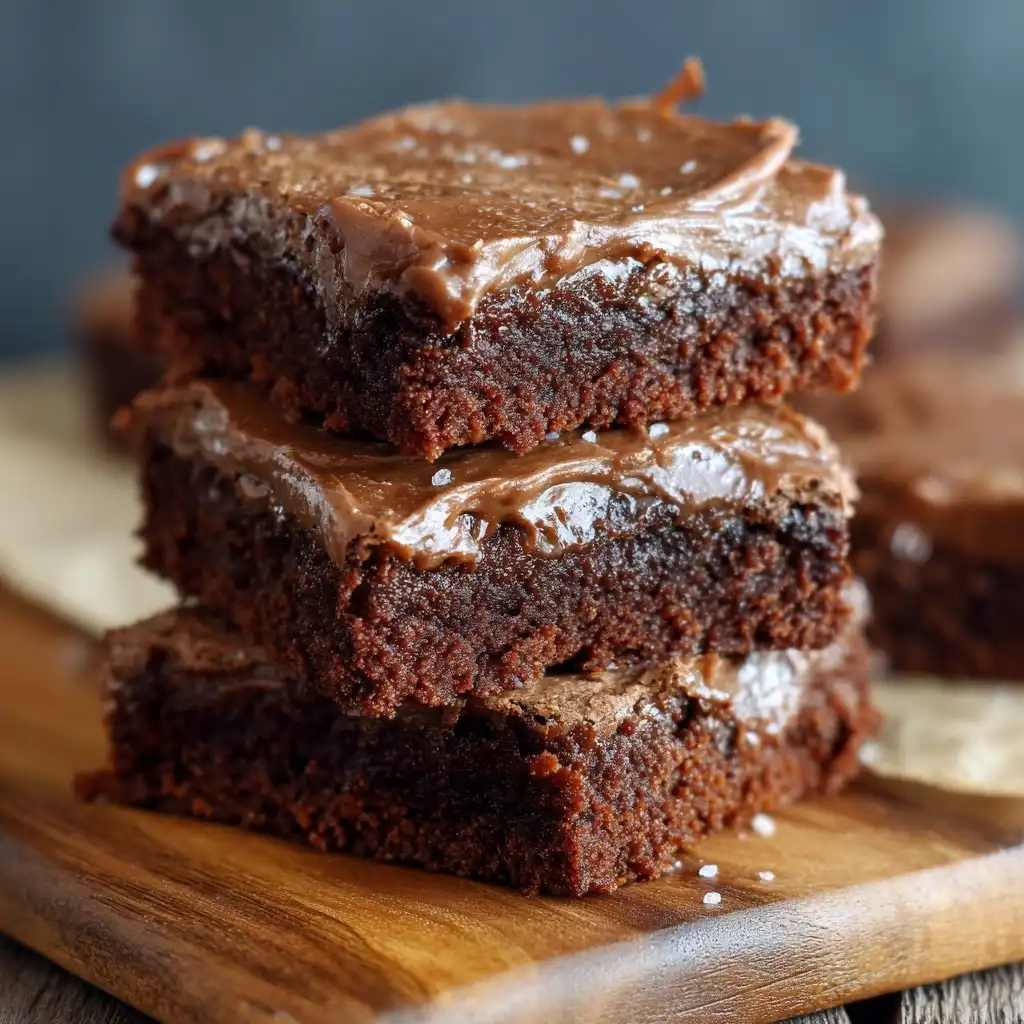
Fudge Frosted Brownies represent the ultimate indulgence in dessert culture — a rich, dense, fudgy brownie base crowned with an impossibly smooth, glossy, intensely chocolatey fudge frosting that sets to a velvety, sliceable perfection. Unlike standard buttercream or ganache toppings, this fudge frosting is cooked to precise temperature thresholds, creating a deep, caramelized cocoa intensity and a luxuriously chewy-yet-melt-in-your-mouth texture. More than just a treat, Fudge Frosted Brownies are an experience: the crackle of the top crust, the slight resistance before yielding to moist decadence, and the slow, lingering sweetness of premium chocolate balanced by subtle notes of vanilla, espresso, and sea salt. Whether served at holiday gatherings, birthday celebrations, bake sales, or as a well-deserved personal reward after a long week, these brownies command attention — and rarely leave the platter intact.
The History
The evolution of the brownie traces back to late 19th-century America, with competing origin stories pointing to Boston’s Palmer House Hotel (1893), where a dense, nut-free chocolate confection was allegedly created for the Chicago World’s Columbian Exposition, and to home cooks experimenting with leftover cake batter in the 1890s — seeking a simpler, stovetop-friendly alternative to layer cakes. The word “brownie” first appeared in print in the 1896 edition of Fannie Farmer’s Boston Cooking-School Cook Book, though those early versions resembled molasses-spiced bar cookies more than today’s fudgy iterations. The fudgy brownie — denser, moister, and less cakelike — gained popularity in the 1920s and 1930s, aided by the rise of accessible cocoa powder, granulated sugar, and standardized oven temperatures. Meanwhile, fudge itself emerged from 19th-century New England confectionery traditions, where students at Vassar College and other women’s colleges popularized the boiled-sugar candy in the 1880s — hence the enduring nickname “Vassar fudge.” The fusion of these two beloved American desserts — the brownie and the fudge — didn’t become mainstream until the mid-20th century, when home economists and magazine editors (notably in Better Homes & Gardens and Good Housekeeping) began layering thick, stove-top fudge frostings over brownie bars as a showstopping upgrade. By the 1970s and ’80s, bakery chains and gourmet food trucks cemented the Fudge Frosted Brownie’s status as a cult classic — now elevated with single-origin chocolate, house-made marshmallow fluff swirls, and artisanal sea salts in modern iterations.
Ingredients Breakdown
Every exceptional Fudge Frosted Brownie begins with intentionality — not just in measurement, but in ingredient selection and function. Below is a comprehensive, chef-level breakdown:
- Unsweetened Chocolate (4 oz, chopped): Provides intense cocoa solids and fat without added sugar; essential for depth and structure. Opt for 100% cacao or high-quality 85% for complexity — avoid alkalized (Dutch-process) here unless adjusting acidity, as natural cocoa reacts better with baking soda.
- Granulated Sugar (1¾ cups): Not only sweetens but aids in crust formation and aeration during mixing. The fine crystals dissolve smoothly into melted chocolate and butter, contributing to that signature shiny top.
- Brown Sugar (½ cup, packed light or dark): Adds moisture, acidity (via molasses), and caramel notes. Dark brown sugar yields deeper toffee tones; light offers subtler warmth.
- Unsalted Butter (1 cup / 2 sticks, cubed): Supplies richness, tenderness, and emulsification power. European-style butter (82–84% fat) enhances mouthfeel and browning. Salted butter may be used, but omit added salt later.
- Eggs (4 large, room temperature): Act as binders, leaveners (trapping air when beaten), and emulsifiers. Room temperature ensures even incorporation and prevents seizing when added to warm chocolate-butter mixtures.
- Pure Vanilla Extract (2 tsp): A flavor amplifier — use Madagascar Bourbon or Tahitian for layered floral-woody notes. Avoid imitation; it dulls the chocolate profile.
- All-Purpose Flour (¾ cup + 2 tbsp): Provides minimal gluten structure to prevent collapse while preserving fudginess. Too much = cakey; too little = fragile and greasy. Sifted flour integrates seamlessly.
- Natural Cocoa Powder (⅓ cup): Unsweetened, non-alkalized cocoa delivers bright, fruity acidity and robust bitterness that balances sweetness. Dutch-process would mute acidity and require pH adjustments.
- Baking Powder (½ tsp): A tiny amount lifts the batter just enough to avoid leaden density — crucial for achieving that tender crumb beneath the fudge layer.
- Espresso Powder (1 tsp, instant): Not for coffee flavor — it intensifies chocolate notes through umami synergy. Optional but highly recommended.
- Fine Sea Salt (1 tsp + pinch for garnish): Enhances all flavors, curbs cloying sweetness, and sharpens chocolate perception. Use flaky Maldon or fleur de sel for finishing.
Fudge Frosting Ingredients:
- Granulated Sugar (2 cups): The backbone of the fudge matrix — must be fully dissolved and brought to soft-ball stage (234–240°F) for proper crystallization control.
- Heavy Cream (¾ cup): High-fat (36–40%) cream ensures silkiness and prevents graininess. Ultra-pasteurized works, but pasteurized (not ultra) yields superior sheen.
- Unsalted Butter (½ cup / 1 stick, cubed): Added off-heat to enrich and temper the hot sugar syrup — prevents separation and adds gloss.
- Unsweetened Chocolate (4 oz, finely chopped): Melts into the hot mixture for intensified chocolate character and viscosity.
- Corn Syrup (2 tbsp): Inhibits sugar recrystallization — critical for smooth, non-grainy fudge. Light or dark both work; dark adds subtle molasses nuance.
- Pure Vanilla Extract (1½ tsp): Added at the end to preserve volatile aromatic compounds.
- Fine Sea Salt (¼ tsp): Balances sweetness and highlights chocolate’s terroir.
Step-by-Step Recipe
- Prep & Preheat: Position oven rack to center. Line a 9×13-inch metal baking pan with parchment paper, leaving 2-inch overhang on two opposite sides for easy lifting. Grease exposed edges lightly. Preheat oven to 325°F (163°C) — lower heat ensures even baking without doming or cracking.
- Melt Chocolate-Butter Base: In a heatproof bowl set over a saucepan of barely simmering water (double boiler), combine unsweetened chocolate and butter. Stir constantly with a silicone spatula until fully melted, smooth, and homogenous (~5–7 minutes). Remove from heat; let cool slightly (110–115°F) — too hot will scramble eggs.
- Whisk Wet Ingredients: In a large mixing bowl, whisk together granulated sugar, brown sugar, and eggs until pale, thickened, and ribbon-like (2–3 minutes with hand mixer or 1 minute with stand mixer). Add vanilla and whisk to combine. Gradually pour warm chocolate-butter mixture into egg-sugar mixture in a slow, steady stream, whisking constantly to emulsify — no streaks should remain.
- Combine Dry Ingredients: In a separate bowl, sift together flour, cocoa powder, baking powder, espresso powder, and 1 tsp salt. Whisk 15 seconds to aerate and evenly distribute leaveners.
- Fold & Batter Finalization: Using a spatula, gently fold dry ingredients into wet mixture in 3 additions, rotating bowl between folds. Stop as soon as no dry streaks remain — overmixing develops gluten and causes toughness. Batter will be thick, glossy, and slightly sticky.
- Pan & Bake: Pour batter into prepared pan. Use an offset spatula to spread evenly, smoothing surface. Tap pan firmly on counter 3 times to release air bubbles and level top. Bake 35–42 minutes — brownies are done when a toothpick inserted 2 inches from edge comes out with *moist crumbs* (not wet batter, not clean). Center may appear slightly underbaked — it will set as it cools. Avoid overbaking; carryover heat continues cooking.
- Cool Completely (Non-Negotiable Step): Place pan on a wire rack. Cool brownies *undisturbed* for full 2 hours at room temperature. This allows starches to set, fats to solidify, and structure to stabilize — critical for clean fudge adhesion and slicing.
- Prepare Fudge Frosting: While brownies cool, prepare frosting. In a heavy-bottomed 3-quart saucepan, combine sugar, cream, corn syrup, and ¼ tsp salt. Clip a candy thermometer to side, ensuring bulb doesn’t touch bottom. Heat over medium-low, stirring constantly with a heatproof spatula until sugar dissolves completely (~4–5 minutes). Once dissolved, stop stirring. Increase heat to medium and bring to a full, rolling boil. Boil — without stirring — until thermometer reads 236°F (soft-ball stage), ~8–12 minutes depending on humidity and altitude. Immediately remove from heat.
- Emulsify & Finish Frosting: Carefully add butter, chopped chocolate, and vanilla. Let sit 2 minutes undisturbed to melt chocolate and soften butter. Then stir vigorously with a silicone spatula in a figure-eight motion until completely smooth, glossy, and slightly thickened (~1–2 minutes). Do not over-stir or incorporate air — it should look like molten dark chocolate sauce.
- Frost & Set: Pour warm (but not hot — ideally 110–115°F) fudge frosting over cooled brownies. Use an offset spatula to spread evenly to edges, swirling gently if desired. Sprinkle immediately with flaky sea salt. Refrigerate uncovered for minimum 3 hours, or overnight for optimal sliceability and fudge texture development.
- Cut & Serve: Using parchment overhangs, lift brownies from pan onto cutting board. With a hot, dry knife (dipped in boiling water and wiped dry between cuts), slice into 16 even 3×3-inch squares. Wipe knife thoroughly before each cut for pristine edges.
Tips
- Room Temperature Is Non-Negotiable: Cold eggs cause the warm chocolate-butter mixture to seize into grainy lumps. Pull eggs from fridge 1 hour ahead.
- Weigh Your Ingredients: Flour especially varies wildly by scoop method. For precision: ¾ cup + 2 tbsp AP flour = 100g. Cocoa = 30g. Gram scales eliminate inconsistency.
- Double-Boiler Discipline: Never let water boil vigorously — gentle steam is ideal. If water touches bottom of bowl, chocolate may scorch or seize. Keep heat low and stir constantly.
- Thermometer Accuracy Matters: Calibrate your candy thermometer in boiling water (should read 212°F at sea level) before starting frosting. Even a 2°F error can cause graininess or failure to set.
- No Stirring During Boil: Agitating sugar syrup while boiling encourages recrystallization — leading to gritty fudge. If crystals form on pan sides, brush down with wet pastry brush.
- Cooling Patience Pays Off: Cutting warm brownies + warm fudge = melty, smeary disaster. Two-hour ambient cool + 3-hour chill = perfect contrast: tender brownie + firm, glossy fudge.
- Altitude Adjustments: Above 3,000 ft: reduce sugar by 1 tbsp in brownie batter; increase baking powder to ¾ tsp; bake at 335°F for 32–38 minutes. For fudge, reduce target temp by 2°F per 1,000 ft.
- Knife Technique: For flawless slices, use a sharp, thin-bladed chef’s knife. Heat under hot tap water for 10 seconds, dry *completely*, cut, repeat. Never saw — press straight down.
- Storage Wisdom: Store unfrosted brownies airtight at room temp up to 3 days. Frosted brownies must be refrigerated (up to 1 week) due to dairy in fudge. Freeze *unfrosted* brownies up to 3 months; thaw, then frost fresh.
- Rescue Grainy Fudge: If frosting seizes or turns sandy, gently reheat in double boiler with 1 tsp hot cream, stirring until smooth. Then cool and re-chill.
Variations and Customizations
While classic Fudge Frosted Brownies shine in their purity, they serve as a magnificent canvas for creativity — balancing novelty with structural integrity. Here are rigorously tested, professional-grade variations:
- Espresso-Infused Fudge: Steep 2 tbsp finely ground dark roast espresso in the cream for 15 minutes before heating. Strain, then proceed. Adds smoky depth and amplifies chocolate bitterness beautifully.
- Sea Salt Caramel Swirl: After spreading fudge, drizzle ⅓ cup homemade or high-quality salted caramel sauce over top. Use a skewer to marble gently — creates ribbons that stay distinct after chilling.
- Crunchy Hazelnut Praline: Fold 1 cup finely chopped, toasted hazelnuts into warm fudge *just before pouring*. Or sprinkle toasted praline bits on top post-frosting for textural contrast.
- Peppermint Patty Fusion: Add ½ tsp pure peppermint extract + ¼ tsp white food-grade oil to fudge mixture off-heat. Top chilled fudge with crushed candy canes or Andes mints — mint cuts richness perfectly.
- Orange-Cardamom Zest: Add 1 tbsp finely grated orange zest + ½ tsp freshly ground cardamom to brownie batter. In fudge, infuse cream with zest and 6 crushed green cardamom pods (strain before boiling).
- Vegan Adaptation: Replace eggs with flax eggs (4 tbsp ground flax + 10 tbsp water, rested 15 min); use vegan butter and dairy-free dark chocolate (70%+). For fudge: substitute full-fat coconut milk for cream, and use refined coconut oil (2 tbsp) + vegan butter (¼ cup).
- Gluten-Free Version: Swap AP flour for 100g GF 1:1 blend (with xanthan gum); add ¼ tsp xanthan gum if blend lacks it. Verify all cocoa, chocolate, and vanilla are GF-certified.
- Blondie-Fudge Hybrid: Omit unsweetened chocolate and cocoa from brownie batter. Use 8 oz white chocolate + 1 tsp vanilla bean paste. Frost with brown sugar fudge (replace granulated with dark brown sugar) for butterscotch notes.
- Boozy Elegance: Add 2 tbsp bourbon, rum, or Grand Marnier to warm fudge off-heat. For brownies: stir 1 tbsp into melted chocolate-butter base. Alcohol evaporates partially but leaves aromatic complexity.
- Mini Mason Jar Edition: Bake brownie batter in 4-oz mason jars (fill ¾ full). Bake 22–26 min. Cool 1 hour. Pipe fudge frosting with star tip. Seal and refrigerate — perfect for gifts or portion control.
Health Considerations and Nutritional Value
While Fudge Frosted Brownies are inherently indulgent — designed for celebration, not daily nutrition — understanding their composition empowers mindful enjoyment. A standard 3×3-inch serving (1/16th of recipe) contains approximately:
- Calories: 385–420 kcal (varies with chocolate % and butter fat)
- Total Fat: 22–25g (13–15g saturated, primarily from cocoa butter and dairy)
- Carbohydrates: 46–50g (42–45g sugars — naturally occurring in chocolate + added)
- Protein: 4–5g (from eggs, minimal in chocolate)
- Fiber: 2–3g (from cocoa — a source of polyphenols and prebiotic fiber)
- Iron: ~1.8mg (10% DV — cocoa is non-heme iron; pair with vitamin C for absorption)
- Magnesium: ~65mg (16% DV — supports muscle/nerve function)
- Antioxidants: Rich in flavanols (epicatechin, procyanidins) — linked to improved endothelial function and reduced oxidative stress. Dark chocolate (>70%) offers significantly higher levels than milk chocolate.
Considerations for Special Diets:
- Diabetes-Friendly Tweaks: Reduce total sugar by ¼ cup; replace with allulose (non-glycemic) or erythritol blend (1:1 ratio). Use high-cocoa, low-sugar chocolate (85%+). Monitor blood glucose response individually.
- Lactose Sensitivity: Substitute lactose-free butter and heavy cream, or full-fat coconut cream (chilled, solid part only) for fudge. Note: coconut cream yields softer set.
- Heart Health Focus: Use dark chocolate rich in flavanols (look for “high-flavanol” certification or >70% cacao). Replace 2 tbsp butter with avocado oil in brownie batter for monounsaturated fat boost.
- Allergen Notes: Naturally nut-free unless customized. Contains dairy, eggs, soy (lecithin in chocolate), and gluten (unless GF flour used). Always verify chocolate labels for shared-equipment warnings if severe allergy exists.
- Mindful Portioning: Serving size matters. Cutting into 20 smaller squares increases perceived abundance while reducing per-serving calories by ~20%. Pair with tart raspberry coulis or Greek yogurt for balance.
Remember: Nutrition science increasingly affirms that pleasure, ritual, and social connection around food are vital components of holistic health. Enjoying a truly exceptional Fudge Frosted Brownie — slowly, intentionally, shared with loved ones — contributes meaningfully to emotional well-being and sustainable eating habits.
Ingredients
Makes 16 servings
Brownie Base:
- 4 oz unsweetened chocolate (100% or 85% cacao), finely chopped
- 1 cup (2 sticks / 227g) unsalted butter, cubed
- 1¾ cups (350g) granulated sugar
- ½ cup (100g) packed light or dark brown sugar
- 4 large eggs, room temperature
- 2 tsp pure vanilla extract
- ¾ cup + 2 tbsp (100g) all-purpose flour, sifted
- ⅓ cup (30g) natural unsweetened cocoa powder
- ½ tsp baking powder
- 1 tsp instant espresso powder
- 1 tsp fine sea salt
Fudge Frosting:
- 2 cups (400g) granulated sugar
- ¾ cup (180ml) heavy cream (36–40% fat)
- ½ cup (1 stick / 113g) unsalted butter, cubed
- 4 oz (113g) unsweetened chocolate, finely chopped
- 2 tbsp light or dark corn syrup
- 1½ tsp pure vanilla extract
- ¼ tsp fine sea salt
- Flaky sea salt (Maldon or fleur de sel), for garnish
Directions
- Preheat oven to 325°F (163°C). Line a 9×13-inch metal baking pan with parchment paper, leaving 2-inch overhang on two opposite sides. Lightly grease exposed edges.
- In a heatproof bowl set over a saucepan of barely simmering water, melt unsweetened chocolate and butter, stirring constantly until smooth and glossy (~5–7 min). Remove from heat; cool to 110–115°F (do not let harden).
- In a large bowl, whisk granulated sugar, brown sugar, and eggs with a hand mixer (or stand mixer fitted with whisk) on medium-high for 2–3 minutes until thick, pale, and ribbon-stage. Whisk in vanilla.
- Gradually pour warm chocolate-butter mixture into egg-sugar mixture in a slow, steady stream, whisking constantly until fully emulsified and uniform.
- In another bowl, sift together flour, cocoa powder, baking powder, espresso powder, and 1 tsp salt. Whisk 15 seconds to combine.
- Fold dry ingredients into wet mixture in 3 additions using a silicone spatula, rotating bowl between folds. Stop as soon as no dry streaks remain — do not overmix.
- Pour batter into prepared pan. Smooth top with offset spatula. Tap pan firmly on counter 3 times to release air bubbles.
- Bake 35–42 minutes, until toothpick inserted 2 inches from edge comes out with moist crumbs (center may look soft — it’s correct). Do not overbake.
- Cool brownies in pan on wire rack for 2 full hours — undisturbed — until completely room temperature.
- Meanwhile, prepare fudge frosting: In a heavy-bottomed 3-quart saucepan, combine sugar, cream, corn syrup, and ¼ tsp salt. Stir over medium-low heat until sugar dissolves completely (~4–5 min). Stop stirring. Clip candy thermometer to side. Bring to rolling boil; cook without stirring until thermometer reads 236°F (soft-ball stage), ~8–12 min.
- Immediately remove from heat. Add butter, chopped chocolate, and vanilla. Let sit 2 minutes. Stir vigorously with silicone spatula in figure-eight motion until smooth, glossy, and slightly thickened (~1–2 min).
- Pour warm fudge over cooled brownies. Spread evenly with offset spatula. Sprinkle immediately with flaky sea salt.
- Refrigerate uncovered for minimum 3 hours, or preferably overnight.
- Using parchment overhangs, lift brownies from pan. Slice into 16 even 3×3-inch squares with hot, dry knife (wiped clean between cuts).
FAQ
- Can I make these ahead of time?
- Absolutely — and recommended! Brownies taste even richer after 24 hours. Frosted brownies keep refrigerated up to 1 week. For longer storage, freeze *unfrosted* brownies tightly wrapped for up to 3 months. Thaw at room temperature, then frost fresh.
- Why did my fudge turn grainy?
- Graininess almost always results from sugar recrystallization. Causes include: stirring during boiling, undissolved sugar crystals on pan sides (brush down with wet pastry brush), or rapid cooling. To fix: gently reheat in double boiler with 1 tsp hot cream, stirring until smooth, then cool and re-chill.
- Can I use Dutch-process cocoa?
- You can — but you’ll need to adjust leavening. Replace baking powder with ½ tsp baking soda, and omit espresso powder (it won’t activate properly). Natural cocoa provides brighter acidity that better balances the fudge’s sweetness.
- My brownies cracked on top — what went wrong?
- Cracking usually occurs from excessive air incorporation (over-beating eggs/sugar) or too-rapid oven temperature change. Ensure eggs are room temp, beat only until ribbon-stage, and avoid opening oven door before 30 minutes. A water bath (placing pan in larger pan with 1 inch hot water) also prevents cracking.
- Is there a shortcut for the fudge frosting?
- For true fudge texture and sheen, stove-top preparation is irreplaceable. However, a “no-cook” alternative: melt 8 oz semi-sweet chocolate + ½ cup heavy cream + ¼ cup butter in double boiler. Stir until smooth. Chill 45 min, beat with mixer until light and spreadable. It’s ganache-like — delicious, but not authentic fudge.
- Can I bake these in a different size pan?
- Yes, with timing adjustments: 9-inch square pan → bake 42–48 min; 10×15-inch jelly roll pan → bake 28–33 min (cut into 24 bars); muffin tin → fill ⅔ full, bake 18–22 min. Always rely on the toothpick test, not timer alone.
- How do I prevent the fudge from sliding off?
- Ensure brownies are completely cool before frosting — residual warmth