Introduction
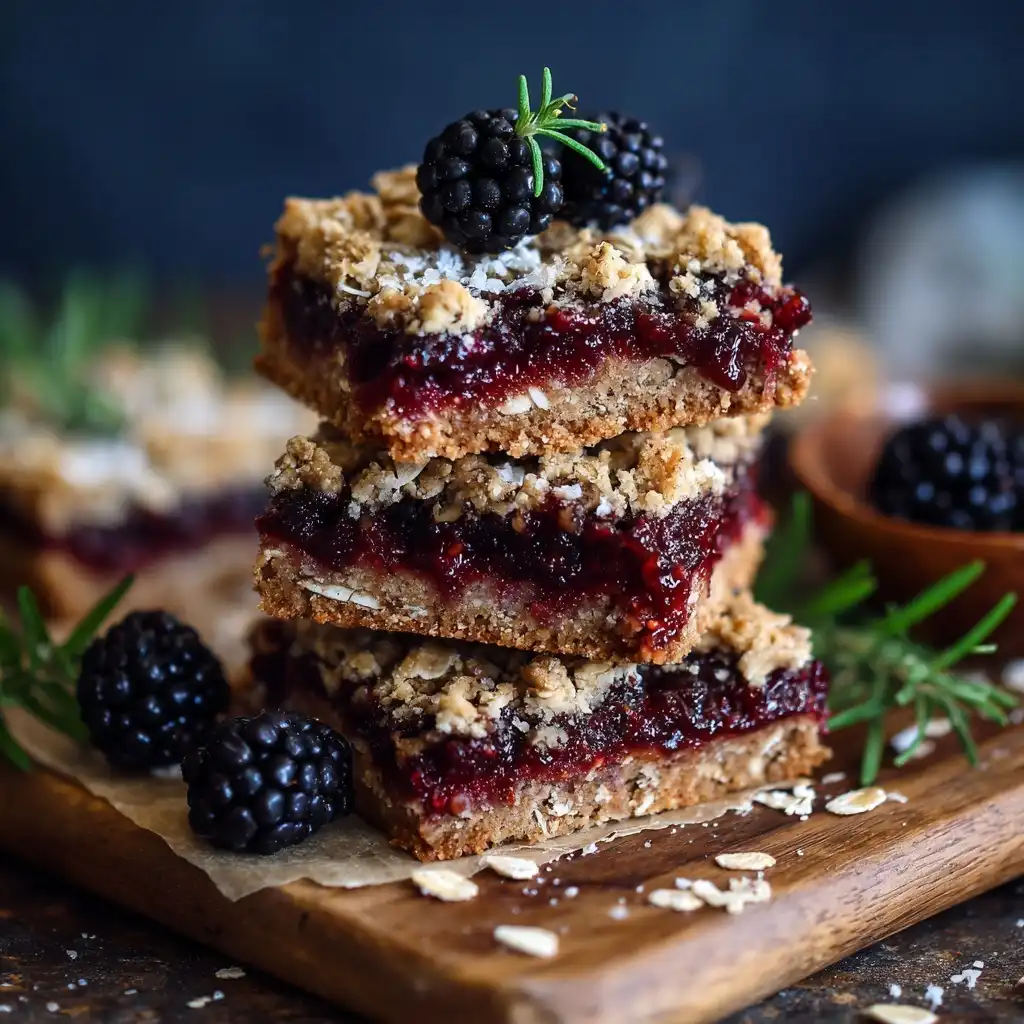
Blackberry Oat Bars are a beloved, wholesome, and versatile baked treat that effortlessly bridges the gap between dessert and nourishing snack. With their tender, chewy oat base, vibrant burst of tart-sweet blackberry filling, and golden-brown crumbly topping, these bars deliver comfort in every bite—perfect for picnics, lunchboxes, after-school treats, or weekend baking therapy. Whether you’re a seasoned baker or a beginner looking for an approachable, forgiving recipe, Blackberry Oat Bars offer delightful texture contrast, natural fruit brightness, and nostalgic charm—all without requiring fancy equipment or obscure ingredients.
The History
Oat-based bar cookies trace their roots to early 20th-century American home baking, when rolled oats—popularized by Quaker Oats’ mass marketing campaigns starting in the 1870s—became a pantry staple valued for affordability, shelf stability, and nutritional heft. The “oat bar” format evolved alongside Depression- and wartime-era resourcefulness: bakers combined pantry staples like oats, flour, sugar, butter, and seasonal fruit preserves into no-fuss, sliceable desserts that minimized waste and maximized yield. Blackberries, native across much of North America and long harvested wild (especially in the Pacific Northwest, Appalachia, and the South), were naturally incorporated into regional variations—often as fresh-picked, cooked-down fillings or local jam swirls. By the 1950s, recipes resembling modern Blackberry Oat Bars appeared in community cookbooks, women’s magazines like Good Housekeeping, and church fundraising collections, often titled “Berry Crumble Bars,” “Oatmeal Fruit Squares,” or “Blackberry Crisp Bars.” Their enduring popularity lies in their adaptability—no two family versions are quite alike—and their embodiment of rustic, from-the-garden authenticity.
Ingredients Breakdown
Understanding each component reveals how flavor, texture, and structure harmonize in Blackberry Oat Bars:
- Old-Fashioned Rolled Oats: The backbone of both base and topping. Their hearty flake provides chew, fiber, and toasty depth when baked. Not interchangeable with quick oats (which turn gummy) or steel-cut oats (which remain too hard). Gluten-free certified oats are essential for sensitive individuals.
- All-Purpose Flour: Adds structure and binding without toughness. A small amount stabilizes the oat matrix and prevents excessive spreading. Whole wheat pastry flour can be substituted 1:1 for added nuttiness and fiber.
- Brown Sugar (Light or Dark): Contributes moisture, rich molasses notes, and caramelized edges. Dark brown sugar intensifies flavor and yields a slightly denser, more moist bar; light offers milder sweetness and brighter color.
- Granulated Sugar: Balances acidity in the blackberry layer and aids in browning and crispness of the topping.
- Unsalted Butter: Provides richness, tenderness, and flakiness. Cold, cubed butter creates pockets of steam for lift and separation in the crumble; melted butter yields a denser, more cohesive base. European-style butter (higher fat content) enhances flavor and browning.
- Ground Cinnamon & Pure Vanilla Extract: Warm spice and aromatic depth that complement blackberries’ earthy-tart profile without overpowering. A pinch of freshly grated nutmeg or cardamom adds sophistication.
- Salt: Critical for balancing sweetness and amplifying all other flavors—even in small amounts (¼ tsp makes a measurable difference).
- Fresh Blackberries: Preferred for superior flavor, texture, and natural pectin. Ripe but firm berries hold shape better than overripe ones. Wild blackberries offer intense, wine-like complexity; cultivated varieties (e.g., ‘Triple Crown,’ ‘Navaho’) provide consistent size and juiciness.
- Lemon Juice & Zest: Brightens the filling, cuts through sweetness, and prevents browning during prep. Zest contributes volatile citrus oils for aromatic lift.
- Granulated Sugar (for Filling): Controls tartness and draws out juices. Less sugar yields a more intensely fruity, less jammy result—ideal for mature palates.
- Cornstarch or Tapioca Starch: The unsung hero. Thickens berry juices to prevent soggy bars and ensures a clean slice. Cornstarch gives a glossy, clear set; tapioca yields a slightly more elastic, jewel-toned gel.
- Optional Add-Ins: Chopped toasted walnuts or pecans in the topping add crunch and healthy fats; a drizzle of local honey or blackberry-infused syrup post-baking enhances sheen and terroir; a sprinkle of flaky sea salt before baking elevates sweet-savory nuance.
Step-by-Step Recipe
- Prep & Preheat: Position oven rack in center position. Preheat oven to 350°F (175°C). Line a 9×13-inch metal baking pan with parchment paper, leaving 2-inch overhang on two opposite sides for easy lifting. Lightly grease exposed pan edges.
- Make the Oat Base & Topping (One Bowl Method): In a large bowl, whisk together 2 cups old-fashioned rolled oats, 1 cup all-purpose flour, ¾ cup packed light brown sugar, ½ cup granulated sugar, 1 tsp ground cinnamon, and ½ tsp fine sea salt. Add 1 cup (2 sticks / 227g) cold, unsalted butter, cut into ½-inch cubes. Using a pastry cutter, fork, or fingertips, work butter into dry ingredients until mixture resembles coarse crumbs with some pea-sized pieces remaining. Reserve 1½ cups of this mixture for the topping; press the remaining mixture firmly and evenly into the bottom of the prepared pan using the back of a measuring cup or flat-bottomed glass. Chill while preparing filling (15 min minimum).
- Prepare the Blackberry Filling: In a medium saucepan over medium-low heat, combine 4 cups fresh blackberries (rinsed, stemmed, and gently patted dry), ⅔ cup granulated sugar, 2 tbsp fresh lemon juice, 1 tsp finely grated lemon zest, and 3 tbsp cornstarch. Stir constantly with a heatproof spatula, crushing about one-third of berries against the side of the pan to release juices. Bring to a gentle simmer—bubbles should break steadily across the surface. Cook, stirring continuously, for 4–6 minutes until thickened, glossy, and reduced by ~¼. It should coat the back of a spoon and hold a line when a finger is drawn through it. Remove from heat; cool slightly (5 min), then stir in 1 tsp pure vanilla extract. Let cool fully to room temperature (~20 min)—warm filling will melt the base.
- Assemble & Bake: Pour cooled blackberry filling evenly over chilled oat base. Gently spread with an offset spatula, avoiding dragging the base. Sprinkle reserved oat crumble evenly over filling, pressing lightly to adhere. Optional: scatter ¼ cup chopped, toasted walnuts over top. Bake for 45–55 minutes, rotating pan halfway through, until topping is deep golden brown, edges are bubbling vigorously, and center filling is set (a toothpick inserted 1 inch from edge should come out mostly clean—slight jammy residue is fine; center should not be liquidy).
- Cool Completely & Slice: Place pan on a wire rack. Cool bars completely at room temperature (minimum 2 hours)—this step is non-negotiable for clean slicing and optimal texture. For best results, refrigerate uncovered for 1 additional hour before cutting. Use a sharp, thin-bladed knife wiped clean between cuts. Lift bars out using parchment overhang, then slice into 12–16 rectangles (3×4 grid for 12 generous bars; 4×4 for 16 snack-sized bars).
Tips
- Oats Matter: Always use certified gluten-free rolled oats if serving celiac guests—“gluten-free” labeling is not implied by “oat” alone due to cross-contamination risks in milling facilities.
- Butter Temperature Is Key: Cold butter = flaky, layered crumble. Melted butter = dense, cookie-like topping. For ultra-crisp edges, chill assembled bars for 15 minutes before baking.
- Prevent Sogginess: Pat berries *very* dry before cooking. Excess water dilutes pectin and starch, leading to runny filling. If using frozen blackberries, thaw completely, drain *thoroughly* in a fine-mesh sieve (press gently), and increase cornstarch by ½ tbsp.
- Thickening Wisdom: Cornstarch breaks down under prolonged high heat—don’t boil the filling longer than necessary. For high-altitude baking (above 3,000 ft), increase cornstarch by ½ tsp and reduce oven temp by 25°F.
- Golden Rule of Cooling: Cutting warm bars guarantees crumbling and smearing. Refrigeration firms the filling’s gel and solidifies butter, yielding sharp corners and defined layers.
- Storage Savvy: Store cooled bars in a single layer in an airtight container at room temperature for up to 3 days, or refrigerate for up to 10 days. Freeze unfrosted bars (wrapped individually in parchment + placed in freezer bag) for up to 3 months. Thaw overnight in fridge or at room temp for 30 minutes.
- Baking Pan Choice: Use a light-colored aluminum 9×13-inch pan—not dark nonstick or glass. Dark pans over-brown bottoms; glass conducts heat unevenly and may cause cracking. If using glass, reduce oven temp to 325°F and extend bake time by 5–8 minutes.
- Flavor Boosters: Stir 1 tbsp blackberry jam into the filling for intensified fruit depth. Add ¼ tsp almond extract to the base for subtle marzipan nuance. Brush cooled bars with warmed apricot glaze for bakery-level shine.
Variations and Customizations
Blackberry Oat Bars are a canvas for creativity—here’s how to make them your own:
- Double-Berry Bliss: Replace 1 cup blackberries with equal parts raspberries or boysenberries for complex tartness and jewel-toned layers.
- Maple-Spiced Version: Substitute ¼ cup pure maple syrup for ¼ cup granulated sugar in the filling; add ¼ tsp ground ginger and ⅛ tsp ground cloves to the base spices.
- Vegan Adaptation: Use cold vegan butter (e.g., Miyoko’s or Earth Balance sticks), flax egg (1 tbsp ground flax + 2.5 tbsp water, rested 5 min) in place of vanilla in filling for binding, and certified GF oats. Ensure sugar is vegan (some brands use bone char).
- Protein-Packed: Add ¼ cup unflavored plant-based or whey protein powder to the dry base mix; reduce flour by 1 tbsp to compensate. Stir in ⅓ cup roasted pumpkin seeds or hemp hearts into the crumble topping.
- Lower-Sugar Option: Reduce total sugar by ¼ cup (split between base and filling), use monk fruit/erythritol blend 1:1, and boost flavor with extra lemon zest, cinnamon, and 1 tsp apple cider vinegar in filling.
- Chocolate-Blackberry Fusion: Fold ½ cup finely chopped dark chocolate (70% cacao) into the warm filling just before cooling. Or drizzle melted white chocolate over cooled bars.
- Herbal Infusion: Steep 1 tsp fresh thyme leaves or ½ tsp dried lavender in warm lemon juice for 10 minutes before adding to berries—strain before cooking.
- Breakfast Bar Twist: Reduce filling sugar by half, add 1 tsp orange zest, and stir 2 tbsp chia seeds into filling for omega-3s and extra thickness. Top with sliced almonds instead of walnuts.
- Gluten-Free All-Purpose: Swap flour 1:1 with a trusted GF blend (e.g., King Arthur Measure for Measure or Bob’s Red Mill 1-to-1). Add ¼ tsp xanthan gum if blend doesn’t include it.
- Mini Bar Version: Press base into a greased 12-cup standard muffin tin. Fill each cup ¾ full with filling, top with crumble. Bake at 350°F for 22–26 minutes. Yields ~24 bite-sized bars.
Health Considerations and Nutritional Value
A standard 2×2-inch Blackberry Oat Bar (recipe yields 16) contains approximately:
- Calories: 220–250 kcal
- Total Fat: 10–12g (6–7g saturated, primarily from butter)
- Carbohydrates: 32–36g (including 2–3g dietary fiber from oats and blackberries, and 18–22g sugars—~10g naturally occurring in berries)
- Protein: 3–4g (from oats and minimal flour)
- Vitamins & Minerals: Excellent source of vitamin C (from blackberries), manganese (oats), and antioxidants including anthocyanins—the pigments giving blackberries their deep purple hue, linked to anti-inflammatory and neuroprotective benefits. Also provides modest iron, calcium, and B vitamins.
Health Notes:
- Fiber Benefits: Oats supply beta-glucan, a soluble fiber proven to support heart health by lowering LDL cholesterol and promoting satiety. Combined with blackberry fiber, these bars aid digestive regularity.
- Natural Sugars vs. Added Sugars: While containing added sugars (brown and granulated), the fruit’s natural fructose, polyphenols, and fiber slow glucose absorption—making them a more balanced choice than refined-sugar-only desserts.
- Butter Considerations: For heart-health focus, substitute up to half the butter with cold, unrefined coconut oil (adds subtle sweetness) or avocado oil (neutral flavor, high smoke point). Note: texture will be slightly denser.
- Portion Mindfulness: These are nutrient-dense but energy-dense. Enjoying 1 bar as a snack or dessert fits well within balanced eating patterns—pair with Greek yogurt or a handful of nuts for added protein/fat to further stabilize blood sugar.
- Allergen Awareness: Naturally nut-free (unless added), but always verify oat and flour sourcing for gluten sensitivity. Vegan versions eliminate dairy allergens.
- Not a “Health Food”—But a Healthier Indulgence: When compared to commercial fruit bars (often loaded with corn syrup, preservatives, and artificial colors), homemade Blackberry Oat Bars offer transparency, whole-food ingredients, and zero additives—making them a significantly upgraded choice for mindful enjoyment.
Ingredients
- 2 cups old-fashioned rolled oats (certified gluten-free if needed)
- 1 cup all-purpose flour (or whole wheat pastry flour)
- ¾ cup packed light brown sugar
- ½ cup granulated sugar, plus ⅔ cup for filling
- 1 teaspoon ground cinnamon
- ½ teaspoon fine sea salt
- 1 cup (2 sticks / 227g) unsalted butter, cold and cubed
- 1 teaspoon pure vanilla extract
- 4 cups fresh blackberries (about 16 oz / 450g), rinsed, stemmed, and patted very dry
- 2 tablespoons fresh lemon juice
- 1 teaspoon finely grated lemon zest
- 3 tablespoons cornstarch (or tapioca starch)
Directions
- Preheat oven to 350°F (175°C). Line a 9×13-inch metal baking pan with parchment paper, leaving overhang on two sides.
- In a large bowl, whisk together oats, flour, brown sugar, ½ cup granulated sugar, cinnamon, and salt. Cut in cold butter until mixture resembles coarse crumbs. Reserve 1½ cups for topping.
- Press remaining crumb mixture firmly into bottom of prepared pan. Chill for 15 minutes.
- In a saucepan, combine blackberries, ⅔ cup granulated sugar, lemon juice, lemon zest, and cornstarch. Cook over medium-low heat, stirring constantly and lightly crushing berries, until thickened and glossy (4–6 minutes). Remove from heat; stir in vanilla. Cool completely (~20 minutes).
- Pour cooled filling over chilled base. Sprinkle reserved crumble evenly over top. Optional: add toasted nuts.
- Bake 45–55 minutes, until topping is deep golden and filling is set at edges. Cool completely in pan on wire rack (2+ hours). Refrigerate 1 hour before slicing.
- Lift bars out using parchment. Slice into 12–16 rectangles with a sharp knife. Wipe blade between cuts.
FAQ
- Can I use frozen blackberries?
- Yes—but thaw completely, drain *extremely* well in a fine-mesh sieve (press gently), and increase cornstarch by ½ tablespoon. Frozen berries release more water and may yield a slightly softer set.
- Why did my bars turn out soggy?
- Most commonly: (1) Filling wasn’t cooled completely before assembly, melting the base; (2) Berries weren’t patted dry enough pre-cooking; (3) Undercooked filling—ensure it simmers until thick and coats the spoon; (4) Slicing while warm. Always cool fully and refrigerate before cutting.
- How do I prevent the topping from sinking?
- Chill the pressed base before adding filling—it creates a firm barrier. Also, ensure filling is cool (not lukewarm) and thickened properly. Overmixing the crumble or pressing it too hard into the filling can also cause integration.
- Can I make these ahead for an event?
- Absolutely. Bake 1–2 days in advance. Store tightly covered at room temperature for up to 3 days or refrigerated for up to 10 days. They taste even better on Day 2 as flavors meld. For longer storage, freeze (see Tips section).
- Are these bars suitable for kids?
- Yes—they’re naturally appealing with mild sweetness, soft texture, and familiar fruit flavor. Oats provide sustained energy, and blackberries offer brain-boosting antioxidants. For school lunches, omit nuts due to allergy policies.
- What’s the best way to reheat or refresh stale bars?
- Not recommended—these are best enjoyed fresh or chilled. If bars dry out, wrap individually in damp paper towel and microwave for 5–8 seconds. Alternatively, serve with a scoop of vanilla ice cream or a dollop of crème fraîche for instant revitalization.
- Can I double the recipe?
- Yes—use two 9×13-inch pans and bake simultaneously on separate racks (swap positions halfway). Do not double in one pan—it will bake unevenly and likely remain underdone in the center.
- My filling is too tart. How can I fix it next time?
- Blackberry tartness varies by variety and ripeness. Next batch: increase sugar by 1–2 tbsp, add a pinch of baking soda (⅛ tsp) to neutralize acid, or stir in 1 tsp honey at the end of cooking for rounded sweetness.
- Can I use blackberry jam instead of fresh berries?
- You can—but it changes the character. Use 2½ cups high-quality, low-sugar blackberry jam (no corn syrup), reduce added sugar in filling to ¼ cup, and omit cornstarch. Simmer jam with lemon juice/zest for 2 minutes to concentrate flavor. Texture will be more uniformly jammy, less textured.
- Why do my bars crumble when I lift them?
- Too little chilling time before slicing, insufficient pressing of the base, or cutting with a dull knife. Ensure 2+ hours room-temp cooling + 1-hour refrigeration, press base *very* firmly, and use a sharp, thin knife wiped clean between slices.
Summary
Blackberry Oat Bars are a timeless, adaptable, and deeply satisfying treat—combining the earthy comfort of toasted oats with the bright, complex tartness of peak-season blackberries, all held together by buttery, spiced crumble and a perfectly set, jewel-toned filling.
Whether baked for nostalgia, nutrition, celebration, or simple everyday joy, they embody the art of humble ingredients transformed through patience, technique, and respect for seasonal abundance—yielding bars that are as nourishing to the spirit as they are to the body.