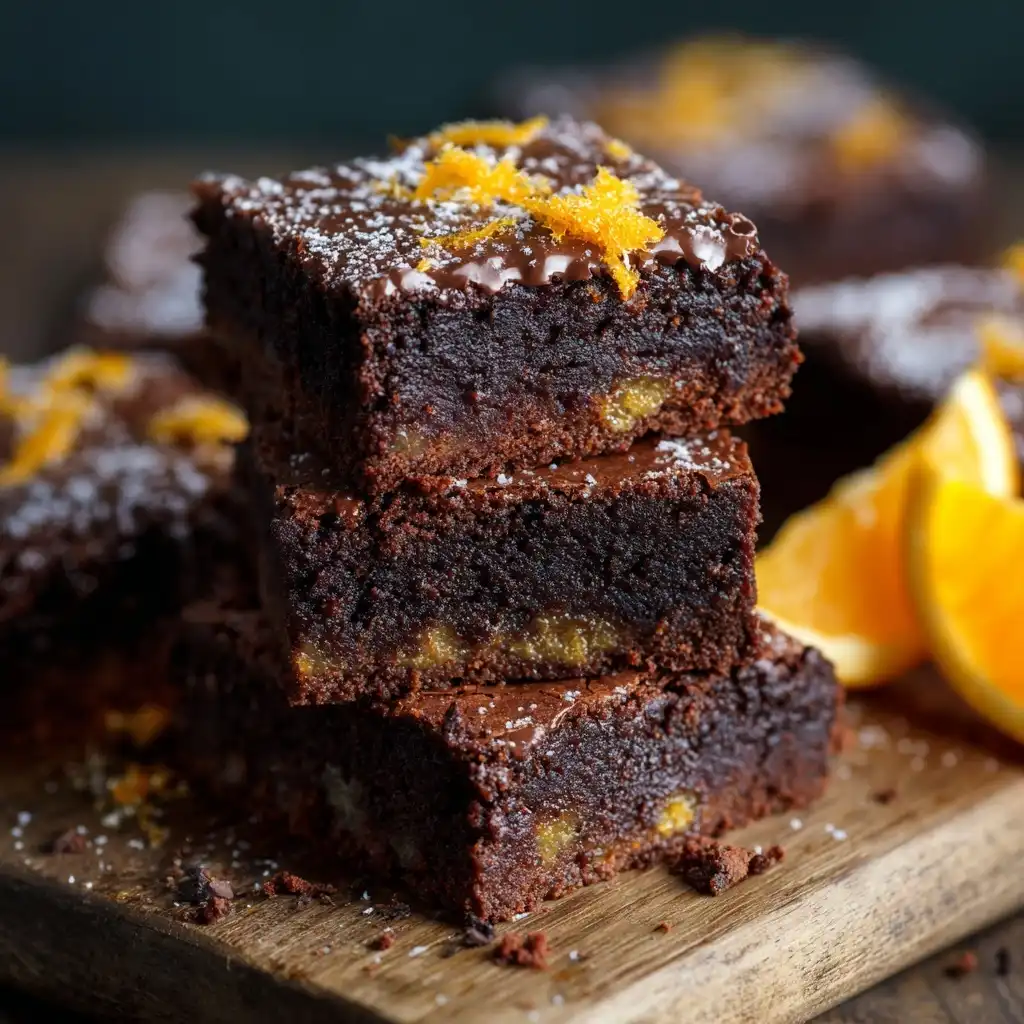
Introduction
Chocolate Orange Brownies are a luxurious, flavor-forward twist on the classic American brownie—elevating rich cocoa with the bright, zesty essence of citrus. This harmonious pairing bridges indulgence and sophistication: the deep, bittersweet intensity of high-quality chocolate is cut through by the aromatic oils of fresh orange zest and the subtle tang of orange juice or reduction. Far more than a simple flavor addition, the orange acts as a natural flavor amplifier—enhancing chocolate’s complexity while softening its heaviness, resulting in a dessert that feels both decadent and refreshingly balanced. Whether served at an elegant dinner party, packed into lunchboxes, or enjoyed solo with a cup of espresso, Chocolate Orange Brownies offer a sensory experience where warmth, brightness, and depth converge in every bite.
The History
The brownie itself traces its origins to the late 19th century in the United States, with early iterations appearing in cookbooks like the 1896 Boston Cooking-School Cook Book by Fannie Farmer—though those were more akin to molasses-based “brownie cakes.” The fudgy, dense, bar-style brownie emerged around the 1890s–1900s, popularized by brands like Palmer House Hotel (Chicago, 1893) and later by boxed mixes in the 1940s. Meanwhile, the marriage of chocolate and citrus has ancient roots: pre-Columbian Mesoamerican cultures, including the Aztecs and Mayans, often spiced their ceremonial cacao drinks with native citrus relatives (like sour oranges introduced post-1492) and aromatic herbs. In European confectionery, orange-infused chocolate gained prominence in the 18th and 19th centuries—think of British “orange fondant” chocolates and French “chocolat à l’orange” ganaches. The modern Chocolate Orange Brownie, however, is a relatively recent innovation—gaining traction in food magazines and artisanal bakeries during the 2000s as home bakers embraced bold, global flavor pairings. It reflects a broader culinary movement toward balancing richness with acidity, inspired by techniques from pastry science and fine-dining dessert philosophy.
Ingredients Breakdown
Each ingredient in this recipe serves a precise functional and sensory role—understanding *why* it’s included empowers you to adapt intelligently:
- Unsweetened Cocoa Powder (Dutch-processed preferred): Provides intense chocolate flavor without added sugar or fat; Dutch-processed offers smoother, less acidic notes that harmonize beautifully with orange.
- Granulated Sugar & Brown Sugar: Granulated ensures crisp edges and structural lift; brown sugar adds moisture, chewiness, and molasses depth that complements orange’s brightness.
- Large Eggs (room temperature): Act as emulsifiers and leaveners—creating the signature crackly top while binding the batter. Room temperature ensures even incorporation and optimal aeration.
- Unsalted Butter: Adds richness, tenderness, and mouth-coating luxury. Clarified butter can be used for enhanced nuttiness and higher smoke point—ideal if incorporating orange-infused brown butter.
- All-Purpose Flour: Provides essential gluten structure—but minimal mixing prevents toughness. For gluten-free versions, a 1:1 certified GF blend with xanthan gum works reliably.
- Fine Sea Salt: Not just for seasoning—it heightens sweetness, balances bitterness, and intensifies both chocolate and citrus notes.
- Pure Vanilla Extract: Adds warm, floral background notes that bridge chocolate and orange without competing.
- Fresh Orange Zest (from 2–3 medium navel or Valencia oranges): Contains volatile citrus oils—the true soul of the recipe. Never substitute dried zest; always use microplane-fresh for maximum aroma and potency.
- Fresh Orange Juice (2–3 tbsp, strained): Adds brightness and subtle acidity. Reduce it by half on the stove first to concentrate flavor and avoid excess liquid that could compromise texture.
- High-Quality Dark Chocolate (60–70% cacao), chopped: Folded in for melty pockets and textural contrast—provides fruity, earthy, or roasted notes depending on origin (e.g., Madagascar for berry notes, Peru for nuttiness).
- Optional Enhancements: A pinch of ground cardamom (0.125 tsp) deepens citrus complexity; a splash of Grand Marnier or Cointreau (1 tsp) adds boozy warmth; flaky sea salt sprinkled pre-bake enhances finish.
Step-by-Step Recipe
- Prep & Preheat: Center rack in oven. Line a 9×13-inch metal baking pan with parchment paper, leaving 2-inch overhang on two opposite sides for easy lifting. Grease parchment lightly. Preheat oven to 325°F (163°C)—a slightly lower temp ensures even baking and prevents cracked tops or dry edges.
- Infuse the Butter (Optional but Recommended): In a small saucepan over medium-low heat, melt butter. Add orange zest and simmer gently for 3–4 minutes—stirring occasionally—until butter is fragrant and flecked with golden zest. Strain through a fine-mesh sieve into a heatproof bowl, pressing zest to extract all oil. Discard solids. Let cool to lukewarm (about 100°F/38°C).
- Whisk Dry Ingredients: In a medium bowl, sift together cocoa powder, flour, salt, and optional spices (e.g., cardamom). Whisk thoroughly to aerate and eliminate lumps—critical for even distribution and avoiding graininess.
- Cream Wet Base: In a large heatproof bowl, combine granulated sugar, brown sugar, and lukewarm infused butter (or plain melted butter). Whisk vigorously by hand for 2–3 minutes until thick, glossy, and slightly pale—this incorporates air for lift and creates the signature shiny crust.
- Incorporate Eggs & Flavorings: Add eggs one at a time, whisking fully after each until emulsified (no streaks of yellow). Stir in vanilla, reduced orange juice, and 2 tsp of the reserved orange zest (reserve remaining zest for topping). Mixture should be smooth and velvety.
- Combine Wet & Dry: Using a flexible silicone spatula, gently fold dry ingredients into wet in 3 additions—stopping *just* as no flour streaks remain. Overmixing develops gluten and yields cakey (not fudgy) brownies. Batter will be thick and glossy.
- Add Chocolate & Finish: Fold in 1 cup chopped dark chocolate. Pour batter into prepared pan, smoothing top with offset spatula. Sprinkle evenly with remaining orange zest and optional flaky salt.
- Bake with Precision: Bake 32–38 minutes. Begin checking at 32 min: edges should be set and pulling slightly from pan; center should look *almost* set with faint surface cracks and a slight jiggle when gently shaken (like firm Jell-O). A toothpick inserted 1 inch from edge should come out with moist crumbs—not wet batter—and clean 1 inch from center.
- Cool Completely: Cool in pan on wire rack for 2 hours minimum—ideally 3–4 hours or overnight. Rushing cooling causes crumbling and masks flavor development. Chill uncovered for cleanest cuts.
- Cut & Serve: Use parchment overhang to lift entire slab onto cutting board. With a hot, sharp knife (dipped in hot water and wiped between cuts), slice into 16 even bars. Wipe blade frequently for pristine edges.
Tips
- Zest First, Juice Second: Always zest oranges before juicing—they’re easier to grate when cold and firm. Refrigerate whole oranges for 30 minutes pre-zesting for maximum yield.
- Reduce Orange Juice: Simmer ¼ cup fresh juice down to 2 tbsp over low heat (3–4 min). This removes excess water, concentrates flavor, and prevents batter thinning.
- Room-Temperature Eggs Are Non-Negotiable: Cold eggs cause seized batter and uneven texture. Place eggs in warm water for 5 minutes if forgotten.
- Don’t Skip the Rest Time: Brownies taste significantly better the next day—flavors meld, cocoa deepens, and orange oils mellow into seamless harmony.
- Chill Before Cutting: Refrigerating baked & cooled brownies for 1 hour firms up fats, allowing razor-sharp, crumb-free slices.
- Use Metal Pans, Not Glass or Ceramic: Metal conducts heat evenly—glass retains heat too long, risking overbaked edges and underdone centers.
- Rotate Pan Mid-Bake: At 20 minutes, rotate pan 180° for uniform browning—especially important in older or convection ovens.
- Scale Your Recipe Accurately: Use a digital kitchen scale for flour and cocoa—measuring cups vary up to 25% in volume, leading to dry or greasy results.
- Test Doneness Correctly: Rely on visual cues + jiggle test—not just timer or toothpick. Underbaked = fudge-like perfection; overbaked = dry and crumbly.
- Store Smart: Keep in airtight container at room temp up to 4 days, refrigerated up to 10 days, or frozen (wrapped in parchment + foil) up to 3 months. Thaw at room temp 1 hour before serving.
Variations and Customizations
Flour & Dietary Adaptations
- Gluten-Free: Substitute 1:1 gluten-free all-purpose flour blend (with xanthan gum). Add ½ tsp psyllium husk powder for improved chew and moisture retention.
- Whole Grain: Replace ¼ cup flour with toasted oat flour or almond flour for nutty depth and fiber—reduce bake time by 2–3 minutes.
- Vegan: Use flax eggs (2 tbsp ground flax + 5 tbsp water, rested 10 min), coconut oil (refined for neutral taste), and vegan dark chocolate. Add 1 tsp apple cider vinegar to react with baking soda (if using).
Flavor Twists
- Orange-Cranberry Swirl: Fold in ¾ cup dried unsweetened cranberries + 1 tbsp orange liqueur. Drizzle with white chocolate–orange glaze post-bake.
- Spiced Chocolate-Orange: Add ¼ tsp ground cinnamon, ⅛ tsp ground ginger, and a pinch of black pepper to dry ingredients for warmth and intrigue.
- Espresso-Orange Fusion: Dissolve 1 tbsp instant espresso powder in warm orange juice before adding. Deepens chocolate and adds smoky nuance.
- White Chocolate–Orange Blondies: Omit cocoa and dark chocolate; use 1 cup white chocolate chunks + 1.5x orange zest/juice. Swap brown sugar for turbinado for caramel notes.
- Boozy Orange Truffle Bars: Infuse butter with 1 tbsp Grand Marnier + zest. After baking, brush warm brownies with orange–Grand Marnier syrup (2 tbsp juice + 1 tbsp sugar + 1 tsp liqueur, simmered 2 min).
Texture & Presentation Upgrades
- Double-Chocolate Orange: Add ¼ cup cocoa nibs + ½ cup dark chocolate chunks for crunch and intensity.
- Orange Glaze Finish: Whisk 1 cup powdered sugar + 2 tbsp reduced orange juice + ½ tsp vanilla until smooth. Drizzle over cooled brownies; let set 30 min.
- Sea Salt & Candied Orange Garnish: Top with flaky salt and paper-thin, sugar-candied orange slices (simmer 8–10 min in equal parts water/sugar, dry on rack).
- Layered Bars: Press ½ batch of batter into pan; top with ½ cup orange curd (homemade or high-quality store-bought); cover with remaining batter. Swirl gently with knife.
Health Considerations and Nutritional Value
While undeniably indulgent, Chocolate Orange Brownies can be contextualized within a balanced diet—especially when made thoughtfully:
- Antioxidant Powerhouse: High-cocoa chocolate (70%+) delivers flavanols linked to improved vascular function and reduced oxidative stress. Paired with orange’s vitamin C and hesperidin (a bioflavonoid), synergy enhances antioxidant absorption.
- Sugar Awareness: A standard 2×2-inch bar contains ~22–26g total sugar (depending on add-ins). To reduce: cut sugar by 15% (replace with 1 tbsp maple syrup for moisture), or use monk fruit–erythritol blend (1:1 ratio) for keto-friendly versions.
- Fat Profile: Butter provides saturated fat, but also butyrate (gut-health supportive) and fat-soluble vitamins (A, D, E, K). For heart-health focus, substitute ½ the butter with avocado oil or walnut oil—retains richness while adding omega-3s.
- Fiber Boost: Adding 2 tbsp ground flaxseed or chia seeds increases soluble fiber (supports satiety & cholesterol) without altering texture. Increase orange zest to 1 tbsp for extra polyphenols.
- Portion Mindfulness: Serving size matters—cutting into 24 smaller squares instead of 16 reduces calories per piece by ~25%. Pair with Greek yogurt or berries to slow sugar absorption.
- Allergen Notes: Naturally nut-free (unless added). For dairy-free, ensure chocolate is certified dairy-free (many “dark” chocolates contain milk solids). Always check labels for cross-contamination warnings if severe allergy exists.
- Glycemic Impact: Despite sugar content, the combination of fat, fiber (from cocoa/flour), and acidity (orange) lowers glycemic load vs. plain sugar cookies—making them a comparatively smarter occasional treat.
Per standard 2×2-inch bar (recipe yields 16): Approx. 215 kcal | 12g fat (7g sat) | 26g carbs (22g sugars) | 2g protein | 1g fiber | 85mg sodium | 15% DV iron (from cocoa) | 8% DV calcium.
Ingredients
- 1 cup (90g) Dutch-processed unsweetened cocoa powder
- 1 ¼ cups (260g) granulated sugar
- 1 cup (200g) packed light brown sugar
- 1 cup (227g) unsalted butter, cubed (or infused with orange zest)
- 4 large eggs, room temperature
- 2 tsp pure vanilla extract
- ¼ cup (60ml) fresh orange juice, reduced to 2 tbsp
- 3 tbsp finely grated orange zest (from 2–3 medium oranges)
- 1 ¼ cups (160g) all-purpose flour
- 1 tsp fine sea salt
- 1 cup (175g) high-quality dark chocolate (60–70% cacao), coarsely chopped
- Flaky sea salt, for finishing (optional)
Directions
- Preheat oven to 325°F (163°C). Line a 9×13-inch metal baking pan with parchment paper, leaving overhang on two sides. Lightly grease parchment.
- (Optional infusion step) In a small saucepan, melt butter over medium-low heat. Add 1 tbsp orange zest and simmer gently 3–4 minutes until fragrant and golden. Strain through fine-mesh sieve into heatproof bowl; press zest to extract oils. Cool to lukewarm (~100°F).
- In medium bowl, sift together cocoa powder, flour, salt, and remaining zest (2 tbsp). Whisk 30 seconds to aerate.
- In large bowl, whisk granulated sugar, brown sugar, and lukewarm butter until thick and glossy (~2–3 min).
- Add eggs one at a time, whisking fully after each. Whisk in vanilla, reduced orange juice, and 2 tsp of the reserved zest.
- Fold dry ingredients into wet in 3 batches until *just* combined. Fold in chopped chocolate.
- Spread batter evenly into pan. Smooth top. Sprinkle with remaining 1 tsp zest and flaky salt.
- Bake 32–38 minutes—center should jiggle slightly when nudged; edges set and pulling from pan. Toothpick at edge: moist crumbs; at center: clean or with few moist crumbs.
- Cool completely in pan on wire rack—minimum 2 hours, ideally overnight.
- Lift brownies using parchment. Cut into 16 bars with hot, wiped knife. Store airtight at room temperature up to 4 days.
FAQ
- Can I use orange extract instead of fresh zest and juice?
- Not recommended. Extract lacks volatile citrus oils and can taste artificial or medicinal. If absolutely necessary, use *only* ½ tsp pure orange oil (not extract) + 1 tbsp juice—but fresh zest remains irreplaceable for authenticity and aroma.
- Why did my brownies sink in the center?
- Most common causes: overmixing batter (develops gluten), opening oven too early (temperature shock), underbaking (structure hasn’t set), or expired leavening (though this recipe uses none—so likely timing or mixing error).
- Can I make these ahead for a party?
- Absolutely—and advised! They improve in flavor and texture after 12–24 hours. Bake 1–2 days ahead, cool completely, wrap tightly, and store at room temp. Bring to room temp 30 minutes before serving.
- My brownies turned out cakey, not fudgy. What went wrong?
- Fudgy texture relies on high fat-to-flour ratio and minimal mixing. Likely culprits: too much flour (scooped vs. weighed), overmixing after adding flour, using too many eggs, or substituting cocoa with chocolate bars (adds extra cocoa butter and sugar).
- Is there a way to make them lower in sugar without ruining texture?
- Yes—reduce granulated sugar by ¼ cup and add 2 tbsp unsweetened applesauce for moisture. Or replace ⅓ cup sugar with date paste (blend ½ cup pitted dates + 3 tbsp hot water until smooth). Expect slightly denser, more caramel-forward bars.
- Can I freeze unbaked batter?
- Not ideal—eggs and leavening (none here, but still) degrade. Instead, bake fully, cool, wrap in parchment + foil, and freeze up to 3 months. Thaw overnight in fridge, then bring to room temp.
- What kind of oranges work best?
- Navel oranges for easy peeling and mild sweetness; Valencia for higher juice yield and floral notes; blood oranges for stunning maroon swirls and berry-like tartness (use zest only—juice can discolor batter).
- Can I add nuts?
- Yes! Fold in ¾ cup toasted walnuts or pecans with chocolate. Toasting enhances nuttiness and prevents sogginess. Avoid raw nuts—they release oils and turn rancid faster.
- Why does the recipe use both granulated and brown sugar?
- Granulated creates structure and crisp edges; brown sugar adds molasses minerals, moisture, and chew. Skipping one compromises texture balance—don’t substitute 1:1.
- How do I prevent the top from cracking excessively?
- Cracks are normal and desirable for shiny crust—but excessive cracking means too-rapid cooling or overbaking. Ensure oven temp is accurate (use oven thermometer), avoid drafts, and cool *in pan*—don’t rush removal.
Summary
Chocolate Orange Brownies are a masterclass in flavor layering—where the profound depth of premium cocoa meets the vibrant, aromatic lift of freshly grated orange zest and reduced juice, yielding bars that are luxuriously fudgy, complexly nuanced, and irresistibly balanced.
With meticulous attention to ingredient quality, temperature control, and timing—and endless possibilities for customization from gluten-free adaptations to boozy glazes and spiced variations—these brownies transcend nostalgia to become a sophisticated, endlessly adaptable centerpiece for any occasion.