Introduction
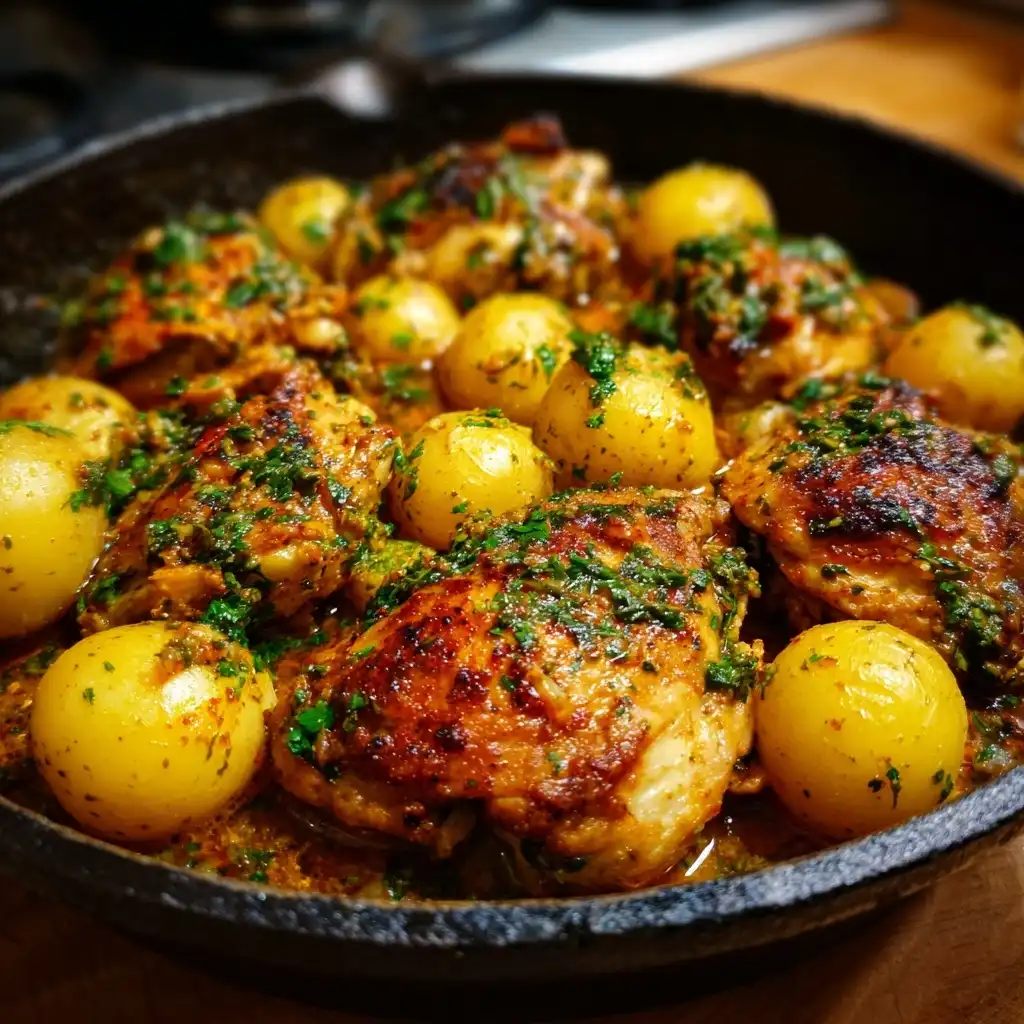
Garlic Butter Chicken and Baby Potatoes is a soul-satisfying, restaurant-worthy dish that effortlessly bridges comfort food and gourmet appeal. With its golden-brown, herb-kissed chicken breasts nestled beside tender, caramelized baby potatoes, all luxuriously coated in a rich, aromatic garlic butter sauce, this meal delivers deep umami, creamy texture, and vibrant herbal brightness in every bite. It’s the kind of dish that fills your kitchen with irresistible aromas—warm garlic, toasted thyme, and browned butter—that instantly signal “dinner is special tonight.” Whether you’re cooking for a cozy weeknight family dinner, impressing guests at a Sunday roast, or meal prepping for flavorful lunches all week, this recipe stands out for its simplicity, versatility, and remarkable depth of flavor achieved with minimal ingredients and straightforward techniques.
The History
While there’s no single documented origin for Garlic Butter Chicken and Baby Potatoes as a unified dish, its roots trace back to centuries-old culinary traditions across Europe and the Mediterranean. Butter-based pan sauces enriched with garlic have long been staples in French haute cuisine, particularly in preparations like poulet à la meunière (chicken cooked in butter, lemon, and parsley) and poulet au beurre blanc. The use of garlic in poultry dishes dates even further—to ancient Roman cookbooks such as Apicius, where garlic was prized for both flavor and perceived medicinal properties. Meanwhile, baby potatoes—small, waxy, early-harvested tubers—have been cultivated since the 16th century after the potato’s introduction from the Andes to Europe. Their naturally sweet, creamy flesh made them ideal for roasting and sautéing, especially alongside proteins. By the mid-20th century, American home cooks began adapting European techniques using accessible pantry staples, giving rise to what we now recognize as modern garlic butter chicken: a skillet-to-table marvel combining seared chicken, roasted potatoes, and a glossy, emulsified pan sauce. Over time, food bloggers, celebrity chefs, and viral cooking videos elevated it into a global favorite—celebrated on platforms like TikTok and Pinterest for its visual appeal, forgiving technique, and crowd-pleasing balance of richness and freshness.
Ingredients Breakdown
Every ingredient in this dish plays a precise and purposeful role—not just for taste, but for texture, chemistry, and culinary function:
- Chicken Breasts (boneless, skinless): Opt for uniform thickness (about ¾-inch) to ensure even cooking. Pounding them gently helps prevent curling and promotes consistent browning. High-quality, air-chilled, or organic chicken yields superior moisture retention and richer flavor.
- Baby Potatoes (Yukon Gold, red bliss, or fingerling): Chosen for their waxy starch content, which holds shape during roasting while developing a crisp exterior and creamy interior. Yukon Golds offer buttery sweetness; red bliss adds earthy notes; fingerlings bring nuttiness and visual charm. Never substitute starchy russets—they’ll disintegrate.
- Unsalted Butter: Essential for building the sauce’s luxurious mouthfeel and carrying fat-soluble flavors. Unsalted allows full control over sodium levels. European-style butter (82–86% fat) provides deeper richness and better browning.
- Fresh Garlic: Always use freshly minced or pressed garlic—not jarred or powdered—for bright, pungent aroma and enzymatic complexity. Garlic’s allicin compounds peak when crushed and allowed to rest for 10 minutes before heating.
- Fresh Herbs (Thyme & Parsley): Thyme contributes woodsy, floral notes that stand up to roasting heat; its stems can be used to infuse the butter while cooking. Flat-leaf parsley adds a clean, grassy finish and visual pop when added at the end—its volatile oils degrade with prolonged heat, so timing matters.
- Dry White Wine (e.g., Sauvignon Blanc or Pinot Grigio): Acts as a deglazing agent to lift fond (caramelized bits) from the pan, adding acidity and subtle fruitiness to balance the butter’s richness. Alcohol evaporates, leaving only nuanced complexity. Substitute with low-sodium chicken broth + ½ tsp lemon juice if avoiding alcohol.
- Lemon Juice (freshly squeezed): Provides essential acidity to cut through fat, brighten the sauce, and enhance perception of salt and herbs. Bottled juice lacks volatile citrus esters and often contains preservatives that dull flavor.
- Extra-Virgin Olive Oil: Used for initial searing—higher smoke point than butter alone and adds fruity, peppery depth. A blend of olive oil and butter prevents burning while maximizing flavor.
- High-Quality Sea Salt & Freshly Ground Black Pepper: Kosher salt ensures even seasoning without bitterness; coarse black pepper adds aromatic heat that complements garlic and thyme.
- Optional Enhancements: A splash of Dijon mustard (for emulsification and tang), a pinch of red pepper flakes (for gentle heat), or a tablespoon of crème fraîche (for velvety richness and subtle sourness).
Step-by-Step Recipe
- Prep & Season (10 minutes): Pat chicken breasts *very* dry with paper towels—this is non-negotiable for proper searing. Lightly pound thicker ends to ¾-inch uniformity. Season generously on both sides with kosher salt and freshly ground black pepper. Wash, scrub, and pat baby potatoes *completely dry*—any surface moisture inhibits roasting and causes steaming instead of browning.
- Par-Roast Potatoes (35–40 minutes): Toss potatoes with 2 tbsp olive oil, 1 tsp salt, ½ tsp pepper, and 1 tbsp fresh thyme leaves. Spread in a single layer on a parchment-lined sheet pan. Roast at 425°F (220°C) until golden, fork-tender, and deeply caramelized at edges—about 35 minutes, flipping halfway. Remove and set aside.
- Sear Chicken (6–8 minutes): Heat 1 tbsp olive oil and 1 tbsp butter in a large, heavy-bottomed stainless steel or cast-iron skillet over medium-high heat until shimmering. Place chicken in the pan without crowding. Sear undisturbed for 4–5 minutes until deeply golden and easily releases from pan. Flip and cook 2–3 more minutes until internal temperature reaches 155–158°F (68–70°C). Transfer to a clean plate, tent loosely with foil, and rest 5 minutes (carryover cooking will bring it to safe 165°F).
- Build the Sauce (5 minutes): Reduce heat to medium-low. In the same skillet, add remaining 3 tbsp butter. Once melted and foaming subsides, add minced garlic and remaining thyme sprigs. Sauté gently for 45 seconds—just until fragrant (do not brown garlic). Pour in white wine, scraping vigorously with a wooden spoon to release all browned bits (fond). Simmer 2–3 minutes until reduced by half. Stir in lemon juice and a pinch of salt.
- Combine & Finish (3 minutes): Return rested chicken and roasted potatoes to the skillet. Spoon sauce over everything. Gently shake pan to coat. Cook 1–2 minutes to warm through. Remove thyme stems. Swirl in 1 tbsp cold butter for extra gloss and body (optional “mounting” technique). Sprinkle generously with chopped fresh parsley and a final crack of black pepper.
- Rest & Serve (2 minutes): Let sit off heat for 2 minutes—this allows juices to redistribute in chicken and sauce to lightly thicken. Serve immediately, spooning extra sauce over top.
Tips
- Dryness is Destiny: Excess moisture is the #1 cause of pale, steamed chicken and soggy potatoes. Pat both ingredients *thoroughly*—even re-pat after seasoning if they look glistening.
- Don’t Skip the Rest: Allowing chicken to rest for 5 minutes after searing ensures juicy, tender results. Cutting too soon releases precious juices onto the cutting board—not your plate.
- Control Garlic Heat: Garlic burns fast. Keep heat at medium-low when sautéing and stir constantly. If it starts turning golden, remove pan from heat immediately and proceed with wine.
- Use a Thermometer: Visual cues are unreliable. An instant-read thermometer ensures perfect doneness—155°F for chicken breast, pulled early to account for carryover.
- Layer Flavors Early: Add whole thyme sprigs to the potato roasting pan—they infuse oil and potatoes with aroma. Tie them in a bundle for easy removal later.
- Emulsify Like a Pro: For a silkier, more cohesive sauce, whisk constantly while adding cold butter at the end—or blend 2 tbsp sauce + 1 tbsp cold butter in a mini food processor for 10 seconds.
- Skillet Matters: Stainless steel or cast iron retains heat best for searing and fond development. Non-stick pans won’t produce adequate browning or fond for deglazing.
- Acid Timing: Lemon juice should be added *after* wine reduction—adding it earlier can cause curdling in high-butter sauces due to premature protein coagulation.
- Make-Ahead Magic: Roast potatoes up to 2 days ahead and refrigerate. Re-crisp in a 400°F oven for 10 minutes before finishing the dish. Chicken can be brined (½ cup salt + 4 cups water, 30–60 min) for enhanced juiciness and seasoning penetration.
- Rescue a Broken Sauce: If sauce separates, remove from heat, whisk in 1 tsp cold water or lemon juice, then slowly drizzle in 1 tsp cold butter while whisking vigorously.
Variations and Customizations
This dish is infinitely adaptable—here are chef-tested variations that maintain structural integrity while offering exciting new dimensions:
- Mediterranean Twist: Add ½ cup halved kalamata olives, ¼ cup crumbled feta, and 2 tbsp chopped sun-dried tomatoes (oil-packed, drained) in the final 2 minutes. Swap thyme for oregano.
- Herbaceous Garden Version: Replace thyme with 2 tbsp mixed fresh herbs—chives, tarragon, chervil, and dill—added at the very end. Top with microgreens.
- Spiced & Smoky: Rub chicken with 1 tsp smoked paprika, ½ tsp cumin, and ¼ tsp cinnamon before searing. Finish sauce with a drizzle of chili oil and crumbled cotija cheese.
- Creamy Dijon: Whisk 1 tbsp Dijon mustard and 2 tbsp crème fraîche into the finished sauce. Garnish with chive blossoms.
- Low-Carb/Keto-Friendly: Substitute baby potatoes with roasted cauliflower florets or radish “potatoes” (peeled, quartered radishes roasted at 425°F until tender-crisp).
- Pantry-Powered (No Fresh Garlic): Use 1 tsp high-quality garlic powder *plus* ½ tsp asafoetida (hing) for authentic allium depth—add with butter before wine.
- One-Pan Wonder: Skip par-roasting—toss raw baby potatoes with oil and seasonings, nestle around seared chicken in skillet, cover tightly with foil, and bake at 400°F for 35 minutes. Uncover, broil 3–5 minutes for crispness, then proceed with sauce.
- Meal Prep Powerhouse: Double the recipe. Store components separately: sliced chicken (3–4 days), roasted potatoes (5 days), and sauce base (without parsley, 4 days). Reheat gently in skillet with splash of broth.
- Vegan Adaptation: Use extra-firm marinated tofu or seitan cutlets. Roast potatoes as directed. Make sauce with vegan butter, nutritional yeast (1 tbsp), miso paste (1 tsp), and white miso–infused broth instead of wine.
- Brunch Reinvention: Slice cooked chicken and potatoes thinly. Fold into a frittata with goat cheese and scallions—or serve atop toasted sourdough with poached eggs and hollandaise.
Health Considerations and Nutritional Value
A standard serving (1 chicken breast + 1 cup roasted baby potatoes + 2 tbsp sauce) contains approximately 520–580 calories, with thoughtful nutrient distribution:
- Protein Powerhouse: ~42g high-biological-value protein from chicken supports muscle synthesis, satiety, and metabolic health. Contains all nine essential amino acids, plus B6, B12, selenium, and phosphorus.
- Smart Carbs: Baby potatoes provide ~32g complex carbohydrates with resistant starch (especially when cooled and reheated), promoting gut microbiome diversity and steady blood glucose response. Their skin contributes ~3g fiber per serving—nearly 12% of daily needs.
- Heart-Healthy Fats: Butter contributes saturated fat, but paired with olive oil (rich in monounsaturated fats and polyphenols), the ratio remains balanced. Garlic and lemon enhance endothelial function and reduce oxidative stress.
- Phytonutrient Density: Garlic offers allicin (anti-inflammatory, antimicrobial); thyme contains thymol (antioxidant); parsley is loaded with vitamin K (bone health), vitamin C (immunity), and apigenin (neuroprotective flavonoid).
- Sodium Awareness: Total sodium hovers around 480–550mg per serving—well within ADA guidelines (<2,300mg/day). Reduce by omitting added salt to potatoes and using low-sodium broth in wine substitutions.
- Gluten-Free & Allergen Notes: Naturally gluten-free. Ensure wine is certified GF (most are). Butter may contain trace dairy—substitute with ghee for lactose-intolerant individuals.
- For Diabetics: Low glycemic load (~15 GL) thanks to fiber, fat, and protein slowing glucose absorption. Monitor portion size of potatoes if carb-counting strictly.
- Pregnancy-Safe: Fully cooked chicken and pasteurized butter make this pregnancy-friendly. Garlic supports circulation; folate-rich parsley aids neural tube development.
- Weight Management Friendly: High-volume, high-protein, moderate-fat composition promotes fullness and reduces snacking. Prioritize portion control over restriction—the satisfaction factor prevents rebound cravings.
- Anti-Inflammatory Alignment: Meets key criteria of the Mediterranean and DASH diets—rich in antioxidants, unsaturated fats, and polyphenols while minimizing processed sugars and refined grains.
Ingredients
- 2 (6–7 oz) boneless, skinless chicken breasts, pounded to ¾-inch thickness
- 1 lb (about 2 cups) baby potatoes (Yukon Gold or red bliss), scrubbed and dried thoroughly
- ¼ cup extra-virgin olive oil, divided
- 5 tbsp unsalted butter, divided (plus extra for finishing, optional)
- 6 cloves garlic, finely minced (about 2 tbsp)
- 1 tbsp fresh thyme leaves + 4–5 whole sprigs (for roasting & sauce)
- ½ cup dry white wine (Sauvignon Blanc or Pinot Grigio)
- 2 tbsp fresh lemon juice (from ~1 large lemon)
- 1 tsp kosher salt, plus more to taste
- Freshly ground black pepper, to taste
- ¼ cup fresh flat-leaf parsley, finely chopped
- Optional: 1 tsp Dijon mustard, 1 tbsp crème fraîche, pinch red pepper flakes
Directions
- Preheat oven to 425°F (220°C). Line a large rimmed baking sheet with parchment paper.
- In a bowl, toss baby potatoes with 2 tbsp olive oil, 1 tsp salt, ½ tsp black pepper, and 1 tbsp thyme leaves. Spread in a single layer on prepared sheet. Roast 35–40 minutes, flipping halfway, until golden, crispy-edged, and tender when pierced with a fork. Set aside.
- Pat chicken breasts *extremely* dry with paper towels. Season both sides generously with salt and pepper.
- Heat 1 tbsp olive oil and 1 tbsp butter in a large heavy-bottomed skillet (stainless or cast iron) over medium-high heat until shimmering. Add chicken and sear undisturbed 4–5 minutes until deeply browned. Flip and cook 2–3 minutes more until internal temp reaches 155–158°F. Transfer to a plate, tent with foil, and rest 5 minutes.
- Reduce heat to medium-low. Add remaining 3 tbsp butter to skillet. Once melted and foaming, add minced garlic and thyme sprigs. Sauté 45 seconds until fragrant—do not brown.
- Pour in wine, scraping bottom vigorously with a wooden spoon to release all browned bits. Simmer 2–3 minutes until reduced by half.
- Stir in lemon juice and a pinch of salt. Taste and adjust seasoning.
- Return rested chicken and roasted potatoes to skillet. Spoon sauce over everything. Gently shake pan to coat. Cook 1–2 minutes to warm through.
- Remove thyme sprigs. Optional: Swirl in 1 tbsp cold butter for extra sheen and body. Sprinkle with parsley, additional black pepper, and flaky sea salt.
- Let rest 2 minutes off heat. Serve immediately, spooning abundant sauce over chicken and potatoes.
FAQ
- Can I use chicken thighs instead of breasts?
- Absolutely—and many chefs prefer them! Boneless, skinless thighs stay juicier and offer richer flavor. Adjust sear time to 5–6 minutes per side, targeting 165°F internal temp. They’re more forgiving with longer cooking times.
- Why do my potatoes steam instead of roast?
- Two culprits: (1) Not drying potatoes thoroughly before oiling—surface water creates steam; (2) overcrowding the pan. Use two sheets if needed. Also, ensure oven is fully preheated—cold start = soggy spuds.
- Can I make this dairy-free?
- Yes. Substitute high-quality vegan butter (e.g., Miyoko’s or Country Crock Plant Butter) and use olive oil exclusively. For creaminess, stir in 1 tbsp cashew cream or silken tofu blended with lemon at the end.
- Is the white wine necessary? What’s the best non-alcoholic substitute?
- Wine adds acidity and complexity that’s hard to replicate—but not irreplaceable. Best substitute: ½ cup low-sodium chicken broth + 1 tsp apple cider vinegar + ½ tsp sugar (to mimic wine’s balance). Simmer 2 minutes before adding lemon.
- How do I prevent the garlic butter sauce from separating or becoming greasy?
- Emulsification is key. Keep heat low when adding butter, whisk constantly, and finish with cold butter off-heat. Adding a touch of Dijon mustard (an emulsifier) or reducing wine further before adding lemon helps stabilize the sauce.
- Can I prepare this entirely in advance and reheat?
- You can prep components up to 2 days ahead (roasted potatoes, seared & chilled chicken, sauce base without herbs). To reheat: Warm potatoes in oven at 400°F for 10 minutes; gently pan-sear chicken in butter/oil until heated through; recombine with fresh sauce (reheat base, add fresh lemon and parsley).
- What sides pair well with this dish?
- Its richness pairs beautifully with bitter greens (arugula salad with lemon vinaigrette), steamed asparagus with almonds, or a light cucumber-dill yogurt slaw. Avoid heavy starches—this dish already features potatoes.
- Why does my chicken sometimes come out dry?
- Overcooking is the usual cause. Pull chicken at 155–158°F—not 165°F—and let carryover heat finish it. Brining (30–60 min in ½ cup salt + 4 cups water) also dramatically improves moisture retention and seasoning depth.
- Can I freeze leftovers?
- Yes—but with caveats. Freeze chicken and potatoes separately in airtight containers for up to 3 months. Sauce is best made fresh (dairy doesn’t freeze well). Thaw overnight in fridge and reheat gently with a splash of broth to refresh moisture.
- What’s the best way to store and reheat leftovers?
- Store in separate airtight containers: chicken (3–4 days), potatoes (5 days), sauce (4 days, without parsley). Reheat potatoes in oven or air fryer for crispness; warm chicken in skillet over medium-low with 1 tsp broth; whisk sauce gently on stove and combine just before serving.
Summary
Garlic Butter Chicken and Baby Potatoes is a masterclass in rustic elegance—melding golden, herb-crusted chicken, caramelized waxy potatoes, and a luminous, aromatic garlic-butter-wine-lemom sauce into one harmonious, deeply satisfying plate.
Backed by centuries of culinary tradition yet endlessly customizable, it’s nutritionally balanced, approachable for weeknights, impressive enough for gatherings, and adaptable for dietary needs—all without sacrificing an ounce of flavor or texture.