Introduction
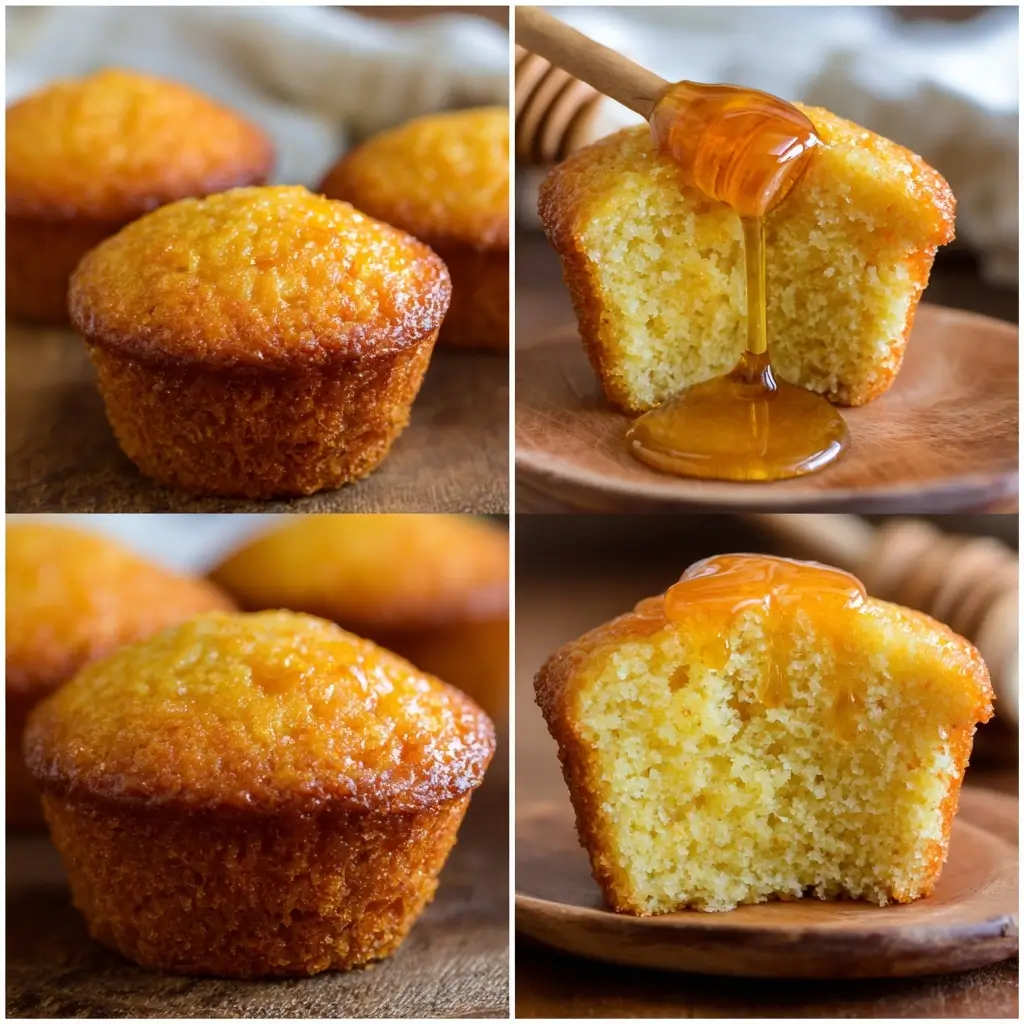
Honey Butter Cornbread Cupcakes are the delightful, nostalgic lovechild of Southern comfort food and modern bakery charm—imagine the warm, crumbly richness of classic cornbread elevated with golden honey sweetness, a whisper of creamy butter, and the whimsical individuality of cupcakes. These aren’t just muffins in disguise; they’re a carefully balanced fusion that honors tradition while embracing innovation—moist yet sturdy, subtly sweet yet deeply savory, tender yet slightly rustic in texture. Perfect for brunch gatherings, holiday potlucks, summer barbecues, or even as an unexpected dessert pairing with bourbon-spiked whipped cream or maple-glazed pecans, Honey Butter Cornbread Cupcakes offer warmth in every bite and versatility in every occasion. Whether you’re a lifelong cornbread devotee or a curious newcomer to Southern baking, these cupcakes invite you in with their golden domes, delicate crumb, and irresistible aroma of toasted corn, caramelized honey, and browned butter.
The History
Cornbread’s roots stretch back over 4,000 years to Indigenous Mesoamerican civilizations—particularly the Maya, Aztec, and various North American tribes—who cultivated and revered maize (corn) as both sustenance and sacred staple. Using stone-ground maize, they created unleavened flatbreads, porridges, and steamed cakes long before European contact. When English colonists arrived in the 17th century, they adopted and adapted these techniques, substituting wheat flour where available—but in the resource-scarce, agrarian South, cornmeal became the flour of choice. By the 18th and 19th centuries, Southern cooks perfected skillet-baked, buttermilk-leavened cornbread, often enriched with eggs, lard, or later, butter and sugar—sparking the enduring regional divide between “sweet” Northern-style cornbread and “savory, less-sweet” Southern tradition. The addition of honey—a pre-colonial sweetener used by Native Americans and later embraced by colonial beekeepers—added complexity and moisture without the refined intensity of granulated sugar. Fast forward to the late 20th and early 21st centuries: the cupcake renaissance, led by bakeries like Magnolia Bakery and shows like *Sex and the City*, ignited a wave of creative reinterpretation. Enter the Honey Butter Cornbread Cupcake—a brilliant marriage of heritage and trend: honoring cornbread’s earthy soul while embracing the portion-controlled, decorative, and crowd-pleasing appeal of the cupcake format. It gained traction in artisanal Southern bakeries, food blogs, and wedding menus alike—often featured at Nashville weddings, Austin food festivals, and Charleston brunch pop-ups—symbolizing a broader culinary movement: respectful reinvention.
Ingredients Breakdown
Every ingredient in Honey Butter Cornbread Cupcakes serves a precise functional and flavor-driven role—nothing is arbitrary. Let’s explore each component in depth:
- Yellow Cornmeal (medium-grind, stone-ground preferred): The heart and soul. Medium-grind delivers optimal texture—coarse enough for authentic grit and rustic mouthfeel, fine enough to bind smoothly. Stone-ground retains more germ and bran, yielding richer flavor, deeper color, and subtle nuttiness. Avoid “degerminated” or overly fine “corn flour,” which sacrifices character and can produce gummy results.
- All-Purpose Flour: Provides gluten structure and tenderness. Too much flour yields cakey, bland results; too little risks crumbliness. A 2:1 cornmeal-to-flour ratio preserves cornbread integrity while ensuring lift and cohesion.
- Granulated Sugar: Adds baseline sweetness, aids browning (Maillard reaction), and helps retain moisture. Not excessive—just enough to complement, not dominate, the honey.
- Brown Sugar (light or dark): Introduces molasses notes—caramel, toffee, and faint bitterness—that deepen complexity and enhance moisture retention via its natural humectant properties.
- Baking Powder & Baking Soda: A dual-leavening system. Baking powder provides reliable lift during oven spring; baking soda reacts instantly with acidic components (buttermilk, honey, brown sugar) for early rise and subtle tang mitigation. Together, they ensure tall, evenly domed cupcakes with open, airy crumb—not dense or leaden.
- Fine Sea Salt: Critical for balancing sweetness and amplifying all other flavors. Enhances corn’s natural savoriness and prevents cloyingness.
- Large Eggs (room temperature): Bind ingredients, add richness and structure, and contribute to emulsification and leavening. Room temperature ensures uniform batter integration and optimal air incorporation.
- Unsalted Butter (brown it!): Browned butter is non-negotiable for depth—it transforms ordinary fat into a fragrant, nutty, toasty elixir rich in diacetyl and furans. Clarified butter alone lacks this nuance; melted butter is acceptable but falls short. Browning unlocks profound umami and aromatic complexity that defines the cupcake’s signature profile.
- Full-Fat Buttermilk (well-shaken): Acidic, tangy, and thick—its lactic acid activates baking soda, tenderizes gluten, and contributes unparalleled moisture and subtle sour brightness that cuts through richness. Low-fat or powdered substitutes lack body and acidity precision.
- Pure Raw Honey (local, amber variety recommended): Not just sweetener—it’s floral, enzymatically active, hygroscopic (moisture-binding), and heat-sensitive. Added *after* cooling the browned butter to preserve delicate volatile compounds and prevent caramelization-induced bitterness. Local honey adds terroir: clover offers mild sweetness; tupelo lends buttery notes; wildflower imparts herbal intrigue.
- Vanilla Extract (pure, not imitation): Rounds out flavor, bridges sweet and savory notes, and enhances perceived richness without overpowering.
- Optional Add-Ins: Finely chopped roasted jalapeños (for gentle heat), toasted corn kernels (for textural pop), crumbled cooked bacon (for smoky saltiness), or a swirl of honey-bourbon glaze (applied post-bake).
Step-by-Step Recipe
- Preheat & Prep: Position oven rack in center position. Preheat oven to 375°F (190°C). Line a standard 12-cup muffin tin with high-quality parchment cupcake liners (or grease and flour if preferred). Do not skip lining—cornbread’s tenderness makes removal tricky without it.
- Brown the Butter: In a light-colored saucepan (for easy monitoring), melt ½ cup (1 stick / 113g) unsalted butter over medium-low heat. Swirl occasionally. Once melted, continue cooking until foam subsides and butter turns golden amber with specks of deep brown solids forming on the bottom (~5–8 minutes). Immediately pour into a heatproof bowl, scraping all browned bits. Let cool to warm (about 100–110°F / 38–43°C)—do not proceed if hot, or honey will scorch.
- Whisk Dry Ingredients: In a large bowl, thoroughly whisk together 1 cup (135g) medium-grind yellow cornmeal, ½ cup (63g) all-purpose flour, ¼ cup (50g) granulated sugar, ¼ cup (55g) packed light brown sugar, 2 tsp aluminum-free baking powder, ½ tsp baking soda, and ¾ tsp fine sea salt. Ensure no lumps remain—especially in cornmeal, which can clump.
- Combine Wet Ingredients: To the cooled browned butter, whisk in ⅔ cup (160ml) full-fat buttermilk, ¼ cup (85g) pure raw honey, 2 large room-temperature eggs, and 1½ tsp pure vanilla extract until fully emulsified and smooth. The mixture should be homogenous—not separated or oily.
- Combine Wet + Dry: Pour wet ingredients into dry ingredients. Using a silicone spatula, gently fold *just until no dry streaks remain*. Overmixing develops gluten, leading to toughness and tunneling. Batter will be thick, slightly lumpy, and pourable—resemble pancake batter, not cake batter. Let rest 5 minutes: this hydrates the cornmeal, improves tenderness, and allows leaveners to begin activation.
- Fill & Bake: Spoon batter evenly into prepared liners—fill each ~¾ full (about 3 tbsp per cup). Tap tin sharply twice on counter to release air bubbles. Bake 18–22 minutes, rotating pan halfway through, until cupcakes are deeply golden, tops spring back when lightly pressed, and a toothpick inserted into the center comes out with moist crumbs (not wet batter). Avoid overbaking—cornbread dries out quickly.
- Cool Strategically: Let cupcakes cool in pan for 5 minutes—this sets structure. Then transfer carefully to a wire rack. Cool completely (45–60 minutes) before glazing or serving. Warm cupcakes steam inside liners, causing sogginess and sticking.
Tips
- Grind Matters: If only fine cornmeal is available, substitute ⅞ cup fine + ⅛ cup medium for better texture. Never use instant or self-rising cornmeal—they contain added leaveners and salt that disrupt balance.
- Browned Butter Mastery: Use a timer and watch closely—the difference between nutty perfection and burnt bitterness is 20 seconds. If you overshoot, start over—burnt butter cannot be salvaged.
- Buttermilk Hack: No buttermilk? Make your own: add 2 tsp white vinegar or lemon juice to ⅔ cup whole milk. Let sit 5–10 minutes until slightly curdled. Do not skip the full-fat requirement.
- Room-Temp Rule: Cold eggs or buttermilk cause browned butter to seize and create uneven batter. Plan ahead—pull dairy and eggs from fridge 60+ minutes prior.
- Don’t Peek! Opening the oven before 15 minutes risks collapse. Use oven light instead.
- Altitude Adjustment: Above 3,000 ft? Increase oven temp by 15–25°F, reduce baking powder by ⅛ tsp, and add 1 tbsp extra buttermilk.
- Liner Trick: For ultra-professional presentation, use double liners—white inner + kraft outer—or press liners into cups with a small measuring cup for crisp, upright edges.
- Storage Wisdom: Unfrosted cupcakes stay fresh 2 days at room temp in an airtight container. Freeze unfrosted, wrapped tightly in plastic + foil, up to 3 months. Thaw overnight in fridge, then bring to room temp before serving.
Variations and Customizations
The Honey Butter Cornbread Cupcake is a canvas for creativity—rooted in tradition, yet endlessly adaptable:
- Spiced & Smoky: Add ½ tsp smoked paprika + ¼ tsp chipotle powder to dry ingredients. Top with crumbled candied bacon before baking.
- Herb-Infused: Whisk 1 tbsp finely chopped fresh rosemary or thyme into cooled browned butter. Pairs beautifully with honey-lavender glaze.
- Cheddar-Jalapeño: Fold in ½ cup shredded sharp cheddar and 2 tbsp minced pickled jalapeños (pat dry) into batter. Finish with flaky sea salt.
- Vegan Adaptation: Replace eggs with flax eggs (2 tbsp ground flax + 6 tbsp water, rested 10 min); use plant-based butter (brownable variety like Miyoko’s) and vegan buttermilk (soy or oat milk + acid); ensure honey substitute is agave or date syrup (note: not “honey butter” then).
- Gluten-Free: Substitute 1:1 GF all-purpose blend (with xanthan gum) for flour; ensure cornmeal is certified GF; increase baking powder to 2¼ tsp for lift.
- Dessert-Forward: Add ⅓ cup mini chocolate chips + 1 tsp cinnamon. Drizzle with salted honey ganache (melt ¼ cup dark chocolate with 2 tbsp warm heavy cream + 1 tbsp honey + pinch flaky salt).
- Mini Version: Bake in 24 mini-muffin cups at 375°F for 11–14 minutes—ideal for appetizers or bridal showers.
- Breakfast Twist: Top cooled cupcakes with maple-cinnamon butter (½ cup softened butter + 2 tbsp pure maple syrup + ½ tsp cinnamon + pinch salt, whipped 3 min).
Health Considerations and Nutritional Value
A single Honey Butter Cornbread Cupcake (standard size, unfrosted, ~75g) contains approximately:
- Calories: 220–240 kcal
- Total Fat: 10–11g (6–7g unsaturated, from browned butter and corn oil naturally present in cornmeal)
- Carbohydrates: 32–35g (including 18–20g naturally occurring sugars from honey, brown sugar, and buttermilk lactose)
- Fiber: 1.2–1.5g (modest, but enhanced significantly with whole-grain cornmeal or added ground flaxseed)
- Protein: 3.5–4g (from eggs, buttermilk, and cornmeal)
- Sodium: 210–240mg (easily reduced by cutting salt by ¼ tsp or using low-sodium baking powder)
Nutritional Highlights: Cornmeal contributes B vitamins (especially thiamin and folate), magnesium, iron, and antioxidants like zeaxanthin and lutein—beneficial for eye health. Raw honey contains trace enzymes, polyphenols, and prebiotic oligosaccharides supporting gut microbiota (though most benefits diminish above 104°F, so raw honey is best added cold). Browned butter contains beneficial compounds like conjugated linoleic acid (CLA) and butyrate precursors. However, moderation remains key: while nutrient-dense for a baked good, it’s still energy-concentrated. For dietary adaptations: diabetics may benefit from reducing total sugar by 1 tbsp and increasing fiber via 1 tbsp oat bran; those managing cholesterol can use half butter/half avocado oil (though flavor shifts); nut-free and soy-free by default (check labels on baking powder and vanilla).
Ingredients
- ½ cup (1 stick / 113g) unsalted butter
- 1 cup (135g) medium-grind yellow cornmeal, preferably stone-ground
- ½ cup (63g) all-purpose flour
- ¼ cup (50g) granulated sugar
- ¼ cup (55g) packed light brown sugar
- 2 tsp aluminum-free baking powder
- ½ tsp baking soda
- ¾ tsp fine sea salt
- ⅔ cup (160ml) full-fat buttermilk, well-shaken
- ¼ cup (85g) pure raw honey
- 2 large eggs, room temperature
- 1½ tsp pure vanilla extract
Directions
- Preheat oven to 375°F (190°C). Line a 12-cup muffin tin with parchment cupcake liners.
- In a light saucepan, melt butter over medium-low heat. Swirl occasionally until foam subsides and butter turns golden-amber with fragrant browned bits (5–8 min). Immediately pour into a heatproof bowl, scraping all solids. Cool to 100–110°F (38–43°C).
- In a large bowl, whisk cornmeal, flour, granulated sugar, brown sugar, baking powder, baking soda, and salt until uniform.
- To cooled browned butter, whisk in buttermilk, honey, eggs, and vanilla until smooth and emulsified.
- Pour wet mixture into dry mixture. Gently fold with silicone spatula until just combined and no dry pockets remain. Batter will be thick and slightly lumpy. Let rest 5 minutes.
- Divide batter evenly among liners (~3 tbsp each). Tap pan firmly twice on counter.
- Bake 18–22 minutes, rotating pan halfway, until deeply golden and toothpick comes out with moist crumbs.
- Cool in pan 5 minutes, then transfer to wire rack. Cool completely before serving or glazing.
FAQ
- Can I make these ahead of time?
- Absolutely. Bake cupcakes up to 2 days ahead. Store unfrosted in an airtight container at room temperature. For longer storage, freeze cooled cupcakes (unfrosted) for up to 3 months—wrap individually in plastic wrap, then place in freezer bag. Thaw overnight in fridge, then bring to room temperature before serving.
- Why did my cupcakes sink in the middle?
- Sinking typically occurs due to underbaking (leaveners collapse before structure sets), opening the oven too early, overmixing (traps excess air that expands then deflates), or inaccurate measuring (too much leavener or too little flour/cornmeal). Always use spoon-and-level method for dry ingredients and verify oven temperature with an oven thermometer.
- Can I use honey instead of sugar entirely?
- Not recommended. Honey adds significant liquid and acidity. Replacing all granulated sugar with honey would require adjusting buttermilk (reduce by ~2 tbsp), adding extra flour (~1 tbsp), and decreasing baking soda (by ⅛ tsp) to rebalance pH—resulting in denser, gummier texture. Stick to the specified ratio for ideal crumb.
- My batter seems too thick/thin—what do I do?
- First, verify measurements—use kitchen scale for accuracy. If too thick after resting, add 1 tsp buttermilk at a time. If too thin, add ½ tsp cornmeal. Never add flour mid-batter—it creates gluten pockets. Trust the recipe: proper hydration happens during the 5-minute rest.
- What’s the best way to store frosted cupcakes?
- If glazed with a simple honey-butter glaze (butter + honey + powdered sugar), store in single layer in airtight container in fridge up to 3 days. Bring to room temperature 30 minutes before serving for optimal texture and flavor release.
- Can I bake these in a loaf pan instead?
- Yes! Pour batter into a greased and parchment-lined 8×4-inch loaf pan. Bake at 375°F for 40–48 minutes, until tester comes out clean. Cool in pan 15 minutes, then transfer. Slice into 12 portions for “cupcake-sized” servings.
- Is there a dairy-free version that still tastes amazing?
- Yes—with caveats. Use high-fat coconut milk yogurt (unsweetened) + 1 tsp apple cider vinegar as buttermilk substitute; use refined coconut oil (neutral flavor) browned gently in saucepan (it won’t brown like butter, but develops nuttiness); flax eggs; and maple syrup instead of honey. Flavor profile shifts toward tropical-nutty, but remains deeply satisfying.
Summary
Honey Butter Cornbread Cupcakes are a masterclass in Southern-inspired baking—where centuries-old cornmeal tradition meets modern technique, crowned with the aromatic luxury of browned butter and the floral grace of raw honey. They deliver comforting nostalgia in every golden, tender, slightly craggy bite—equally at home beside fried chicken as they are drizzled with bourbon-maple glaze at a garden wedding.
With meticulous attention to ingredient quality, temperature control, and gentle mixing, these cupcakes transcend novelty to become a beloved, repeat-worthy staple—proof that honoring heritage and embracing creativity aren’t mutually exclusive, but essential partners in unforgettable flavor.