Introduction
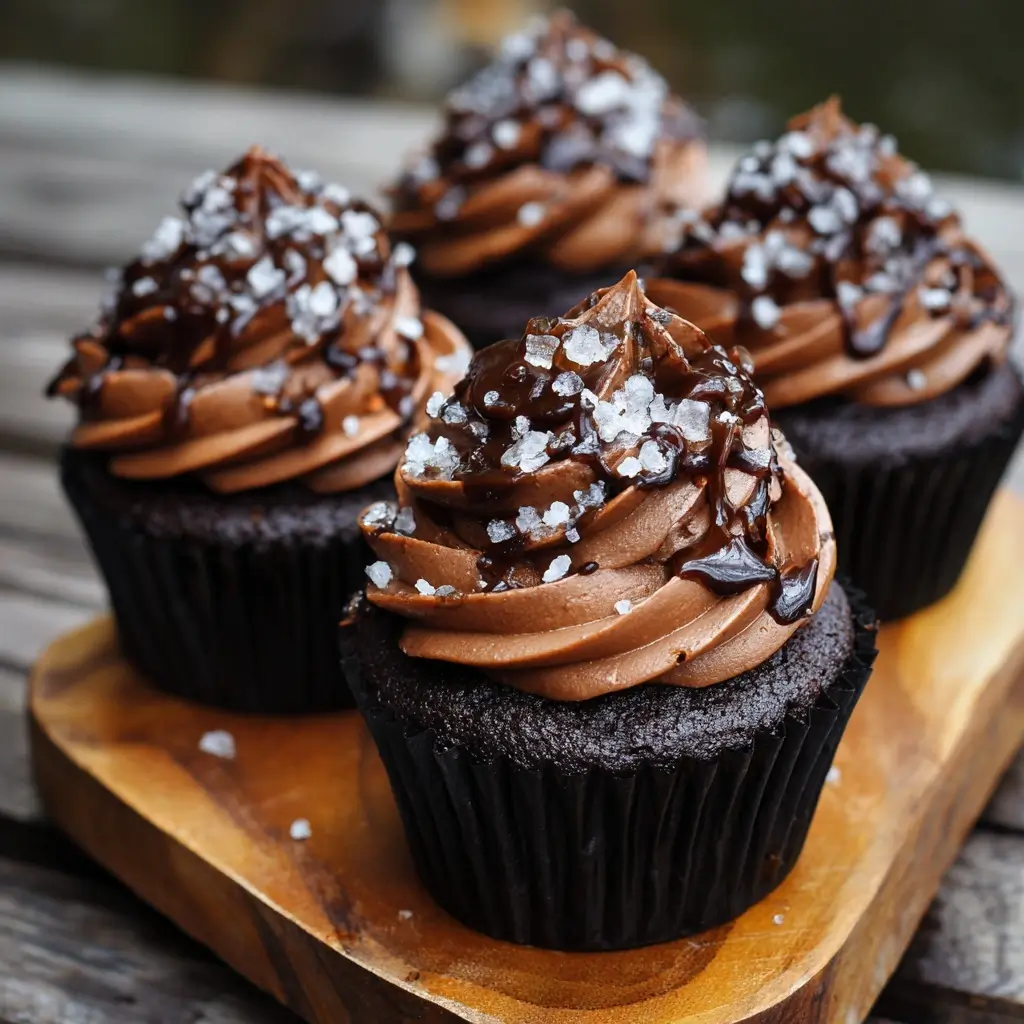
Dark Chocolate Sea Salt Cupcakes are a masterclass in contrast—rich, velvety, and deeply complex dark chocolate balanced by the bright, crystalline pop of flaky sea salt. More than just a dessert, they’re an experience: a sophisticated yet approachable treat that marries indulgence with elegance. These cupcakes transcend the ordinary chocolate cupcake by embracing the boldness of high-cocoa chocolate and the nuanced minerality of artisanal sea salt—transforming a simple baked good into a gourmet confection worthy of special occasions, dinner parties, or quiet moments of self-care. Whether you’re a seasoned baker or a curious beginner, this recipe invites you to explore texture, temperature, and taste in perfect harmony.
The History
The evolution of the Dark Chocolate Sea Salt Cupcake is a delicious convergence of culinary movements spanning decades. While cupcakes themselves trace back to early 19th-century American “lighter” cake recipes baked in small tins (as documented in Amelia Simmons’ 1796 American Cookery), the modern cupcake renaissance began in the 1980s with Magnolia Bakery’s iconic vanilla-and-frosting interpretation. The dark chocolate revival gained momentum in the 1990s and early 2000s as European-style couverture chocolates—especially those with 70%+ cocoa solids—became more widely available in North America and the UK. Meanwhile, the “salted chocolate” trend emerged from haute patisserie: French chocolatiers like Pierre Hermé famously championed salted caramel and dark chocolate pairings in the late 1990s, while American chefs such as David Lebovitz and Molly Wizenberg popularized the concept through cookbooks and food blogs. Sea salt—particularly hand-harvested varieties like Maldon, fleur de sel, and Himalayan pink salt—gained traction in the mid-2000s as consumers sought minimally processed, terroir-driven ingredients. By 2010, “salted chocolate” had become a mainstream flavor profile, appearing in ice creams, truffles, and ultimately, cupcakes. The Dark Chocolate Sea Salt Cupcake thus represents a cultural synthesis: old-world technique, new-world ingredient awareness, and contemporary palate preferences for bold, layered, and intentional flavor experiences.
Ingredients Breakdown
Every ingredient in this recipe plays a precise, non-negotiable role—not just for flavor, but for structure, moisture retention, emulsification, and mouthfeel:
- Unsweetened Cocoa Powder (Dutch-processed): Provides deep, rounded chocolate flavor without acidity; Dutch processing neutralizes natural cocoa’s bitterness and enhances solubility and color intensity. Avoid natural cocoa unless substituting with precise acid adjustments.
- High-Quality Dark Chocolate (70–74% cocoa): Adds fat, cocoa solids, and nuanced flavor notes (e.g., dried cherry, espresso, toasted almond). Couverture-grade chocolate ensures superior melt and sheen in both batter and ganache.
- Granulated Sugar: Not only sweetens but also tenderizes the crumb by interfering with gluten formation and contributes to browning via caramelization.
- Brown Sugar (light or dark): Introduces molasses-derived moisture, acidity, and subtle caramel complexity—critical for preventing dryness and enhancing chewiness.
- All-Purpose Flour (or pastry flour for ultra-tenderness): Provides gluten for structure—but used conservatively to avoid toughness. Sifting ensures even distribution and aerates the flour for lift.
- Instant Espresso Powder: A secret weapon—it doesn’t make the cupcakes taste like coffee, but amplifies chocolate’s inherent depth and richness through synergistic flavor compounds.
- Baking Powder & Baking Soda: A dual-acting leavening system—baking soda reacts immediately with acidic components (brown sugar, cocoa), while baking powder provides secondary lift during oven spring. Precision in measurement prevents metallic aftertaste or collapsed centers.
- Buttermilk (or DIY buttermilk): Its mild acidity activates leaveners, tenderizes gluten, and adds subtle tang that balances sweetness. Full-fat buttermilk yields superior richness versus low-fat alternatives.
- Vegetable Oil (or refined coconut oil): Ensures moist, fine-grained crumb—unlike butter, which can create a denser, more elastic texture. Oil remains liquid at room temperature, contributing to shelf-stable softness for up to 3 days.
- Eggs (room temperature): Provide emulsification, structure, and leavening. Extra egg yolk (included in many variations) boosts tenderness and richness.
- Pure Vanilla Extract: Rounds out flavor with warm, floral, and creamy top notes—always use real extract, not imitation, for authenticity.
- Fine Sea Salt (in batter): Enhances all other flavors and mitigates perceived sweetness—this is *not* the finishing salt.
- Flaky Sea Salt (Maldon, Fleur de Sel, or Jacobsen): Used exclusively as a garnish. Its delicate pyramidal crystals dissolve slowly on the tongue, delivering bursts of salinity that cut through fat and amplify chocolate’s bitterness in the most pleasing way.
- Heavy Cream (for ganache): High fat content (36–40%) ensures a glossy, velvety, stable emulsion with chocolate. Ultra-pasteurized cream works best for consistent results.
- Unsalted Butter (for ganache): Adds silkiness, shine, and a subtle dairy richness—never substitute salted butter here, as it compromises salt balance.
Step-by-Step Recipe
- Prep Work (20 minutes): Preheat oven to 350°F (177°C). Line two standard 12-cup muffin tins with high-quality parchment or foil liners (avoid wax paper, which may smoke). Weigh or measure all ingredients precisely—baking is chemistry, especially when balancing alkaline cocoa and acidic leaveners.
- Melt & Cool Chocolate Base: Finely chop 6 oz (170 g) dark chocolate. Place in a heatproof bowl set over a saucepan of barely simmering water (double boiler), stirring occasionally until fully melted and smooth (~5–7 min). Remove from heat and cool to lukewarm (about 90°F / 32°C)—too hot, and it will scramble eggs; too cold, and it will seize. Stir in ¼ cup (60 ml) vegetable oil until fully incorporated.
- Dry Ingredients Whisk: In a large bowl, sift together 1 cup + 2 tbsp (140 g) all-purpose flour, ¾ cup (65 g) Dutch-process cocoa powder, 1 tsp baking powder, ½ tsp baking soda, 1 tsp fine sea salt, and 1 tbsp instant espresso powder. Whisk vigorously for 45 seconds to fully aerate and distribute leaveners evenly.
- Wet Ingredients Combine: In another bowl, whisk 1 cup (200 g) granulated sugar, ½ cup (100 g) packed light brown sugar, 2 large eggs (room temp), 1 large egg yolk, 2 tsp pure vanilla extract, and 1 cup (240 ml) full-fat buttermilk until homogenous—about 90 seconds. Do not overmix.
- Combine Wet & Dry (Gently): Pour the cooled chocolate-oil mixture into the wet ingredients and stir with a silicone spatula until just combined. Gradually add the dry ingredients in three additions, folding *just until no streaks remain* after each addition. Overmixing develops gluten and causes tunneling or dense domes. Batter should be thick, glossy, and slightly rippling—not runny, not stiff.
- Portion & Bake: Use a 2-tablespoon scoop or ice cream scoop to portion batter evenly into lined cups—fill each ~¾ full (≈3.5 oz / 100 g per cup). Tap pan firmly twice on counter to release air bubbles. Bake on center rack for 18–21 minutes—start checking at 17 minutes. Cupcakes are done when a toothpick inserted into the center comes out with *moist crumbs* (not wet batter, not completely clean). Rotate pans halfway through for even baking.
- Cool Strategically: Let cupcakes cool in pans for exactly 12 minutes—this allows internal steam to redistribute and prevents collapse. Then transfer carefully to a wire rack to cool completely (minimum 60 minutes) before frosting. Warm cupcakes will melt ganache and cause sliding or bleeding.
- Prepare Ganache (Timing Critical): While cupcakes cool, heat 1 cup (240 ml) heavy cream in a small saucepan until steaming and tiny bubbles form at edges (~185°F / 85°C). Remove from heat. Place 8 oz (227 g) finely chopped dark chocolate (same % as batter) in a heatproof bowl. Pour hot cream over chocolate, cover with plate, and let sit undisturbed for 4 minutes. Uncover and gently stir with spatula from center outward until smooth and glossy. Stir in 2 tbsp (28 g) unsalted butter, cut into cubes, until fully melted and emulsified. Let ganache cool at room temperature for 45–60 minutes, stirring every 15 minutes, until thickened to pipeable consistency (like soft-serve ice cream).
- Frost & Finish: Fit a piping bag with a large round tip (Wilton #2A or Ateco #808) and fill with ganache. Pipe a generous swirl onto each cooled cupcake, starting at the outer edge and spiraling inward. Immediately sprinkle with 2–3 delicate flakes of flaky sea salt per cupcake—press lightly so salt adheres but remains visible. For professional presentation, use tweezers to place salt precisely atop the ganache peak.
- Rest Before Serving: Let frosted cupcakes rest at cool room temperature (68–72°F) for 20 minutes to allow ganache to set slightly. Serve within 4 hours for optimal texture—or refrigerate (covered loosely) for up to 2 days, bringing to room temperature 30 minutes before serving.
Tips
- Room Temperature Is Non-Negotiable: Cold eggs or buttermilk cause chocolate to seize and create lumpy batter. Take ingredients out 90 minutes before baking.
- Weigh, Don’t Scoop Flour: A cup of flour can vary from 115 g (scooped) to 145 g (spooned & leveled). Use a digital scale for accuracy—140 g is ideal for this formula.
- Don’t Skip the Espresso Powder: Even 1 tbsp elevates chocolate perception dramatically. If avoiding caffeine, use ½ tsp roasted barley powder as a neutral alternative.
- Test Your Leaveners: Mix ½ tsp baking soda with 1 tsp vinegar—if it doesn’t bubble vigorously, replace it. Same for baking powder + hot water.
- Altitude Adjustments: At 3,000+ ft, reduce baking powder to ¾ tsp, increase flour by 1 tbsp, and bake at 360°F for 16–19 min.
- Ganache Texture Mastery: If ganache seizes, gently rewarm over double boiler while whisking in 1 tsp hot cream. If too thin, refrigerate 10-minute intervals, stirring between, until desired thickness.
- Freeze for Longevity: Unfrosted, fully cooled cupcakes freeze beautifully for up to 3 months. Thaw overnight in fridge, then bring to room temp before ganaching.
- Salt Application Timing: Always apply flaky sea salt *immediately* after piping ganache—waiting causes salt to sink or dissolve into the surface, losing its textural impact.
- Oven Thermometer Required: Most built-in oven thermostats are inaccurate by ±25°F. An inexpensive oven thermometer ensures precise baking temperature.
- Batch Consistency Tip: Bake one test cupcake first to verify timing and adjust for your specific oven before committing full batch.
Variations and Customizations
This foundational recipe serves as a canvas for creative expression—each variation preserves structural integrity while introducing new dimensions of flavor, texture, or dietary alignment:
- Gluten-Free Version: Substitute flour blend (1:1 ratio) containing xanthan gum (e.g., King Arthur Measure for Measure or Bob’s Red Mill 1-to-1). Add ¼ tsp additional xanthan gum if blend lacks it. Increase buttermilk by 1 tbsp for moisture compensation.
- Vegan Adaptation: Replace eggs with flax eggs (2 tbsp ground flax + 6 tbsp water, rested 10 min); use plant-based buttermilk (1 cup unsweetened soy milk + 1 tbsp apple cider vinegar); swap butter in ganache for refined coconut oil or vegan butter; ensure chocolate is dairy-free and certified vegan.
- Espresso-Infused: Steep 2 tbsp coarsely ground espresso beans in warm buttermilk for 20 minutes, then strain. Use infused buttermilk in batter—and dust finished cupcakes with espresso sugar (equal parts granulated sugar + instant espresso).
- Orange-Zest & Dark Chocolate: Add 2 tsp finely grated orange zest to dry ingredients. Replace 1 tsp vanilla with ½ tsp orange extract. Garnish with candied orange peel and sea salt.
- Chili-Spiced: Add ¼–½ tsp ancho or chipotle powder to dry ingredients. Pair with smoked sea salt for layered warmth.
- Peanut Butter Swirl: After filling liners, drop 1 tsp smooth natural peanut butter onto batter. Use skewer to swirl gently before baking. Frost with plain ganache and finish with crushed roasted peanuts + sea salt.
- Boozy Variation: Add 2 tbsp bourbon, rum, or Grand Marnier to wet ingredients. Reduce buttermilk by same amount. Infuse ganache with 1 tsp spirit and finish with dark chocolate curls.
- Mini Cupcake Version: Fill mini muffin tins ⅔ full. Bake at 350°F for 10–12 minutes. Yield: 48 minis. Perfect for weddings or tasting menus.
- Stout-Enhanced: Replace ¼ cup buttermilk with room-temp Guinness or oatmeal stout. Adds malty depth and improves rise due to carbonation.
- White Chocolate–Sea Salt Contrast: Swap dark chocolate in batter for high-quality white chocolate (same weight). Use white chocolate ganache and finish with black lava salt for visual drama and mineral contrast.
Health Considerations and Nutritional Value
While inherently indulgent, Dark Chocolate Sea Salt Cupcakes can be contextualized within a balanced diet when mindfully prepared and consumed:
- Dark Chocolate Benefits: At 70–74% cocoa, these cupcakes deliver flavanols—antioxidants linked to improved endothelial function, modest blood pressure reduction, and enhanced cognitive blood flow (per meta-analyses in The American Journal of Clinical Nutrition). One cupcake contains ~120 mg flavanols—comparable to a 1-oz serving of quality dark chocolate.
- Sodium Awareness: Total sodium per cupcake ranges from 180–220 mg (including fine salt in batter + 3–4 mg per flake of Maldon). This falls well within FDA daily limits (2,300 mg), and the salt’s purpose is sensory—not preservative—so no excess is needed.
- Sugar Transparency: With 20–22 g total sugar per cupcake (depending on frosting thickness), this sits below the AHA’s recommended max of 25 g added sugar/day for women. Using coconut sugar or date paste reduces glycemic impact but alters texture and requires hydration adjustments.
- Fat Profile: Primarily unsaturated fats from cocoa butter and vegetable oil—heart-healthy when replacing saturated fats. Ganache adds saturated fat, but portion control keeps intake moderate.
- Dietary Accommodations: Naturally lower in dairy than buttercream-based cupcakes (no milk solids in ganache beyond cream), making them easier to digest for some lactose-sensitive individuals. Gluten-free and vegan versions expand accessibility significantly.
- Functional Additions: Boost nutrition subtly by adding 2 tbsp ground flaxseed or chia seeds to dry ingredients (adds fiber, omega-3s, and binds moisture) or swapping 2 tbsp flour for black bean flour (increases protein and iron).
- Mindful Indulgence Framework: These cupcakes align with intuitive eating principles—their bold flavor and salt contrast promote satisfaction with smaller portions, reducing likelihood of overconsumption. Serving size awareness (1 cupcake = 280–310 calories) supports conscious enjoyment rather than guilt-driven restriction.
Ingredients
Makes 24 standard cupcakes
- 6 oz (170 g) high-quality dark chocolate (70–74% cocoa), finely chopped
- ¼ cup (60 ml) neutral vegetable oil (e.g., grapeseed or avocado)
- 1 cup + 2 tbsp (140 g) all-purpose flour, spooned & leveled or weighed
- ¾ cup (65 g) Dutch-process unsweetened cocoa powder
- 1 tsp baking powder
- ½ tsp baking soda
- 1 tsp fine sea salt (e.g., Diamond Crystal)
- 1 tbsp instant espresso powder
- 1 cup (200 g) granulated sugar
- ½ cup (100 g) packed light brown sugar
- 2 large eggs + 1 large egg yolk (all room temperature)
- 2 tsp pure vanilla extract
- 1 cup (240 ml) full-fat buttermilk (room temperature)
- For the Ganache:
- 8 oz (227 g) high-quality dark chocolate (70–74%), finely chopped
- 1 cup (240 ml) heavy cream (36–40% fat)
- 2 tbsp (28 g) unsalted butter, cubed
- Flaky sea salt (Maldon, Fleur de Sel, or Jacobsen) for garnish
Directions
- Preheat oven to 350°F (177°C). Line two 12-cup muffin tins with parchment or foil cupcake liners.
- In a heatproof bowl set over barely simmering water, melt chopped chocolate, stirring occasionally until smooth. Remove from heat; stir in vegetable oil until fully combined. Cool to 90°F (32°C).
- In a large bowl, sift together flour, cocoa powder, baking powder, baking soda, fine sea salt, and espresso powder. Whisk 45 seconds to aerate.
- Pour cooled chocolate-oil mixture into wet ingredients; stir until combined. Gradually fold in dry ingredients in three parts, mixing *just until no dry streaks remain*. Do not overmix.
- Divide batter evenly among lined cups (~3.5 oz / 100 g each; ~¾ full). Tap pans firmly twice on counter.
- Bake 18–21 minutes, rotating pans halfway, until toothpick inserted comes out with moist crumbs. Cool in pans 12 minutes, then transfer to wire racks to cool completely (≥60 min).
- For ganache: Heat cream in saucepan until steaming (185°F). Pour over chopped chocolate in heatproof bowl. Cover, wait 4 min. Uncover; stir gently until smooth. Stir in butter until melted and glossy. Cool 45–60 min, stirring every 15 min, until pipeable.
- Fit piping bag with large round tip; fill with ganache. Pipe generous swirl onto each cooled cupcake.
- Immediately top each with 2–3 delicate flakes of flaky sea salt, pressing lightly to adhere.
- Let rest 20 minutes at room temperature before serving. Store covered at cool room temperature up to 8 hours, or refrigerate up to 2 days (bring to room temp before serving).
FAQ
- Can I use natural cocoa powder instead of Dutch-process?
- Yes—but you must replace the baking powder with an additional ½ tsp baking soda and reduce the fine salt to ¾ tsp to compensate for increased acidity. Natural cocoa yields a sharper, fruitier chocolate note but less depth.
- Why does my ganache look grainy or split?
- Ganache splits when cream is too hot (>200°F) or chocolate isn’t finely chopped. To fix: gently reheat over double boiler while whisking in 1 tsp hot cream. For prevention, always use finely chopped chocolate and pour cream at 185°F.
- My cupcakes sank in the center—what went wrong?
- Most common causes: opening oven door before 16 minutes, underbaking (toothpick came out wet), expired leaveners, or overmixing batter. Also check oven temperature accuracy with a standalone thermometer.
- Can I make these ahead for an event?
- Absolutely. Bake cupcakes 1–2 days ahead; store unfrosted in airtight container at room temp. Ganache can be made 3 days ahead and refrigerated—rewhip with immersion blender before piping. Assemble day-of.
- Is there a substitute for buttermilk?
- Yes: mix 1 cup whole milk + 1 tbsp white vinegar or lemon juice. Let sit 5–10 minutes until curdled. Avoid low-fat milk—it lacks necessary fat for tenderness.
- Can I use salted butter in the ganache?
- No—salted butter introduces unpredictable sodium levels and may interfere with sea salt garnish balance. Always use unsalted butter for controlled seasoning.
- How do I prevent sea salt from falling off?
- Apply salt *immediately* after piping ganache while surface is still tacky. Press flakes gently with tweezers or fingertip—don’t sprinkle from height. Use larger-flake salts (Maldon holds best).
- Why do you use both granulated and brown sugar?
- Granulated sugar provides clean sweetness and crisp crust; brown sugar contributes moisture, acidity for leavening activation, and complex molasses notes that deepen chocolate flavor.
- Can I bake these in a 9×13 pan as a sheet cake?
- Yes—bake at 350°F for 32–38 minutes. Cool completely before cutting into 24 squares. Frost with ganache and finish with sea salt as directed.
- What’s the best way to store leftovers?
- Unfrosted cupcakes: airtight container at room temp up to 3 days. Frosted: loosely covered (to prevent condensation) in fridge up to 2 days. Never freeze frosted cupcakes—ganache cracks and weeps upon thawing.
Summary
Dark Chocolate Sea Salt Cupcakes are a harmonious study in contrast—intense, earthy dark chocolate elevated by the bright, mineral-rich crunch of hand-harvested sea salt, all supported by a tender, moist crumb and luxuriously silky ganache. They embody precision baking, mindful ingredient selection, and the joyful alchemy of science and sensuality on a single, elegant bite.
Whether crafted for celebration, comfort, or culinary curiosity, these cupcakes reward attention to detail—from cocoa origin and salt flake geometry to oven calibration and ganache tempering—proving that extraordinary flavor lives not in complexity, but in the intentional balance of few, exceptional elements.