Introduction
Raspberry Almond Tea Cupcakes are a sophisticated, flavor-forward twist on the classic cupcake—elegantly bridging the worlds of artisanal tea culture and modern pastry artistry. These delicate, tender treats harmonize the bright, tart-sweet vibrancy of fresh or freeze-dried raspberries with the warm, nutty depth of pure almond extract—and often a whisper of premium black or white tea infusion—to create a multi-layered sensory experience. Perfect for afternoon tea service, bridal showers, garden parties, or as an elevated dessert offering in boutique cafés, they strike a refined balance between nostalgic comfort and contemporary sophistication. More than just a dessert, they’re an invitation to slow down, savor thoughtfully sourced ingredients, and appreciate the subtle alchemy that occurs when botanicals, fruit, and nuts converge in a single, perfectly portioned bite.
The History
The origins of Raspberry Almond Tea Cupcakes lie at the intersection of three culinary traditions: British tea-time customs, American cupcake evolution, and global flavor fusion trends of the early 21st century. While cupcakes themselves trace back to 19th-century American “cup cake” recipes (so named for measuring ingredients by the cup rather than weight), the modern gourmet cupcake renaissance began in the early 2000s—with bakeries like Magnolia Bakery popularizing them as individual, highly decorated indulgences. Simultaneously, the specialty tea movement gained momentum, spurred by companies like Harney & Sons, Teavana, and David’s Tea introducing complex, food-grade loose-leaf blends designed not just for steeping—but for baking, infusing, and pairing. Raspberry and almond have long shared a natural affinity: from traditional European frangipane tarts and Danish pastries to Middle Eastern ma’amoul cookies—this pairing is rooted in centuries-old flavor science (raspberry’s malic acid cuts through almond’s rich oils, while almond’s benzaldehyde compounds enhance raspberry’s fruity esters). The intentional incorporation of brewed tea—particularly Earl Grey (bergamot-infused black tea), jasmine green tea, or even rooibos—into the batter emerged around 2012–2015, pioneered by pastry chefs experimenting with “tea-infused desserts” at James Beard Award–winning establishments and progressive patisseries in Portland, Brooklyn, and Toronto. Over time, home bakers adopted and adapted these techniques, leading to widespread online sharing of variations—making Raspberry Almond Tea Cupcakes a beloved staple of food blogs, Instagram bakeries, and seasonal farmers’ market pop-ups.
Ingredients Breakdown
Every element in this recipe serves both functional and sensory purposes—no ingredient is merely filler. Below is a detailed analysis of each component’s role:
- All-Purpose Flour (unbleached, preferably organic): Provides gluten structure without overwhelming density; protein content (~10–11%) ensures lift and crumb integrity while remaining tender. Sifting is non-negotiable—it aerates flour, prevents overmixing, and promotes even distribution of leaveners and tea particles.
- Granulated Sugar: Not only sweetens but also contributes to browning (Maillard reaction), tenderness (by interfering with gluten formation), and moisture retention (hygroscopic properties). Fine-grain sugar dissolves more readily in the batter for smoother texture.
- Brown Sugar (light or dark): Adds molasses-derived complexity, acidity, and hygroscopic moisture—critical for keeping cupcakes moist over 3–4 days. Dark brown sugar imparts deeper caramel notes; light offers subtler warmth.
- Baking Powder & Baking Soda: A dual-leavening system ensures consistent rise: baking powder (acid + base + starch) provides primary lift, while baking soda (activated by the natural acidity in buttermilk *and* raspberries) adds extra oomph and neutralizes excess tartness. Freshness is essential—test baking powder by dropping ½ tsp into hot water; it should fizz vigorously within 5 seconds.
- Unsalted Butter (European-style, 82–84% fat preferred): High-fat butter yields richer flavor, superior mouthfeel, and better steam production during baking—key for fine, even crumb. Must be softened to 65°F (18°C)—cool enough to hold a fingerprint but not greasy. Over-softening leads to dense cupcakes.
- Eggs (large, pasture-raised if possible): Act as emulsifiers, binders, and structural agents. Egg whites provide lift and stability; yolks add richness, color, and fat-soluble flavor compounds. Room-temperature eggs incorporate more evenly and trap air effectively during creaming.
- Buttermilk (cultured, full-fat): Its lactic acid tenderizes gluten, activates baking soda, and imparts subtle tang—complementing raspberry’s brightness. If unavailable, make a substitute: 1 cup whole milk + 1 tbsp lemon juice or white vinegar, rested 10 minutes until curdled.
- Pure Almond Extract (NOT imitation): Derived from bitter almond oil or peach/kernel distillates, it contains benzaldehyde—the same compound responsible for the aroma of fresh almonds, cherries, and apricots. Imitation versions use synthetic benzaldehyde and lack nuance, often tasting medicinal or sharp. Use sparingly—¼ tsp can perfume an entire batch.
- High-Quality Freeze-Dried Raspberries (unsweetened): The gold standard for intense, concentrated raspberry flavor and vibrant fuchsia hue—without added moisture that would compromise batter consistency. Unlike fresh berries (which release juice and cause sinking or tunneling) or jams (which add excess sugar and pectin), freeze-dried raspberries pulverize into a fine, dispersible powder that integrates seamlessly. One 1-oz bag typically yields ~⅓ cup powder—enough for 12–14 cupcakes.
- Loose-Leaf Tea (Earl Grey, Jasmine Green, or White Peony recommended): Must be food-grade, caffeine-containing or caffeine-free depending on preference. Tea is not simply steeped and discarded—the leaves themselves are finely ground and folded into dry ingredients, delivering tannins, volatile oils (like linalool in bergamot), and polyphenols directly into the crumb. Avoid tea bags with staples or paper filters; opt for whole-leaf varieties that grind cleanly in a spice grinder.
- Vanilla Bean Paste or Pure Extract: Adds round, creamy depth that bridges fruit and nut notes. Vanilla bean paste (with visible specks) offers superior aromatic complexity versus extract alone.
- Sea Salt (flaky or fine grey Celtic): Enhances all other flavors by suppressing bitterness and amplifying sweetness and fruitiness. Critical for balancing the intensity of almond and tea.
- Optional Additions: Toasted sliced almonds (for garnish), almond milk (in place of buttermilk for dairy-free), or a splash of Chambord (raspberry liqueur) for adult variations.
Step-by-Step Recipe
- Prepare Your Tea Infusion Base: Measure ½ cup freshly boiled water (just off the boil, ~205°F) and pour over 2 tsp loose-leaf tea (e.g., Earl Grey) in a small heatproof bowl. Steep uncovered for exactly 4 minutes—set a timer. Strain through a fine-mesh sieve lined with cheesecloth, pressing gently on leaves to extract maximum liquid. Discard leaves. Let tea infusion cool completely to room temperature (at least 20 minutes)—warm liquid will melt butter and scramble eggs.
- Grind Tea Leaves & Raspberries: In a clean, dry spice grinder or high-speed blender, pulse 1 tbsp loose-leaf tea (same variety used for infusion) with ¼ cup freeze-dried raspberries until uniformly powdery—about 15–20 seconds. Pass mixture through a fine-mesh sieve to remove any fibrous bits; discard residue. Set aside.
- Cream Butter & Sugars: In the bowl of a stand mixer fitted with paddle attachment, beat ¾ cup (1½ sticks) softened unsalted butter, ¾ cup granulated sugar, and ¼ cup packed light brown sugar on medium speed for 3–4 minutes until pale, fluffy, and noticeably increased in volume. Scrape bowl thoroughly with silicone spatula halfway through.
- Incorporate Eggs One at a Time: Add 2 large room-temperature eggs and 1 large room-temperature egg yolk. Beat on medium-low for 30 seconds after each addition until fully incorporated and glossy. Do not rush—undermixed eggs yield flat cupcakes; overmixed eggs cause toughness. Add 1 tsp vanilla bean paste and ¼ tsp pure almond extract; mix 15 seconds just to combine.
- Whisk Dry Ingredients: In a separate large bowl, whisk together 1¾ cups (210g) sifted all-purpose flour, 1½ tsp double-acting baking powder, ¼ tsp baking soda, ½ tsp fine sea salt, and the tea-raspberry powder from Step 2. Whisk for 45 seconds to ensure even distribution—especially of leaveners and fine particles.
- Alternate Wet & Dry Additions: With mixer on low, add one-third of dry ingredients; mix 15 seconds until mostly incorporated. Pour in half of the cooled tea infusion + ½ cup cultured buttermilk; mix 15 seconds. Repeat: another third dry, remaining tea-buttermilk mixture, final third dry—ending with dry ingredients. Mix each addition *only until no streaks remain*. Overmixing develops gluten and causes tunnels or peaked tops.
- Fold in Fresh Raspberries (Optional but Recommended): Gently fold in ½ cup fresh, very dry raspberries (patted thoroughly with paper towels) using a silicone spatula—10–12 folds max. This adds juicy bursts without compromising structure. Skip if using only freeze-dried for stronger tea-raspberry dominance.
- Portion & Bake: Line a standard 12-cup muffin tin with high-quality parchment liners (not thin paper—they prevent sticking and tearing). Fill each liner ⅔ full (~3½ tablespoons per cupcake) using a large cookie scoop for uniformity. Tap pan sharply twice on counter to release air bubbles. Bake at 350°F (175°C) on center oven rack for 18–22 minutes—rotate pan front-to-back at 12 minutes. Cupcakes are done when a toothpick inserted in center comes out with *moist crumbs* (not wet batter, not completely clean—this ensures moistness).
- Cool Strategically: Let cupcakes cool in pan for exactly 12 minutes—this allows structure to set without collapsing. Then transfer carefully to a wire rack to cool completely (minimum 45 minutes) before frosting. Warm cupcakes will melt buttercream and absorb condensation.
Tips
- Scale, Don’t Scoop Dry Ingredients: For absolute consistency—especially across batches—weigh flour (125g per cup) and sugars. Volume measurements vary wildly based on scooping method.
- Room Temperature Is Non-Negotiable: Cold butter won’t cream properly. Cold eggs cause curdling. Cold buttermilk tightens gluten. Plan ahead: pull butter and eggs from fridge 90 minutes pre-baking; warm buttermilk in microwave at 50% power for 8 seconds if needed.
- Freeze-Dried Raspberry Powder Must Be Ultra-Fine: Any grittiness will translate to sandy texture. Grind in short pulses and sieve. Store leftover powder in an airtight container in freezer for up to 6 months—flavor remains vibrant.
- Don’t Skip the Tea Grinding Step: Steeping alone imparts flavor to liquid, but grinding the leaves delivers tannins, fiber, and volatile oils directly into the crumb—essential for authentic tea character and subtle astringency that balances sweetness.
- Rotate & Monitor Oven Hotspots: Most home ovens run hotter at rear or right side. Rotate pan halfway, and use an independent oven thermometer to verify accuracy—many ovens are off by ±25°F.
- Underbake Slightly, Then Rest: Removing at the *first sign* of springy tops (not golden-brown edges) preserves moisture. The residual heat continues cooking the interior during cooling.
- Frost Only When Completely Cool: Even slight warmth causes buttercream to slide, melt, or soak in. Chill cupcakes for 10 minutes before piping if impatient—but never frost warm.
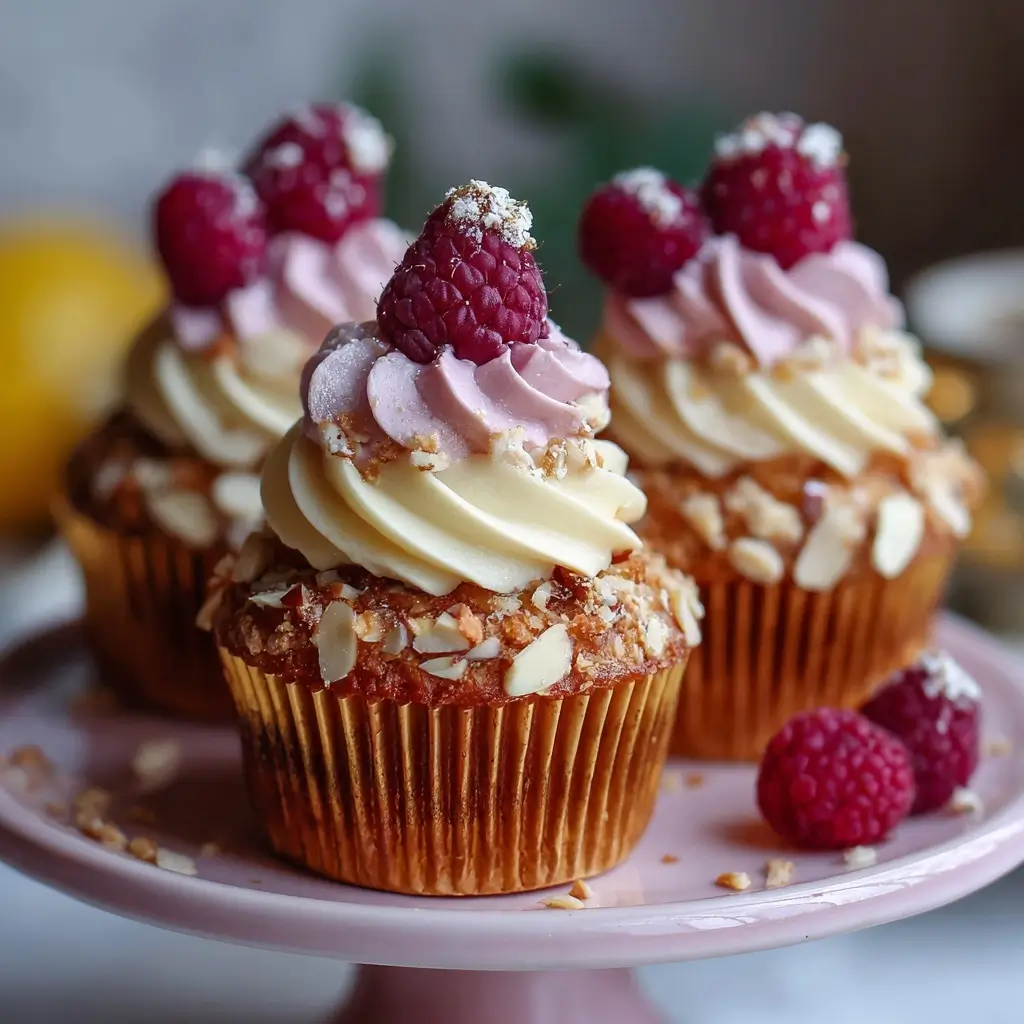
- Use a Piping Bag with Star Tip for Professional Finish: Fit a reusable bag with Wilton 1M tip. Fill ⅔ full, twist top, and pipe in a continuous swirl motion starting at center and moving outward in concentric circles.
- Garnish Thoughtfully: Press 2–3 toasted slivered almonds into each cupcake *immediately after frosting*, then dot with a single fresh raspberry half (cut-side down) for visual contrast and freshness.
- Storage Wisdom: Unfrosted cupcakes freeze beautifully for up to 3 months—wrap individually in plastic, then place in freezer bag. Thaw overnight in fridge, then bring to room temp before frosting. Frosted cupcakes keep refrigerated for 4 days (cover loosely with inverted cake dome or toothpick-lifted parchment); bring to room temp 30 minutes before serving.
Variations and Customizations
These cupcakes serve as a versatile canvas—easily adapted for dietary needs, seasonal produce, global flavors, or occasion-specific elegance:
- Dairy-Free Version: Substitute cultured coconut milk (full-fat, chilled overnight, skim off thick cream layer) for buttermilk; use vegan butter (Miyoko’s or Country Crock Plant Butter) and flax egg (1 tbsp ground flax + 2½ tbsp warm tea infusion, rested 5 min) for the extra yolk. Ensure almond extract is alcohol-free (some contain ethanol).
- Gluten-Free Adaptation: Replace flour with 1:1 GF blend containing xanthan gum (King Arthur or Bob’s Red Mill). Add ½ tsp additional xanthan gum if blend doesn’t include it. Increase buttermilk by 1 tbsp to compensate for GF flour’s absorbency. Expect slightly denser crumb—enhance with extra ¼ tsp almond extract.
- Vegan Raspberry-Almond Matcha Variation: Use almond milk yogurt + apple cider vinegar for “buttermilk,” aquafaba (3 tbsp whipped to soft peaks) instead of eggs, and ceremonial-grade matcha (1 tsp) added to dry ingredients alongside tea-raspberry powder. Frost with coconut whip sweetened with maple syrup and folded-in crushed freeze-dried raspberries.
- Black Forest-Inspired: Add 2 tbsp unsweetened cocoa powder to dry ingredients; replace 2 tbsp granulated sugar with dark chocolate chunks (65% cacao); soak fresh raspberries in 1 tsp Kirsch before folding in.
- Lavender-Infused Earl Grey: Add ¼ tsp culinary-grade lavender buds to tea infusion in Step 1 (strain with leaves); reduce almond extract to ⅛ tsp to avoid flavor competition.
- Champagne Raspberry: Replace buttermilk with chilled, dry brut Champagne (yes—real bubbly!). Reduce granulated sugar by 1 tbsp to balance acidity. Garnish with edible gold leaf and candied violets.
- Spiced Chai Version: Use Masala Chai leaves instead of Earl Grey; add ¼ tsp ground cardamom, ⅛ tsp ground ginger, and pinch of black pepper to dry ingredients. Frost with spiced mascarpone buttercream.
- Mini Cupcake Batch (for events): Fill mini muffin tins ½ full; bake at 350°F for 11–14 minutes. Yields 36–40. Perfect for wedding favors—package in clear boxes with twine and custom tea-themed tags.
- Decadent “Tea Latte” Filling: Pipe a core of cold-brewed, reduced earl grey ganache (steep 2 tbsp leaves in ¼ cup heavy cream, strain, simmer with 4 oz white chocolate until smooth, chill until firm) into each cupcake using a Bismarck tip before frosting.
- Breakfast-Suitable: Reduce sugar by ¼ cup total; add ¼ cup rolled oats to dry ingredients; top with honey-almond glaze instead of buttercream.
Health Considerations and Nutritional Value
While inherently a treat, Raspberry Almond Tea Cupcakes can be mindfully formulated to maximize nutrient density and minimize refined impact—without sacrificing joy or authenticity:
- Nutrient Highlights: Raspberries deliver vitamin C (32mg per ½ cup fresh = 35% DV), manganese (0.4mg = 20% DV), and 8g dietary fiber per cup—supporting gut health, immunity, and antioxidant defense (ellagic acid and anthocyanins combat oxidative stress). Almonds contribute vitamin E (7mg = 47% DV), magnesium (76mg = 18% DV), and heart-healthy monounsaturated fats. Tea infusions provide catechins (EGCG in green tea), theaflavins (in black tea), and L-theanine—a calming amino acid shown to improve alpha brain wave activity and reduce mental fatigue.
- Sugar Consciousness: This recipe uses 1 cup total sugar for 12 cupcakes (~21g per serving)—well below commercial bakery averages (often 30–40g). Brown sugar’s molasses adds trace iron and calcium. For lower glycemic impact, substitute ¼ cup of granulated sugar with monk fruit–erythritol blend (1:1 ratio); note: texture may be slightly drier—add 1 tsp extra buttermilk.
- Whole Grain Option: Replace ½ cup all-purpose flour with white whole wheat flour (not regular whole wheat—it’s too dense). Increases fiber to 2g per cupcake and adds B vitamins—but retain at least 1¼ cups AP flour for optimal rise and tenderness.
- Fat Quality Matters: Using grass-fed butter or avocado oil (substituted 1:1 for melted butter) boosts omega-3s and CLA (conjugated linoleic acid). Vegan versions with almond or cashew buttercreams offer plant sterols linked to cholesterol management.
- Allergen Awareness: Almond extract poses risk for tree nut allergies. For strict avoidance, use imitation almond flavor only if certified nut-free (most aren’t—check labels rigorously), or substitute with ½ tsp pure vanilla + ⅛ tsp tonka bean powder (if legal in your region) for similar benzaldehyde notes. Always label clearly for guests.
- Caffeine Content: A standard cupcake contains ~3–5mg caffeine (from tea leaves and infusion)—equivalent to 1 sip of green tea. Decaf white tea or rooibos reduces this to near-zero. Ideal for children or sensitive individuals.
- Portion Control & Mindful Enjoyment: Serving size is one cupcake—not two. Pair with a cup of hot herbal tea (chamomile or peppermint) to aid digestion and extend the ritualistic pleasure, reducing impulsive second helpings.
- Not a Health Food—But a Nourishing Choice: These cupcakes prioritize real, recognizable ingredients over emulsifiers, artificial colors (that fuchsia hue comes purely from raspberries), and hydrogenated oils. That alone supports long-term metabolic health more than ultra-processed alternatives—even when enjoyed occasionally.
Ingredients
- ½ cup freshly boiled water (205°F)
- 2 tsp high-quality loose-leaf Earl Grey tea (plus 1 tbsp more for grinding)
- ¼ cup unsweetened freeze-dried raspberries
- ¾ cup (1½ sticks / 170g) unsalted European-style butter, softened to 65°F
- ¾ cup (150g) granulated cane sugar
- ¼ cup (55g) packed light brown sugar
- 2 large eggs + 1 large egg yolk (all room temperature)
- 1 tsp vanilla bean paste
- ¼ tsp pure almond extract
- 1¾ cups (210g) sifted unbleached all-purpose flour
- 1½ tsp double-acting baking powder
- ¼ tsp baking soda
- ½ tsp fine sea salt
- ½ cup (120ml) cultured buttermilk, cold
- ½ cup fresh raspberries, very dry (optional but recommended)
Directions
- Steep 2 tsp loose-leaf Earl Grey in ½ cup hot water for exactly 4 minutes. Strain, cool completely.
- In spice grinder, pulse 1 tbsp Earl Grey leaves + ¼ cup freeze-dried raspberries until powdery. Sift into bowl.
- Cream butter, granulated sugar, and brown sugar 3–4 min until pale and fluffy.
- Add eggs + yolk one at a time, beating 30 sec each. Mix in vanilla and almond extract.
- Whisk together flour, baking powder, baking soda, salt, and tea-raspberry powder.
- Alternate dry ingredients and cooled tea infusion + buttermilk into butter mixture—begin and end with dry. Mix only until combined.
- Gently fold in fresh raspberries (if using) with 10–12 strokes.
- Fill lined muffin cups ⅔ full. Tap pan twice. Bake at 350°F for 18–22 min until toothpick shows moist crumbs.
- Cool in pan 12 min, then transfer to wire rack to cool completely (45+ min).
FAQ
- Can I use fresh raspberries instead of freeze-dried?
- Yes—but only *in addition* to freeze-dried powder, not as replacement. Fresh berries add juicy bursts but introduce excess moisture and sink if not thoroughly dried. Always pat dry with paper towels and fold in gently at the end.
- Why does the recipe call for both baking powder AND baking soda?
- Baking powder provides baseline leavening; baking soda reacts specifically with the acids in buttermilk *and* raspberries for extra lift and to neutralize harsh tartness—yielding a balanced, rounded flavor profile.
- My cupcakes sank in the center—what went wrong?
- Most common causes: 1) Overmixing batter (develops gluten → tunneling), 2) Opening oven too early (causes rapid temperature drop), 3) Underbaking (structure hasn’t set), or 4) Too much leavener (check expiration dates—old baking powder loses potency).
- Can I make these ahead for a party?
- Absolutely. Bake cupcakes up to 2 days ahead—cool completely, store unfrosted in airtight container at room temp. Frost day-of. Or freeze unfrosted cupcakes for up to 3 months; thaw overnight in fridge, then bring to room temp before decorating.
- What’s the best frosting to pair with these?
- Almond-rose buttercream (buttercream infused with 1 tsp rosewater + ¼ tsp almond extract), white chocolate–raspberry ganache, or Earl Grey Swiss meringue buttercream. Avoid heavy chocolate frostings—they overpower the delicate tea-raspberry-almond harmony.
- Can I use tea bags instead of loose-leaf?
- Not ideal. Most tea bags contain fannings or dust—not whole leaves—and often include paper, glue, or staples that shouldn’t be ground into batter. If necessary, snip open food-grade silk or plant-based bags, empty leaves, and grind only the loose contents.
- Why do you recommend European-style butter?
- Higher fat content (82–84% vs. 80% standard) means less water → less steam → finer, more velvety crumb and richer flavor. It also creams more efficiently, trapping more air for superior rise.
- My batter looks curdled after adding eggs—should I panic?
- No—if butter was even slightly too warm or eggs too cold, temporary curdling is normal. Keep mixing on low for 10–15 more seconds; it will smooth out as emulsion forms. If it persists, add 1 tsp flour to stabilize.
- How do I prevent raspberries from bleeding purple into the batter?
- Freeze-dried raspberry powder *will* tint batter pink/fuchsia—that’s desired! Fresh raspberries bleed minimally if patted bone-dry and folded in last. Avoid stirring vigorously after adding.
- Can kids safely enjoy these?
- Yes—with attention to caffeine. A cupcake made with decaf white tea or rooibos contains negligible caffeine (<1mg). Always disclose ingredients for allergy awareness (almond extract contains tree nut proteins).
Summary
Raspberry Almond Tea Cupcakes are a masterclass in layered flavor harmony—where the floral-citrus brightness of bergamot-infused tea, the jammy intensity of freeze-dried raspberries, and the warm, marzipan-like depth of pure almond extract unite in a tender, moist, expertly balanced crumb.
They honor tradition through meticulous technique—proper creaming, precise tea infusion, strategic folding—while embracing innovation via global ingredients, mindful substitutions, and endless creative expression, making every bite a thoughtful, joyful, and deeply satisfying pause in the day.