Introduction
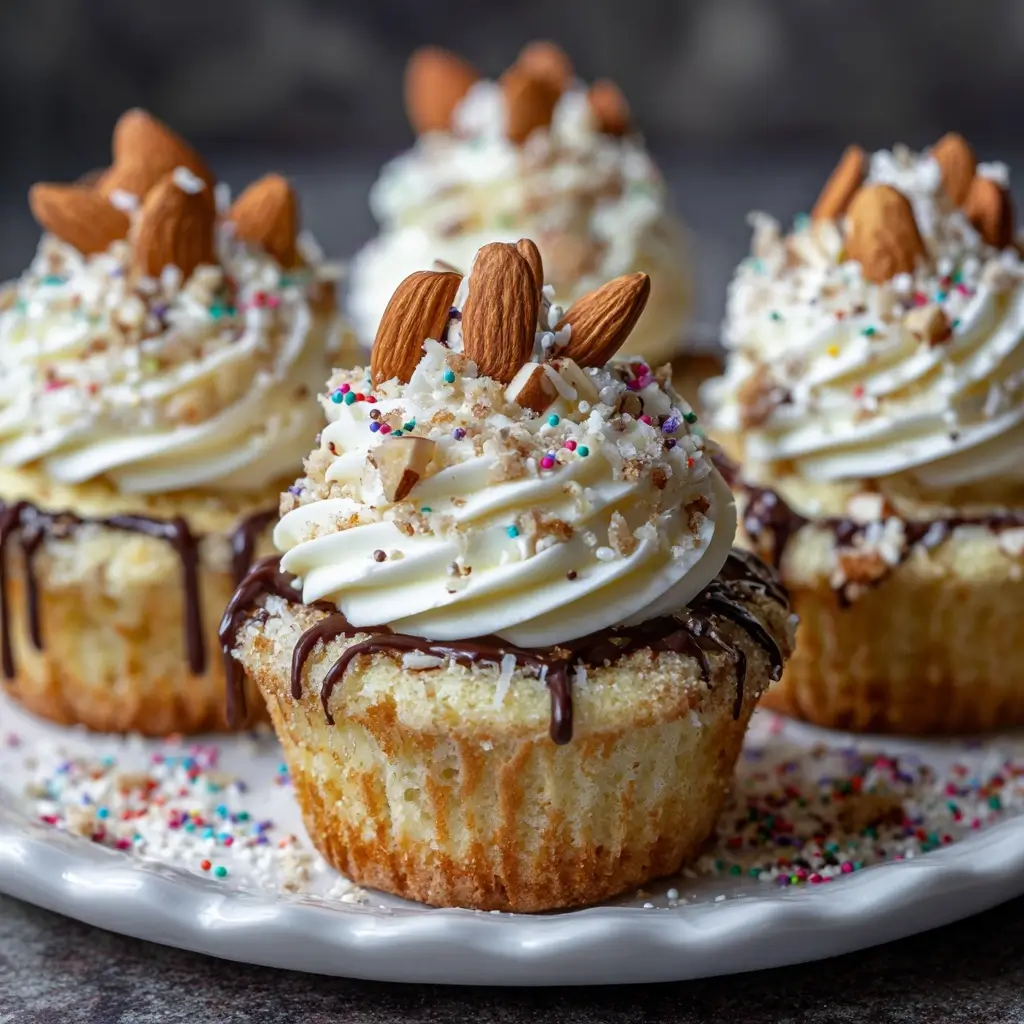
Almond Biscotti Cupcakes are a delightful fusion of two beloved Italian-inspired treats: the crisp, twice-baked elegance of traditional biscotti and the moist, tender charm of classic cupcakes. This innovative dessert bridges texture and tradition—offering the rich, nutty depth of toasted almonds and almond extract found in biscotti, while delivering the soft crumb, delicate rise, and customizable frosting appeal of a cupcake. Far more than just a clever name, these cupcakes embody sophistication with approachability—ideal for holiday gatherings, afternoon tea service, bridal showers, or even as an elevated twist on everyday baking. With their golden-brown exteriors, speckled almond-studded interiors, and optional glaze or drizzle reminiscent of biscotti’s signature sugar-dusted finish, Almond Biscotti Cupcakes invite both nostalgia and novelty in every bite.
The History
The origins of this hybrid dessert lie not in ancient Tuscan bakeries—but in the joyful, experimental spirit of modern American and Anglo-Italian home bakers who began reimagining classic recipes for contemporary palates and occasions. Traditional biscotti di Prato, dating back to at least the 14th century in Tuscany, were born out of necessity: dense, dry, and durable for long storage and dipping into vin santo or coffee. Their hallmark traits—almonds, anise or citrus notes, double baking—became cultural signatures. Meanwhile, cupcakes evolved from “cup cakes” of 19th-century America—baked in small tins or cups for even portioning and faster cooking. The convergence began in earnest in the early 2000s, as food blogs and artisanal bakeries embraced “deconstructed” and “recomposed” classics. Almond Biscotti Cupcakes emerged as part of this movement: a response to requests for gluten-conscious (via substitutions), less-sweet, and texturally dynamic desserts. Notably, acclaimed pastry chefs like Gina DePalma (of Babbo and La Boulange) and cookbook authors such as Carol Field (The Italian Baker) inspired reinterpretations that honored authenticity while embracing innovation—making the Almond Biscotti Cupcake not just a trend, but a thoughtful evolution of centuries-old technique.
Ingredients Breakdown
Every element in this recipe has been carefully selected to replicate the soul of biscotti—without compromising cupcake integrity:
- Blanched Almond Flour (1¼ cups): Provides fine, nutty richness and natural moisture retention; essential for replicating biscotti’s dense-yet-tender crumb. Must be *blanched* (skins removed) for smooth texture and pale color.
- All-Purpose Flour (¾ cup): Adds necessary gluten structure for lift and resilience during baking—preventing crumbliness while preserving chew.
- Toasted Sliced Almonds (1 cup, plus extra for garnish): Toasted separately to deepen flavor and add contrasting crunch. Toasting unlocks volatile oils, yielding a warm, marzipan-like aroma critical to authenticity.
- Granulated Sugar (1 cup): Moderately sweet—not cloying—mirroring biscotti’s restrained sweetness. Part is creamed for aeration; part is reserved for topping.
- Brown Sugar (¼ cup, light or dark): Adds subtle molasses complexity, moisture, and a hint of caramelized depth—echoing the faint brown sugar notes sometimes found in modern biscotti variations.
- Unsalted Butter (½ cup / 1 stick, softened): Creamed to incorporate air and ensure tenderness. European-style butter (82–84% fat) is highly recommended for superior flavor and flakier crumb definition.
- Large Eggs (2, room temperature): Provide emulsification, structure, and leavening support. One yolk is often reserved for egg wash if a glossy, biscotti-like sheen is desired.
- Pure Almond Extract (1½ tsp): Non-negotiable for true identity—vanilla alone cannot replicate the distinctive marzipan-tinged top note of authentic almond biscotti. Use only pure extract (not imitation) for nuanced depth.
- Whole Milk (⅓ cup, room temperature): Balances batter hydration without diluting flavor; contributes to tender crumb and gentle browning.
- Baking Powder (1 tsp) & Baking Soda (¼ tsp): A dual-leavening system ensures reliable, balanced rise—critical given the density of almond flour. Baking soda also promotes browning and neutralizes acidity from brown sugar.
- Fine Sea Salt (¾ tsp): Enhances all other flavors and counterbalances sweetness—just as salt does in traditional biscotti dough.
- Optional Flavor Enhancers: Finely grated orange or lemon zest (1 tbsp) adds bright, perfumed lift; a pinch of ground star anise (⅛ tsp) nods to historic Tuscan spice traditions; a tablespoon of amaretto liqueur (reducing milk by 1 tbsp) deepens complexity for adult palates.
Step-by-Step Recipe
- Preheat & Prep: Position oven rack in center. Preheat to 350°F (177°C). Line a standard 12-cup muffin tin with high-quality parchment liners (or grease and flour if using foil liners). Toast sliced almonds on a rimmed baking sheet for 8–10 minutes until fragrant and lightly golden; cool completely, then coarsely chop ½ cup for batter and reserve remaining ½ cup for topping.
- Mix Dry Ingredients: In a medium bowl, whisk together blanched almond flour, all-purpose flour, baking powder, baking soda, and salt. Sift twice for uniformity and to eliminate any almond flour clumps. Set aside.
- Cream Butter & Sugars: In a large stand mixer fitted with paddle attachment (or using hand mixer), beat softened butter, granulated sugar, and brown sugar on medium-high for 4–5 minutes until very light, fluffy, and nearly white in color. Scrape bowl thoroughly.
- Incorporate Eggs & Extract: Add eggs one at a time, beating well after each addition (about 30 seconds per egg) until fully emulsified. Beat in almond extract and optional citrus zest until homogenous. Mixture should be smooth and slightly thickened.
- Alternate Dry & Wet: Reduce mixer speed to low. Add one-third of dry ingredients; mix just until incorporated. Add half of milk; mix until just combined. Repeat with another third of dry, remaining milk, and final third of dry—mixing only until no streaks remain. Overmixing develops gluten and causes toughness. Batter will be thick, glossy, and slightly sticky.
- Fold in Almonds: Using a silicone spatula, gently fold in the ½ cup coarsely chopped toasted almonds until evenly distributed. Avoid over-folding—preserve air pockets.
- Portion & Top: Divide batter evenly among lined cups (about ¼ cup per cup—use a #20 scoop for precision). Smooth tops lightly. Press 1 tsp reserved whole or halved toasted almonds onto center of each cupcake. Sprinkle lightly with a pinch of coarse sugar (turbinado or demerara) for sparkling, biscotti-style crust.
- Bake with Precision: Bake 18–22 minutes—or until a toothpick inserted into the center comes out with *moist crumbs* (not wet batter, but not completely clean—this ensures optimal moistness without gummy texture). Rotate pan halfway through. Do NOT overbake: biscotti cupcakes rely on slight residual moisture for tenderness.
- Cool Strategically: Let cupcakes cool in pan for exactly 5 minutes—this sets structure without steaming. Then transfer carefully to a wire rack. Cool completely (at least 1 hour) before glazing or frosting—warm cupcakes will melt icing and cause sogginess.
- Glaze (Optional but Recommended): Whisk together 1 cup powdered sugar, 1½–2 tbsp whole milk or almond milk, ½ tsp pure almond extract, and a pinch of salt until smooth. Adjust thickness with milk (for drizzle) or powdered sugar (for spreadable glaze). Drizzle generously over cooled cupcakes. Immediately sprinkle with extra toasted almonds or edible gold dust for artisanal flair.
Tips
- Almond Flour Freshness Is Paramount: Almond flour oxidizes quickly. Use within 3 months of opening (refrigerate or freeze for longevity). Stale almond flour yields dull flavor and greasy texture.
- Room Temperature = Reliable Results: Cold eggs or butter cause curdling and uneven emulsification—leading to dense, greasy cupcakes. Take ingredients out 90+ minutes ahead.
- Toast Almonds in Batches: Overcrowding the pan leads to steaming, not toasting. Use parchment-lined sheets and stir every 3 minutes for even browning.
- Measure Flours Correctly: Spoon flour into measuring cup and level with straight edge—never scoop directly from bag (compacts flour and adds up to 25% excess).
- Don’t Skip the 5-Minute Pan Cool: This brief rest allows steam to escape gradually, preventing soggy bottoms and promoting structural integrity.
- Use a Timer—and a Toothpick Test: Oven variances are real. Rely on visual cues (golden edges, domed centers pulling slightly away from liners) AND the toothpick test—not just time.
- For Professional Presentation: Pipe glaze using a parchment cone with tiny snipped tip—or use a spoon and tilt cupcake to let glaze cascade naturally for rustic elegance.
- Storage Wisdom: Unfrosted cupcakes keep best at room temperature in an airtight container for 2 days, refrigerated for up to 5 days, or frozen unfrosted for 3 months. Thaw overnight in fridge, then bring to room temp before glazing.
Variations and Customizations
This versatile base welcomes endless creativity—while staying true to its biscotti soul:
- Double-Almond Delight: Replace ¼ cup all-purpose flour with additional blanched almond flour and fold in ⅓ cup finely ground toasted almonds (made in food processor) for intensified nuttiness and denser crumb.
- Citrus-Infused Biscotti Cupcakes: Add 1 tbsp finely grated orange zest + 1 tsp orange extract; substitute orange blossom water (½ tsp) for part of almond extract; garnish with candied orange peel.
- Chocolate-Dipped Biscotti Cupcakes: After glazing and setting, dip cooled cupcake tops ½-inch deep into tempered dark chocolate (70% cacao). Let set on parchment, then sprinkle with flaky sea salt and crushed toasted almonds.
- Gluten-Free Version: Substitute all-purpose flour with certified GF 1:1 baking blend (like King Arthur or Bob’s Red Mill). Increase almond flour to 1½ cups and add ½ tsp xanthan gum to dry ingredients. Verify all extracts and toppings are GF-certified.
- Vegan Adaptation: Use vegan butter (Miyoko’s or Earth Balance), flax eggs (2 tbsp ground flax + 6 tbsp water, rested 10 mins), unsweetened almond milk, and vegan powdered sugar. Ensure almond extract is alcohol-based (not glycerin-based) for purity.
- Spiced Biscotti Cupcakes: Add ½ tsp ground cinnamon, ¼ tsp ground cardamom, and a pinch of freshly grated nutmeg to dry ingredients. Pair with honey-almond glaze.
- Mini Biscotti Cupcakes: Use mini muffin tin (24 cavities); reduce bake time to 11–14 minutes. Perfect for bridal favors or tasting menus.
- Savory-Sweet Brunch Version: Omit almond extract; add 1 tsp fresh rosemary (finely minced), ¼ cup grated Parmigiano-Reggiano, and 2 tbsp chopped sun-dried tomatoes. Glaze with lemon-thyme icing.
Health Considerations and Nutritional Value
Per standard-sized cupcake (un-glazed, made with full ingredients): approximately 225–240 calories, 11–13g total fat (mostly monounsaturated from almonds), 28–30g carbohydrates (18–20g sugars), 3–4g protein, and 1–1.5g dietary fiber. Key nutritional highlights include:
- Heart-Healthy Fats: Almonds provide oleic acid (same heart-protective fat in olive oil) and vitamin E—an antioxidant linked to reduced inflammation and arterial health.
- Lower Glycemic Impact: Almond flour has a glycemic index of ~0 vs. wheat flour (~70), resulting in slower blood sugar elevation—beneficial for metabolic health and sustained energy.
- Nutrient Density: Naturally rich in magnesium (supports muscle/nerve function), calcium (bone health), riboflavin (B2, for energy metabolism), and plant-based antioxidants like flavonoids and phenolic compounds.
- Reduced Gluten Load: With 60% of flour being almond-based, these cupcakes offer significantly less gluten than traditional versions—making them more digestible for many with mild sensitivities (though not suitable for celiac disease unless certified GF protocols are followed).
- Considerations: While nutrient-rich, they remain a dessert—moderation is advised. Those managing diabetes should monitor portions and pair with protein/fiber (e.g., Greek yogurt dip or almond butter swirl). For lower-sugar options, reduce granulated sugar to ¾ cup and replace brown sugar with coconut sugar (same volume); increase almond extract to 2 tsp to maintain flavor impact.
Ingredients
- 1¼ cups blanched almond flour (sifted)
- ¾ cup all-purpose flour (spooned & leveled)
- 1 cup granulated sugar
- ¼ cup light or dark brown sugar
- ½ cup (1 stick) unsalted butter, softened to 65°F
- 2 large eggs, room temperature
- 1½ tsp pure almond extract
- ⅓ cup whole milk, room temperature
- 1 tsp baking powder
- ¼ tsp baking soda
- ¾ tsp fine sea salt
- 1 cup sliced almonds, toasted and cooled
- Coarse sugar (e.g., turbinado), for topping
- For Glaze (optional): 1 cup powdered sugar, 1½–2 tbsp whole milk, ½ tsp pure almond extract, pinch of salt
Directions
- Preheat oven to 350°F (177°C). Line 12-cup muffin tin with parchment liners. Toast almonds on rimmed baking sheet 8–10 min until golden and fragrant; cool completely. Chop ½ cup; reserve remaining ½ cup.
- In medium bowl, whisk almond flour, all-purpose flour, baking powder, baking soda, and salt. Sift twice. Set aside.
- In large mixer bowl, beat butter, granulated sugar, and brown sugar on medium-high 4–5 min until pale, fluffy, and aerated.
- Add eggs one at a time, beating 30 sec after each. Beat in almond extract until smooth.
- Reduce speed to low. Add ⅓ dry mixture; mix until just incorporated. Add ½ milk; mix until just combined. Repeat with another ⅓ dry, remaining milk, and final ⅓ dry—stopping as soon as no dry streaks remain.
- Fold in ½ cup chopped toasted almonds with spatula until evenly distributed.
- Divide batter evenly (≈¼ cup each) among liners. Gently smooth tops. Press 1 tsp reserved almonds onto center of each. Sprinkle lightly with coarse sugar.
- Bake 18–22 min, rotating pan halfway, until toothpick inserted returns with moist crumbs (not wet batter).
- Cool in pan 5 min exactly. Transfer to wire rack. Cool completely (≥1 hr) before glazing.
- Make glaze: Whisk powdered sugar, milk, almond extract, and salt until smooth. Adjust consistency. Drizzle over cooled cupcakes. Top immediately with extra toasted almonds or edible glitter.
FAQ
- Can I make these ahead of time?
- Yes! Unfrosted cupcakes freeze beautifully for up to 3 months. Wrap individually in plastic, place in freezer bag, and thaw overnight in fridge. Glaze just before serving for best texture and shine.
- Why did my cupcakes sink in the center?
- Most commonly due to under-baking (remove too early), excessive leavening (double-check measuring spoons), opening oven door before 15 minutes, or using cold ingredients that destabilize batter structure.
- Can I use almond meal instead of almond flour?
- No—almond meal contains skins and is coarser, leading to gritty texture, uneven browning, and potential bitterness. Blanched almond flour is essential for authentic results.
- My batter looks thick and stiff—is that normal?
- Absolutely. Almond flour absorbs liquid differently than wheat flour. The batter should be thick, glossy, and hold soft peaks when lifted—never runny or pourable.
- Can I omit the almond extract?
- You can, but strongly discouraged—the extract delivers the unmistakable, aromatic signature of true biscotti. Vanilla cannot substitute. If allergic, consider a high-quality roasted almond paste dissolved in milk as alternative (¼ tsp paste per 1 tsp milk).
- How do I prevent almond bits from sinking?
- Toss chopped almonds in 1 tsp of the measured all-purpose flour before folding in—this coats them and helps suspension.
- Can I use oil instead of butter?
- Not recommended. Butter provides essential flavor, aeration, and structure. Oil yields greasy, flat cupcakes lacking the tender-yet-chewy biscotti mouthfeel.
- Are these suitable for Passover?
- Yes—if you use certified kosher-for-Passover almond flour (e.g., Streit’s or Manischewitz), substitute matzo cake meal for the all-purpose flour (reduce to ⅓ cup), and verify all extracts and sugars are KFP certified.
Summary
Almond Biscotti Cupcakes masterfully unite the storied heritage of Italian twice-baked tradition with the comforting familiarity of American cupcakes—delivering a sophisticated, nut-rich, delicately sweet treat with remarkable textural harmony.
From meticulously toasted almonds and pure almond extract to precise creaming techniques and strategic cooling, every detail honors authenticity while embracing modern versatility—making them as perfect for elegant entertaining as they are for joyful, everyday baking.