Introduction
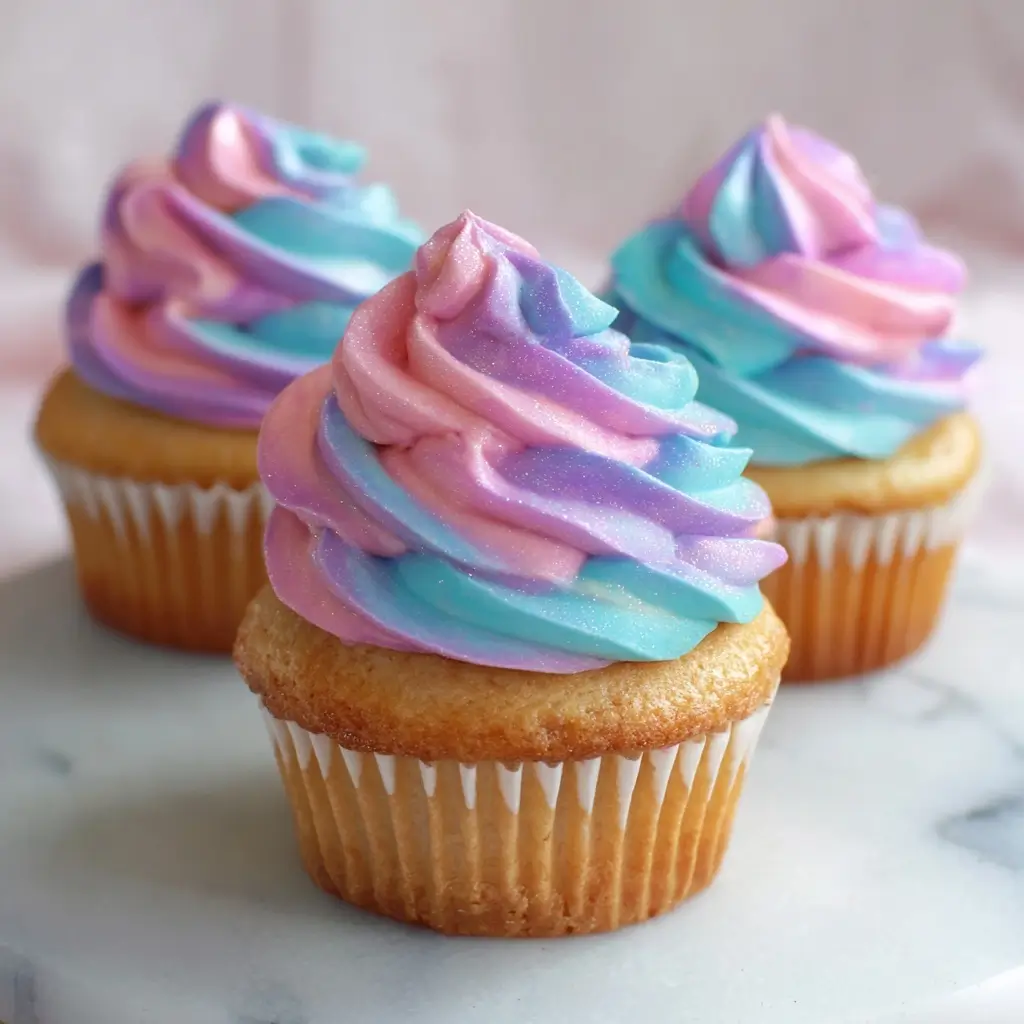
Step into a world of pure confectionery enchantment with Cotton Candy Swirl Cupcakes — whimsical, vibrant, and irresistibly nostalgic treats that transform childhood wonder into edible art. These cupcakes are more than just dessert; they’re a multisensory experience — visually dazzling with pastel-hued ribbons spiraling through tender vanilla cake, fragrantly sweet with notes of spun sugar and bubblegum, and delightfully soft with a cloud-like crumb that melts on the tongue. Whether you’re planning a birthday bash, baby shower, carnival-themed party, or simply craving a joyful escape from the everyday, Cotton Candy Swirl Cupcakes deliver magic in every bite. Their playful aesthetic and dreamy flavor profile make them an instant conversation starter, evoking memories of county fairs, summer nights, and carefree laughter — all while satisfying even the most discerning sweet tooth.
The History
The origin of cotton candy itself traces back to the late 19th century, when dentist William Morrison and confectioner John C. Wharton invented the first electric cotton candy machine in 1897 — originally called “Fairy Floss” — which debuted at the 1904 St. Louis World’s Fair to massive acclaim. Though the spun-sugar confection quickly became a staple of carnivals and amusement parks, its integration into baked goods remained rare for over a century. The modern Cotton Candy Swirl Cupcake emerged organically from the cupcake renaissance of the early 2000s, fueled by the rise of food blogs, competitive baking shows like *Cake Boss* and *Nailed It!*, and social media’s obsession with photogenic desserts. Bakers began experimenting with cotton candy as both a flavor inspiration and a textural element — first infusing extracts, then incorporating crushed candy directly into batters and frostings. By the mid-2010s, specialty bakeries in Los Angeles, Austin, and Brooklyn were crafting limited-edition “Cotton Candy Cloud” cupcakes featuring edible glitter, custom-blended flavors (strawberry-vanilla, blue raspberry, cosmic grape), and signature swirl techniques. Today, these cupcakes represent the perfect fusion of retro Americana and contemporary pastry innovation — a testament to how nostalgia, science (sugar crystallization), and creativity can converge in a single, perfectly portioned treat.
Ingredients Breakdown
Every exceptional Cotton Candy Swirl Cupcake begins with intentional, high-quality components — each selected not only for flavor but for function, texture, and visual harmony. Below is a meticulous breakdown of why each ingredient matters:
- Granulated Sugar: The backbone of sweetness and structure. Fine-grain sugar dissolves cleanly into the batter, aiding aeration during creaming and contributing to a fine, tender crumb. For optimal swirl definition, avoid coarse sugars that may create graininess.
- Unsalted Butter (room temperature): Provides richness, moisture, and emulsification. Using unsalted butter gives precise control over sodium levels and ensures consistent flavor. Its fat content coats flour proteins, limiting gluten development — essential for that melt-in-your-mouth softness.
- Eggs (large, room temperature): Act as binders, leaveners (via trapped air expansion), and emulsifiers. Room temperature eggs incorporate more evenly and increase batter volume — critical for lift and stability when swirling in delicate cotton candy elements.
- Whole Milk + Sour Cream or Buttermilk: The dairy duo adds acidity (which activates baking soda if used) and extra fat/protein for tenderness and moisture retention. Sour cream also contributes subtle tang that balances intense sweetness — preventing cloyingness.
- Pure Vanilla Extract & Vanilla Bean Paste: Deepens flavor complexity beyond one-dimensional sweetness. Real vanilla contains over 250 aromatic compounds; bean paste adds tiny black specks and velvety depth that harmonizes beautifully with cotton candy’s ester-rich profile.
- Real Cotton Candy (freshly spun or high-quality shelf-stable): Not merely decorative — it’s the star functional ingredient. When finely ground and folded in *just before baking*, it partially dissolves, releasing concentrated sugar syrup and volatile flavor compounds (ethyl acetate, benzaldehyde) that infuse the batter with authentic “carnival air” aroma. Its residual micro-crystals also create subtle textural contrast.
- Food Coloring (gel-based, pastel shades): Gel colors are highly concentrated, water-free, and won’t thin batter or destabilize emulsions. Recommended hues: Wilton Soft Pink, Sky Blue, Lilac, and Buttercream Yellow — blended to mimic classic carnival cotton candy palettes. Liquid dyes are discouraged due to added moisture and weak pigmentation.
- Leavening Agents (baking powder + optional pinch of baking soda): Provide controlled lift. Baking powder alone ensures neutral pH balance; adding a trace of baking soda (when paired with acidic sour cream) boosts rise and creates a slightly more open, airy crumb — ideal for showcasing swirls.
- Sea Salt (fine, non-iodized): A crucial flavor amplifier. Salt doesn’t make the cupcake “salty” — it heightens sweetness perception, rounds out artificial notes, and enhances the cotton candy’s fruity esters.
Step-by-Step Recipe
Follow this meticulously tested, professional-grade method to achieve bakery-perfect Cotton Candy Swirl Cupcakes — with defined marbling, uniform rise, and zero tunneling or color bleeding:
- Prep & Preheat: Line two standard 12-cup muffin tins with high-quality silicone or parchment liners (avoid wax paper — cotton candy residue may stick). Preheat oven to 350°F (175°C). Position racks in the upper and lower thirds for even heat distribution.
- Grind the Cotton Candy: Place 1½ cups of fresh, dry cotton candy (preferably made same-day or within 2 hours) into a clean, dry food processor. Pulse 8–10 times until reduced to ultra-fine, snow-like powder — no visible strands. Immediately transfer to a small bowl and cover with plastic wrap to prevent moisture absorption. (Note: Do not use pre-ground commercial “cotton candy flavoring” — it lacks authentic texture and volatile top notes.)
- Cream Butter & Sugar: In a large bowl, beat 1 cup (2 sticks) unsalted butter and 1¾ cups granulated sugar with a stand mixer fitted with paddle attachment on medium speed for 4–5 minutes, until pale, fluffy, and nearly doubled in volume. Scrape bowl thoroughly twice.
- Incorporate Eggs Gradually: Add 4 large room-temperature eggs one at a time, beating on medium-low for 30 seconds after each addition until fully absorbed. Add 2 tsp pure vanilla extract + 1 tsp vanilla bean paste. Beat 15 more seconds. Batter should be smooth, glossy, and slightly thickened.
- Dry-Wet Alternation: Sift together 3 cups (360g) all-purpose flour, 2 tsp aluminum-free baking powder, ¼ tsp baking soda, and 1 tsp fine sea salt. In a separate pitcher, combine 1 cup whole milk and ½ cup full-fat sour cream. With mixer on low, add one-third of dry mix → beat 15 sec. Add half of milk mixture → beat 15 sec. Repeat, ending with dry mix. Do NOT overmix — stop as soon as no streaks remain.
- Divide & Color: Divide batter evenly among three medium bowls (approx. 18 oz each). Tint Bowl 1 with 6 drops soft pink gel; Bowl 2 with 6 drops sky blue gel; Bowl 3 with 4 drops lilac + 2 drops yellow gel for lavender. Stir gently with silicone spatula until uniform — avoid over-stirring to prevent color muddying.
- Swirl Technique (The Key Step): Spoon 2 tbsp pink batter into each liner, followed by 2 tbsp blue, then 2 tbsp lavender — stacking vertically. Insert a clean, narrow skewer or toothpick into center of each cup. Make 3 slow, gentle figure-8 motions — no more, no less. Over-swirling causes grayish blending; under-swirling yields faint separation. Wipe skewer between rows.
- Incorporate Cotton Candy: Immediately after swirling, sprinkle ½ tsp of the reserved cotton candy powder over the top of each cupcake. Gently tap tin once to settle — do not stir or press down.
- Bake with Precision: Bake 18–20 minutes, rotating tins front-to-back and top-to-bottom at 10-minute mark. Cupcakes are done when tops spring back lightly when touched and a toothpick inserted near edge (not center swirl) comes out clean. Avoid opening oven before 16 minutes — sudden temperature drops cause collapse.
- Cool Strategically: Let cupcakes cool in pans for exactly 12 minutes — long enough to set structure, short enough to retain internal steam that keeps crumb supple. Then transfer to wire racks to cool completely (minimum 90 minutes) before frosting. Warm cupcakes will melt frosting and blur swirls.
Tips
- Temperature Is Non-Negotiable: All dairy, eggs, and butter must be at true room temperature (68–72°F / 20–22°C). Cold ingredients cause curdling, poor emulsion, and dense texture. To warm eggs quickly, place in warm (not hot) water for 5 minutes. Butter should yield slightly to fingertip pressure but not feel greasy or shiny.
- Cotton Candy Freshness Matters Profoundly: Spun sugar is hygroscopic — it absorbs ambient moisture within minutes, becoming sticky and clumpy. Always spin or open cotton candy immediately before grinding. If using store-bought, choose brands sealed in nitrogen-flushed bags (e.g., Fluffy Stuff or Carnival Classics) and grind within 5 minutes of opening.
- Gel Colors > Liquids, Always: Liquid food coloring introduces excess water, diluting batter consistency and causing color bleed during baking. Gel colors maintain viscosity and deliver bold, fade-resistant hues. Pro tip: Mix colors in advance and let sit 1 hour — this allows pigments to fully hydrate for truer tones.
- Swirl Depth Creates Dimension: For dramatic, gallery-worthy marbling, spoon batters in layers *without mixing first*, then swirl from bottom to top — not side-to-side. This preserves distinct bands that rise visibly during baking.
- Oven Thermometer Required: Most home ovens run 25–50°F off calibration. An inexpensive oven thermometer placed on the center rack ensures accurate baking temperature — critical for even rise and preventing cracked domes.
- High-Altitude Adjustment: Above 3,000 ft: Reduce sugar by 1 tbsp per cup, increase liquid by 1–2 tbsp, raise oven temp by 15°F, and decrease baking powder by ⅛ tsp. Test bake one cupcake first.
- Freeze for Future Magic: Unfrosted, fully cooled cupcakes freeze beautifully for up to 3 months. Wrap individually in parchment + foil, store in airtight container. Thaw overnight in fridge, then bring to room temp before frosting — swirls remain vivid, crumb stays moist.
Variations and Customizations
From allergen-friendly adaptations to globally inspired twists, Cotton Candy Swirl Cupcakes offer boundless creative potential — all while preserving their signature ethereal quality:
- Vegan Version: Replace butter with refined coconut oil (for neutral flavor) + vegan butter blend; eggs with flax eggs (1 tbsp ground flax + 2.5 tbsp water per egg); dairy milk/sour cream with oat milk + apple cider vinegar (1 tsp per ½ cup milk, rested 5 min). Use organic cane sugar and certified vegan cotton candy (e.g., Sweet Joy Vegan Fairy Floss).
- Gluten-Free Adaptation: Substitute 1:1 gluten-free all-purpose blend (with xanthan gum included, e.g., King Arthur Measure for Measure or Bob’s Red Mill). Add ½ tsp additional xanthan gum to ensure structure. Increase milk by 1 tbsp to compensate for GF flour’s absorbency.
- Keto/Low-Sugar Option: Use erythritol + monk fruit blend (1:1 sugar replacement), almond flour + coconut flour combo (⅔:⅓ ratio), and sugar-free cotton candy (available from specialty retailers like KetoKandy). Note: Swirls will be less vibrant; enhance with natural beet/purple carrot powders.
- Flavor Infusions: Elevate beyond classic carnival with gourmet pairings: Earl Grey tea-infused milk + bergamot cotton candy; toasted coconut milk + mango-pineapple spun sugar; cold-brew coffee reduction + caramel-vanilla swirl; or rosewater + lychee cotton candy for floral elegance.
- Textural Twists: Fold in freeze-dried raspberry bits (¼ cup) for tart bursts; top with edible pearl dust or luster spray for shimmer; embed a mini marshmallow “cloud” in center before baking; or pipe a ribbon of salted caramel ganache into the base before adding batter.
- Mini & Jumbo Sizes: For bite-sized versions: Fill mini muffin tins ⅔ full; bake 9–11 minutes. For jumbo cupcakes (6 per pan): Use ½ cup batter per liner; bake 24–28 minutes. Adjust swirl technique — use larger skewer and fewer, broader strokes.
- Seasonal Themes: Spring: Pastel green + lemon zest + strawberry cotton candy. Summer: Watermelon red + mint extract + lime cotton candy. Fall: Cinnamon-spiced batter + apple-cider cotton candy + gold leaf. Winter: Peppermint + white chocolate shavings + snowy blue swirl.
Health Considerations and Nutritional Value
While Cotton Candy Swirl Cupcakes are undeniably indulgent, mindful preparation and informed choices allow for balanced enjoyment — especially important for families, educators, health-conscious bakers, or those managing dietary needs. A standard unfrosted cupcake (approx. 3.2 oz / 90g) contains approximately:
- Calories: 285–310 kcal (varies by flour type, dairy fat %, and cotton candy quantity)
- Total Sugar: 22–26 g (of which 14–18 g are added sugars — primarily from granulated sugar + cotton candy)
- Carbohydrates: 38–42 g
- Fat: 11–13 g (mostly unsaturated from butter; saturated fat ~7 g)
- Protein: 3.5–4.2 g
- Sodium: 190–220 mg
Key Health Notes:
- No Artificial Dyes in Homemade Versions: Unlike mass-produced cotton candy, homemade versions rely on natural or FDA-approved gel colors. For clean-label options, use plant-based powders (spirulina for blue, beet for pink, purple carrot for lavender) — though color intensity and stability vary.
- Cotton Candy ≠ Empty Calories Alone: While predominantly sucrose, high-quality spun sugar contains trace minerals from the spinning process and zero preservatives, artificial flavors, or hydrogenated oils often found in commercial alternatives.
- Allergen Transparency: This recipe is naturally nut-free and soy-free (if using soy-free butter). Always verify cotton candy labels — some contain artificial colors banned in the EU (e.g., Red 40, Blue 1) or corn derivatives that may affect sensitive individuals.
- Portion Control & Pairing Wisdom: Serve cupcakes alongside antioxidant-rich berries, herbal iced tea, or a small scoop of plain Greek yogurt to slow sugar absorption and enhance satiety. One cupcake satisfies most sweet cravings without excess.
- For Diabetics or Insulin Resistance: Consult a registered dietitian before consumption. Substitutions like allulose or tagatose may lower glycemic impact, but testing is essential — cotton candy’s rapid-dissolve nature still triggers quick glucose response.
- Child Nutrition Context: These cupcakes are best enjoyed as occasional celebratory foods — not daily snacks. Pair with nutrient-dense meals and emphasize the fun, sensory, and cultural storytelling aspects to foster positive food relationships.
Ingredients
Makes 24 standard cupcakes
- 1 cup (2 sticks / 227g) unsalted butter, room temperature
- 1¾ cups (350g) granulated sugar
- 4 large eggs, room temperature
- 2 teaspoons pure vanilla extract
- 1 teaspoon vanilla bean paste
- 1 cup (240ml) whole milk, room temperature
- ½ cup (120g) full-fat sour cream, room temperature
- 3 cups (360g) all-purpose flour, spooned & leveled
- 2 teaspoons aluminum-free baking powder
- ¼ teaspoon baking soda
- 1 teaspoon fine sea salt
- 1½ cups (approx. 45g) fresh cotton candy (pink, blue, and purple varieties preferred)
- Gel food coloring: Soft Pink, Sky Blue, Lilac, Buttercream Yellow
Directions
- Preheat oven to 350°F (175°C). Line two 12-cup muffin tins with premium parchment or silicone liners.
- In a food processor, pulse cotton candy in 1-second bursts until powdered (8–10 pulses). Transfer to small bowl; cover and set aside.
- In stand mixer with paddle attachment, beat butter and sugar on medium speed 4–5 minutes until light and fluffy. Scrape bowl.
- Add eggs one at a time, beating 30 seconds after each. Add vanilla extract and bean paste; mix 15 seconds.
- In separate bowl, sift flour, baking powder, baking soda, and salt.
- In measuring cup, whisk milk and sour cream.
- With mixer on low, add ⅓ dry mix → mix 15 sec. Add ½ wet mix → mix 15 sec. Repeat, ending with dry mix. Stop as soon as combined.
- Divide batter evenly into three bowls. Tint: Bowl 1 with pink, Bowl 2 with blue, Bowl 3 with lilac/yellow blend.
- Spoon 2 tablespoons of each colored batter into liners in order: pink → blue → lavender. Do not stir.
- Using clean skewer, make three slow figure-8 motions per cupcake. Wipe skewer between rows.
- Sprinkle ½ tsp cotton candy powder over each cupcake. Tap tin gently.
- Bake 18–20 minutes, rotating tins at 10 minutes. Cool in pan 12 minutes, then on wire rack 90+ minutes.
FAQ
- Can I make these cupcakes ahead of time?
- Absolutely. Unfrosted cupcakes keep tightly wrapped at room temperature for 2 days, refrigerated for 5 days, or frozen for 3 months. Frost only when ready to serve for optimal texture and color vibrancy.
- Why did my swirls disappear or turn gray?
- Overmixing during the swirl step is the #1 culprit. Use gentle, minimal figure-8 motions — no more than three. Also ensure gel colors are highly concentrated and not over-diluted. Gray results from over-blending pink + blue pigments; try reducing blue by 1 drop next time.
- Can I use cotton candy flavor oil instead of real cotton candy?
- You can — but you’ll lose the signature mouthfeel, subtle crunch, and volatile aromatic compounds that define authenticity. Flavor oils work well *in addition* to a small amount of real spun sugar for layered complexity.
- My cupcakes sank in the center. What went wrong?
- Common causes: opening oven too early (before 16 min), under-baking, over-creaming butter/sugar (traps too much unstable air), or expired leavening agents. Always test with toothpick near edge, not center swirl.
- Are there natural alternatives to artificial food coloring?
- Yes — though with caveats. Beet juice powder (pink), spirulina (blue), and purple carrot powder (lavender) offer clean-label appeal. However, they’re less vibrant, may shift hue with pH (e.g., spirulina turns green in alkaline batter), and require 2–3× more volume — potentially altering texture. Best for rustic, “naturally dyed” aesthetics.
- Can I bake these in a convection oven?
- Yes — reduce temperature to 325°F (163°C) and check at 16 minutes. Convection airflow accelerates drying, so monitor closely. Do not use convection for the initial 8 minutes to protect delicate swirl formation.
- How do I transport these without smudging the swirls?
- Cool completely, then place upright in a rigid, divided cupcake carrier with snug-fitting lid. For longer trips, insert a strip of parchment between cupcakes and liner to prevent sticking. Never stack.
- What’s the best frosting to pair with these?
- A stabilized Swiss meringue buttercream tinted with matching gel colors and swirled with edible glitter is ideal. For lighter options: cotton candy–infused whipped cream (fold in 1 tsp cotton candy powder per cup) or tangy lemon cream cheese frosting to cut sweetness.
Summary
Cotton Candy Swirl Cupcakes are a masterclass in joyful pastry engineering — where nostalgic carnival charm meets precise baking science, yielding tender, vividly marbled cakes infused with the ephemeral sweetness of freshly spun sugar.
From sourcing pristine cotton candy and mastering the delicate figure-8 swirl to adapting for dietary needs and understanding nutritional context, this recipe honors tradition while inviting endless creativity — proving that magic, when measured, mixed, and baked with intention, fits perfectly in a paper liner.