Introduction
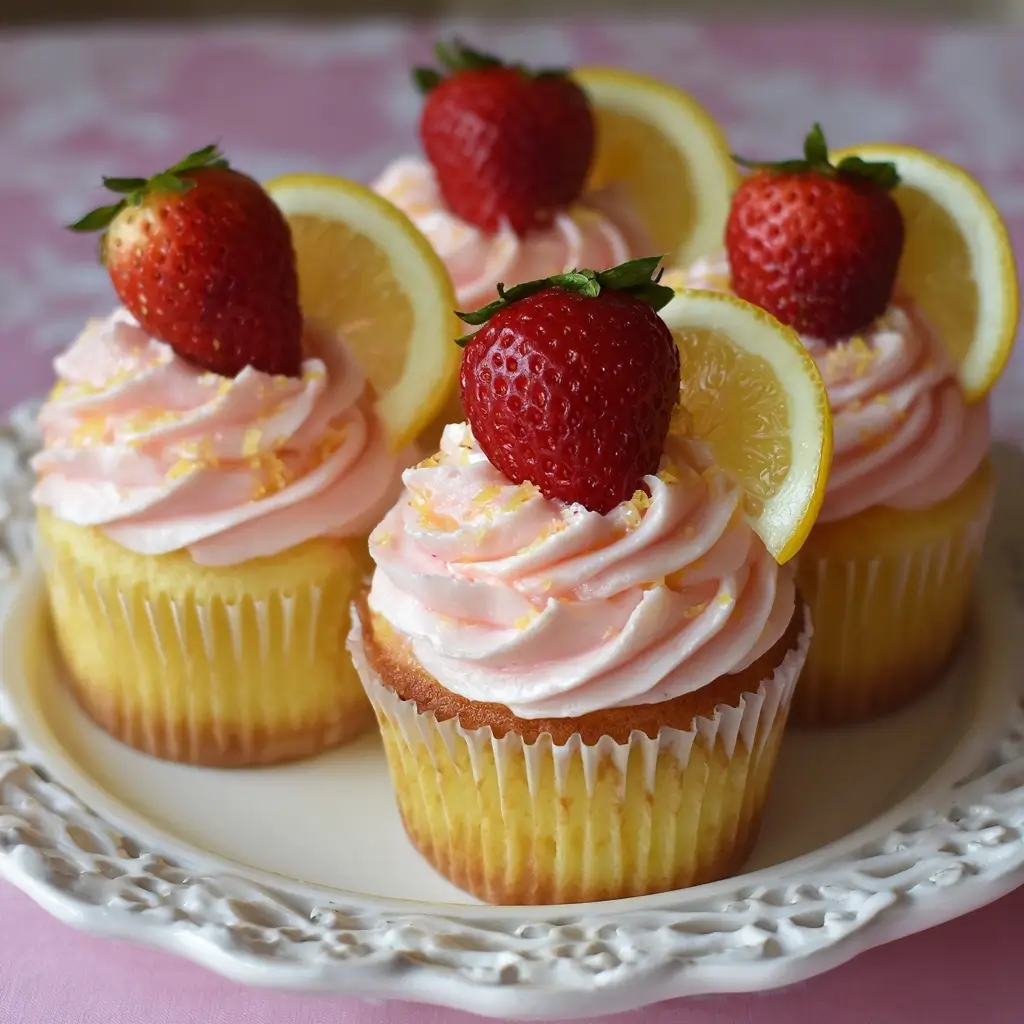
Strawberry Lemonade Cupcakes are the ultimate celebration of summer in bite-sized form—vibrant, refreshing, and irresistibly nostalgic. These cupcakes masterfully bridge the tart zing of freshly squeezed lemon juice with the luscious sweetness of ripe, sun-kissed strawberries, all wrapped in a tender, moist vanilla cake base. Unlike traditional lemon or strawberry cupcakes, this hybrid creation captures the effervescent spirit of a tall glass of homemade strawberry lemonade—bright, balanced, and bursting with layered flavor. Perfect for garden parties, bridal showers, baby announcements, or simply brightening an ordinary Tuesday, these cupcakes deliver both visual charm (think rosy-hued batter and glossy lemon-strawberry glaze) and complex, harmonious taste. They’re more than dessert—they’re a sensory experience that evokes backyard barbecues, farmers’ market hauls, and the joyful simplicity of seasonal ingredients done right.
The History
The evolution of Strawberry Lemonade Cupcakes is a delicious convergence of two iconic American favorites: lemonade and cupcakes. Lemonade itself dates back centuries—traced to 10th-century Egypt as a medicinal drink made from citrus, water, and honey—but entered mainstream U.S. culture during the 19th century, especially gaining popularity at fairs, picnics, and temperance rallies as a wholesome, non-alcoholic refreshment. Strawberry lemonade emerged later, likely in the early-to-mid 20th century, as home cooks began muddling fresh berries into their pitcher recipes to add natural sweetness and vivid color—especially after frozen strawberries became widely available post-WWII. Meanwhile, cupcakes rose from “number cakes” (baked in numerical tins) in 19th-century American cookbooks like Eliza Leslie’s Directions for Cookery (1851), evolving into festive, decorated individual treats by the 1950s thanks to advances in baking powder, electric mixers, and food coloring. The fusion into Strawberry Lemonade Cupcakes gained momentum in the 2000s with the rise of food blogs, Pinterest, and artisanal bakery trends—where bakers began experimenting with drink-inspired desserts. Notable milestones include Molly Yeh’s 2013 blog post featuring “Lemonade Cupcakes with Strawberry Buttercream,” and Magnolia Bakery’s limited-edition summer menu in 2016, which helped cement the flavor profile as a modern classic. Today, it stands as a testament to culinary cross-pollination—where beverage craftsmanship meets pastry artistry.
Ingredients Breakdown
Every exceptional Strawberry Lemonade Cupcake begins with intentionality—not just in measurement, but in ingredient quality and function. Below is a meticulous breakdown of each component, explaining *why* it matters and how it contributes to texture, moisture, acidity balance, and aroma:
- All-Purpose Flour (2 ½ cups / 315g): Provides essential gluten structure without toughness. Sifted twice to aerate and prevent dense crumb. For gluten-free versions, a 1:1 certified GF blend with xanthan gum is recommended—not almond or oat flour alone, which lack binding strength.
- Granulated Sugar (1 ¾ cups / 350g): Sweetens while aiding in creaming (trapping air for lift), caramelization (golden crust), and moisture retention (hygroscopic properties). Organic cane sugar yields a cleaner, less molasses-forward taste than brown sugars.
- Baking Powder (2 ½ tsp) & Baking Soda (½ tsp): Dual-leavening system: baking powder provides primary lift during baking; baking soda neutralizes excess acidity from lemon juice and strawberries, preventing metallic aftertaste and ensuring optimal rise. Omitting either results in flat, sour, or bitter cupcakes.
- Unsalted Butter (¾ cup / 170g), room temperature: Adds richness, tenderness, and mouthfeel. European-style butter (82–84% fat) enhances flavor depth. Salted butter is discouraged—it introduces inconsistent sodium levels that interfere with leavening and seasoning control.
- Large Eggs (3), room temperature: Emulsify fat and liquid, contribute structure via proteins, and add moisture. Cold eggs can cause batter to curdle; always bring to 68–72°F (20–22°C) before use.
- Whole Milk (¾ cup / 180ml), room temperature: Balances acidity, adds lactose for subtle sweetness and browning, and improves crumb softness. Buttermilk may be substituted *only if* baking soda is reduced by ¼ tsp to avoid over-neutralization.
- Fresh Lemon Juice (⅓ cup / 80ml) & Zest (from 2 large lemons): Juice supplies bright acidity and volatile citrus oils; zest delivers intense aromatic compounds (limonene, citral) that survive baking better than juice alone. Bottled juice lacks enzymatic complexity and often contains preservatives that mute flavor.
- Freeze-Dried Strawberry Powder (⅓ cup / 35g): The secret weapon—concentrated strawberry essence without added water (which would thin batter). Made by grinding unsweetened freeze-dried berries, it imparts vivid red hue, jammy depth, and no graininess. Fresh purée introduces too much moisture and dilutes acidity; strawberry jam adds unwanted pectin and sugar load.
- Heavy Cream (for frosting, ½ cup / 120ml): Higher fat content (36–40%) ensures stable, pipeable, non-grainy buttercream with luxurious melt-in-mouth texture—unlike half-and-half or milk, which cause splitting or dull flavor.
- Confectioners’ Sugar (4 cups / 480g), sifted: Finely ground for smoothness; cornstarch content helps stabilize frosting. Unsifted sugar causes grittiness and air pockets in buttercream.
- Real Vanilla Extract (2 tsp): Madagascar Bourbon vanilla adds warm, creamy undertones that round out sharp citrus and berry notes. Imitation vanilla introduces harsh, artificial top notes that clash.
- Pinch of Fine Sea Salt (¼ tsp): Enhances all other flavors, reduces perceived bitterness, and balances sweetness—critical in high-acid desserts.
Optional but highly recommended enhancements: a splash of Chambord (raspberry liqueur) in the frosting for nuanced fruit complexity; edible dried lavender buds (⅛ tsp) in the dry ingredients for Provence-inspired elegance; or a light brush of lemon simple syrup (1:1 lemon juice:sugar, simmered 3 mins) on baked cupcakes for amplified moisture and brightness.
Step-by-Step Recipe
This method prioritizes precision, timing, and sensory cues—not just timers—to guarantee consistent, professional-grade results. Follow each step in order, with no shortcuts:
- Prep Work (15 minutes): Preheat oven to 350°F (175°C). Line two standard 12-cup muffin tins with premium parchment liners (not wax paper)—they prevent sticking *and* add subtle vanilla aroma when baked. Set racks in upper and lower thirds. Weigh all ingredients using a digital scale (grams preferred); volume measurements introduce up to 20% variance. Zest lemons *before* juicing (zest clogs juicer). Grind freeze-dried strawberries in spice grinder until powdery—no visible shards.
- Cream Butter & Sugar (4 minutes): In stand mixer fitted with paddle attachment, beat butter on medium speed 1 minute until creamy. Gradually add sugar in 3 additions, beating 2 minutes after each until pale, fluffy, and nearly doubled in volume. Scrape bowl thoroughly with silicone spatula. *Key cue:* When you lift paddle, mixture should form thick, ribbon-like strands that hold shape for 3 seconds.
- Incorporate Eggs (3 minutes): Add eggs one at a time, mixing on medium-low 45 seconds after each until fully emulsified (no streaks of yolk or white). Add vanilla with final egg. Overmixing here causes toughness—stop as soon as uniform.
- Combine Dry Ingredients (2 minutes): In separate bowl, whisk flour, baking powder, baking soda, salt, and strawberry powder until *absolutely homogeneous*—no pink streaks or clumps. Sifting through a fine-mesh strainer ensures even distribution and removes lumps.
- Alternate Wet & Dry (3 minutes): With mixer on low, add ⅓ dry mix → mix 15 sec. Add ½ milk → mix 15 sec. Repeat (dry → milk → dry), ending with dry. *Crucial:* Never add all liquid or all dry at once—it causes gluten overdevelopment and tunneling. After final addition, mix only until *just combined*—batter will look slightly lumpy; overmixing = dense cupcakes.
- Finish with Citrus (1 minute): Gently fold in lemon zest and juice with spatula using 12 figure-eight motions—just enough to distribute. Batter will lighten in color and become slightly more fluid. Let rest 5 minutes—this allows starches to hydrate and gluten to relax.
- Fill & Bake (22–24 minutes): Use 2-tablespoon ice cream scoop to portion 24 level mounds (≈¼ cup each) into liners, filling ⅔ full. Tap pan sharply 3 times on counter to release air bubbles. Bake 22 minutes on upper rack, then rotate pans front-to-back *and* top-to-bottom. Bake additional 1–2 minutes until tops spring back when lightly pressed and toothpick inserted in center comes out with *moist crumbs* (not wet batter, not clean). Total bake time varies by oven—use visual/tactile cues over timer.
- Cool Completely (1 hour minimum): Remove cupcakes from pans immediately onto wire racks. Cool upright—never stack or cover. Frosting applied to warm cupcakes melts, slides off, and causes condensation that blurs colors. Wait until bottoms are room temperature to touch (≈65°F/18°C).
Tips
- Acidity Control is Non-Negotiable: Lemon juice lowers batter pH, which can weaken gluten and destabilize eggs. Always pair it with baking soda to buffer—and never exceed ⅓ cup juice unless adjusting leavening. Too much acid = collapsed centers and sulfur-like off-notes.
- Strawberry Powder > Purée Every Time: Fresh strawberry purée adds ~85% water, turning cupcakes gummy and diluting lemon impact. Freeze-dried powder delivers 10x the flavor concentration with zero moisture penalty. Store opened powder in airtight container with silica packet—it degrades rapidly when exposed to humidity.
- Room Temperature is a Spectrum: “Room temp” means 68–72°F (20–22°C), not “left out overnight.” Butter should yield to gentle thumb pressure; eggs should feel cool but not cold. Use infrared thermometer for accuracy—especially critical in humid climates where ingredients sweat.
- Rotate Racks Mid-Bake—Religiously: Home ovens have hot spots. Rotating ensures even browning and prevents domed, cracked tops. If your oven has convection, reduce temp by 25°F and disable fan—the delicate crumb dries out under forced air.
- Undermix, Then Undermix Again: Gluten development happens fast in small-batch batters. Mix dry/wet *only until no streaks remain*. Lumps are fine—they vanish during baking. Overmixed batter = rubbery, tunnel-riddled cupcakes.
- Cooling Is Part of Baking: Residual heat continues cooking crumb for 5–7 minutes post-oven. Cooling upright on racks prevents soggy bottoms from trapped steam. Never refrigerate to “speed up” cooling—it causes condensation and starch retrogradation (gritty texture).
- Frosting Consistency is King: For flawless swirls, buttercream must be 68–70°F (20–21°C). If too cold, it tears; too warm, it melts. Chill bowl and beaters 15 minutes pre-mixing if kitchen exceeds 75°F (24°C). Add heavy cream 1 tsp at a time—over-liquifying causes greasiness.
- Decorate with Intention: Pipe frosting using Wilton 1M tip for classic swirls. Garnish with candied lemon slices (simmer thin rounds in 1:1 sugar:water 15 mins, dry 24 hrs), fresh hulled strawberry halves, or edible viola blossoms. Avoid sprinkles with artificial dyes—they bleed into lemon glaze.
Variations and Customizations
These cupcakes are a versatile canvas—elevate, adapt, or reimagine them for dietary needs, seasons, or occasions without sacrificing integrity:
- Vegan Version: Replace butter with refined coconut oil (solid at room temp); eggs with flax eggs (1 tbsp ground flax + 2.5 tbsp water per egg, rested 10 mins); milk with unsweetened oat milk + ½ tsp apple cider vinegar (to mimic buttermilk tang). Use aquafaba (3 tbsp per egg) whipped to stiff peaks folded in last for lift. Frost with cashew-coconut buttercream (soaked raw cashews, coconut cream, lemon zest, powdered sugar).
- Gluten-Free Adaptation: Substitute flour with King Arthur Measure-for-Measure GF blend. Add ½ tsp xanthan gum if blend doesn’t include it. Increase baking powder to 2 ¾ tsp for extra lift. Bake 1–2 minutes longer—GF batters set slower.
- Strawberry-Lemonade Swirl Cake: Double the recipe and bake in three 6-inch round pans. Layer with strawberry lemonade curd (see below) and Swiss meringue buttercream. Ideal for weddings or birthdays.
- Mini Cupcakes (24–30 count): Fill liners ½ full. Bake 11–13 minutes. Perfect for tasting menus or party favors. Reduce frosting per cupcake by ⅓.
- Strawberry Lemonade Curd Filling: Whisk 1 cup fresh strawberry purée (strained), ¾ cup lemon juice, 1 ½ cups sugar, 4 egg yolks, and 6 tbsp cold butter in saucepan. Cook over medium-low, stirring constantly with silicone spatula, until thick enough to coat back of spoon (170°F/77°C). Strain, cool, chill 2 hours. Pipe 1 tsp into center of each cupcake before frosting.
- Adult-Enhanced: Add 2 tbsp elderflower liqueur (St-Germain) to batter, or 1 tbsp bourbon to frosting. For sophisticated depth, infuse lemon zest into heavy cream overnight, then strain before whipping buttercream.
- Winter Variation: Swap strawberry powder for roasted beet powder (½ cup) + orange zest/juice instead of lemon. Earthy-sweet and jewel-toned—perfect for holiday tables.
- Kid-Friendly Fun: Make “Strawberry Lemonade Pops” by pouring batter into silicone pop molds, baking 18 mins, then inserting sticks and freezing. Dip in white chocolate and crushed freeze-dried strawberries.
Health Considerations and Nutritional Value
While inherently indulgent, Strawberry Lemonade Cupcakes can be mindfully crafted to align with wellness goals—without compromising joy or flavor. A standard cupcake (1/24th recipe, unfrosted) contains approximately 210 calories, 28g carbs (18g sugar), 9g fat (5.5g saturated), 3g protein, and 0g fiber. Key nutritional insights and optimization strategies:
- Vitamin C Powerhouse: One cupcake delivers ~25mg vitamin C (28% DV) from lemon juice and zest—supporting immune function, collagen synthesis, and iron absorption. Pair with iron-rich foods (spinach salad) for synergistic benefit.
- Antioxidant-Rich Berries: Freeze-dried strawberries retain >90% of anthocyanins (potent anti-inflammatory flavonoids) and ellagic acid (studied for cellular protection). Fresh berries lose up to 50% nutrients during cooking—freeze-drying preserves them intact.
- Smart Sugar Reduction: Cut granulated sugar by ¼ cup (50g) without texture loss—lemon and strawberry provide ample sweetness perception. Replace ½ cup sugar with monk fruit-erythritol blend (1:1 ratio) for keto-friendly version (net carbs drop to 12g).
- Healthy Fat Options: Substitute ¼ cup butter with avocado oil (neutral flavor, high smoke point) or grass-fed ghee (lactose-free, rich in butyrate). Increases monounsaturated fats and reduces inflammatory omega-6s.
- Fiber Fortification: Add 2 tbsp golden flaxseed meal or psyllium husk to dry ingredients—adds 3g fiber per cupcake, slows glucose absorption, and enhances satiety. No taste or texture compromise.
- Allergen Notes: Naturally nut-free and soy-free (verify vanilla extract). For dairy-free, use coconut oil and oat milk—but note: coconut oil solidifies when cold, causing frosting to harden. Serve at room temp.
- Glycemic Impact Mitigation: Serve with Greek yogurt dip (lemon zest + honey + mint) to add protein and fat, lowering overall glycemic load. Avoid consuming on empty stomach—pair with a handful of almonds or cheese.
- Portion Mindfulness: The visual appeal of these cupcakes encourages slower, more intentional eating—a proven strategy for improved satiety signaling. Using mini liners (12 per batch) reduces calorie intake by 40% while satisfying dessert craving.
Important disclaimer: These cupcakes are not a substitute for medical nutrition therapy. Individuals with GERD should limit lemon juice to 2 tbsp (increased acidity may trigger reflux). Those on warfarin should consult physicians before consuming large amounts of vitamin K–rich foods—though strawberries and lemons are very low in K, making them generally safe.
Ingredients
- 2 ½ cups (315g) all-purpose flour, sifted
- 1 ¾ cups (350g) granulated sugar
- 2 ½ tsp aluminum-free baking powder
- ½ tsp baking soda
- ¼ tsp fine sea salt
- ¾ cup (170g) unsalted butter, room temperature
- 3 large eggs, room temperature
- ¾ cup (180ml) whole milk, room temperature
- ⅓ cup (80ml) fresh lemon juice (from 3–4 lemons)
- Zest of 2 large lemons (about 2 tbsp)
- ⅓ cup (35g) unsweetened freeze-dried strawberry powder
- 2 tsp pure vanilla extract
For the Strawberry Lemonade Buttercream:
- 2 cups (454g) unsalted butter, room temperature
- 4 cups (480g) confectioners’ sugar, sifted
- ½ cup (120ml) heavy cream, room temperature
- 2 tsp pure vanilla extract
- 2 tbsp fresh lemon juice
- 2 tbsp freeze-dried strawberry powder
- Pinch of fine sea salt
For Garnish (optional):
- Candied lemon slices
- Fresh hulled strawberries, halved
- Edible flowers (violets, pansies)
- White chocolate drizzle (melted 70% cocoa white chocolate)
Directions
- Preheat oven to 350°F (175°C). Line two 12-cup muffin tins with parchment cupcake liners. Set aside.
- In a medium bowl, whisk together flour, granulated sugar, baking powder, baking soda, salt, and freeze-dried strawberry powder until thoroughly combined and uniformly pink. Set aside.
- In the bowl of a stand mixer fitted with paddle attachment, beat butter on medium speed for 1 minute until creamy and smooth. Gradually add sugar in three additions, beating for 2 minutes after each until light, fluffy, and pale yellow. Scrape bowl and paddle thoroughly.
- Add eggs one at a time, beating on medium-low for 45 seconds after each addition until fully incorporated and glossy. Add vanilla with the third egg.
- With mixer on low speed, add one-third of the dry ingredients and mix for 15 seconds until mostly blended. Add half of the milk and mix for 15 seconds. Repeat, adding another third dry, remaining milk, and final third dry—mixing only until no dry streaks remain after each addition. Do not overmix.
- Gently fold in lemon zest and lemon juice with a silicone spatula using 12 gentle figure-eight strokes. Batter will be smooth, slightly thick, and rosy-gold. Let rest 5 minutes at room temperature.
- Using a 2-tablespoon ice cream scoop, portion batter evenly into prepared liners, filling each ⅔ full. Tap pans firmly on counter 3 times to release air bubbles.
- Bake for 22 minutes on upper oven rack. Rotate pans front-to-back and top-to-bottom. Bake 1–2 minutes more until cupcakes are golden, spring back when lightly touched, and a toothpick inserted in center emerges with moist crumbs (not wet batter).
- Immediately remove cupcakes from pans and transfer to wire racks. Cool completely—minimum 60 minutes—before frosting.
- Make buttercream: Beat butter on medium-high for 3 minutes until pale and whipped. Gradually add confectioners’ sugar in 3 additions, beating 1 minute after each. Add heavy cream, vanilla, lemon juice, strawberry powder, and salt. Beat on high for 4 minutes until ultra-light, fluffy, and glossy. If too soft, chill bowl 10 minutes; if too stiff, add ½ tsp cream.
- Frost cooled cupcakes using a piping bag fitted with Wilton 1M tip. Swirl generously. Garnish immediately with desired toppings.
- Store unfrosted cupcakes airtight at room temperature up to 2 days; frosted cupcakes refrigerated up to 5 days (bring to room temp 30 minutes before serving). Freeze unfrosted cupcakes up to 3 months—thaw wrapped at room temp 2 hours before frosting.
FAQ
- Can I make these cupcakes ahead of time?
- Yes! Bake cupcakes up to 2 days ahead—cool completely, then store airtight at room temperature. Frost day-of for best texture and appearance. Buttercream can be made 5 days ahead and refrigerated; re-whip 5 minutes before piping.
- Why did my cupcakes sink in the middle?
- Sinking is usually caused by one of three issues: (1) Underbaking—check doneness with toothpick + spring-back test; (2) Opening oven door before 18 minutes—causes rapid temperature drop; (3) Excess lemon juice or under-measured leavening—always weigh baking powder/soda.
- Can I use fresh strawberry purée instead of freeze-dried powder?
- Not recommended. Fresh purée adds ~100g water, leading to gummy texture, muted lemon flavor, and poor rise. If absolutely necessary, reduce milk to ¼ cup and add 1 extra tbsp flour—but results will be inferior.
- My frosting is runny/grainy/broken. How do I fix it?
- Runny? Chill bowl 10 minutes, then re-beat. Grainy? Confectioners’ sugar wasn’t sifted—strain through fine mesh and re-mix. Broken (oily separation)? Butter was too warm—chill 15 minutes, then beat on low until re-emulsified. Always start with cool, stiff butter.
- Are these cupcakes suitable for high-altitude baking?
- At 3,000+ ft, reduce sugar by 1 tbsp, increase baking powder by ¼ tsp, decrease baking soda by ⅛ tsp, and add 1 tbsp extra flour. Bake at 355°F for 20–21 minutes. Test early—high altitude accelerates leavening.
- Can I make this recipe dairy-free?
- Absolutely. Substitute butter with refined coconut oil (solid), milk with oat milk + ½ tsp vinegar, and heavy cream with full-fat coconut cream (chilled, solid part only). Note: Coconut oil frosting firms when cold—serve at 70°F.
- How do I prevent color bleeding in the batter?
- Use only freeze-dried strawberry powder—not artificial red dye or jams. Dye-based products react with lemon’s acidity, turning muddy brown. Powder stays vibrant because it’s pH-stable and plant-based.
- What’s the best way to transport these cupcakes?
- Use a cupcake carrier with individual slots or a sturdy cardboard box lined with non-slip shelf liner. Place cupcakes upright, insert foam block with holes cut to size, or nestle in bubble wrap. Never stack. Refrigerate carrier 15 minutes before loading if ambient temp >75°F.
- Can kids help make these?
- Yes! Assign age-appropriate tasks: preschoolers can zest lemons (with safety grater) and stir dry ingredients; elementary kids can scoop batter and pipe frosting (with guidance); tweens can operate stand mixer on low and manage oven timing. Always supervise around hot surfaces and sharp tools.
- Why does the recipe call for both baking powder AND baking soda?