Introduction
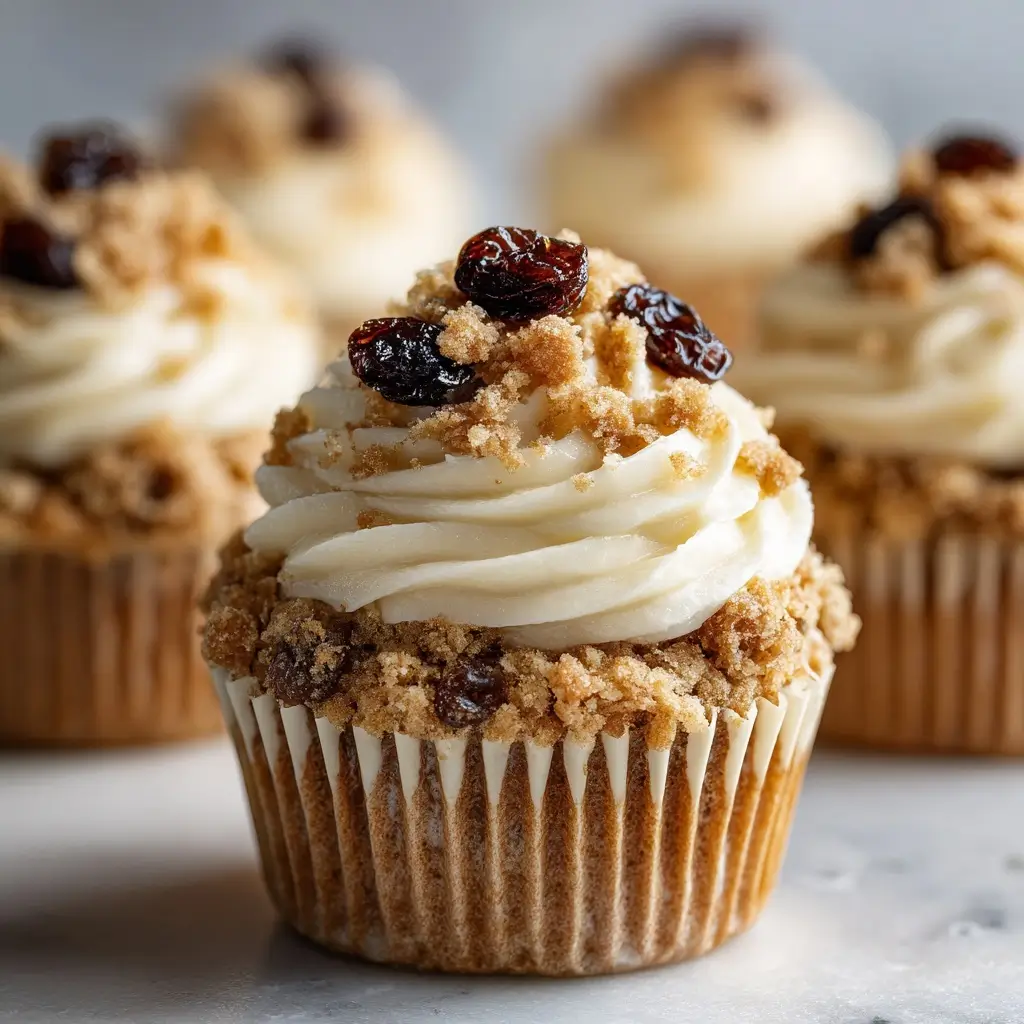
Oatmeal Raisin Cookie Cupcakes are a whimsical, delectable fusion of two beloved American classics: the chewy, warmly spiced comfort of oatmeal raisin cookies and the playful, portion-perfect charm of cupcakes. Imagine the nostalgic aroma of cinnamon, brown sugar, and toasted oats—now transformed into a tender, domed treat baked in a cupcake liner, crowned with a glossy glaze or creamy frosting, and studded with plump, juicy raisins. These aren’t just cookies disguised as cupcakes—they’re an intentional reinvention: soft-baked with precise moisture control, structured to hold their shape without collapsing, and engineered for both handheld delight and elegant presentation. Whether served at brunch gatherings, school bake sales, holiday dessert tables, or as a cozy afternoon indulgence, Oatmeal Raisin Cookie Cupcakes bridge generations—honoring tradition while embracing modern texture expectations, dietary flexibility, and visual appeal.
The History
The roots of the oatmeal raisin cookie trace back to the early 20th century, gaining widespread popularity after the introduction of Quaker Oats’ standardized rolled oats in the 1870s and the subsequent proliferation of home economics cookbooks in the 1920s–30s. Recipes appeared in publications like The Joy of Cooking (1931) and Betty Crocker’s Picture Cook Book (1950), often touting oats as a wholesome, economical ingredient during times of scarcity. Raisins were prized for their natural sweetness and long shelf life—making them ideal pantry staples before refined sugars became ubiquitous. Meanwhile, cupcakes evolved from “cup cakes” (so named because ingredients were measured by volume using teacups rather than scales) documented as early as 1796 in Amelia Simmons’ American Cookery. By the 1950s, cupcake pans and decorative liners entered mainstream kitchens, and bakeries began experimenting with flavor crossovers. The Oatmeal Raisin Cookie Cupcake emerged organically in the late 1990s and early 2000s within boutique bakeries and food blogs—a response to consumer demand for “gourmetized comfort food.” It gained viral traction on platforms like Pinterest and Instagram around 2012–2014, celebrated for its rustic-elegant duality: earthy yet refined, hearty yet delicate. Today, it stands as a testament to culinary evolution—where heritage recipes are reimagined through contemporary techniques, equipment (like convection ovens and digital scales), and cultural values centered on balance, nostalgia, and mindful celebration.
Ingredients Breakdown
Every element in this recipe serves a precise functional and sensory role—far beyond mere flavor contribution. Understanding the science behind each component empowers bakers to troubleshoot, scale, and adapt with confidence.
- Old-Fashioned Rolled Oats (not instant or quick-cooking): Provide structural integrity, chewy texture, and nutty depth. Their intact groats absorb moisture slowly, preventing cakey collapse while delivering that signature toothsome bite. Gluten-free certified oats ensure safety for sensitive individuals—critical since cross-contamination is common in commercial oat processing.
- Raisins (Golden or Dark): Offer concentrated sweetness, tart acidity, and plump juiciness. Soaking them in warm apple juice, rum, or even strong brewed tea for 15–30 minutes before folding in dramatically improves moisture retention and prevents dry, shriveled pockets in the final bake. Golden raisins lend a honeyed brightness; dark raisins contribute deeper molasses notes.
- Brown Sugar (Packed Light or Dark): Acts as both sweetener and tenderizer—its molasses content retains moisture, enhances browning via Maillard reactions, and contributes acidic pH that activates baking soda for optimal lift. Dark brown sugar intensifies caramel and toffee notes; light brown yields subtler warmth.
- Granulated Sugar: Balances hygroscopicity, adds crispness to the outer crust, and aids in creaming to incorporate air—essential for lightness. Too much granulated sugar can inhibit spread and dry out the crumb; too little compromises structure.
- Unsalted Butter (Room Temperature, Not Melted): Provides richness, flakiness in the crumb, and emulsification. Creaming with sugars creates tiny air pockets that expand during baking—key to rise without chemical leaveners dominating. European-style butter (82–84% fat) yields superior tenderness and flavor versus standard 80% varieties.
- Large Eggs (Room Temperature): Bind ingredients, add moisture and protein for structure, and contribute to leavening via steam and coagulation. Using room-temperature eggs ensures uniform emulsion with butter—cold eggs can cause curdling and uneven texture.
- Pure Vanilla Extract (Not Imitation): Contains over 200 aromatic compounds—including vanillin, guaiacol, and furfural—that synergize with cinnamon and caramelized sugars. Alcohol-based extraction ensures full flavor release during baking.
- All-Purpose Flour (or Whole Wheat Pastry Flour Blend): Supplies gluten-forming proteins for scaffolding. Excess flour leads to toughness; insufficient flour causes spreading or sinking. Spoon-and-level measuring is non-negotiable—scooping packs flour densely and adds up to 25% extra per cup.
- Baking Soda (Not Baking Powder): Reacts with the acidity in brown sugar and buttermilk (if used) to produce carbon dioxide gas—lifting the batter gently. Too much results in soapy bitterness and excessive browning; too little yields dense, gummy cupcakes.
- Ground Cinnamon & Nutmeg: Warm, aromatic spices that complement oats’ earthiness. Freshly grated nutmeg (from whole seeds) offers volatile oils absent in pre-ground versions—up to 3x more potency. Ceylon cinnamon (true cinnamon) is milder and sweeter than cassia; preferred for nuanced baking.
- Salt (Fine Sea Salt or Kosher): Enhances all flavors, controls yeast activity (if using sourdough starter variations), and strengthens gluten bonds. It’s not just for “saltiness”—it’s the conductor of the flavor orchestra.
- Optional Add-Ins: Toasted walnuts or pecans (chopped fine to avoid sinking), a tablespoon of molasses for deeper complexity, orange zest for citrus lift, or a pinch of cardamom for floral intrigue.
Step-by-Step Recipe
- Prep & Preheat: Line a standard 12-cup muffin tin with high-quality parchment or foil cupcake liners (avoid thin paper—they may tear when removing). Preheat oven to 350°F (175°C). Position rack in the center third. Allow all refrigerated ingredients (butter, eggs, any dairy) to reach true room temperature (68–72°F)—this takes 60–90 minutes uncovered. Weigh ingredients using a digital kitchen scale for absolute precision (grams preferred over cups).
- Soak the Raisins: In a small bowl, combine 1 cup raisins with ¼ cup warm (not boiling) apple juice or golden rum. Let steep 20 minutes, stirring once halfway. Drain well, reserving liquid (can be added to batter if needed for moisture adjustment). Pat raisins *very* dry with clean paper towels—excess surface moisture causes steaming instead of baking.
- Cream Butter & Sugars: In a large stand mixer fitted with paddle attachment (or sturdy hand mixer), beat 1 cup (2 sticks / 227g) unsalted butter, 1 cup (200g) packed light brown sugar, and ½ cup (100g) granulated sugar on medium speed for 3–4 minutes until pale, fluffy, and completely homogeneous—no graininess visible. Scrape bowl and paddle thoroughly with silicone spatula.
- Incorporate Eggs & Flavorings: Add 2 large room-temperature eggs one at a time, beating on medium-low for 30 seconds after each addition until fully emulsified. Beat in 2 tsp pure vanilla extract and 1 tsp pure almond extract (optional but recommended for depth). Scrape bowl again.
- Whisk Dry Ingredients: In a separate medium bowl, whisk together 1¾ cups (210g) all-purpose flour, 1 tsp baking soda, 1½ tsp ground cinnamon, ¼ tsp freshly grated nutmeg, and 1 tsp fine sea salt until fully aerated and no streaks remain. Sift once for guaranteed uniformity.
- Combine Wet & Dry: On low speed, add dry mixture to wet mixture in three equal additions, alternating with ⅓ cup (80ml) buttermilk or whole milk (if using buttermilk, reduce salt by ¼ tsp to account for its acidity). Begin and end with dry ingredients. Mix *only* until no flour streaks remain—about 15–20 seconds per addition. Overmixing develops excess gluten → tough cupcakes.
- Fold in Oats & Raisins: Remove bowl from mixer. Using a wide silicone spatula, gently fold in 1½ cups (135g) old-fashioned rolled oats and the soaked, drained raisins until *just* distributed—no more than 12–15 folds. Batter will be thick, slightly shaggy, and scoopable—not runny.
- Portion & Bake: Use a 2-tablespoon (30ml) ice cream scoop to portion batter evenly into lined cups—fill each ~¾ full (approx. 3.5 oz / 100g per cup). Smooth tops lightly with damp finger or offset spatula. Optional: Press 1–2 extra plump raisins onto center of each for visual appeal. Bake 18–22 minutes—rotating pan front-to-back at 12 minutes—until cupcakes spring back when lightly pressed, edges are set and lightly golden, and a toothpick inserted *near* (not directly into) a raisin comes out with moist crumbs—not wet batter. Avoid overbaking: they continue cooking in residual heat.
- Cool Strategically: Let cupcakes cool in pan on wire rack for 12 minutes *exactly*. This allows steam to escape gradually, preventing soggy bottoms. Then, carefully lift each liner-wrapped cupcake and transfer to rack to cool completely (45–60 minutes) before frosting. Warm cupcakes melt frosting and trap condensation.
- Frost & Finish: Once fully cooled, pipe or spread your choice of frosting (see Variations). For maximum shelf life and flavor melding, refrigerate frosted cupcakes for 1 hour before serving—this firms the frosting and deepens spice notes.
Tips
- Temperature Is Everything: Cold butter won’t cream properly; cold eggs break emulsions; cold batter spreads unevenly. Use an instant-read thermometer to verify butter is 65–68°F (18–20°C)—cool to touch but leaves slight indentation when pressed.
- Measure by Weight: A cup of flour can vary from 120g to 160g depending on scooping method. Using grams eliminates guesswork—especially critical for gluten development and moisture balance.
- Don’t Skip the Rest: Letting batter rest 20–30 minutes before baking hydrates the oats fully, relaxes gluten, and improves oven spring and crumb uniformity.
- Rotate & Monitor: Ovens have hot spots. Rotating at 12 minutes ensures even browning. Use an oven thermometer—many built-in thermostats are off by ±25°F.
- Line Liners with Butter: Lightly brush inside of each liner with softened butter before filling. This prevents sticking and adds subtle richness to the base.
- Freeze Smart: Unfrosted, completely cooled cupcakes freeze beautifully for up to 3 months. Wrap individually in plastic, then place in freezer bag. Thaw overnight in fridge, then bring to room temp before frosting.
- Revive Stale Cupcakes: If stored too long, wrap individually in damp paper towel and microwave 5–8 seconds. The steam rehydrates the crumb instantly.
- Uniform Scooping = Uniform Baking: Use a spring-release scoop for identical portions—prevents some cupcakes from overbaking while others underbake.
- Test for Doneness Correctly: Tap the top gently—it should feel firm but yield slightly. A toothpick test near (not in) a raisin avoids false positives from juice leakage.
- Cool on a Rack, Not Counter: Trapped heat under cupcakes creates condensation → mushy bottoms and sogginess.
Variations and Customizations
This foundational recipe is incredibly versatile—adaptable for dietary needs, seasonal ingredients, occasion-specific elegance, and global flavor profiles.
- Gluten-Free Version: Substitute 1:1 gluten-free all-purpose flour blend (with xanthan gum included) + ¼ tsp additional xanthan gum. Use certified GF oats. Add 1 tbsp psyllium husk powder to improve elasticity and moisture retention.
- Vegan Adaptation: Replace butter with vegan butter (Miyoko’s or Earth Balance); eggs with flax eggs (2 tbsp ground flax + 6 tbsp water, rested 10 mins); dairy milk with oat or soy milk; and use maple syrup–soaked raisins. Increase baking soda to 1¼ tsp to compensate for reduced acidity.
- Protein-Powered: Add ¼ cup unflavored whey or plant-based protein powder + 1 extra tbsp milk to maintain hydration. Reduce flour by 1 tbsp to prevent density.
- Spiced Chai Infusion: Steep 2 chai tea bags in warm milk for 5 minutes, cool, then use as the liquid component. Add ¼ tsp ground ginger, ⅛ tsp ground cloves, and a pinch of black pepper to dry spices.
- Lemon-Raisin Brightness: Replace vanilla with 1 tbsp lemon zest + 2 tsp lemon juice. Add ¼ tsp cardamom. Use golden raisins soaked in lemonade.
- Maple-Bourbon Swirl: Whisk 2 tbsp real maple syrup and 1 tbsp bourbon into batter last. Drizzle unfrosted cupcakes with maple-bourbon glaze (½ cup powdered sugar + 1 tbsp maple syrup + 1 tsp bourbon + splash cream).
- Decadent Upscale: Top with brown butter cream cheese frosting, candied pecans, and a flaky sea salt sprinkle. Or fill with spiced apple compote before frosting.
- Kid-Friendly Fun: Stir in mini chocolate chips alongside raisins. Frost with funfetti buttercream and decorate with rainbow sprinkles and edible gold dust.
- Mini Cupcake Batch: Use mini muffin tin—bake 10–12 minutes. Perfect for parties, favors, or portion control.
- Stuffed Surprise: Pipe 1 tsp apple butter, date caramel, or lemon curd into center of each cupcake *before* baking—creates a molten core effect.
Health Considerations and Nutritional Value
While undeniably indulgent, Oatmeal Raisin Cookie Cupcakes offer meaningful nutritional advantages over many conventional cupcakes—especially when prepared mindfully. A standard-sized cupcake (based on this recipe, unfrosted) contains approximately:
- Calories: ~220–250 kcal
- Dietary Fiber: 2.5–3.2g (primarily from oats and raisins—supporting digestive health, satiety, and blood sugar regulation)
- Protein: 3–4g (from oats, eggs, and dairy—contributing to muscle maintenance and prolonged fullness)
- Complex Carbohydrates: Oats provide slow-digesting beta-glucan fiber, clinically shown to lower LDL cholesterol and stabilize postprandial glucose spikes.
- Natural Antioxidants: Raisins contain polyphenols (resveratrol, catechins) and flavonoids linked to cardiovascular and cognitive benefits. Cinnamon has anti-inflammatory properties and may improve insulin sensitivity.
- Minerals: Good source of manganese (oats), potassium (raisins), calcium (dairy), and iron (molasses in brown sugar).
Smart Modifications for Enhanced Wellness:
- Reduce Added Sugar: Cut granulated sugar by 25% and increase oats by 2 tbsp—maintains texture while lowering glycemic load.
- Boost Omega-3s: Add 2 tbsp ground flax or chia seeds—adds fiber, lignans, and ALA omega-3 fatty acids.
- Lower Saturated Fat: Substitute half the butter with unsweetened applesauce or mashed banana—but retain at least ½ stick butter for structure and flavor.
- Refined Grain Alternative: Replace up to ½ cup flour with oat flour (blend rolled oats until fine) for increased soluble fiber and smoother texture.
- Frosting Wisdom: Opt for Greek yogurt–based glaze (½ cup Greek yogurt + ½ cup powdered sugar + 1 tsp vanilla) instead of buttercream—cuts 100+ calories and adds probiotics and protein.
Important Considerations: While nutritious *relative to other sweets*, these remain calorie-dense treats. Portion awareness matters—enjoy one as a balanced snack with fruit or nuts, not as an empty-calorie dessert. Individuals with diabetes should monitor carb counts closely and consider pairing with protein/fat to blunt glucose response. Those with celiac disease must verify *certified gluten-free oats*, as regular oats are frequently cross-contaminated with wheat, barley, or rye.
Ingredients
- 1 cup (2 sticks / 227g) unsalted butter, room temperature
- 1 cup (200g) packed light brown sugar
- ½ cup (100g) granulated sugar
- 2 large eggs, room temperature
- 2 tsp pure vanilla extract
- 1 tsp pure almond extract (optional but highly recommended)
- 1¾ cups (210g) all-purpose flour, spooned & leveled
- 1 tsp baking soda
- 1½ tsp ground cinnamon (preferably Ceylon)
- ¼ tsp freshly grated nutmeg
- 1 tsp fine sea salt
- ⅓ cup (80ml) whole milk or cultured buttermilk
- 1½ cups (135g) old-fashioned rolled oats (not instant or quick-cooking)
- 1 cup (160g) raisins (golden or dark), soaked & drained
Directions
- Preheat oven to 350°F (175°C). Line a 12-cup muffin tin with parchment or foil cupcake liners. Set aside.
- In a small bowl, soak raisins in ¼ cup warm apple juice or rum for 20 minutes. Drain thoroughly and pat *very* dry with paper towels.
- In a stand mixer fitted with paddle attachment, beat butter, brown sugar, and granulated sugar on medium speed for 3–4 minutes until light, fluffy, and pale. Scrape bowl.
- Add eggs one at a time, beating 30 seconds after each. Beat in vanilla and almond extract. Scrape bowl.
- In a separate bowl, whisk flour, baking soda, cinnamon, nutmeg, and salt until fully combined. Sift once.
- With mixer on low, add dry ingredients in three parts, alternating with milk—begin and end with dry ingredients. Mix only until incorporated—do not overbeat.
- Remove bowl from mixer. Fold in oats and soaked raisins with silicone spatula until just combined—12–15 folds max.
- Portion 3 tablespoons (45ml) batter into each liner (~¾ full). Smooth tops. Optional: press 1–2 extra raisins on top.
- Bake 18–22 minutes, rotating pan at 12 minutes, until tops spring back and toothpick near a raisin shows moist crumbs.
- Cool in pan 12 minutes exactly. Transfer to wire rack to cool completely (45–60 min) before frosting.
FAQ
- Can I make these ahead of time?
- Yes! Unfrosted cupcakes keep tightly wrapped at room temperature for 2 days, refrigerated for 5 days, or frozen for 3 months. Frosted cupcakes (with buttercream or cream cheese frosting) last 3 days refrigerated. Always bring to room temperature before serving for best texture and flavor.
- Why did my cupcakes sink in the middle?
- Most commonly caused by underbaking, opening the oven door too early, overmixing the batter (developing too much gluten), or using expired baking soda. Ensure your leavener is fresh—test by mixing ¼ tsp soda with 2 tsp vinegar; it should bubble vigorously within 5 seconds.
- Can I use instant oats?
- No. Instant oats are precooked and finely ground—they turn mushy and gluey when baked, destroying the signature chew. Stick to old-fashioned rolled oats for proper texture and absorption.
- My cupcakes stuck to the liners—what went wrong?
- Liners may have been low-quality or improperly seated. Brushing the *inside* of each liner with softened butter before filling prevents sticking. Also ensure cupcakes cool in pan for the full 12 minutes—removing too soon traps steam and weakens adhesion.
- Can I substitute oil for butter?
- You can replace up to half the butter with neutral oil (like avocado or grapeseed) for added moisture, but full substitution sacrifices flavor, structure, and browning. Butter’s water content and milk solids are essential for the cookie-cupcake hybrid texture.
- How do I prevent raisins from sinking?
- Thoroughly draining and drying raisins is key. Toss them in 1 tsp of the measured flour before folding in—this coats them lightly and helps suspend them in the batter.
- What’s the best frosting pairing?
- Classic choices include cinnamon cream cheese frosting, brown butter glaze, maple buttercream, or a simple vanilla bean drizzle. For contrast, try a tangy orange mascarpone or spiced caramel ganache.
- Can I add nuts?
- Absolutely! Fold in ½ cup finely chopped toasted walnuts or pecans with the oats. Toasting enhances flavor and crunch—skip raw nuts, which can taste bitter or greasy when baked.
- Why does the recipe use baking soda instead of baking powder?
- Baking soda requires acid (from brown sugar, buttermilk, or molasses) to activate—and that acid also tenderizes the crumb and deepens caramelization. Baking powder would create excessive lift, yielding cakey, airy texture inconsistent with cookie-like density.
- Can I bake these as regular cookies?
- Yes—with minor adjustments: drop rounded tablespoons onto parchment-lined sheets, flatten slightly, and bake at 350°F for 11–13 minutes. They’ll spread more and develop crispier edges—still delicious, just a different format!
Summary
Oatmeal Raisin Cookie Cupcakes masterfully reimagine a timeless favorite into a sophisticated, portion-perfect dessert—melding the hearty chew of slow-cooked oats, the caramel-kissed sweetness of plump raisins, and the warm embrace of cinnamon and brown sugar, all elevated by professional baking techniques and thoughtful ingredient science.
Whether enjoyed warm from the oven, elegantly frosted for celebrations, or adapted for gluten-free, vegan, or nutrient-dense lifestyles, these cupcakes deliver comfort with intention—proving that nostalgia and innovation bake beautifully together.