Introduction
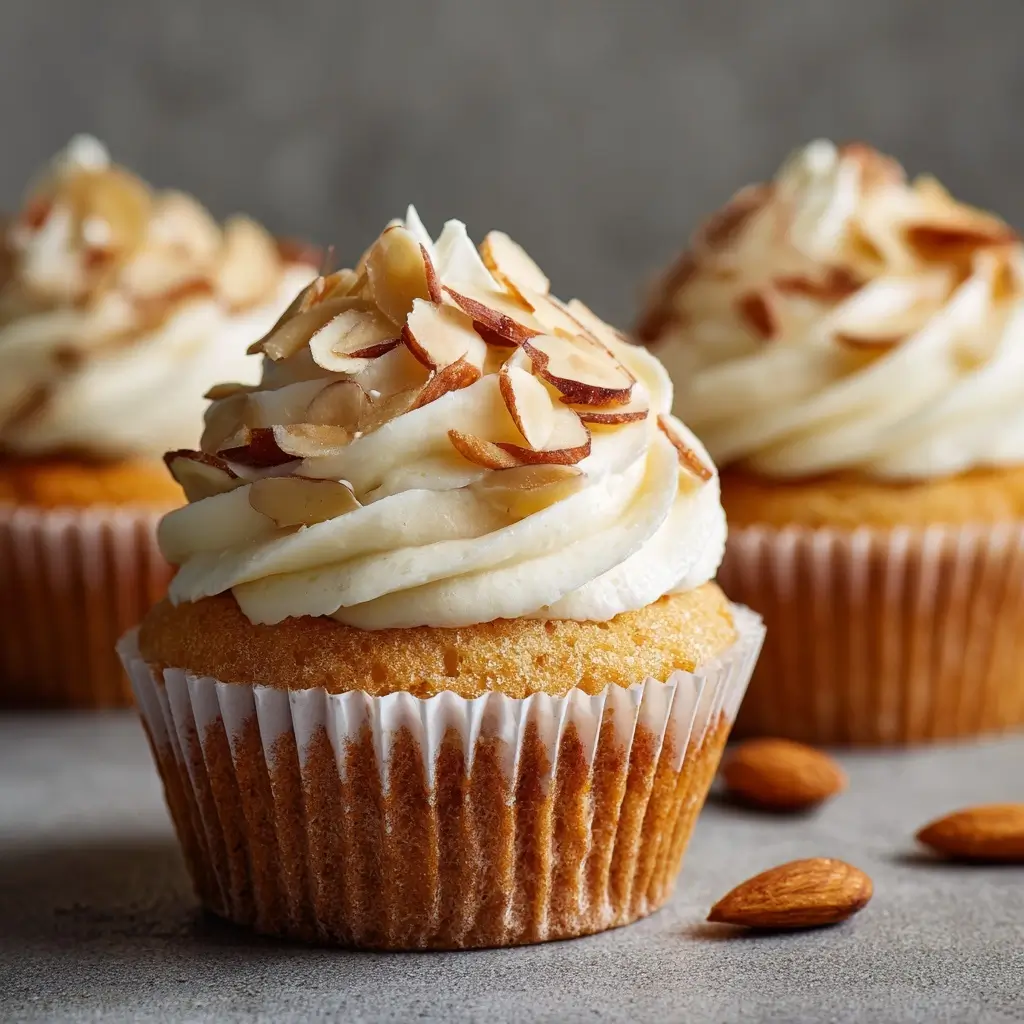
Gluten-Free Vanilla Almond Cupcakes are a celebration of delicate flavor, tender crumb, and inclusive baking—designed to delight everyone, especially those navigating celiac disease, non-celiac gluten sensitivity, or simply choosing a mindful, grain-free-adjacent lifestyle. Unlike many gluten-free baked goods that suffer from grittiness, dryness, or a rubbery texture, these cupcakes boast an airy rise, moist interior, and sophisticated depth thanks to the harmonious pairing of pure Madagascar vanilla and toasted almond essence. They’re not just “gluten-free substitutes”—they’re intentionally crafted confections that stand proudly on their own merit: elegant enough for weddings and baby showers, comforting enough for weekday treats, and versatile enough to adapt to dietary needs without compromise.
The History
The evolution of the gluten-free cupcake mirrors broader shifts in food science, medical awareness, and culinary philosophy. While wheat-based cupcakes trace their roots to 19th-century American “cup cakes” (so named for ingredient measurement by cups rather than weight), the gluten-free iteration emerged much later—gaining momentum only after the 1950s, when Dutch pediatrician Dr. Willem-Karel Dicke identified gluten as the trigger for celiac disease. Early gluten-free baking relied heavily on rice flour and potato starch, often yielding dense, crumbly results. It wasn’t until the 2000s—with advances in xanthan gum stabilization, improved milling of ancient grains like sorghum and teff, and the popularization of nut flours—that truly tender, flavorful gluten-free layer cakes and cupcakes became achievable at home. The addition of almond flour—and specifically *blanched* almond flour—marked a pivotal innovation: its natural fats and fine particle size contribute unparalleled moisture, structure, and subtle sweetness, eliminating the need for excessive gums or oil. This recipe honors that legacy by combining time-tested GF flour blend wisdom with modern almond-forward technique—paying tribute to both scientific progress and the quiet artistry of bakers who refused to let dietary restrictions dim dessert joy.
Ingredients Breakdown
Every ingredient in this recipe serves a precise functional and sensory role—no filler, no guesswork. Here’s why each one matters:
- Blanched Almond Flour (1¾ cups): Finely ground from skinless almonds, it delivers rich nuttiness, natural oils for moisture, protein for structure, and a velvety crumb. Unlike almond meal (which includes skins and is coarser), blanched almond flour ensures uniform texture and pale golden color—critical for delicate vanilla cupcakes.
- Gluten-Free All-Purpose Flour Blend (¾ cup): A carefully balanced 1:1 blend containing brown rice flour, tapioca starch, potato starch, and xanthan gum (e.g., Bob’s Red Mill, King Arthur Measure for Measure, or自制 blend). This provides starch-based lift, mimics wheat’s binding capacity, and prevents the almond flour from dominating structure. *Crucially, it must contain xanthan gum*—if yours doesn’t, add ½ tsp separately.
- Granulated Sugar (1 cup): Not just for sweetness—sugar tenderizes gluten-free batters by inhibiting protein network formation and aids in caramelization for golden edges and crust development.
- Baking Powder (2 tsp) & Baking Soda (¼ tsp): Dual-leavening system: baking powder provides consistent lift during oven spring, while the tiny amount of baking soda (activated by the buttermilk’s acidity) enhances browning and neutralizes any residual tang—yielding cleaner vanilla-almond flavor.
- Unsalted Butter (½ cup / 1 stick, room temperature): Adds richness, mouthfeel, and steam for lift. European-style butter (82–84% fat) is ideal for superior flavor and less water content, reducing risk of gummy texture.
- Large Eggs (3, room temperature): Act as emulsifiers and structural scaffolds. Their proteins coagulate gently during baking, creating a stable yet tender crumb. Cold eggs can cause batter to seize—always bring to room temp (15–20 min out of fridge).
- Pure Vanilla Extract (2 tbsp): Use double-strength or Madagascar Bourbon vanilla for deep, floral, creamy notes that complement—not compete with—almond. Imitation vanilla lacks complexity and can taste medicinal in GF batters.
- Almond Extract (1 tsp, pure—not imitation): The secret amplifier. Just 1 tsp intensifies the almond profile without tasting artificial or soapy. *Never substitute with bitter almond oil (toxic)—only food-grade, pure almond extract.*
- Whole Buttermilk (½ cup, full-fat, room temperature): Acidity activates leaveners and tenderizes; milk solids add richness and promote browning. If unavailable, make DIY buttermilk: stir ½ tbsp lemon juice or white vinegar into ½ cup whole milk, let sit 5 min until curdled.
- Sour Cream (¼ cup, full-fat, room temperature): Adds fat, tang, and lactic acid—further tenderizing while enhancing moisture retention for days. Greek yogurt (full-fat, strained) may be substituted, though sour cream yields slightly richer texture.
- Pinch of Fine Sea Salt (¼ tsp): Essential for balancing sweetness and elevating all other flavors—especially the nuanced nuttiness of almond flour.
Note on Flour Weights: For absolute precision—especially critical in GF baking—measure almond flour and GF blend by weight: 1¾ cups blanched almond flour = 175g; ¾ cup GF blend = 90g. Volume measurements vary wildly due to settling and scoop density.
Step-by-Step Recipe
- Preheat & Prep (15 min ahead): Position oven rack in center. Preheat oven to 350°F (175°C). Line a standard 12-cup muffin tin with high-quality parchment cupcake liners (silicone or greaseproof—avoid thin paper that may tear when removing GF cupcakes). Lightly spray liners with non-stick cooking spray (optional but recommended for easy release).
- Whisk Dry Ingredients (3 min): In a medium bowl, sift together GF all-purpose flour blend, almond flour, granulated sugar, baking powder, baking soda, and salt. Whisk vigorously for 45 seconds to fully aerate and eliminate lumps—this step is non-negotiable for even rise and no gritty pockets.
- Cream Butter & Sugar (4–5 min): Using a stand mixer fitted with paddle attachment (or hand mixer), beat softened butter and sugar on medium-high speed for 4–5 minutes until pale, fluffy, and nearly doubled in volume. Scrape bowl thoroughly halfway. This incorporates air critical for lightness—do not rush.
- Integrate Eggs & Flavorings (3 min): Add eggs one at a time, beating on medium speed for 60 seconds after each addition until fully incorporated and glossy. Pause to scrape bowl. Then beat in vanilla extract and pure almond extract for 30 seconds until fragrant and homogenous.
- Alternate Wet & Dry (2 min): Reduce mixer speed to low. Add one-third of dry mixture; mix just until no flour streaks remain (~15 sec). Add half of buttermilk-sour cream mixture; mix 10 sec. Repeat: dry → wet → dry, ending with dry ingredients. *Never overmix*—stop the moment batter is smooth with no visible flour. Overmixing develops starch networks, causing toughness.
- Fold & Rest (1 min + 10 min): Gently fold batter 3–4 times with a silicone spatula to ensure bottom layers are fully integrated. Let batter rest in bowl for 10 minutes. This allows almond flour to fully hydrate and starches to relax—reducing tunneling and improving crumb cohesion.
- Portion & Bake (22–25 min): Use a 3-tablespoon ice cream scoop (or ¼-cup measure) to evenly portion batter into lined cups—fill each ⅔ full (≈ 3.5 oz/batter per cup). Tap pan firmly twice on counter to release air bubbles. Bake 22–25 minutes, rotating pan front-to-back at 12 minutes. Cupcakes are done when tops are golden, springs back lightly when touched, and a toothpick inserted in center comes out with *moist crumbs* (not wet batter, not completely clean—GF batters set slower).
- Cool Strategically (30+ min): Remove pan from oven. Let cupcakes cool in tin for 15 minutes—this sets structure gently. Then carefully lift each liner and transfer cupcakes to a wire rack. Cool completely (≥45 min) before frosting. Warm cupcakes will melt frosting and absorb condensation, leading to soggy bottoms.
Tips
- Room Temperature is Non-Negotiable: Butter, eggs, buttermilk, and sour cream must all be 65–70°F. Cold ingredients cause batter to “break,” resulting in curdled texture and poor rise. Place eggs in warm water for 5 min if rushed; cut butter into small cubes and leave out 30 min.
- Sift Twice—Seriously: Sift dry ingredients once into bowl, then again *through a fine-mesh sieve* directly into the mixing bowl. Almond flour compacts easily; sifting breaks up micro-clumps invisible to the eye but disastrous to crumb.
- No Overmixing Zone: Once wet and dry are combined, mix only until just blended. Use the “muffin method” principle—even more strictly in GF baking. When in doubt, undermix and fold by hand.
- Oven Thermometer Required: Most home ovens run hot or cold. An inexpensive oven thermometer ensures accurate 350°F—deviations of ±25°F cause collapsed centers or burnt edges.
- High-Altitude Adjustments (3,000+ ft): Reduce baking powder to 1¾ tsp, increase GF blend by 1 tbsp (10g), reduce sugar by 1 tbsp, and bake at 360°F for 20–22 min. Almond flour’s low protein makes it naturally altitude-resilient.
- Freeze for Freshness: Unfrosted, fully cooled cupcakes freeze beautifully for up to 3 months. Wrap individually in plastic wrap, then place in freezer bag. Thaw overnight at room temp—texture remains indistinguishable from fresh.
- Line Choice Matters: Avoid wax paper liners—they steam and peel. Use premium parchment (like If You Care or Reynolds) or foil-lined parchment. For extra security, lightly grease the *bottom* of each liner before filling.
- Don’t Skip the Rest: That 10-minute rest isn’t passive—it’s hydration time. Almond flour absorbs liquid slowly; skipping it leads to uneven bake and potential sinkholes.
Variations and Customizations
This base recipe is a canvas for creativity—each variation maintains structural integrity and GF safety:
- Vanilla-Almond Swirl: Divide batter in half. Stir 2 tbsp unsweetened cocoa powder (GF-certified) into one half. Alternate spoonfuls into liners, then swirl gently with a toothpick.
- Lemon-Almond Zest: Replace 1 tbsp buttermilk with fresh lemon juice; add 1½ tsp finely grated lemon zest with extracts. Top with candied lemon slices pre-bake.
- Cherry-Almond: Fold in ¾ cup finely chopped, patted-dry dried tart cherries (unsweetened) or ½ cup fresh cherries (pitted, halved, tossed in 1 tsp GF flour). Optional: add ¼ tsp almond extract to cherry prep.
- Coconut-Almond: Substitute ¼ cup almond flour with untoasted shredded coconut (fine grind). Top with toasted coconut flakes pre-bake.
- Chocolate-Dipped Mini Cupcakes: Bake in mini muffin tin (30–35 min at 350°F). Cool completely, dip bottoms ½” in tempered dark chocolate (GF-certified), then roll in crushed toasted almonds.
- Vegan Adaptation: Replace butter with refined coconut oil (solid at room temp); eggs with flax eggs (3 tbsp ground flax + 9 tbsp warm water, rested 10 min); buttermilk with almond milk + ½ tbsp lemon juice; sour cream with coconut yogurt (unsweetened, full-fat). Increase baking powder to 2¼ tsp.
- Nut-Free Option: Replace almond flour with an equal weight (175g) of sunflower seed flour (finely ground raw sunflower seeds) + 1 tsp lemon juice (to prevent greening). Omit almond extract; boost vanilla to 3 tbsp.
- Protein-Boosted: Add 2 scoops (60g) unflavored collagen peptides or plant-based vanilla protein powder to dry ingredients. Increase buttermilk by 2 tbsp to compensate.
Health Considerations and Nutritional Value
Per standard cupcake (unfrosted, ~65g batter), approximate values are:
- Calories: 220–240 kcal
- Total Fat: 15–17g (mostly monounsaturated from almond flour and butter)
- Carbohydrates: 18–20g (including 1–1.5g dietary fiber from almond flour)
- Sugars: 12–14g (naturally occurring + added)
- Protein: 5–6g (significantly higher than wheat-based cupcakes due to almond flour’s 20% protein content)
- Sodium: 140–160mg
Key Health Notes:
- Gluten-Free Integrity: All ingredients must be certified gluten-free (especially baking powder, vanilla, and almond extract—cross-contamination is common in shared facilities). Always verify labels—even “naturally gluten-free” items like nuts or spices may be processed on wheat lines.
- Almond Flour Benefits: Rich in vitamin E (antioxidant), magnesium (muscle/nerve function), and heart-healthy fats. Its low glycemic index (GI ≈ 0) makes it favorable for blood sugar management compared to refined wheat flour (GI ≈ 70).
- Butter vs. Oil: Grass-fed butter contributes conjugated linoleic acid (CLA) and butyrate—anti-inflammatory compounds. If using oil, choose avocado or high-oleic sunflower oil for stability.
- Sugar Consciousness: For reduced sugar: replace ¼ cup granulated sugar with erythritol or allulose (1:1 blends work best). Do not use stevia alone—it causes bitterness in GF batters.
- Not Low-Carb/Keto: While almond flour is low-carb, added sugar and GF blend starches push net carbs to ~15g per cupcake. For strict keto, omit sugar entirely and use granulated monk fruit-erythritol blend + increase almond flour to 2 cups (reduce GF blend to ¼ cup).
- Allergen Transparency: Contains tree nuts (almonds), dairy, and eggs. Not suitable for those with these allergies unless using verified safe substitutions.
Ingredients
- 1¾ cups (175g) blanched almond flour, sifted twice
- ¾ cup (90g) certified gluten-free 1:1 all-purpose flour blend (with xanthan gum)
- 1 cup (200g) granulated sugar
- 2 tsp aluminum-free baking powder
- ¼ tsp baking soda
- ¼ tsp fine sea salt
- ½ cup (113g / 1 stick) unsalted butter, room temperature
- 3 large eggs, room temperature
- 2 tbsp pure Madagascar vanilla extract
- 1 tsp pure almond extract
- ½ cup (120ml) whole buttermilk, room temperature
- ¼ cup (60g) full-fat sour cream, room temperature
Directions
- Preheat oven to 350°F (175°C). Line 12-cup muffin tin with parchment cupcake liners; lightly spray with non-stick spray.
- In a medium bowl, whisk together almond flour, GF flour blend, sugar, baking powder, baking soda, and salt. Sift through a fine-mesh sieve into same bowl; whisk 45 seconds until ultra-light and lump-free.
- In stand mixer with paddle attachment, beat butter on medium-high 4 minutes until pale and fluffy. Gradually add sugar; beat 1 more minute until fully incorporated and glossy.
- Add eggs one at a time, beating 60 seconds after each until thickened and smooth. Beat in vanilla and almond extract 30 seconds.
- Reduce speed to low. Add ⅓ dry mixture; mix 15 seconds. Add ½ buttermilk-sour cream mixture; mix 10 seconds. Repeat: dry → wet → dry. Stop immediately when no flour streaks remain.
- Fold batter gently 4 times with spatula. Let rest 10 minutes at room temperature.
- Fill lined cups ⅔ full (≈ 3.5 oz each). Tap pan firmly twice. Bake 22–25 minutes, rotating at 12 minutes, until golden and toothpick shows moist crumbs.
- Cool in pan 15 minutes. Transfer to wire rack; cool completely (≥45 minutes) before frosting.
FAQ
- Why do my gluten-free cupcakes crack on top?
- Cracking usually indicates too-rapid oven spring—often from oven too hot, over-creamed butter, or excessive leavener. Verify oven temp; reduce baking powder to 1¾ tsp if recurring; ensure butter is cool-room-temp (65°F), not warm.
- Can I make these dairy-free?
- Yes. Substitute butter with refined coconut oil (solid), buttermilk with almond milk + ½ tbsp lemon juice, and sour cream with full-fat coconut yogurt. Ensure GF blend is dairy-free (some contain milk derivatives).
- My cupcakes sank in the center—what went wrong?
- Sinking points to underbaking, overmixing, or opening oven too early. Ensure toothpick shows *moist crumbs*, not clean. Never open oven before 18 minutes. Also check expiration dates—old baking powder loses potency.
- Can I use almond meal instead of almond flour?
- Not recommended. Almond meal’s coarse texture and skin content create gritty crumb and uneven rise. If unavoidable, process in food processor until fine, then sift 3x—but results won’t match blanched flour’s tenderness.
- How do I store frosted cupcakes?
- Unfrosted: room temp 2 days, refrigerated 5 days (cover tightly), frozen 3 months. Frosted with buttercream: refrigerate up to 5 days (bring to room temp 1 hour before serving). Avoid freezing frosted cupcakes—they weep upon thawing.
- Is xanthan gum necessary?
- Yes—if your GF blend doesn’t include it. Xanthan gum replaces gluten’s elasticity, preventing crumbliness. Omitting it risks fragile, dry cupcakes that fall apart. Guar gum may substitute 1:1, but xanthan is superior for cake texture.
- Can I bake these as a layer cake?
- Absolutely. Divide batter between two 8-inch round pans (greased & floured with GF blend). Bake 28–32 minutes. Cool in pans 15 minutes, then invert onto racks. Level layers if needed before frosting.
- Why does my batter look thicker than wheat batter?
- It should! Almond flour absorbs more liquid. Trust the recipe—don’t add extra milk. Properly hydrated GF batter is thick but scoopable, like soft cookie dough.
Summary
These Gluten-Free Vanilla Almond Cupcakes redefine what’s possible without gluten—melding the luxurious moisture of blanched almond flour with the delicate perfume of pure Madagascar vanilla and the subtle depth of real almond extract, all lifted by a precisely balanced, xanthan-enriched GF flour blend.
With meticulous attention to ingredient temperature, measured sifting, controlled mixing, and strategic resting, they deliver a bakery-worthy crumb: tender, springy, golden-edged, and profoundly flavorful—proving that dietary necessity never requires dessert compromise.