Introduction
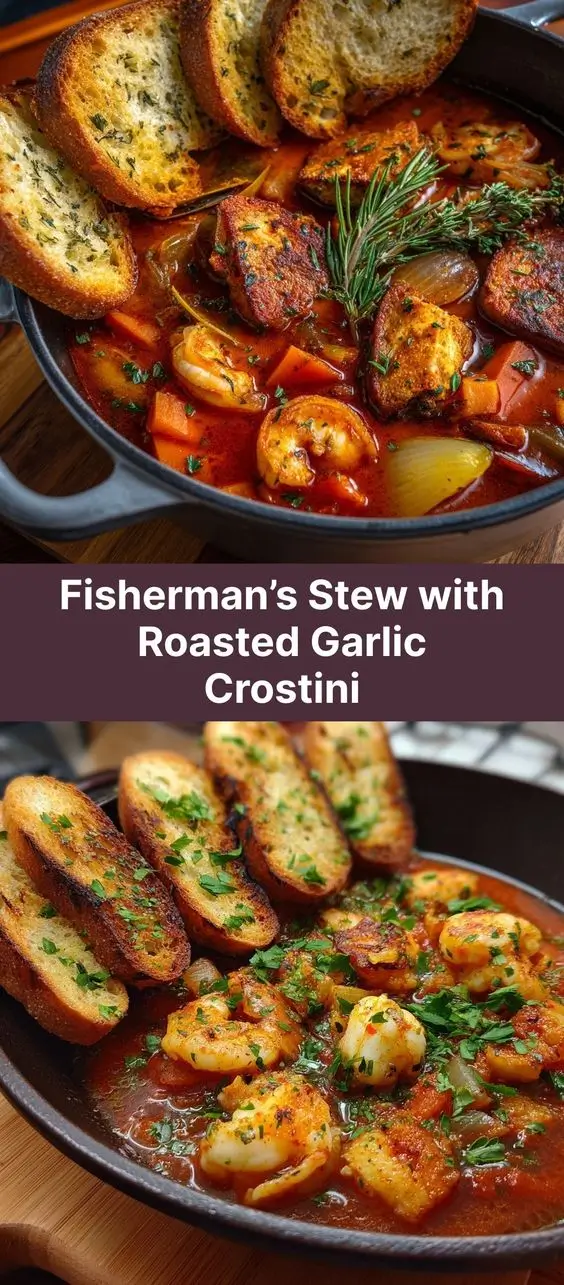
Fisherman’s Stew with Roasted Garlic Crostini is a celebration of the sea, capturing the essence of coastal kitchens where fresh fish, aromatic herbs, and rustic bread come together in perfect harmony. This hearty, soul-warming dish blends tender chunks of flaky white fish, plump shellfish, and a richly flavored tomato-based broth infused with saffron, garlic, and white wine. Paired with golden, crispy crostini generously slathered with sweet, mellow roasted garlic, this meal offers a luxurious yet comforting dining experience that feels both elegant and homey. Whether you’re hosting a dinner party or enjoying a cozy night in, Fisherman’s Stew delivers bold Mediterranean flavors in every spoonful.
The History
Fisherman’s Stew, known by various names such as Bouillabaisse in France, Cacciucco in Italy, or Caldeirada in Portugal, has its roots deeply embedded in the maritime traditions of coastal communities around the Mediterranean Sea. Originally created by fishermen who used whatever catch of the day was less desirable for market—often a mix of bony, tough, or oddly shaped fish—the stew was a way to transform humble ingredients into something delicious and nourishing. Over time, these rustic preparations evolved into celebrated regional specialties, each reflecting local tastes, available seafood, and cultural influences.
The Provençal version, Bouillabaisse from Marseille, became internationally renowned, often requiring up to a dozen different types of fish and strict preparation methods. In Tuscany, Cacciucco typically includes five kinds of fish (symbolizing the Roman numerals on “V”), simmered in red wine and tomatoes. Meanwhile, Spanish Suquet de Peix or Croatian Brudet offer their own spiced-up interpretations. Despite regional differences, the core concept remains consistent: a vibrant, multi-layered fish stew built on fresh seafood and slow-simmered aromatics.
The addition of crostini—specifically garlic-rubbed or roasted garlic-topped toasted bread—is a later enhancement, inspired by Italian antipasto culture. It serves both a practical purpose (soaking up the flavorful broth) and an indulgent one (adding texture and richness). Today, modern versions like Fisherman’s Stew with Roasted Garlic Crostini honor tradition while embracing accessible ingredients and streamlined techniques, making this oceanic delight achievable in any home kitchen.
Ingredients Breakdown
Fisherman’s Stew Components:
- Assorted Seafood: A combination of firm white fish (such as cod, halibut, or haddock), delicate fillets (like sole or turbot), and shellfish (mussels, clams, shrimp, and scallops) ensures a complex flavor profile and varied textures. Freshness is paramount—look for bright eyes in whole fish, firm flesh, and a clean, briny scent.
- Olive Oil: High-quality extra virgin olive oil forms the base of the soffritto (aromatic foundation), adding fruitiness and depth.
- Aromatics: Yellow onion, fennel bulb, leeks, and celery are slowly sautéed to build sweetness and complexity without overpowering the seafood.
- Garlic and Tomatoes: Fresh garlic provides pungency, while crushed San Marzano tomatoes or tomato passata lend acidity and body to the broth. Some recipes use tomato paste for concentrated umami.
- Liquid Base: A blend of fish stock (homemade preferred), dry white wine (e.g., Sauvignon Blanc or Pinot Grigio), and water creates a balanced cooking liquid. The alcohol in wine helps extract flavors and tenderize proteins.
- Herbs and Spices: Bay leaves, fresh thyme, parsley stems, and a pinch of saffron threads (soaked in warm water) are essential. Saffron imparts a golden hue and distinctive earthy aroma. Optional additions include orange or lemon zest, fennel seeds, or a splash of Pernod for licorice notes.
- Acidity: A final squeeze of lemon juice brightens the stew just before serving.
Roasted Garlic Crostini Components:
- Whole Garlic Heads: Multiple heads of garlic are roasted until soft, caramelized, and spreadable—losing all sharpness and gaining nutty sweetness.
- Bread: Thick slices of rustic country loaf, sourdough, or ciabatta provide structural integrity when dipped into hot broth.
- Olive Oil & Herbs: Bread is brushed with olive oil, sometimes mixed with rosemary or thyme, then toasted until crisp and golden.
- Butter (Optional): For extra richness, some variations incorporate butter into the garlic paste or toast the bread with it.
- Parsley or Parmesan (Optional): Finishing touches that elevate presentation and taste.
Step-by-Step Recipe
Part 1: Roast the Garlic
- Preheat oven to 400°F (200°C).
- Cut the top ¼ inch off each head of garlic to expose the cloves. Drizzle generously with olive oil, ensuring oil seeps into each clove. Wrap each head loosely in aluminum foil.
- Place on a baking sheet and roast for 40–50 minutes, until cloves are golden brown, very soft, and fragrant. Let cool slightly, then squeeze out the roasted pulp into a small bowl. Mash with a fork and set aside.
Part 2: Prepare the Stew Base
- In a large, heavy-bottomed Dutch oven or soup pot, heat ¼ cup of olive oil over medium heat.
- Add chopped onion, fennel, leek, and celery. Cook gently for 10–12 minutes, stirring occasionally, until vegetables are translucent and beginning to caramelize—do not let them brown too much.
- Add minced garlic and cook for 1 minute until fragrant.
- Stir in 2 tablespoons of tomato paste and cook for another 2 minutes to deepen flavor.
- Pour in ½ cup dry white wine and simmer until reduced by half, about 3–4 minutes, scraping up any browned bits from the bottom of the pot.
- Add crushed tomatoes (about 2 cups), fish stock (6–8 cups), water (1–2 cups), saffron threads soaked in ¼ cup warm water, bay leaf, thyme sprigs, and parsley stems.
- Bring to a gentle simmer, partially cover, and cook for 30–40 minutes to allow flavors to meld. Taste and adjust seasoning with salt and freshly ground black pepper.
Part 3: Cook the Seafood
- Increase heat to bring the broth to a gentle boil.
- Add firmer fish pieces (cod, halibut) first; simmer for 3 minutes.
- Add medium-firm seafood like scallops and shrimp; cook for 2 more minutes.
- Finally, add delicate fish (sole) and live shellfish (scrubbed mussels and clams in their shells). Cover the pot and cook for 5–7 minutes, or until shells open and fish is opaque and flaky.
- Discard any unopened mussels or clams. Remove bay leaf and herb stems.
- Finish with a squeeze of fresh lemon juice and chopped flat-leaf parsley.
Part 4: Make the Crostini
- While the stew simmers, preheat oven to 375°F (190°C).
- Slice a rustic loaf into ½-inch thick pieces. Arrange on a baking sheet.
- Brush both sides lightly with olive oil and sprinkle with sea salt.
- Toast in the oven for 10–12 minutes, flipping halfway, until golden and crisp.
- Remove from oven. Immediately rub one side of each slice with a cut garlic clove (optional for extra bite), then spread generously with the roasted garlic puree.
- For extra decadence, return to oven for 1–2 minutes to warm through.
Part 5: Serve
- Ladle the hot stew into wide, shallow bowls, ensuring each portion contains a variety of seafood and plenty of broth.
- Float 1–2 pieces of roasted garlic crostini on top or serve them on the side for dipping.
- Garnish with fresh parsley, microgreens, or a drizzle of high-quality olive oil.
- Offer lemon wedges and additional crusty bread on the side.
Tips
- Freshness First: Use the freshest seafood possible. If buying frozen, thaw properly in the refrigerator overnight.
- Layering Doneness: Add seafood in order of density and cooking time to prevent overcooking delicate fish.
- Broth Balance: Simmer the base long enough to concentrate flavor but avoid reducing too much before adding seafood, as it will further reduce during cooking.
- Salt Control: Season carefully—seafood releases salt, and store-bought stocks may already be salty. Always taste before final seasoning.
- Wine Choice: Use a dry, crisp white wine you’d enjoy drinking; avoid “cooking wine” which contains added salt and preservatives.
- Saffron Bloom: Steep saffron in warm liquid for at least 10 minutes to unlock full color and aroma.
- Skimming: Occasionally skim foam or fat from the surface during simmering for a cleaner-tasting broth.
- Crostini Timing: Toast bread just before serving to maintain crunch. Alternatively, prepare components ahead and assemble last minute.
- Storage Tip: Store leftover stew (without crostini) in an airtight container for up to 2 days. Reheat gently to avoid breaking apart fish.
- Dramatic Presentation: Bring the pot to the table for a rustic, communal feel, allowing guests to serve themselves.
Variations and Customizations
- Spicy Kick: Add red pepper flakes, diced fresh chili, or a dash of harissa paste for heat.
- Creamy Version: Stir in a small amount of heavy cream or coconut milk for a richer, bisque-like texture (common in some Spanish and Greek adaptations).
- Vegetarian/Vegan Twist: Replace seafood with artichokes, mushrooms, zucchini, bell peppers, and hearts of palm. Use vegetable stock and omit wine or ensure it’s vegan. Top with marinated tofu “scallops.”
- Asian Fusion: Swap saffron for turmeric and ginger, add lemongrass, soy sauce, and fish sauce, and finish with cilantro and lime. Use salmon instead of white fish.
- Smoky Flavor: Include smoked paprika or a tiny piece of dried squid for umami depth (used traditionally in some Adriatic regions).
- Different Bread: Try baguette, grissini, or even grilled polenta slices as alternatives to crostini.
- Gluten-Free Option: Use gluten-free bread or serve stew over mashed potatoes or cauliflower purée.
- Keto-Friendly: Skip the bread entirely and serve with sautéed spinach or zucchini ribbons. Ensure no sugar-containing ingredients are used in stock or tomatoes.
- Regional Inspirations:
- Marseille-Style: Focus on rockfish and gurnard, serve with rouille (garlic-saffron mayonnaise) on bread.
- Tuscan Cacciucco: Use five types of fish, include red wine in the broth, and serve over stale bread soaked in soup.
- Croatian Brudet: Emphasize vinegar or sour cherry juice for tartness, served with polenta.
Health Considerations and Nutritional Value
Fisherman’s Stew is inherently nutritious, offering a powerhouse of lean protein, heart-healthy fats, vitamins, and minerals derived primarily from seafood and vegetables.
Nutritional Highlights:
- Omega-3 Fatty Acids: Found abundantly in fatty fish like mackerel or salmon (if included), omega-3s support brain health, reduce inflammation, and promote cardiovascular wellness.
- Lean Protein: White fish and shellfish provide complete proteins with low saturated fat content, aiding muscle repair and satiety.
- Vitamins & Minerals: Rich in vitamin D, selenium, iodine, B-complex vitamins (especially B12), zinc, and iron. Shellfish like clams and mussels are particularly high in iron and vitamin B12.
- Lycopene: From tomatoes, this antioxidant supports prostate and skin health and is better absorbed when cooked with fat (like olive oil).
- Fiber & Phytonutrients: Vegetables like onions, fennel, and celery contribute dietary fiber, antioxidants, and anti-inflammatory compounds.
- Roasted Garlic Benefits: Contains allicin (when raw), but roasting enhances digestibility and adds prebiotic fructans that support gut microbiome health.
Considerations:
- Sodium Content: Can be high depending on stock, canned tomatoes, or added salt. Opt for low-sodium versions and control seasoning manually.
- Mercury Levels: Avoid high-mercury fish like swordfish, shark, or king mackerel. Stick to lower-mercury options such as cod, tilapia, shrimp, and scallops.
- Allergies: Shellfish and fish are common allergens. Clearly label if serving at gatherings. Cross-contamination should be avoided in sensitive individuals.
- Purines: Shellfish and certain fish are high in purines, which can exacerbate gout in susceptible people. Moderation is advised.
- Alcohol: While most alcohol evaporates during cooking, trace amounts remain. Use non-alcoholic white wine or omit entirely for alcohol-free versions.
Estimated Nutrition per Serving (with crostini, 1.5 cups stew + 2 crostini):
- Calories: ~450–550 kcal
- Protein: 30–40g
- Fat: 18–25g (mostly unsaturated)
- Carbohydrates: 35–45g (primarily from bread and vegetables)
- Fiber: 5–7g
- Sodium: 800–1200mg (adjustable)
Ingredients
Fisherman’s Stew:
- ¼ cup extra virgin olive oil
- 1 medium yellow onion, finely chopped
- 1 fennel bulb, thinly sliced (fronds reserved)
- 1 leek, cleaned and sliced
- 2 celery stalks, diced
- 4 garlic cloves, minced
- 2 tbsp tomato paste
- ½ cup dry white wine (e.g., Sauvignon Blanc)
- 2 cups crushed San Marzano tomatoes (canned or fresh)
- 6–8 cups fish or vegetable stock
- 1–2 cups water (as needed)
- ½ tsp saffron threads, soaked in ¼ cup warm water
- 2 bay leaves
- 4 sprigs fresh thyme
- 4 parsley stems (not leaves)
- 1 lb firm white fish (cod, halibut), cut into chunks
- ½ lb delicate fish (sole, turbot), cut into pieces
- ½ lb medium shrimp, peeled and deveined
- ½ lb scallops (bay or sea)
- 1 lb mussels, scrubbed and debearded
- 1 lb clams, scrubbed
- 1 lemon, cut into wedges
- ¼ cup chopped fresh parsley
- Salt and freshly ground black pepper to taste
Roasted Garlic Crostini:
- 3 heads garlic
- 3 tbsp olive oil (for roasting garlic)
- 1 rustic loaf (ciabatta or sourdough), sliced ½ inch thick
- 3 tbsp olive oil (for brushing bread)
- Sea salt to taste
- 1 garlic clove (optional, for rubbing)
- Fresh rosemary or thyme (optional)
Directions
- Roast the Garlic: Preheat oven to 400°F. Trim tops off garlic heads, drizzle with oil, wrap in foil, and roast 40–50 minutes until soft. Cool, then squeeze cloves into a bowl and mash. Set aside.
- Build the Base: In a large pot, heat olive oil over medium heat. Add onion, fennel, leek, and celery. Sauté 10–12 minutes until soft. Add minced garlic; cook 1 minute. Stir in tomato paste; cook 2 minutes. Pour in white wine; reduce by half.
- Simmer Broth: Add crushed tomatoes, stock, water, saffron with soaking liquid, bay leaves, thyme, and parsley stems. Bring to a simmer and cook uncovered for 30–40 minutes. Adjust seasoning.
- Cook Seafood: Increase heat to medium-high. Add firm fish; simmer 3 minutes. Add scallops and shrimp; cook 2 minutes. Add delicate fish and shellfish; cover and cook 5–7 minutes until shells open and fish is cooked through. Discard unopened shellfish. Remove herb stems and bay leaves. Stir in lemon juice and parsley.
- Make Crostini: Preheat oven to 375°F. Brush bread with oil, season with salt, and bake 10–12 minutes, flipping once, until golden. Rub with raw garlic (optional), then spread with roasted garlic paste.
- Serve: Ladle stew into bowls. Float crostini on top or serve alongside. Garnish with fennel fronds, parsley, or olive oil drizzle. Serve immediately with extra lemon wedges.
FAQ
Can I make Fisherman’s Stew ahead of time?
Yes, you can prepare the broth base up to 2 days in advance and refrigerate. Reheat gently and add seafood just before serving to maintain texture and freshness.
Can I freeze this stew?
Freezing is not recommended due to the delicate nature of fish and shellfish, which become rubbery upon thawing. However, the broth alone can be frozen for up to 3 months.
What kind of fish should I avoid using?
Avoid oily fish like bluefish or fish with strong flavors that might dominate the broth. Also, steer clear of high-mercury species such as swordfish, shark, and tilefish.
Is saffron necessary?
While saffron is traditional and imparts a unique aroma and golden color, you can substitute with a pinch of turmeric for color and a dash of smoked paprika for depth—but the flavor won’t be identical.
Can I use canned clams or mussels?
Fresh is best, but in a pinch, you can use canned clams (drained, liquid reserved and added to broth). Avoid canned mussels, as they tend to have poor texture.
Why did my fish fall apart?
Overcooking or boiling too vigorously can break down fish. Always simmer gently and add seafood in stages based on cooking time.
Can I make this in a slow cooker?
Yes, but only for the broth base. Add seafood in the last 20–30 minutes on low setting to prevent overcooking.
How do I know when shellfish is done?
Mussels and clams are done when their shells pop open. Discard any that remain closed after cooking—they were dead before cooking and unsafe to eat.
Can I use chicken or vegetable stock instead of fish stock?
Yes. Vegetable stock works well for a lighter version. Chicken stock can be used but will alter the authentic seafood character.
What to do with leftover crostini?
Store in an airtight container at room temperature for up to 2 days. Re-crisp in oven or toaster oven. Use as croutons in salads or soups.
Summary
Fisherman’s Stew with Roasted Garlic Crostini is a luxurious yet approachable dish that brings the bounty of the sea to your table with layers of savory broth, tender seafood, and aromatic herbs. Paired with creamy, golden crostini, it transforms simple ingredients into a memorable, restaurant-worthy meal perfect for any occasion.