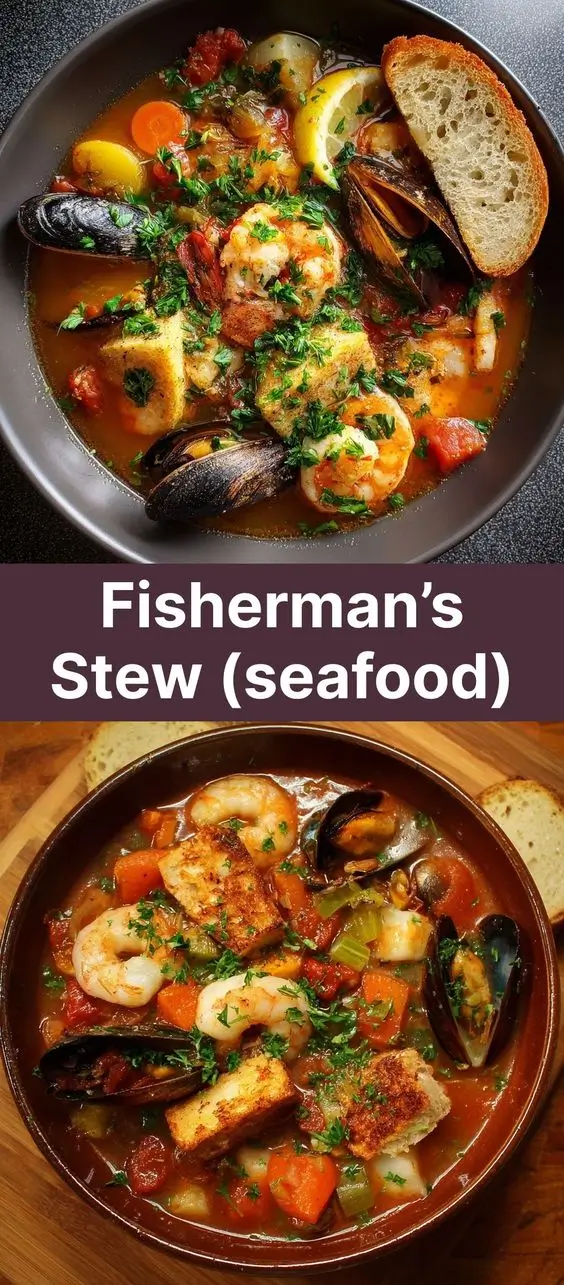
Fisherman’s Stew (Seafood): A Hearty Taste of the Coast
Introduction
Fisherman’s Stew, known in various cultures as Zuppa di Pesce, Bouillabaisse, or Cacciucco, is a rustic and soul-warming dish that embodies the essence of coastal living. Born from the humble traditions of Mediterranean fishermen, this stew transforms the day’s catch—often unsold or less desirable fish—into a rich, aromatic meal bursting with the flavors of the sea. Today, Fisherman’s Stew has evolved into a celebrated seafood dish enjoyed worldwide, prized for its vibrant broth, tender morsels of fish and shellfish, and deeply satisfying character. Whether served in a seaside taverna in southern Italy or recreated in home kitchens across continents, it remains a tribute to simplicity, sustainability, and culinary ingenuity.
The History
The origins of Fisherman’s Stew trace back centuries to the fishing villages along the Mediterranean coast—from Marseille in France to Livorno in Italy and beyond. In these tight-knit communities, fishermen would return from long nights at sea with mixed catches, often including rockfish, monkfish, eels, and small crustaceans. Rather than waste any part of their haul, they combined everything into one large pot, simmering it with tomatoes, onions, garlic, herbs, and local wine. This frugal yet flavorful approach gave birth to regional variations of the stew, each reflecting local ingredients and cultural influences.
In France, Bouillabaisse originated in Marseille and was traditionally made with at least three types of fish and a saffron-infused broth. It was so culturally significant that a Charter of Bouillabaisse was established in 1980 to preserve its authenticity. Meanwhile, in Tuscany, Cacciucco emerged—a fiery red stew from Livorno that combines five types of fish (symbolizing the five “C’s”: caciucco, casa, chiesa, cimitero, and caccia) cooked in a tomato and wine base with chili peppers. Spanish Suquet de Peix, Portuguese Caldeirada, and Croatian Brudet are other cousins of this beloved dish, proving the universal appeal of cooking fresh seafood slowly in a savory liquid.
Over time, Fisherman’s Stew transitioned from a working-class staple to a gourmet delight, gracing the menus of Michelin-starred restaurants while still retaining its earthy roots. Its enduring popularity lies in its versatility—every cook can adapt it based on what’s available, making each batch uniquely personal.
Ingredients Breakdown
The magic of Fisherman’s Stew comes not just from technique but from the quality and synergy of its ingredients. While recipes vary, most versions include the following components:
Seafood
- Firm White Fish: Monkfish, halibut, cod, haddock, or sea bass provide structure and flaky texture.
- Oily Fish: Sometimes included for richness—such as mackerel or swordfish.
- Shellfish: Mussels, clams, shrimp, scallops, squid, or even lobster add sweetness and variety.
- River or Rock Fish: Traditional recipes use less commercial fish like scorpionfish, weever, or gurnard for deeper flavor.
Aromatics & Vegetables
- Onions, Leeks, Fennel: Form the sweet, aromatic base.
- Garlic: Essential for depth and pungency.
- Tomatoes: Fresh, canned, or paste—provide acidity and color.
- Celery & Carrots: Add subtle sweetness and body (common in Italian versions).
Liquids
- Seafood Stock or Fish Fumet: Homemade stock intensifies flavor; store-bought works in a pinch.
- Dry White Wine: Sauvignon Blanc or Pinot Grigio deglaze the pot and brighten the broth.
- Water or Broth Base: Used to adjust consistency.
Herbs & Spices
- Saffron: Signature in Bouillabaisse—adds golden hue and floral notes.
- Bouquet Garni: Typically thyme, bay leaf, parsley, and sometimes rosemary or marjoram.
- Chili Flakes or Fresh Chilies: For heat, especially in Cacciucco.
- Paprika or Piment d’Espelette: Adds smokiness without overwhelming heat.
Finishing Touches
- Olive Oil: High-quality extra virgin drizzled at the end enhances richness.
- Lemon Juice: Brightens the final dish.
- Roux or Rouille: A garlicky mayonnaise with chili and saffron, often served alongside.
- Toasted Bread: Rubbed with garlic and used to soak up the broth.
Step-by-Step Recipe
Ingredients
- 2 tbsp olive oil
- 1 medium onion, finely chopped
- 1 leek (white part only), sliced
- 2 celery stalks, diced
- 1 fennel bulb, thinly sliced (fronds reserved)
- 4 garlic cloves, minced
- 2 carrots, diced (optional)
- 28 oz (800g) canned crushed tomatoes or 4 ripe fresh tomatoes, peeled and chopped
- 1/4 tsp saffron threads, soaked in 2 tbsp warm water
- 1 tsp red pepper flakes (adjust to taste)
- 1 cup dry white wine (e.g., Sauvignon Blanc)
- 4 cups seafood or fish stock (homemade preferred)
- 1 bouquet garni (thyme, bay leaf, parsley stem)
- 1 lb (450g) firm white fish (cod, halibut, monkfish), cut into chunks
- 1/2 lb (225g) shellfish (mussels, clams, scrubbed and debearded)
- 1/2 lb (225g) shrimp, peeled and deveined (tails on)
- 1/2 lb (225g) squid, cleaned and sliced into rings
- Salt and freshly ground black pepper to taste
- Juice of 1/2 lemon
- Fresh parsley, chopped (for garnish)
- Extra virgin olive oil (for finishing)
- Toasted baguette slices (for serving)
- Rouille (optional, see variations)
Directions
- Sauté the Aromatics: In a large, heavy-bottomed pot or Dutch oven, heat olive oil over medium heat. Add onion, leek, celery, fennel, and carrots. Cook gently for 8–10 minutes until softened but not browned. Stir in garlic and cook for 1 minute until fragrant.
- Add Tomatoes and Spices: Stir in crushed tomatoes, red pepper flakes, and saffron with its soaking liquid. Cook for 5–7 minutes, allowing the mixture to reduce slightly and deepen in flavor.
- Deglaze with Wine: Pour in the white wine, scraping up any browned bits from the bottom of the pot. Simmer for 3–4 minutes until alcohol evaporates and liquid reduces by half.
- Build the Broth: Add seafood stock and bouquet garni. Bring to a gentle simmer. Lower heat and let the broth cook uncovered for 20–25 minutes to concentrate flavors. Taste and season with salt and pepper.
- Add the Seafood in Stages: This ensures each type cooks perfectly without overcooking.
- Start with the firmest fish and squid—add them first. Simmer for 5 minutes.
- Add shellfish (mussels and clams) next, pressing them into the liquid. Cover the pot and cook for 5 minutes.
- Finally, add shrimp and delicate fish pieces. Cook for another 3–4 minutes until shrimp turn pink and shellfish open.
- Finish and Serve: Discard any unopened mussels or clams. Remove and discard the bouquet garni. Stir in lemon juice and fresh parsley. Drizzle with a generous amount of extra virgin olive oil.
- Plate with Style: Ladle the stew into deep bowls. Serve hot with toasted garlic-rubbed bread on the side. Offer rouille in small bowls for spreading on bread or stirring into the stew.
Tips
- Use the Freshest Seafood Possible: Since seafood is the star, freshness is non-negotiable. Buy from reputable fishmongers and use within a day of purchase.
- Don’t Rush the Soffritto: The vegetable base should be soft and sweet, not caramelized. Low and slow is key.
- Make Your Own Fish Stock: Simmer fish bones, heads, and trimmings with onion, celery, parsley, and peppercorns for 30 minutes. Strain and use immediately or freeze.
- Layer the Seafood: Add seafood according to cooking time—denser fish first, delicate shellfish last.
- Keep the Broth Balanced: Avoid oversalting early—shellfish release brine. Adjust seasoning at the end.
- Serve Immediately: Seafood stews are best eaten fresh. Reheating can make fish rubbery and shellfish tough.
- Toast the Bread Separately: Rub slices with garlic and toast under the broiler. Add just before serving to maintain crunch.
- Skim if Needed: If the broth appears greasy, skim off excess oil with a spoon before serving.
Variations and Customizations
Fisherman’s Stew welcomes creativity. Here are some popular regional and modern twists:
French Bouillabaisse
Uses Provençal fish like rascasse (scorpionfish), includes saffron prominently, and is served with rouille on thick toast. Often no tomatoes are used—just fish stock, herbs, and orange zest.
Italian Cacciucco
Hails from Livorno, featuring five types of fish, red wine instead of white, and a spicier profile with dried chilies. The name may derive from the French “bouillabaisse,” altered through Tuscan dialect.
Spanish Suquet de Peix
From Catalonia, this version uses potatoes as a thickener and often includes aioli instead of rouille. The broth is creamy due to a pil-pil emulsion created by whisking fish gelatin and olive oil.
Portuguese Caldeirada
Incorporates potatoes layered in the pot, along with tomatoes, onions, and wine. Both white and oily fish are used, and the dish is often baked.
Modern Vegan “Fisherman’s Stew”
Uses king oyster mushrooms, hearts of palm, and seaweed to mimic seafood textures. Vegetable broth, smoked paprika, nori, and kelp add umami depth.
Spicy Thai-Inspired Version
Swap tomatoes for coconut milk, add lemongrass, galangal, kaffir lime leaves, and red curry paste. Use lime juice and cilantro for finish.
Keto-Friendly Adaptation
Naturally low in carbs! Just skip potatoes (if used in some versions) and serve with cauliflower rice or zucchini noodles.
Add-Ins and Swaps
- Lobster or Crab: For luxury—add claw meat at the end.
- Artichoke Hearts: Marinated or canned, they add tenderness.
- Saffron Substitute: Turmeric for color (but not flavor); omit if unavailable.
- Gluten-Free: Ensure stock and wine are certified gluten-free.
Health Considerations and Nutritional Value
Fisherman’s Stew is not only delicious but also nutritionally rich when prepared mindfully:
Key Benefits
- High-Quality Protein: Fish and shellfish provide complete proteins essential for muscle repair and immune function.
- Omega-3 Fatty Acids: Especially in fatty fish like mackerel or monkfish, supporting heart and brain health.
- Low in Saturated Fat: Especially when using lean fish and minimal added oils.
- Rich in Vitamins and Minerals: Iodine, selenium, vitamin B12, zinc, and iron are abundant in seafood.
- Antioxidants: Tomatoes contribute lycopene; garlic and herbs offer anti-inflammatory compounds.
- Hydrating and Low-Calorie Broth: Promotes satiety without excessive calories.
Considerations
- Sodium Content: Store-bought stocks and canned tomatoes can be high in salt. Opt for low-sodium versions and control added salt.
- Mercury Levels: Limit high-mercury fish like swordfish or shark. Stick to smaller, shorter-lived species.
- Allergies: Shellfish and finfish are common allergens. Label clearly when serving guests.
- Purines: Shellfish and certain fish are high in purines, which may affect those with gout. Consume in moderation.
- Sustainability: Choose seafood certified by organizations like MSC (Marine Stewardship Council) or Seafood Watch to protect ocean ecosystems.
Nutritional Estimate (Per Serving, Approx. 1.5 cups)
| Calories | 280–350 |
| Protein | 25–30g |
| Fat | 10–15g (mostly healthy fats) |
| Carbohydrates | 12–18g (mainly from vegetables and tomatoes) |
| Fiber | 3–5g |
| Sodium | 600–900mg (varies by stock and seasoning) |
FAQ
Can I make Fisherman’s Stew ahead of time?
Yes, you can prepare the broth base (through step 4) up to 2 days in advance and refrigerate. However, add seafood just before serving to prevent overcooking.
Can I freeze Fisherman’s Stew?
Freezing is not recommended due to the delicate texture of seafood, which becomes rubbery upon thawing and reheating. The broth alone can be frozen, though.
What can I use instead of saffron?
While saffron is irreplaceable in flavor, a pinch of turmeric can mimic the golden color. For aroma, try a drop of orange blossom water or smoked paprika.
Is Fisherman’s Stew spicy?
Not inherently, but many versions include chili for warmth. Adjust red pepper flakes to your preference—or omit entirely.
Can I use frozen seafood?
Yes, but ensure it’s fully thawed and patted dry. Fresh is best, but high-quality frozen seafood (especially shrimp and squid) works well.
Why are my mussels or clams not opening?
Discard any shellfish that remain closed after cooking—they were likely dead before cooking and unsafe to eat.
Can I make it dairy-free and gluten-free?
Absolutely! This stew is naturally dairy-free. For gluten-free, confirm that your stock and wine are GF-certified.
What wine pairs well with Fisherman’s Stew?
A crisp, mineral-driven white like Vermentino, Albariño, or Sancerre complements the brininess. A light rosé also works beautifully.
Summary
Fisherman’s Stew is a celebration of the sea—an aromatic, hearty medley of fresh seafood simmered in a rich tomato and wine broth infused with saffron, garlic, and herbs.
Rooted in coastal tradition yet endlessly adaptable, it nourishes both body and soul, offering a taste of maritime heritage in every spoonful.