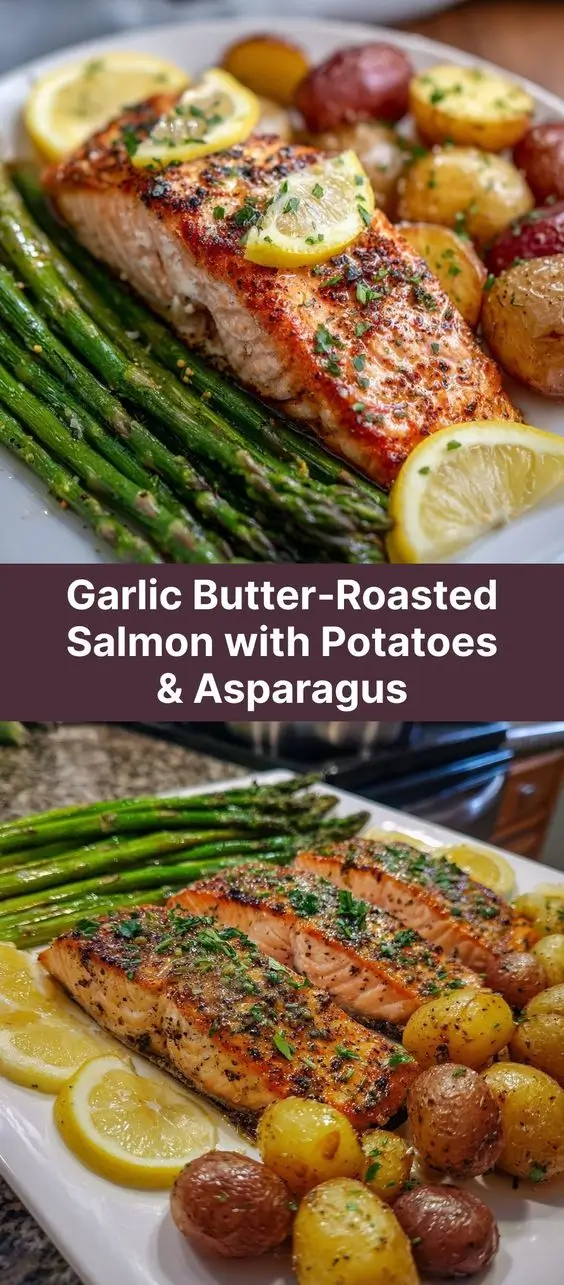
Garlic Butter‑Roasted Salmon with Potatoes & Asparagus
This one-pan wonder brings together the rich, buttery flavor of roasted salmon with tender garlic-infused potatoes and crisp-tender asparagus. Elegant enough for company yet simple enough for a weeknight dinner, this dish is not only delicious but also packed with nutrients. Every bite offers a harmonious blend of savory, creamy, and fresh flavors, making it a favorite among seafood lovers and health-conscious eaters alike.
The History of Roasted Fish and Root Vegetables
The tradition of roasting fish with vegetables dates back centuries across many coastal cultures, particularly in Mediterranean, Scandinavian, and French cuisines. In ancient Greece and Rome, fish were often baked or roasted with herbs, olive oil, and root vegetables as part of daily meals. The French technique of papillote, cooking fish in parchment paper with aromatics, shares similar principles—locking in moisture while infusing deep flavor.
In Northern Europe, especially Norway and Sweden, salmon has long been a dietary staple. With abundant access to both fresh fish and hardy root crops like potatoes, combining them on a single tray for roasting over open flames or in wood-fired ovens became common practice. As modern kitchen appliances like the convection oven became widespread in the 20th century, this method evolved into today’s popular sheet-pan dinners.
The inclusion of garlic and butter as central flavor agents gained prominence through French culinary influence. Garlic butter, known as beurre à l’ail, became a celebrated sauce for seafood by the mid-1800s. When combined with the simplicity of roasted vegetables, it created a timeless fusion of rustic charm and gourmet flair—now exemplified perfectly in dishes like Garlic Butter-Roasted Salmon with Potatoes & Asparagus.
Ingredients Breakdown: What Makes This Dish Shine?
Each ingredient in this recipe plays a crucial role in building layers of flavor, texture, and nutrition. Let’s break down the components:
- Salmon Fillets: Rich in omega-3 fatty acids, protein, and vitamin D, wild-caught salmon provides a buttery, slightly sweet base that pairs beautifully with garlic and lemon.
- Potatoes (Yukon Gold or Red Bliss): These varieties hold their shape well during roasting and offer a creamy interior with a golden, crisp exterior when cooked at high heat.
- Asparagus: A springtime favorite, asparagus adds freshness, color, and fiber. It roasts quickly and absorbs surrounding flavors without becoming mushy.
- Unsalted Butter: Using unsalted butter allows control over salt levels while delivering a rich mouthfeel and helping to crisp the salmon skin.
- Fresh Garlic: Minced garlic becomes sweet and mellow when roasted, coating every element with aromatic depth.
- Lemon: Both zest and juice brighten the dish, cutting through the richness of the butter and enhancing the natural sweetness of the salmon.
- Fresh Herbs (Parsley, Thyme, or Dill): These add herbal complexity and visual appeal—dill especially complements salmon.
- Olive Oil: Helps prevent sticking, promotes browning, and carries flavor throughout the pan.
- Salt & Black Pepper: Essential seasonings that elevate all ingredients without overpowering them.
Step-by-Step Recipe: How to Make Garlic Butter‑Roasted Salmon with Potatoes & Asparagus
Preparation Time:
15 minutes | Cooking Time: 25–30 minutes | Total Time: ~45 minutes | Servings: 4
Ingredients
- 4 (6-ounce) skin-on salmon fillets, patted dry
- 1.5 pounds Yukon Gold potatoes, cut into 1-inch cubes
- 1 bunch asparagus (about 1 lb), trimmed and halved if desired
- ½ cup (1 stick) unsalted butter
- 6 cloves garlic, finely minced
- Zest and juice of 1 large lemon
- ¼ cup extra-virgin olive oil
- 2 tablespoons chopped fresh parsley
- 1 tablespoon chopped fresh dill (optional)
- 1 teaspoon fresh thyme leaves (or ½ tsp dried)
- 1 teaspoon kosher salt (divided)
- ½ teaspoon freshly ground black pepper (divided)
- Optional: ¼ teaspoon red pepper flakes for heat
- Optional garnish: lemon slices, additional herbs
Directions
- Preheat Oven & Prepare Pan: Preheat your oven to 400°F (200°C). Line a large rimmed baking sheet with parchment paper or lightly grease it with olive oil to prevent sticking.
- Season Potatoes: In a large bowl, toss the cubed potatoes with 2 tablespoons of olive oil, ½ teaspoon salt, ¼ teaspoon black pepper, half of the minced garlic, and thyme. Spread them evenly in a single layer on one side of the baking sheet. Roast for 15 minutes to begin crisping the edges.
- Prepare Garlic Butter Sauce: While potatoes roast, melt the butter in a small saucepan over low heat. Add the remaining minced garlic and cook gently for 2–3 minutes until fragrant but not browned. Remove from heat and stir in lemon zest, lemon juice, red pepper flakes (if using), and a pinch of salt. Set aside.
- Prepare Asparagus: After the first 15 minutes of potato roasting, remove the pan from the oven. Push the potatoes to one side and add the asparagus to the other side. Drizzle with 1 tablespoon olive oil, sprinkle with ¼ teaspoon salt, and toss lightly on the pan to coat. Return to oven for another 5 minutes.
- Season & Place Salmon: Pat salmon fillets dry again if needed (moisture prevents browning). Season both sides with remaining salt and pepper. Place fillets skin-side down on the baking sheet nestled among the vegetables. Spoon about 1 tablespoon of the warm garlic butter over each fillet, letting some drip onto the surrounding veggies.
- Final Roast: Return the pan to the oven and roast for 12–15 minutes, depending on the thickness of the salmon. The salmon is done when it flakes easily with a fork and reaches an internal temperature of 125–130°F (for medium-rare) or up to 135°F for medium. Potatoes should be golden and tender when pierced with a knife; asparagus should be bright green and slightly crisp.
- Rest & Garnish: Remove the pan from the oven and loosely tent the salmon with foil if resting before serving. Let sit for 3–5 minutes. Drizzle any remaining garlic butter over the entire dish. Sprinkle generously with chopped parsley, dill, and additional lemon zest if desired. Add lemon slices around the plate for presentation.
- Serve Immediately: Divide portions onto plates, ensuring each serving includes salmon, potatoes, and asparagus. Serve hot and enjoy!
Pro Tips for Perfect Results Every Time
- Dry the Salmon Skin: Moisture is the enemy of crispy skin. Always pat salmon fillets thoroughly with paper towels before seasoning and placing on the tray.
- Uniform Cutting: Cut potatoes into even-sized pieces so they cook uniformly. Uneven cuts lead to some being undercooked while others burn.
- Don’t Overcrowd the Pan: Use a large enough baking sheet (at least 13×18 inches) to allow space for air circulation. Crowding steams instead of roasts the food.
- Baste Midway (Optional): For extra richness, baste the salmon halfway through cooking with more garlic butter using a pastry brush.
- Use a Meat Thermometer: To avoid overcooking salmon, use an instant-read thermometer. Remove at 125°F—the residual heat will bring it to 130–135°F.
- Add Veggies Based on Density: Start with dense vegetables like potatoes first, then add quicker-cooking ones like asparagus later.
- Substitute Butter Wisely: If avoiding dairy, use ghee or a high-quality plant-based butter alternative that can withstand high heat.
- Make Ahead Prep: Chop potatoes and asparagus ahead of time and store in separate containers in the fridge. Mince garlic and make garlic butter up to 2 days in advance and refrigerate—reheat gently before using.
Variations and Customizations
This recipe is incredibly adaptable. Whether you’re catering to dietary preferences, seasonal availability, or global flavor profiles, here are some creative twists:
- Vegetable Swaps: Try broccoli, green beans, zucchini, cherry tomatoes, bell peppers, or Brussels sprouts instead of asparagus. Root vegetables like carrots or sweet potatoes can replace or complement the potatoes.
- Herb Variations: Swap dill for tarragon for a French twist, cilantro for an Asian-Mexican fusion, or rosemary for a heartier, earthy note (use sparingly—it’s potent).
- Citrus Alternatives: Orange or lime can replace lemon for a sweeter or tangier profile. Blood orange zest adds a stunning pop of color and subtle berry notes.
- Spice It Up: Add harissa paste, smoked paprika, or sriracha to the garlic butter for a spicy kick. A sprinkle of everything bagel seasoning on the salmon adds crunch and umami.
- Gluten-Free & Dairy-Free: Naturally gluten-free! For dairy-free, substitute butter with avocado oil or coconut oil (though flavor changes), or use vegan butter blends designed for roasting.
- Keto-Friendly: This dish is already low-carb friendly. Just ensure no sugar is added to butter or seasoning blends.
- Paleo/Whole30: Omit butter (use ghee or olive oil) and ensure compliance with program rules. Replace regular butter with compliant fat sources.
- Sheet Pan Alternatives: Can’t fit everything? Use two pans and place one on the upper rack, one on the lower. Rotate halfway through for even cooking.
- Protein Substitutions: While salmon shines, try this method with trout, cod, halibut, or even chicken breasts (adjust cooking times accordingly).
- Crust Options: Press a mixture of Parmesan, breadcrumbs, and herbs onto the salmon before roasting for a golden crust (not dairy-free/keto).
Health Considerations and Nutritional Value
Garlic Butter-Roasted Salmon with Potatoes & Asparagus isn’t just tasty—it’s a powerhouse of essential nutrients. Here’s why it deserves a regular spot on your menu:
Nutrition Highlights (Per Serving – Approximate)
| Nutrient | Amount | Benefits |
|---|---|---|
| Calories | 520–580 kcal | Well-balanced energy source suitable for active individuals. |
| Protein | 38–42g | Supports muscle repair, satiety, and immune function. |
| Omega-3 Fatty Acids (EPA/DHA) | ~2,000–2,500mg | Promotes brain health, reduces inflammation, supports heart function. |
| Total Fat | 30–35g | Mainly healthy fats from salmon and olive oil; includes monounsaturated and polyunsaturated fats. |
| Saturated Fat | 9–11g | Moderate amount from butter; consider reducing butter or substituting with olive oil if monitoring intake. |
| Carbohydrates | 25–30g | Primarily complex carbs from potatoes, providing sustained energy and fiber. |
| Dietary Fiber | 4–6g | From potatoes and asparagus—supports digestive health and blood sugar regulation. |
| Vitamin D | ~500–700 IU | Nearly 100% of daily needs—crucial for bone health and immunity. |
| Vitamin B12 | ~8–10mcg | Over 300% of RDI—essential for nerve function and red blood cell production. |
| Potassium | ~1,200mg | Helps regulate blood pressure and fluid balance. |
| Vitamin C & K | Moderate amounts | Antioxidant support (C); important for clotting and bone health (K). |
| Selenium | High | A powerful antioxidant mineral found abundantly in seafood. |
Dietary Notes:
- Heart Health: Omega-3s in salmon help reduce triglycerides, lower blood pressure, and decrease risk of arrhythmias.
- Weight Management: High protein and healthy fats increase fullness and reduce cravings.
- Diabetes-Friendly (in Moderation): Pairing starchy potatoes with fiber and protein helps moderate glycemic response. Opt for smaller potato portions or swap with cauliflower for lower carb versions.
- Pregnancy-Safe: Salmon is safe and recommended (2–3 servings/week) during pregnancy due to its DHA content, which supports fetal brain development. Choose wild-caught when possible to minimize contaminants.
- Mercury Levels: Salmon is low in mercury compared to tuna, swordfish, or shark, making it one of the safest fish for regular consumption.
Frequently Asked Questions (FAQ)
Can I use frozen salmon?
Yes, but thaw it completely in the refrigerator overnight before cooking. Cooking frozen salmon may result in uneven texture and excess moisture. Never refreeze once thawed unless cooked.
Do I need to flip the salmon?
No. Place the salmon skin-side down and leave it undisturbed. The skin protects the delicate flesh and crisps beautifully. Flipping increases the risk of breaking the fillet.
Can I make this recipe ahead of time?
You can prep ingredients (chop veggies, make garlic butter) up to a day ahead. However, assemble and roast just before serving for best texture. Reheated salmon can become dry, though gentle reheating in the oven at 275°F wrapped in foil works moderately well.
Is it safe to eat slightly pink salmon?
Yes. Properly cooked salmon transitions from translucent to opaque pink. It should flake easily with a fork. The FDA recommends 145°F internal temperature, but many chefs prefer 125–135°F for better texture and moisture retention.
What sides go well with this dish?
It’s a complete meal on its own! But you can serve it with a simple arugula salad, quinoa, or crusty whole-grain bread to soak up the garlic butter juices.
Can I cook everything at the same time?
Yes, but timing matters. Dense potatoes take longer than asparagus and salmon. Starting potatoes early ensures everything finishes perfectly together. Alternatively, parboil potatoes for 5 minutes before roasting to speed up cooking.
Why did my potatoes burn?
Common causes include too high heat, overcrowding, or not tossing halfway. Make sure your oven is accurately calibrated and spread ingredients in a single layer. Tossing potatoes midway promotes even browning.
Can I use garlic powder instead of fresh garlic?
Fresh is best for aroma and flavor, but in a pinch, use ½ teaspoon garlic powder per clove. Note: it lacks the sweetness and complexity of sautéed fresh garlic.
How do I store leftovers?
Cool within 2 hours and store in an airtight container in the refrigerator for up to 2 days. Reheat gently in the oven or enjoy cold in salads. Avoid microwaving, which can make salmon rubbery.
Can I freeze this dish?
We don’t recommend freezing after cooking—salmon tends to lose texture and develop off-flavors. Instead, freeze raw salmon separately and prepare fresh vegetables when ready to cook.
Summary
Garlic Butter-Roasted Salmon with Potatoes & Asparagus is a nutritious, flavorful one-pan meal that balances indulgence with wellness, featuring omega-3-rich salmon, fiber-packed vegetables, and aromatic garlic butter.
Easy to customize, rich in essential nutrients, and ready in under an hour, this dish satisfies both gourmet tastes and busy lifestyles—making it a must-have in any home cook’s repertoire.