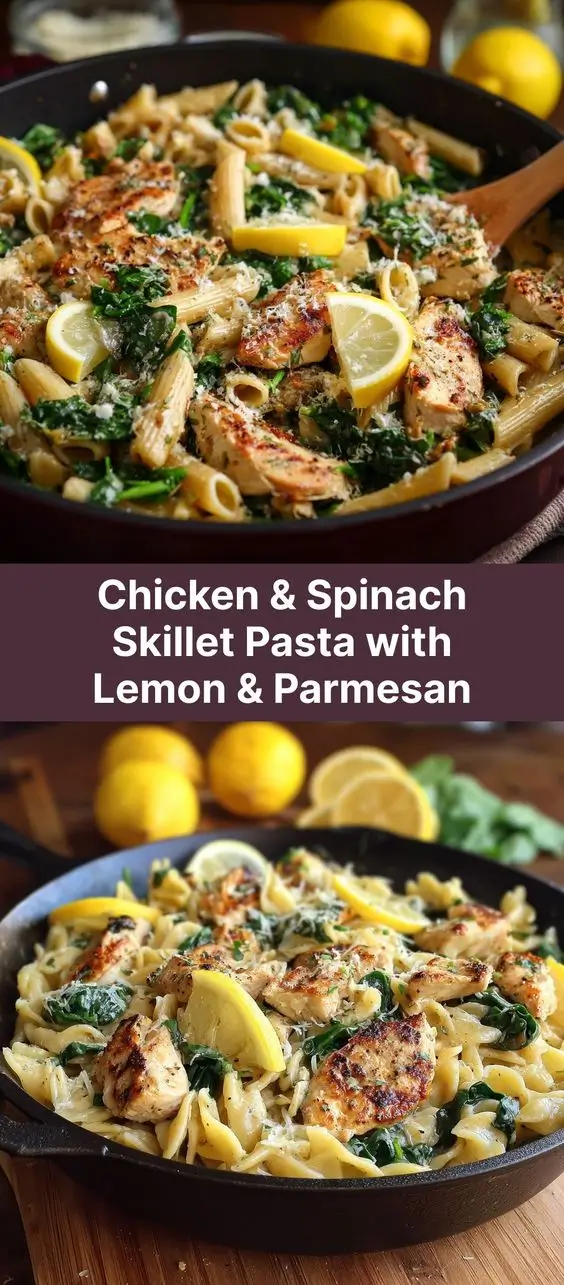
Chicken & Spinach Skillet Pasta with Lemon & Parmesan
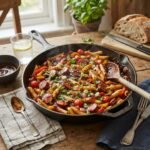
This vibrant, one-pan wonder—Chicken & Spinach Skillet Pasta with Lemon & Parmesan—brings together tender chicken breast, al dente pasta, fresh baby spinach, and a luscious lemon-Parmesan sauce for a meal that’s as nourishing as it is delicious. Perfect for busy weeknights yet elegant enough to serve guests, this dish celebrates simple ingredients elevated by bold flavors. With its bright citrus notes, creamy cheese finish, and hearty protein, it’s comfort food reimagined: wholesome, satisfying, and effortlessly stylish.
The History Behind the Dish
While there’s no single documented origin for Chicken & Spinach Skillet Pasta with Lemon & Parmesan, its roots lie in the fusion of Italian-American culinary traditions and modern healthy cooking trends. Classic Italian dishes like Pasta al Limone (lemon pasta) and Parmigiana di Pollo (chicken Parmesan) have long celebrated the pairing of poultry, cheese, and citrus. Over time, home cooks began combining elements from both—adding lean chicken and leafy greens into quick-cooking pasta dishes—to create balanced, family-friendly meals.
The skillet format emerged from the growing popularity of one-pot recipes, especially during the 2010s, when efficiency, minimal cleanup, and flavor concentration became kitchen priorities. The addition of spinach aligns with the health-conscious movement, incorporating nutrient-dense vegetables without sacrificing taste. Today, this dish represents a harmonious blend of Mediterranean influences, American practicality, and contemporary wellness ideals—all simmered into a single sizzling pan.
Ingredients Breakdown
Every ingredient in this recipe plays a vital role in building layers of texture and flavor. Here’s a detailed look at what goes into the dish and why:
- Chicken Breast: Boneless, skinless chicken breasts are favored for their lean protein content and mild flavor, which absorbs seasonings beautifully. They’re seared first to develop a golden crust, locking in moisture before being sliced or shredded back into the sauce.
- Whole Wheat or Regular Pasta: Small shapes like penne, rotini, or farfalle hold sauce well. Whole wheat adds fiber and a nutty depth, while regular pasta delivers a softer bite. The starch released during cooking helps thicken the sauce naturally.
- Fresh Baby Spinach: Tender and slightly sweet, baby spinach wilts quickly into the hot mixture, contributing color, iron, and vitamins A and K without overpowering other flavors.
- Lemons: Both zest and juice are used. Zest provides aromatic oils rich in limonene, giving intense citrus fragrance, while fresh juice adds acidity that cuts through richness and brightens the entire dish.
- Parmesan Cheese: Real Parmigiano-Reggiano melts into the sauce, adding umami, saltiness, and creaminess without needing heavy cream. Its granular texture dissolves smoothly when stirred into warm liquids.
- Garlic & Shallot: These aromatics form the flavor base. Shallots offer a milder, sweeter onion note compared to yellow onions, while garlic brings pungency that mellows when sautéed.
- Olive Oil: Extra virgin olive oil is used for searing chicken and sautéing vegetables, contributing heart-healthy monounsaturated fats and a fruity backbone.
- Chicken Broth: Adds savory depth and acts as a cooking liquid, helping steam the pasta and infuse every strand with flavor. Low-sodium versions allow better control over salt levels.
- Heavy Cream (optional): Used sparingly to enrich the sauce, though many variations omit it entirely for a lighter version relying on Parmesan and starchy pasta water for creaminess.
- Red Pepper Flakes: A pinch introduces subtle heat, balancing the lemon’s brightness and enhancing overall complexity.
- Fresh Herbs (parsley or basil): Added at the end for freshness, color contrast, and a final aromatic lift.
Step-by-Step Recipe
Ingredients
- 2 boneless, skinless chicken breasts (about 1.5 lbs / 680 g), thinly sliced or cubed
- Salt and freshly ground black pepper, to taste
- 2 tablespoons extra virgin olive oil, divided
- 1 medium shallot, finely chopped (or ½ small onion)
- 3 cloves garlic, minced
- 8 oz (225 g) dry pasta (penne, rotini, or fusilli recommended)
- 2 cups low-sodium chicken broth
- 1 cup water (optional, if more liquid needed)
- 4 cups fresh baby spinach (packed)
- Zest of 1 large lemon
- 3 tablespoons fresh lemon juice (about 1–2 lemons)
- ½ cup grated Parmesan cheese, plus more for serving
- ¼ teaspoon red pepper flakes (adjust to taste)
- ½ cup heavy cream (optional, for richer sauce)
- ¼ cup chopped fresh parsley or basil, for garnish
Directions
- Prepare the Chicken: Pat chicken dry with paper towels and season generously with salt and pepper on both sides. Heat 1 tablespoon of olive oil in a large deep skillet or Dutch oven over medium-high heat. Once shimmering, add chicken in a single layer and cook for 5–6 minutes per side until golden brown and cooked through (internal temperature should reach 165°F / 74°C). Transfer to a plate, cover loosely with foil, and set aside.
- Sauté Aromatics: In the same skillet, reduce heat to medium and add the remaining 1 tablespoon of olive oil. Add chopped shallot and sauté for 2–3 minutes until softened and translucent. Stir in minced garlic and red pepper flakes; cook for another 30 seconds until fragrant—do not let garlic brown.
- Add Liquids and Pasta: Pour in chicken broth (and water, if using) and bring to a gentle boil. Add uncooked pasta, stirring to submerge. Return to a simmer, then reduce heat to medium-low, cover, and cook for 12–15 minutes, stirring occasionally, until pasta is al dente and most of the liquid is absorbed. If the mixture becomes too dry, add a splash more broth or water.
- Incorporate Spinach and Lemon: Once pasta is nearly done, stir in fresh spinach in batches, allowing each addition to wilt before adding more. Mix in lemon zest and lemon juice. If using heavy cream, pour it in now and stir gently to combine.
- Shred or Chop Chicken: While pasta cooks, shred or chop the cooked chicken into bite-sized pieces using two forks or a knife.
- Combine Everything: Return the chicken (and any accumulated juices) to the skillet. Sprinkle in the grated Parmesan cheese and stir thoroughly until melted and evenly distributed. Taste and adjust seasoning with additional salt, pepper, or lemon juice as needed.
- Finish and Serve: Remove from heat. Let sit for 2–3 minutes to allow flavors to meld and sauce to thicken slightly. Garnish with extra Parmesan, a drizzle of olive oil, and chopped fresh parsley or basil. Serve immediately while hot.
Tips for Success
- Don’t Overcook the Chicken: Slicing or dicing the chicken before cooking ensures faster, even cooking and prevents dryness. For juicier results, consider pounding thicker breasts to an even thickness before slicing.
- Use Fresh Lemon Juice: Bottled lemon juice lacks the vibrant, clean acidity of fresh. Always zest the lemon before juicing to avoid waxy residue.
- Grate Your Own Parmesan: Pre-grated cheeses contain anti-caking agents that can make the sauce grainy or prevent smooth melting. Use a microplane or box grater for best results.
- Reserve Pasta Water (if boiling separately): Though this is a one-pot recipe, if you ever adapt it to traditional boiling, save ½ cup of starchy pasta water to help emulsify the sauce.
- Control Sauce Consistency: If the skillet becomes too dry during cooking, add small amounts of broth or water. Conversely, if too wet, uncover and simmer for a few extra minutes to reduce.
- Let It Rest Before Serving: Allowing the dish to rest off heat for a few minutes gives the sauce time to cling to the pasta and intensify in flavor.
- Boost Umami: Add a splash of white wine after sautéing shallots and reduce before adding broth, or stir in 1 teaspoon of capers or anchovy paste for deeper savoriness.
Variations and Customizations
This recipe is incredibly versatile—here are some creative ways to personalize it:
- Creamier Version: Increase heavy cream to ¾ cup or substitute half-and-half. Alternatively, blend 2 tablespoons of ricotta with lemon juice for a lighter creamy twist.
- Dairy-Free Option: Skip the Parmesan and cream. Use nutritional yeast (3–4 tablespoons) for cheesy flavor and a cashew cream (blend soaked cashews with lemon juice and water) for richness.
- Gluten-Free Adaptation: Replace regular pasta with high-quality gluten-free pasta (like brown rice or corn-based). Ensure broth and all additives are certified GF.
- Vegetarian Twist: Omit chicken and use mushrooms (such as cremini or oyster) sautéed until golden. Substitute vegetable broth for chicken broth.
- Vegan Alternative: Combine plant-based chicken substitute (e.g., soy curls or seitan) with dairy-free cheese and cream alternatives. Add white beans for protein and heartiness.
- Seafood Swap: Replace chicken with cooked shrimp or flaked salmon added at the end to prevent overcooking.
- Extra Veggies: Fold in sun-dried tomatoes, roasted red peppers, artichoke hearts, peas, or zucchini ribbons for added color and nutrition.
- Herb Variations: Try tarragon for a French flair, dill for a Greek-inspired profile, or chives for mild onion essence.
- Spicier Kick: Double the red pepper flakes or add a dash of cayenne. Top with pickled jalapeños or harissa swirl.
- Baked Finish: Transfer mixture to an oven-safe dish, top with mozzarella and extra Parmesan, and broil for 3–5 minutes until bubbly and golden.
Health Considerations and Nutritional Value
A typical serving (approx. 1.5 cups) of this Chicken & Spinach Skillet Pasta contains roughly:
- Calories: ~450–550 (varies based on cream, cheese, and oil usage)
- Protein: 30–35g — supports muscle repair and satiety
- Carbohydrates: 45–55g — primarily from complex carbs (especially with whole wheat pasta)
- Fat: 18–25g — mostly unsaturated from olive oil and moderate saturated fat from dairy
- Fiber: 5–7g — particularly high if using whole grain pasta and spinach
- Sodium: 600–900mg — can be reduced by using low-sodium broth and limiting added salt
Nutrient Highlights:
- Vitamin C: From lemon juice and spinach—supports immune function and collagen synthesis.
- Vitamin A: Abundant in spinach (as beta-carotene)—essential for vision and skin health.
- Calcium & Phosphorus: Provided by Parmesan—important for bone strength.
- Iron: Spinach contributes non-heme iron; pair with vitamin C (lemon) to enhance absorption.
- Omega-3s (if using whole grains): Some whole wheat pastas contain small amounts of beneficial fatty acids.
Dietary Notes:
- Heart-Healthy: Olive oil and lean chicken support cardiovascular wellness when consumed in moderation.
- Weight Management: High protein and fiber content promote fullness, reducing the likelihood of snacking.
- Keto-Friendly? Not inherently, due to pasta content. However, replace pasta with spiralized zucchini (zoodles) or shirataki noodles for a low-carb alternative.
- Allergen Alert: Contains dairy (Parmesan, cream), gluten (pasta), and possibly egg (in some pastas). Modify accordingly for sensitivities.
FAQ
Can I make this ahead of time?
Yes! Prepare the full dish and store in an airtight container in the refrigerator for up to 3 days. Reheat gently on the stove with a splash of broth or water to loosen the sauce. Note: pasta may absorb more liquid over time.
Can I freeze this skillet pasta?
Freezing is possible but not ideal—dairy-based sauces can separate upon thawing, and spinach may become mushy. If freezing, omit cream and freeze for up to 2 months. Thaw overnight and reheat slowly, stirring frequently.
Why did my sauce turn out grainy?
This usually happens when pre-grated cheese with cellulose is used, or if the heat is too high when adding cheese. Always grate your own Parmesan and remove the pan from direct heat before stirring in cheese.
Can I use frozen spinach?
Yes, but squeeze out all excess water after thawing to prevent diluting the sauce. Use about 1.5 cups chopped frozen spinach (equivalent to 6 oz). Add it later in the process to avoid over-wilting.
Is this recipe suitable for kids?
Absolutely! The mild, creamy, cheesy flavor appeals to most palates. You can reduce or omit red pepper flakes and cut chicken into smaller pieces for easier eating.
What wine pairs well with this dish?
A crisp white wine such as Pinot Grigio, Sauvignon Blanc, or Vermentino complements the lemon and Parmesan beautifully. For a non-alcoholic option, try sparkling water with lemon and mint.
Summary
Chicken & Spinach Skillet Pasta with Lemon & Parmesan is a flavorful, nutritious one-pan meal that combines lean protein, whole grains, leafy greens, and bright citrus in perfect harmony. Quick to prepare, endlessly customizable, and beloved by families and foodies alike, it’s a modern classic ready for your weekly rotation.