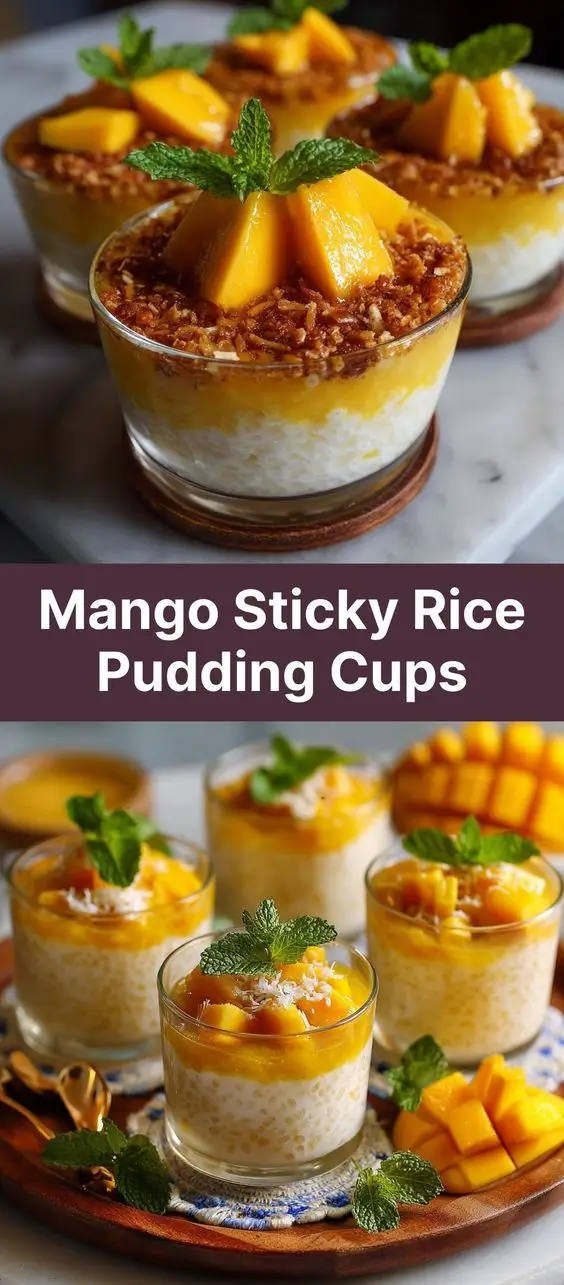
Mango Sticky Rice Pudding Cups: A Tropical Delight in Every Bite
Introduction
Mango Sticky Rice Pudding Cups are a modern twist on the beloved Thai dessert, Khao Niew Mamuang. Traditionally served as a warm, creamy dish of glutinous rice drenched in coconut milk and paired with ripe mango slices, this cup version elevates the experience by transforming it into a portable, elegant, and Instagram-worthy treat. Perfect for brunches, summer picnics, or as an exotic dessert at dinner parties, these individual servings bring together the rich creaminess of sticky rice, the tropical sweetness of mango, and the velvety depth of coconut — all layered beautifully in transparent cups for visual appeal.
Whether you’re new to Southeast Asian desserts or a longtime lover of Thai cuisine, Mango Sticky Rice Pudding Cups offer a delightful fusion of textures and flavors that dance on the palate. The chewy yet tender rice contrasts with the juicy softness of mango, while the luscious coconut sauce ties everything together in sweet harmony. This recipe is not only delicious but also highly customizable, making it ideal for dietary preferences ranging from vegan to gluten-free.
The History
The origins of mango sticky rice trace back to Thailand, where it has been enjoyed for generations as a seasonal delicacy, particularly during the peak mango harvest between March and June. In Thai culture, mango sticky rice holds a special place — it’s not just food; it’s tradition. Vendors across Bangkok, Chiang Mai, and Phuket sell it in banana leaves on street corners, and families prepare it at home to celebrate the arrival of mango season.
Historically, glutinous rice (also known as sticky rice) was a staple in northern and northeastern Thailand, often eaten with hands and used in both savory and sweet preparations. When combined with ripe mangoes — native to South Asia and cultivated extensively in Thailand — the pairing became iconic. The addition of coconut milk, another regional ingredient, elevated the dish into a luxurious dessert fit for royalty.
Over time, mango sticky rice gained international fame, appearing on menus from New York to Tokyo. With the rise of food trends like deconstructed desserts and edible jars, the “pudding cup” format emerged — a contemporary presentation inspired by mason jar desserts and parfait styles. Today’s Mango Sticky Rice Pudding Cups honor the authenticity of the original while embracing modern plating techniques and global tastes.
Ingredients Breakdown
The magic of Mango Sticky Rice Pudding Cups lies in its simplicity and quality of ingredients. Each component plays a vital role in creating the final symphony of taste and texture.
- Glutinous Rice (Sticky Rice): Also called sweet rice, this short-grain rice is high in amylopectin, giving it a sticky, chewy texture when cooked. It’s essential to use true glutinous rice, not regular sushi rice or jasmine rice, for authentic results.
- Coconut Milk: Full-fat coconut milk is crucial for richness and creaminess. Avoid “light” versions, as they dilute flavor and fail to provide the silky mouthfeel needed. Look for brands without additives or guar gum for the cleanest taste.
- Sugar: Traditionally, palm sugar is used for its caramel-like depth, but white sugar, brown sugar, or coconut sugar can be substituted depending on availability and preference.
- Pinch of Salt: Enhances the overall flavor profile by balancing sweetness — never skip this!
- Vanilla Extract (optional): Adds a subtle aromatic warmth that complements the coconut and mango.
- Fresh Ripe Mangoes: Choose fragrant, golden-yellow mangoes like Ataulfo, Kent, or Nam Dok Mai varieties. They should yield slightly to gentle pressure and smell sweet at the stem end.
- Toasted Mung Beans or Sesame Seeds (optional garnish): Adds crunch and nuttiness, enhancing texture contrast.
- Heavy Cream or Coconut Cream (optional): For extra indulgence, some recipes swirl in a touch of heavy cream or reduce coconut cream into a thick drizzle.
Step-by-Step Recipe
Follow these detailed steps to create restaurant-quality Mango Sticky Rice Pudding Cups at home:
- Soak the Rice: Rinse 1 cup of glutinous rice under cold water until the water runs clear. Soak in enough water to cover by 2 inches for at least 4 hours, preferably overnight. This step ensures even cooking and optimal stickiness.
- Steam the Rice: Drain the soaked rice and transfer it to a steamer lined with cheesecloth or banana leaves (if available). Steam over boiling water for 20–25 minutes, or until fully cooked and translucent. Do not boil — steaming preserves texture.
- Prepare Coconut Sauce: While the rice steams, heat 1 can (13.5 oz) of coconut milk with 1/3 cup sugar and 1/4 tsp salt in a saucepan over medium heat. Stir until sugar dissolves. Remove from heat and stir in 1/2 tsp vanilla extract if using. Reserve 1/4 cup for topping later.
- Infuse the Rice: Once steamed, immediately transfer hot rice to a large bowl. Pour the warm coconut mixture over the rice, gently folding to coat every grain. Let it sit, covered with a damp cloth, for 20–30 minutes so the rice absorbs the liquid fully.
- Prepare the Mango: Peel and slice two ripe mangoes into thin strips or cubes. To impress guests, cut decorative fans by scoring the flesh without cutting through the skin, then flipping inside out.
- Assemble the Cups: In clear serving glasses or mason jars, start with a layer of coconut-infused sticky rice (about 1/3 full). Add a generous portion of mango pieces. Repeat layers, finishing with mango on top.
- Add Final Touches: Drizzle reserved coconut sauce over each cup. Garnish with toasted sesame seeds, shredded coconut, or crushed roasted mung beans for added texture.
- Chill or Serve Warm: Traditionally served slightly warm, but chilling for 30 minutes enhances firmness and refreshment — ideal for hot days.
Tips
- Use Banana Leaves (Optional): Line your steamer with fresh or frozen banana leaves for an authentic aroma. You can also tie a strip into a knot and add it to the rice while soaking.
- Don’t Rush Soaking: Skipping the soak leads to unevenly cooked rice. If pressed for time, soak in warm water for 2 hours minimum.
- Steam, Don’t Boil: Boiling makes the rice mushy. Steaming yields fluffy, distinct grains that remain cohesive.
- Cool Before Assembling: Allow the rice to cool slightly before layering — too hot, and the mango will soften excessively.
- Adjust Sweetness: Taste the coconut sauce before mixing. Some mangoes are sweeter than others; adjust sugar accordingly.
- Layer Creatively: For visual appeal, alternate small layers: rice, mango, rice, mango, topped with sauce.
- Prevent Drying Out: Keep cooked rice covered during infusion. Exposure causes drying and hardening.
- Double the Coconut Sauce: Guests love extra sauce! Make a larger batch to have on hand.
Variations and Customizations
Mango Sticky Rice Pudding Cups are wonderfully adaptable. Here are creative ways to personalize them:
- Vegan Version: Ensure all sugar is plant-based (avoid bone char-filtered white sugar), and stick strictly to coconut milk and natural sweeteners.
- Dairy-Free & Gluten-Free: Naturally compliant — just verify labels on packaged ingredients.
- Tropical Twist: Add layers of pineapple, passionfruit pulp, or lychee between rice and mango for more complexity.
- Protein Boost: Sprinkle chia seeds, hemp hearts, or crushed pistachios between layers for nutrition and crunch.
- Flavor Infusions: Infuse the coconut milk with pandan leaf (screwpine), lemongrass, or cardamom pods for aromatic flair.
- Alcoholic Option: Add a splash of rum, Malibu, or mango liqueur to the coconut sauce for adult-only versions.
- Low-Sugar Option: Replace sugar with monk fruit syrup, erythritol, or stevia blend, adjusting to taste.
- Crunchy Topping: Top with granola, crumbled coconut macaroons, or candied ginger for textural surprise.
- Mini Dessert Shots: Serve in espresso cups or shot glasses for cocktail parties.
- Frozen Pops: Blend components and freeze in popsicle molds for a chilled alternative.
Health Considerations and Nutritional Value
While undeniably indulgent, Mango Sticky Rice Pudding Cups do offer some nutritional benefits when enjoyed in moderation.
Nutritional Highlights:
- Mangoes: Rich in vitamin C, vitamin A, fiber, and antioxidants like mangiferin, which may support immune health and reduce inflammation.
- Coconut Milk: Contains medium-chain triglycerides (MCTs), which are metabolized differently than other fats and may support energy levels and satiety.
- Glutinous Rice: Provides quick-releasing carbohydrates ideal for energy, though low in fiber compared to whole grains.
Considerations:
- High in Calories and Sugar: Due to coconut milk and added sugar, this dessert is calorie-dense. One serving (one cup) can range from 350–500 calories depending on size and ingredients.
- Carbohydrate Content: Primarily from refined carbs (sticky rice and sugar), so individuals managing blood sugar should consume cautiously.
- Lactose-Free but High in Fat: While naturally dairy-free, coconut milk is high in saturated fat. Moderation is key, especially for those monitoring cholesterol.
- Allergens: Contains coconut (a tree nut allergen in some classifications), so label appropriately for guests.
For a healthier take, consider reducing sugar, increasing fruit ratio, using light coconut milk sparingly, and adding seeds or nuts for protein and healthy fats.
Ingredients
- 1 cup glutinous rice (sweet rice)
- 1 3/4 cups water (for steaming)
- 1 (13.5 oz) can full-fat coconut milk (divided)
- 1/3 cup sugar (palm, coconut, or white sugar)
- 1/4 teaspoon salt
- 1/2 teaspoon vanilla extract (optional)
- 2 large ripe mangoes, peeled and sliced
- 1 tablespoon toasted sesame seeds or mung beans (optional garnish)
- 1 tablespoon shredded unsweetened coconut (optional)
Directions
- Rinse glutinous rice under cold water until water runs clear. Soak in ample water for 4–8 hours. Drain well.
- Line a steamer basket with cheesecloth. Add drained rice and steam over boiling water for 20–25 minutes, or until tender and glossy.
- In a saucepan, combine 1 cup of coconut milk, sugar, salt, and vanilla. Heat gently until sugar dissolves. Do not boil.
- Transfer hot rice to a mixing bowl. Pour warm coconut mixture over rice. Gently fold to combine. Cover with a damp towel and let rest 20–30 minutes.
- While rice rests, peel and slice mangoes into bite-sized pieces or decorative fans.
- In clear dessert cups, spoon a layer of sticky rice (about 1/3 cup per cup).
- Add a layer of mango slices. Repeat the layers, ending with mango on top.
- Drizzle remaining coconut milk (or reduced sauce) over each cup.
- Garnish with sesame seeds, shredded coconut, or crushed nuts.
- Serve immediately, warm or chilled. Best consumed within 24 hours.
FAQ
Can I make mango sticky rice pudding cups ahead of time?
Yes! Prepare the rice and mango separately, store in airtight containers (rice in fridge, mango at room temp), and assemble just before serving to maintain texture.
Can I use canned mango instead of fresh?
Fresh is strongly recommended for flavor and texture. Canned mango tends to be overly soft and sugary. If necessary, drain thoroughly and pat dry.
Why is my sticky rice gummy?
This usually happens if the rice wasn’t soaked long enough or was boiled instead of steamed. Always steam soaked rice for best results.
Is glutinous rice gluten-free?
Yes! Despite the name, glutinous rice contains no gluten. It refers to the sticky texture, not the protein.
Can I freeze leftover pudding cups?
Not recommended. Freezing alters the texture of both rice and mango, resulting in mushiness upon thawing.
What type of coconut milk should I use?
Choose high-quality, full-fat coconut milk with minimal additives. Shake the can well before opening. Some prefer to refrigerate the can and skim off the thick cream layer for a richer sauce.
How do I know when mangoes are ripe?
They should feel slightly soft to the touch, emit a fruity aroma near the stem, and have vibrant yellow-orange skin. Avoid bruised or wrinkled fruit.
Can I make this without sugar?
You can omit or reduce sugar, but it affects flavor balance. Try ripe bananas or date syrup for natural sweetness.
Summary
Mango Sticky Rice Pudding Cups blend the traditional Thai dessert with modern elegance, offering a visually stunning and deeply satisfying tropical treat. Layered with coconut-infused sticky rice and fresh mango, each bite delivers creamy, sweet, and floral notes in perfect harmony.