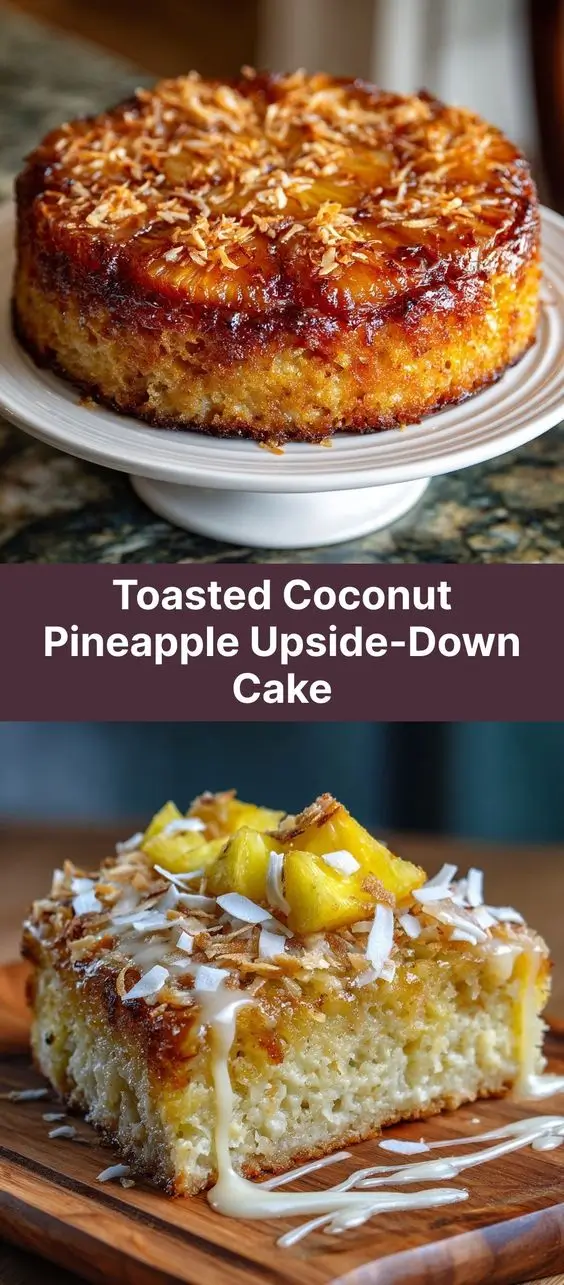
Toasted Coconut Pineapple Upside-Down Cake: A Tropical Delight
Introduction
The Toasted Coconut Pineapple Upside-Down Cake is a show-stopping dessert that brings together the rich, buttery sweetness of caramelized fruit and the tropical charm of toasted coconut. This modern twist on the classic American pineapple upside-down cake elevates the traditional recipe by incorporating layers of flavor and texture—crisp golden pineapple rings, chewy maraschino cherries (optional), and a generous sprinkle of nutty toasted coconut. Whether served at summer barbecues, holiday gatherings, or as an indulgent weeknight treat, this cake never fails to impress with its vibrant appearance and luscious taste. With each bite, you’re transported to a sun-kissed beach, where the scent of coconut drifts through the warm breeze and pineapple juice glistens under the tropical sun.
The History
The origins of the pineapple upside-down cake trace back to the early 20th century, during a time when canned pineapple was gaining popularity in the United States. The Dole Pineapple Company played a pivotal role in popularizing the recipe by hosting a national recipe contest in 1925, which led to a surge in both pineapple consumption and creative baking. Originally baked in cast iron skillets, the cake was a clever way for home bakers to showcase exotic fruits using accessible ingredients. Over time, variations emerged, including cherry-topped versions and spiced renditions, but the core concept remained: fruit arranged at the bottom of the pan, covered with batter, then flipped after baking to reveal a glossy, caramelized top.
The addition of toasted coconut to this beloved dessert is a more recent innovation, inspired by the growing appreciation for layered textures and bold flavors in modern baking. Coconut, long associated with tropical cuisine, complements pineapple’s tangy sweetness perfectly. When toasted, coconut develops a deep, nutty aroma and a satisfying crunch that enhances the soft crumb of the cake. Today, the Toasted Coconut Pineapple Upside-Down Cake stands as a fusion of nostalgic tradition and contemporary culinary flair—a dessert that honors its roots while embracing new dimensions of taste.
Ingredients Breakdown
Understanding each ingredient’s role ensures a perfect outcome every time. Here’s a detailed look at what goes into this delectable cake:
Fruit and Topping Layer
- Pineapple rings (canned or fresh): The star of the topping. Canned pineapple offers consistent texture and sweetness, while fresh provides a brighter acidity. Drain well to avoid excess moisture.
- Maraschino cherries (optional): Traditionally placed in the center of each pineapple ring for visual appeal and a burst of sweet-tart flavor.
- Unsalted butter: Melts into a rich base that helps caramelize the sugar and bind the fruit layer. Using unsalted allows control over salt content.
- Brown sugar (light or dark): Provides deep molasses notes and contributes to the gooey, sticky topping when heated. Dark brown sugar intensifies the caramel flavor.
- Shredded coconut (unsweetened or sweetened): Adds texture and tropical essence. Unsweetened gives a more natural flavor; sweetened increases overall sweetness.
Cake Batter
- All-purpose flour: The structural foundation. Provides gluten formation necessary for rise and crumb stability.
- Granulated sugar: Sweetens the batter and aids in browning and moisture retention.
- Baking powder and baking soda: Leavening agents that help the cake rise evenly. Baking soda also reacts with acidic ingredients like pineapple juice for extra lift.
- Salt: Balances sweetness and enhances all other flavors.
- Butter (softened): Adds richness, tenderness, and flavor. Must be at room temperature for proper creaming.
- Eggs (large, room temperature): Bind ingredients, add structure, and contribute to leavening through air incorporation.
- Vanilla extract: Enhances sweetness and adds warmth to the overall flavor profile.
- Buttermilk or pineapple juice: Adds moisture and slight acidity, improving texture and activating leaveners. Pineapple juice doubles down on tropical flavor.
- Flaked or shredded coconut (toasted or untoasted): Mixed into the batter for bursts of coconut flavor and chewy texture.
Step-by-Step Recipe
- Preheat oven to 350°F (175°C). Ensure your oven rack is positioned in the center. Lightly grease a 9- or 10-inch cast iron skillet or round cake pan with non-stick spray or butter. If using a glass or ceramic dish, confirm it’s oven-safe.
- Toast the coconut. In a dry skillet over medium heat, spread shredded or flaked coconut in an even layer. Stir frequently until golden brown—about 3–5 minutes. Remove immediately to prevent burning. Set aside to cool.
- Prepare the topping. Melt ½ cup (1 stick) unsalted butter in the baking skillet over low heat. Once melted, remove from heat and stir in ¾ cup packed brown sugar until fully combined and syrupy. Sprinkle half of the toasted coconut evenly over the butter-sugar mixture.
- Arrange the fruit. Place pineapple rings in a single, slightly overlapping layer over the caramel base. If desired, cut extra rings to fill gaps. Nestle a maraschino cherry (if using) into the center of each ring. Sprinkle the remaining toasted coconut around and between the fruit.
- Make the batter. In a medium bowl, whisk together 1 ½ cups all-purpose flour, 1 cup granulated sugar, 1 ½ teaspoons baking powder, ¼ teaspoon baking soda, and ¼ teaspoon salt. Set aside.
- Cream the butter and sugar. In a large mixing bowl, beat ½ cup softened unsalted butter with an electric mixer on medium speed until creamy (about 1 minute). Gradually add the granulated sugar and beat for 3–4 minutes until light and fluffy.
- Add eggs and vanilla. Beat in 2 large eggs one at a time, scraping the bowl after each addition. Mix in 1 teaspoon pure vanilla extract.
- Incorporate dry and wet ingredients alternately. Add one-third of the flour mixture to the butter mixture and mix on low until just combined. Pour in half of ⅓ cup buttermilk (or pineapple juice), mix gently. Repeat, ending with the flour mixture. Do not overmix. Fold in ½ cup additional toasted coconut (optional) for enhanced texture.
- Pour batter over fruit. Carefully spoon the batter over the arranged pineapple layer, spreading evenly with a spatula to cover completely.
- Bake for 35–45 minutes. Place in preheated oven and bake until a toothpick inserted in the center comes out clean and the top is golden brown. Rotate the pan halfway through for even baking.
- Cool for 10–15 minutes. Let the cake rest in the pan. This allows the caramel to thicken slightly, preventing fruit from sliding off when inverted.
- Invert onto a serving plate. Run a knife around the edges. Place a large flat plate or cake stand over the pan. Holding tightly, flip both pan and plate upside down in one confident motion. Gently lift the pan. If any fruit sticks, use a spoon to reposition it.
- Serve warm or at room temperature. Slice into wedges and enjoy as-is or with a scoop of vanilla ice cream, whipped cream, or coconut sorbet.
Tips for Success
- Use a reliable oven thermometer. Oven temperatures can vary; accurate heat ensures even baking without drying out the cake.
- Don’t skip toasting the coconut. Toasting unlocks aromatic compounds and transforms bland shreds into fragrant, crunchy morsels that elevate the entire dessert.
- Drain pineapple thoroughly. Excess juice dilutes the caramel layer. Pat rings dry with paper towels if needed.
- Avoid overmixing the batter. Overmixing develops gluten, leading to a dense, tough cake. Mix only until ingredients are incorporated.
- Cool before flipping. Flipping too soon may cause hot caramel to run or fruit to detach. Wait at least 10 minutes.
- Choose the right pan. A heavy-duty skillet (cast iron or oven-safe nonstick) conducts heat evenly and supports the flipping process better than thin pans.
- Double the topping for extra gooeyness. For a more decadent finish, increase butter and brown sugar by 25–50%.
- Reheat leftovers gently. Warm individual slices in the microwave for 15–20 seconds or in a 300°F oven for 10 minutes to restore freshness.
Variations and Customizations
This cake is wonderfully adaptable. Try these creative twists:
- Fruit swaps: Replace pineapple with mango slices, peaches, apricots, or even apples for a seasonal spin.
- Gluten-free version: Substitute all-purpose flour with a 1:1 gluten-free baking blend. Add ¼ teaspoon xanthan gum if not included in the mix.
- Dairy-free/vegan option: Use plant-based butter and buttermilk (1 tablespoon lemon juice + ¾ cup almond milk). Replace eggs with flax eggs (1 tablespoon ground flaxseed + 3 tablespoons water per egg).
- Alcohol infusion: Add 1–2 tablespoons dark rum or coconut rum to the batter for a sophisticated, adult-friendly kick.
- Spice it up: Add ½ teaspoon ground cinnamon, nutmeg, or cardamom to the batter for warm, complex notes.
- Coconut overload: Use coconut oil instead of butter, coconut milk instead of buttermilk, and press toasted coconut onto the sides after flipping.
- Mini versions: Bake in muffin tins for individual servings. Reduce baking time to 18–22 minutes.
- No-cherry version: Skip maraschino cherries for a cleaner, more natural presentation. Fill centers with macadamia nuts or candied ginger instead.
Health Considerations and Nutritional Value
While undeniably indulgent, this cake can be enjoyed mindfully. Here’s a nutritional perspective (per serving, based on 8 servings):
- Calories: ~380–450 kcal
- Total Fat: 18–22g (mostly from butter and coconut)
- Saturated Fat: 12–15g (moderate intake recommended)
- Carbohydrates: 55–60g (primarily sugars from brown sugar, pineapple, and batter)
- Sugars: 40–45g (high; consider reducing sugar by 25% for a less sweet version)
- Protein: 4–5g
- Dietary Fiber: 1–2g (can be increased by using whole wheat pastry flour)
- Sodium: 200–250mg
Health Notes:
- Coconut benefits: Contains medium-chain triglycerides (MCTs), which may support metabolism. However, high in saturated fat, so moderation is key.
- Pineapple perks: Rich in vitamin C, manganese, and bromelain—an enzyme that aids digestion and has anti-inflammatory properties.
- Sugar awareness: High sugar content makes this dessert best suited for occasional enjoyment, especially for those managing blood sugar levels.
- Portion control: Serve smaller slices with a side of Greek yogurt to balance sweetness and add protein.
- Allergen info: Contains dairy, eggs, tree nuts (coconut), and gluten. Modify accordingly for dietary restrictions.
Ingredients
For the Topping:
- ½ cup (1 stick / 113g) unsalted butter
- ¾ cup (150g) packed brown sugar (light or dark)
- 1 cup (80g) shredded or flaked coconut, toasted
- 6–8 pineapple rings (about 20 oz can or equivalent fresh)
- 6–8 maraschino cherries (optional)
For the Cake Batter:
- 1 ½ cups (190g) all-purpose flour
- 1 cup (200g) granulated sugar
- 1 ½ teaspoons baking powder
- ¼ teaspoon baking soda
- ¼ teaspoon salt
- ½ cup (1 stick / 113g) unsalted butter, softened
- 2 large eggs, room temperature
- 1 teaspoon pure vanilla extract
- ⅓ cup (80ml) buttermilk or pineapple juice
- ½ cup (40g) additional toasted coconut (optional, for texture)
Directions
- Preheat oven to 350°F (175°C). Grease a 9- or 10-inch oven-safe skillet or cake pan.
- Toast coconut in a dry skillet over medium heat until golden brown. Cool and set aside.
- Melt butter in the prepared skillet over low heat. Stir in brown sugar until smooth. Remove from heat.
- Sprinkle half of the toasted coconut over the butter-sugar mixture.
- Arrange pineapple rings in a single layer over the caramel. Place cherries in the center if using. Sprinkle remaining coconut between the fruit.
- In a bowl, whisk flour, granulated sugar, baking powder, baking soda, and salt.
- In a large bowl, cream softened butter until smooth. Gradually add sugar and beat until fluffy.
- Beat in eggs one at a time, then stir in vanilla extract.
- Alternately add flour mixture and buttermilk (or pineapple juice), beginning and ending with flour. Mix until just combined.
- Fold in optional ½ cup toasted coconut.
- Pour batter evenly over the fruit layer, smoothing the top.
- Bake for 35–45 minutes, or until a toothpick comes out clean.
- Let cool in the pan for 10–15 minutes.
- Run a knife around the edge. Place a serving plate over the pan and flip carefully.
- Lift off the pan. Reposition any stray fruit with a spoon.
- Slice and serve warm. Store leftovers covered in the refrigerator for up to 4 days.
FAQ
Can I make this cake ahead of time?
Yes! Bake and cool completely, then leave inverted in the pan overnight at room temperature. Re-warm before serving for best texture.
Why did my cake stick to the pan?
Insufficient greasing or flipping too soon are common causes. Always grease well and wait at least 10 minutes before inverting.
Can I use sweetened coconut?
Absolutely. Sweetened coconut increases overall sweetness and creates a more candy-like topping. Adjust sugar in the batter if desired.
Is this cake freezable?
Yes, though texture may change slightly. Wrap the cooled, unflipped cake tightly and freeze for up to 2 months. Thaw in the fridge and reheat before serving.
Can I use fresh pineapple?
You can, but ensure it’s very ripe and drain well. Fresh pineapple contains more moisture and bromelain, which may affect gelatin-based toppings—but not an issue here.
What can I substitute for buttermilk?
Mix 1 tablespoon vinegar or lemon juice with ¾ cup milk and let sit 5 minutes. Alternatively, use plain yogurt or sour cream thinned with milk.
Can I bake this in a bundt pan?
Yes! Use a well-greased bundt pan and adjust baking time to 40–50 minutes. Invert carefully onto a plate.
Summary
The Toasted Coconut Pineapple Upside-Down Cake combines caramelized pineapple, rich buttery topping, and nutty toasted coconut in a moist, tender cake that flips into a stunning tropical dessert. Easy to customize and always a crowd-pleaser, it’s a modern twist on a timeless classic.