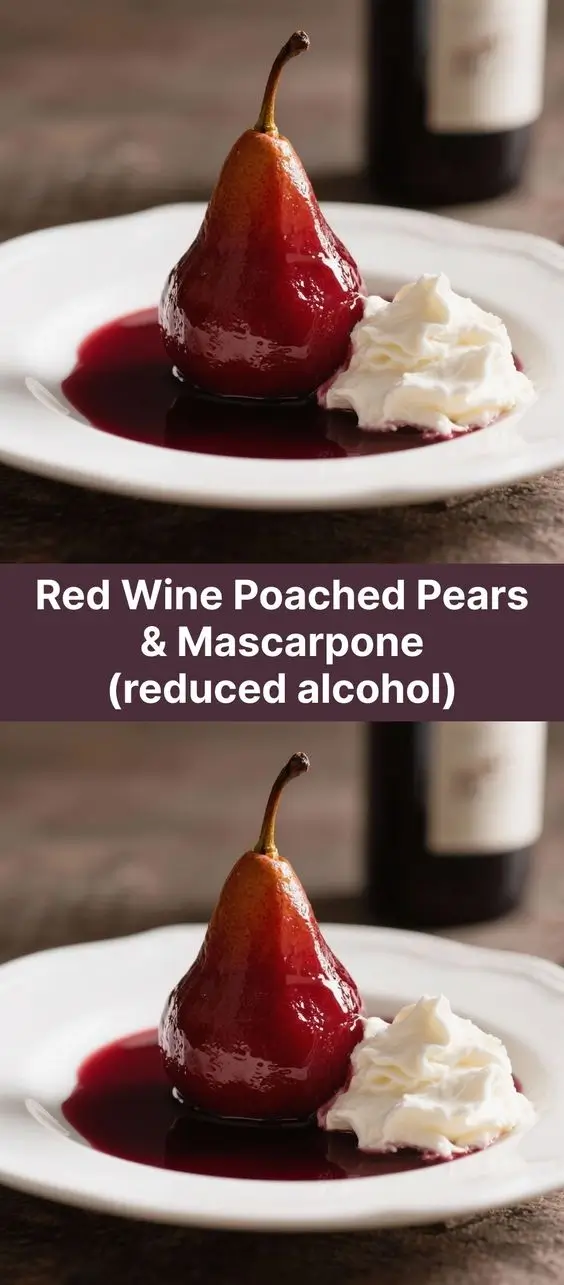
Red Wine Poached Pears & Mascarpone (Reduced Alcohol)
A sophisticated, elegant dessert that combines the deep, rich flavors of red wine-poached pears with the creamy indulgence of mascarpone cheese. This refined yet simple-to-make treat is perfect for dinner parties, holiday gatherings, or a luxurious weeknight indulgence. With a reduced alcohol version, it’s accessible to more palates while still preserving its complex, aromatic essence.
The History
Poached pears have graced European tables for centuries, with roots tracing back to medieval France and Italy. Known as poires à la Beaujolais in French cuisine or per e vino rosso in Italian traditions, this dessert emerged from the practice of preserving fruit in spiced wine—a method born out of both necessity and culinary artistry. In times before refrigeration, simmering pears in red wine infused with spices not only extended their shelf life but also transformed them into a delicately flavored delicacy enjoyed by nobility and commoners alike.
The addition of dairy elements like mascarpone is a more modern twist, reflecting the evolution of dessert culture in the 20th century, especially as Italian ingredients gained global popularity. Mascarpone, a luxuriously smooth cream cheese native to Lombardy, began appearing alongside poached fruits in upscale restaurants and home kitchens during the 1980s and 1990s. The pairing of tender, wine-infused pears with cool, velvety mascarpone became a hallmark of contemporary gourmet desserts—balancing acidity, sweetness, and richness in every bite.
This recipe honors those historical roots while adapting to modern dietary preferences, including a reduced-alcohol version that maintains depth of flavor without overwhelming the palate. It’s a bridge between tradition and innovation, making it ideal for today’s health-conscious yet flavor-driven audiences.
Ingredients Breakdown
Understanding each ingredient helps you appreciate how they contribute to the final dish’s aroma, texture, and balance:
- Ripe but firm pears (Bosc or Anjou preferred): These varieties hold their shape well during poaching. Bosc pears, with their honeyed sweetness and dense flesh, are particularly ideal.
- Low-alcohol or dealcoholized red wine: Traditional recipes use full-bodied wines like Cabernet Sauvignon or Merlot. For a reduced-alcohol version, opt for dealcoholized red wine (about 0.5% ABV) or simmer regular red wine to evaporate most alcohol while retaining flavor.
- Water: Dilutes the wine slightly to prevent overpowering bitterness and ensures even heat distribution during poaching.
- Granulated sugar or maple syrup: Sweetens the poaching liquid. Maple syrup adds a subtle earthiness; sugar offers clean sweetness.
- Whole spices – cinnamon stick, star anise, cloves, black peppercorns: Add warmth and complexity. Cloves and star anise should be used sparingly—they’re potent!
- Orange or lemon zest: Brightens the mixture with citrus oils, cutting through the wine’s richness.
- Fresh orange juice: Enhances fruitiness and acidity, helping to balance the sweetness.
- Vanilla bean or extract: Adds floral, sweet depth. A split vanilla bean pod steeped in the liquid releases tiny seeds that speckle the syrup beautifully.
- Mascarpone cheese: The star of the topping—silky, mildly tangy, and rich. It contrasts perfectly with the tart-sweet pears.
- Honey or agave (optional): Drizzled over mascarpone for extra sweetness or served on the side.
- Toasted nuts (walnuts, almonds, or pistachios): For crunch and nutty contrast.
- Fresh mint leaves: Garnish for freshness and visual appeal.
Step-by-Step Recipe
- Prepare the Pears: Peel the pears carefully, leaving the stems intact for an elegant presentation. Slice a thin piece off the bottom so they can stand upright. If desired, use a melon baller to gently scoop out the core from the base.
- Make the Poaching Liquid: In a large, heavy-bottomed pot or Dutch oven, combine:
- 3 cups (720 ml) low-alcohol red wine
- 1 cup (240 ml) water
- ½ cup (100g) granulated sugar or ⅓ cup (80ml) maple syrup
- 1 cinnamon stick
- 2 whole star anise
- 4 whole cloves
- 3 black peppercorns (optional, for subtle spice)
- Zest of 1 orange
- ¼ cup (60ml) fresh orange juice
- 1 vanilla bean (split and scraped) or 1 tsp pure vanilla extract
- Simmer the Spices: Bring the mixture to a gentle boil over medium-high heat, stirring until sugar dissolves. Reduce heat and let it simmer uncovered for 10 minutes to meld flavors and allow some alcohol to evaporate. If using regular red wine, extend this step to 15–20 minutes to reduce alcohol further.
- Add the Pears: Carefully place the prepared pears into the liquid, ensuring they are mostly submerged. If needed, add more water or a small heatproof plate to weigh them down gently.
- Poach Gently: Cover the pot partially and simmer over low heat for 20–35 minutes, depending on pear size and ripeness. Turn the pears occasionally for even coloring. They’re done when a skewer inserts easily into the thickest part near the stem, but the fruit still holds its shape.
- Cool and Infuse: Remove the pot from heat and let the pears cool in the liquid for at least 1 hour, preferably 2–4 hours or overnight in the refrigerator. This allows deeper flavor absorption and beautiful color development.
- Reduce the Syrup (Optional): Strain the poaching liquid into a saucepan, discarding solids. Simmer over medium heat until reduced by half—this creates a glossy, concentrated syrup perfect for drizzling. Let it cool before serving.
- Prepare the Mascarpone: In a small bowl, lightly whip the mascarpone with a splash of vanilla extract or a drizzle of honey to soften it and enhance flavor. Do not overmix—it should remain thick and spreadable.
- Assemble: Place each chilled pear upright on a dessert plate. Spoon a generous dollop of mascarpone beside or on top. Drizzle with reduced syrup, sprinkle with toasted nuts, and garnish with mint.
Tips
- Choose the right pears: Avoid overly ripe pears—they’ll disintegrate during cooking. Bosc and Anjou are best; Bartlett pears may work if very firm.
- Don’t rush the poach: Low and slow is key. Boiling will break the pears apart.
- Submerge fully: Use a parchment paper circle (called a “cartouche”) cut to fit inside the pot, placed directly on the liquid surface to keep pears submerged and prevent oxidation.
- Alcohol reduction hack: Simmer regular red wine with water and spices for 20 minutes before adding pears—up to 85% of alcohol will evaporate.
- Chill thoroughly: Cold pears contrast beautifully with room-temperature mascarpone.
- Make ahead: This dish tastes better the next day! Store pears in their liquid in the fridge for up to 5 days.
- Serve with flair: Warm the plates slightly before plating for a restaurant-quality experience.
Variations and Customizations
This recipe is highly adaptable. Here are some creative twists:
- Vegan Version: Substitute mascarpone with cashew cream or coconut yogurt. Use maple syrup instead of honey.
- Gluten-Free Friendly: Naturally gluten-free—just ensure all ingredients (especially wine) are certified GF if needed.
- Different Fruits: Try peaches, nectarines, apples, or quinces in the same poaching liquid. Adjust cooking time accordingly.
- Spice Variations: Swap star anise for cardamom pods, or add a slice of fresh ginger for zing.
- Liqueur Touch (optional): For non-reduced versions, add 1–2 tbsp of Grand Marnier, Chambord, or brandy after poaching for extra depth.
- Chocolate Drizzle: Melt dark chocolate and drizzle over the mascarpone for decadence.
- Herbal Notes: Add a sprig of rosemary or thyme to the poaching liquid for a savory-herbal undertone.
- Warm Serving Option: Serve warm pears with warm mascarpone (gently warmed but not melted) for a cozy autumn dessert.
- Mini Jars: Layer diced poached pears and mascarpone in small glasses for parfaits—perfect for parties.
Health Considerations and Nutritional Value
While undeniably indulgent, this dessert can be part of a balanced diet when enjoyed in moderation. Here’s what you need to know:
- Reduced Alcohol Content: By using dealcoholized wine or pre-simmering regular wine, this version contains less than 0.5–1% alcohol, making it suitable for pregnant individuals, children, or those avoiding alcohol for health or religious reasons.
- Sugar Content: The primary concern is added sugar. One serving contains approximately 25–35g of sugar, depending on sweeteners used. To reduce:
- Use monk fruit sweetener or erythritol in the poaching liquid.
- Opt for unsweetened mascarpone and sweeten with stevia.
- Reduce overall sugar by 25–50%—the natural fruit sugars will still shine.
- Fiber and Vitamins: Pears provide dietary fiber (about 5g per medium pear), vitamin C, and potassium. The skin (though removed here) contains most of the fiber—consider leaving it on for rustic versions.
- Mascarpone Nutrition: High in fat (about 44g per 100g), primarily saturated. While delicious, portion control is advised. For lighter options:
- Mix mascarpone with Greek yogurt (½ and ½).
- Use ricotta cheese whipped with a touch of lemon zest.
- Antioxidants: Red wine—even dealcoholized—is rich in polyphenols like resveratrol, which may support heart health. Though levels decrease after processing, some beneficial compounds remain.
- Calorie Count: Approximately 320–380 calories per serving (pear + ¼ cup mascarpone + syrup). Can be lowered to ~220 with substitutions.
Ingredients
- 4 ripe but firm Bosc or Anjou pears
- 3 cups (720 ml) low-alcohol or dealcoholized red wine
- 1 cup (240 ml) water
- ½ cup (100g) granulated sugar or ⅓ cup (80ml) pure maple syrup
- 1 cinnamon stick
- 2 star anise pods
- 4 whole cloves
- 3 black peppercorns (optional)
- Zest and juice of 1 orange (about ¼ cup juice)
- 1 vanilla bean (split and seeds scraped) or 1 tsp vanilla extract
- 8 oz (225g) mascarpone cheese
- 1 tbsp honey or agave (optional, for mascarpone)
- ¼ cup (30g) toasted walnuts, almonds, or pistachios (chopped)
- Fresh mint leaves (for garnish)
Directions
- Peel pears, keeping stems intact. Trim bottoms so they stand upright. Core from the base using a melon baller.
- In a large pot, combine red wine, water, sugar, cinnamon, star anise, cloves, peppercorns, orange zest, orange juice, and vanilla bean (pod and seeds). Stir and bring to a gentle boil over medium-high heat.
- Once boiling, reduce heat and simmer uncovered for 10–15 minutes to infuse spices and reduce alcohol. Stir in vanilla extract now if not using a bean.
- Place pears into the liquid, ensuring they are mostly submerged. Use a parchment cartouche or small plate to keep them under the surface.
- Cover pot partially and simmer over low heat for 20–35 minutes, turning occasionally, until pears are tender but not mushy.
- Turn off heat and let pears cool in liquid for 1 hour at room temperature, then transfer to refrigerator for at least 2 more hours (or overnight).
- When ready to serve, remove pears and set aside. Strain the poaching liquid into a clean saucepan.
- Bring liquid to a simmer over medium heat and reduce by half (about 15–20 minutes) until syrupy. Cool completely.
- In a small bowl, mix mascarpone with honey or agave if desired, just until smooth. Do not over-whip.
- To serve: Place a pear upright on each plate. Add a generous spoonful of mascarpone. Drizzle with reduced syrup. Sprinkle with toasted nuts and garnish with mint leaves.
FAQ
Can I make this without any alcohol?
Yes! Use dealcoholized red wine or replace wine entirely with a mix of grape juice, black tea, and a splash of balsamic vinegar for depth. Simmer with spices as directed.
How long do poached pears last in the fridge?
Up to 5 days when stored in their liquid in an airtight container. They often taste better after 24 hours as flavors deepen.
Can I freeze poached pears?
Yes, though texture may soften slightly upon thawing. Freeze in syrup in freezer-safe containers for up to 2 months.
Why did my pears turn brown?
Exposure to air causes oxidation. Keep them submerged during poaching and cooling. Adding citrus juice helps prevent browning.
Is mascarpone necessary?
It’s traditional, but you can substitute with whipped cream, crème fraîche, Greek yogurt, or vegan alternatives like almond-based cream cheese.
Can I can or preserve these pears?
Yes, but only if following safe canning procedures (water bath with proper acidity). Consult a trusted preserving guide for pH requirements.
What wine works best?
A dry, medium-bodied red like Merlot, Pinot Noir, or Côtes du Rhône. Avoid oaky or overly tannic wines, which can become bitter when reduced.
Summary
Elegant red wine-poached pears with reduced alcohol are delicately spiced, slowly simmered to tender perfection, and paired with luscious mascarpone for a dessert that’s both timeless and modern.
Ideal for special occasions or quiet evenings, this dish balances fruit, spice, cream, and sophistication in every silky, satisfying bite.