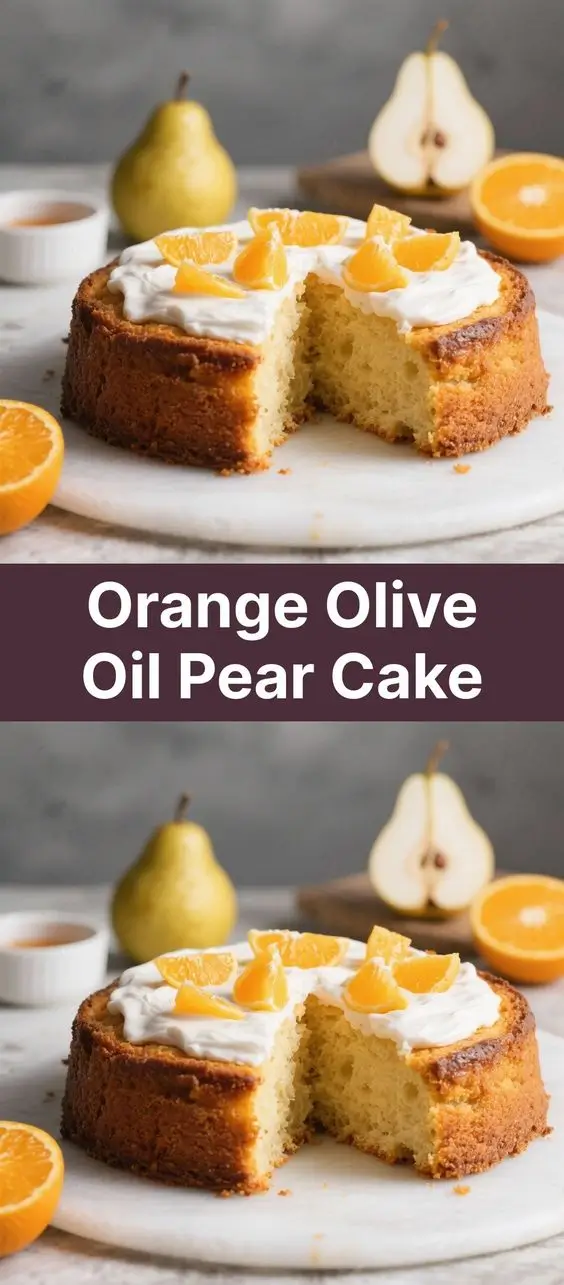
Orange Olive Oil Pear Cake: A Moist, Rustic Delight Bursting with Citrus and Fruit
Introduction
The Orange Olive Oil Pear Cake is a celebration of simplicity, elegance, and wholesome ingredients. This rustic dessert marries the bright acidity of fresh oranges, the earthy richness of extra virgin olive oil, and the tender sweetness of ripe pears into one harmonious loaf. Unlike traditional butter-based cakes, this version uses olive oil for a moist crumb and subtle savory depth that elevates the entire flavor profile. Perfect for brunch, afternoon tea, or as a refined dessert, this cake is not only delicious but also naturally lower in saturated fat and free from refined butter. Its Mediterranean-inspired ingredient list makes it a modern classic—ideal for health-conscious bakers and food lovers alike who crave something flavorful yet nourishing.
The History
The roots of using olive oil in baking trace back centuries to Mediterranean culinary traditions, where olive oil was—and still is—a staple fat used in both savory and sweet preparations. In countries like Italy, Spain, and Greece, olive oil cakes have long been part of regional cuisines, often made during harvest season when both olives and citrus fruits were abundant. These early cakes were humble, made with pantry staples such as flour, sugar, eggs, olive oil, and whatever fruit was on hand—often citrus, figs, or grapes.
The addition of pears to an olive oil cake is a more contemporary twist, inspired by the growing popularity of fruit-forward desserts and the farm-to-table movement. Pears bring natural sweetness, moisture, and a delicate floral note that complements the boldness of olive oil. The use of orange juice and zest further connects the recipe to Southern European traditions, particularly Italian torta al olio, which features citrus and oil in a tender crumb.
In recent years, chefs and home bakers have reimagined these old-world recipes with modern sensibilities—focusing on whole ingredients, reduced sugar, and plant-based fats. The Orange Olive Oil Pear Cake is a product of this evolution: a fusion of ancient techniques and current wellness trends, resulting in a dessert that feels both timeless and refreshingly new.
Ingredients Breakdown
Each ingredient in this cake plays a vital role in creating its signature texture, moisture, and complex flavor. Let’s dive into the purpose behind every component:
- Extra Virgin Olive Oil: The star of the show. High-quality EVOO adds a silky mouthfeel, rich aroma, and a slightly peppery finish that balances the sweetness. It also contributes heart-healthy monounsaturated fats and antioxidants. Choose a mild, fruity olive oil rather than a very robust or bitter one for best results in baking.
- Ripe Pears: Use varieties like Bartlett, Bosc, or Anjou for their balance of sweetness and firmness. When grated or finely diced, pears release natural sugars and moisture, reducing the need for added fats and liquids. They also contribute dietary fiber and enzymes that help tenderize the cake.
- Fresh Oranges: Both the zest and juice are used. Orange zest contains aromatic essential oils that infuse the batter with intense citrus fragrance. Freshly squeezed juice adds acidity, which reacts with leavening agents to create lift, while enhancing brightness and cutting through the oil’s richness.
- Granulated Sugar: Provides sweetness and structure. While you can reduce the amount slightly or substitute with coconut sugar or maple syrup, doing so may affect browning and texture.
- Large Eggs: Act as binders and leavening agents. They help emulsify the oil and liquid ingredients and provide structure through protein coagulation during baking.
- All-Purpose Flour: Offers gluten development necessary for structure. For a gluten-free version, a 1:1 gluten-free flour blend works well, though the crumb may be slightly denser.
- Baking Powder & Baking Soda: Work together to ensure proper rise. Baking powder provides initial lift, while baking soda reacts with the acid from orange juice to create additional bubbles.
- Ground Cinnamon: Adds warmth and complements the pear and orange flavors. It also has anti-inflammatory properties and pairs beautifully with autumnal or wintertime servings.
- Salt: Enhances all other flavors and balances sweetness.
- Vanilla Extract: Deepens the overall flavor profile with its warm, floral notes, rounding out the citrus and fruit elements.
- Optional Almond Flour: Sometimes added for nuttiness and extra moisture. It also increases protein content and can make the crumb more tender.
Step-by-Step Recipe
Ingredients
- 1 cup (240 ml) extra virgin olive oil (mild, fruity variety)
- 1 ½ cups (300 g) granulated sugar (or coconut sugar for a less refined option)
- 4 large eggs, room temperature
- Zest of 2 medium oranges
- ½ cup (120 ml) freshly squeezed orange juice (about 2–3 oranges)
- 2 ripe pears (about 300 g), peeled and grated or finely diced
- 2 ½ cups (315 g) all-purpose flour (spooned and leveled)
- 1 ½ teaspoons baking powder
- ½ teaspoon baking soda
- 1 teaspoon ground cinnamon
- ¼ teaspoon salt
- 1 teaspoon pure vanilla extract
- Optional: ¼ cup (25 g) almond flour for added moisture and richness
- Powdered sugar, for dusting (optional garnish)
- Additional orange slices or pear fans, for decoration
Directions
- Preheat Oven: Position rack in the center of the oven and preheat to 350°F (175°C). Grease a 9×5-inch loaf pan thoroughly with olive oil or line it with parchment paper, leaving overhang on the long sides for easy removal.
- Prepare Wet Ingredients: In a large mixing bowl, whisk together the olive oil, sugar, orange zest, and vanilla extract until well combined and slightly thickened, about 2 minutes. Add the eggs one at a time, whisking vigorously after each addition until fully incorporated and the mixture appears smooth and emulsified.
- Add Orange Juice and Pears: Stir in the freshly squeezed orange juice, followed by the grated or finely diced pears. Mix until evenly distributed.
- Sift Dry Ingredients: In a separate bowl, sift together the all-purpose flour, almond flour (if using), baking powder, baking soda, cinnamon, and salt. Sifting helps prevent lumps and ensures even leavening.
- Combine Wet and Dry Mixtures: Gradually add the dry ingredients to the wet mixture, folding gently with a rubber spatula just until no streaks of flour remain. Do not overmix—this preserves the tender crumb. A few small lumps are acceptable.
- Pour into Pan: Transfer the batter into the prepared loaf pan, smoothing the top with the spatula. Tap the pan gently on the counter to release air bubbles.
- Bake: Place in the oven and bake for 60–75 minutes, or until a wooden skewer inserted into the center comes out clean or with just a few moist crumbs. The cake should be deeply golden brown on top and spring back lightly when touched.
- Cool: Let the cake cool in the pan for 15 minutes, then use the parchment overhang (or carefully run a knife around the edges) to transfer it to a wire rack to cool completely. This prevents steaming and sogginess.
- Serve: Dust with powdered sugar before serving, if desired. Garnish with thin orange slices or pear slices arranged on top for a stunning presentation.
Tips
- Use Quality Olive Oil: Since olive oil is a dominant flavor, choose a good-tasting, mild extra virgin variety. Avoid overly bitter or grassy oils typically reserved for salads.
- Room Temperature Ingredients: Ensure eggs and any dairy (if substituting milk or yogurt) are at room temperature to promote even mixing and better emulsification.
- Don’t Overmix: Once flour is added, mix only until combined. Overmixing develops gluten, leading to a tough or dense cake.
- Check for Doneness Early: Ovens vary, so begin checking at 60 minutes. If the top browns too quickly, tent loosely with aluminum foil.
- Let It Cool Completely: This cake firms up as it cools. Cutting too soon may result in crumbling or a gummy texture.
- Enhance Moisture: For an even moister cake, brush the warm loaf with a simple syrup made from equal parts orange juice and sugar, heated until dissolved.
- Grate Pears Finely: Use the small holes of a box grater for uniform distribution and maximum moisture release. If dicing, aim for pieces smaller than ¼ inch.
- Double the Zest: For a more intense citrus punch, increase orange zest to 3 oranges’ worth.
Variations and Customizations
This versatile cake welcomes creativity. Here are some delicious ways to personalize your Orange Olive Oil Pear Cake:
- Lemon Variation: Replace orange zest and juice with lemon for a brighter, tangier profile. Lemon pairs especially well with blueberries or raspberries.
- Gluten-Free Version: Substitute all-purpose flour with a high-quality gluten-free 1:1 baking blend. Add ½ teaspoon xanthan gum if not included in the blend.
- Vegan Adaptation: Replace eggs with flax eggs (1 tablespoon ground flaxseed + 3 tablespoons water per egg) and use maple syrup instead of honey or sugar. Note: texture will be denser.
- Nutty Twist: Fold in ½ cup chopped toasted walnuts, pecans, or almonds for crunch and richness.
- Spice It Up: Add a pinch of nutmeg, cardamom, or ginger along with cinnamon for a spiced version perfect for fall or winter holidays.
- Fruit Additions: Mix in ½ cup dried cranberries, chopped dates, or candied ginger for extra texture and flavor contrast.
- Yogurt Enrichment: Stir in ½ cup plain Greek yogurt or dairy-free alternative for a tangy boost and ultra-moist crumb.
- Mini Loaves or Muffins: Divide the batter among greased muffin tins or mini loaf pans. Bake for 20–25 minutes for muffins or 35–45 minutes for minis.
- Almond Joy Version: Increase almond flour to ½ cup and add sliced almonds on top before baking for a marzipan-like flavor.
- Dairy-Free Glaze: Drizzle cooled cake with a glaze made from powdered sugar, orange juice, and a splash of olive oil for shine and flavor.
Health Considerations and Nutritional Value
The Orange Olive Oil Pear Cake stands out as a healthier alternative to traditional cakes, thanks to its nutrient-dense ingredients and mindful substitutions. Here’s how it benefits your well-being:
- Heart-Healthy Fats: Replacing butter with olive oil introduces monounsaturated fats, which are linked to reduced LDL (“bad”) cholesterol and improved cardiovascular health.
- Natural Sweetness: Ripe pears and orange juice contribute natural sugars, allowing for reduced added sugar without sacrificing taste.
- Dietary Fiber: Pears are rich in soluble and insoluble fiber, supporting digestive health and helping regulate blood sugar levels.
- Vitamin C: From fresh oranges, this cake delivers a boost of immune-supporting vitamin C and antioxidant compounds like flavonoids.
- No Trans Fats: Free from hydrogenated oils or shortening, this cake avoids harmful trans fats commonly found in processed baked goods.
- Lower Saturated Fat: Compared to butter-based cakes, this version significantly reduces saturated fat intake.
- Antioxidant-Rich: Extra virgin olive oil contains polyphenols, powerful antioxidants associated with anti-inflammatory effects and longevity.
- Energy Balance: While still a dessert, this cake offers moderate energy density and can fit into balanced diets when enjoyed in moderation.
Nutritional Estimate (per slice, 1/10 of cake):
- Calories: ~320
- Total Fat: 18g (mostly unsaturated)
- Saturated Fat: 3g
- Carbohydrates: 38g
- Dietary Fiber: 2.5g
- Sugars: 25g (includes natural and added)
- Protein: 5g
- Vitamin C: 15% DV
- Iron: 8% DV
Note: Values may vary based on ingredient brands and substitutions. Using coconut sugar, almond flour, or reduced sugar will alter the profile accordingly.
FAQ
Can I make this cake ahead of time?
Yes! This cake tastes even better the next day as flavors meld. Store covered at room temperature for up to 2 days or refrigerate for up to 5 days. Bring to room temperature before serving.
How do I store leftovers?
Wrap tightly in plastic wrap or store in an airtight container at room temperature for 2–3 days. For longer storage, refrigerate for up to 5 days or freeze slices for up to 3 months.
Can I freeze the cake?
Absolutely. Wrap the cooled loaf or individual slices in plastic and foil, then freeze for up to 3 months. Thaw overnight in the refrigerator and bring to room temperature before serving.
Why did my cake sink in the middle?
Common causes include underbaking, opening the oven door too early, too much leavening agent, or overmixing. Make sure your baking powder is fresh and avoid jostling the pan during baking.
Can I use canned pears?
Fresh pears are preferred for texture and less moisture. If using canned, drain thoroughly and pat dry to avoid a soggy batter.
Is this cake suitable for special diets?
With modifications, yes. It can be adapted to be gluten-free, vegan, dairy-free, and lower in refined sugar. Always check labels on ingredients like sugar and extracts.
What kind of olive oil should I use?
Choose a mild, fruity extra virgin olive oil—not one labeled “robust” or “peppery.” Taste it first; if it’s pleasant raw, it will work well in baking.
Can I add alcohol for flavor?
Yes! Soak dried fruit in Grand Marnier, Amaretto, or brandy before adding, or brush the warm cake with a liqueur-infused syrup for sophistication.
Summary
The Orange Olive Oil Pear Cake is a moist, fragrant dessert that combines the richness of olive oil, the sweetness of ripe pears, and the zesty brightness of fresh oranges into a wholesome, elegant treat. Baked with care and minimal refinement, it’s a modern classic that satisfies both the palate and the pursuit of mindful eating.