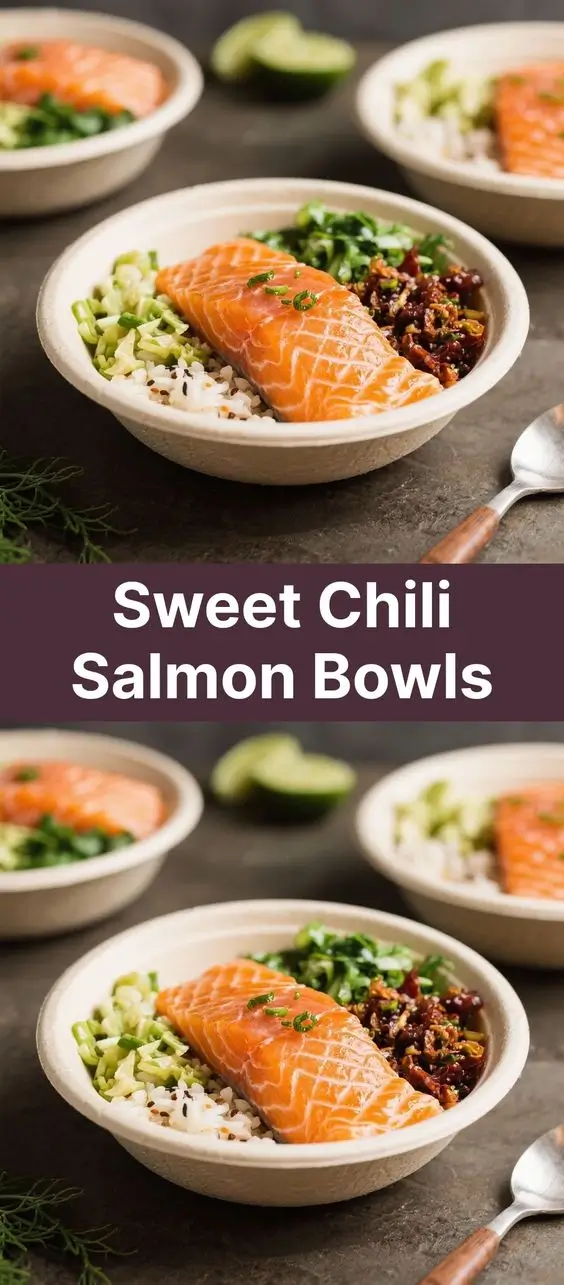
Sweet Chili Salmon Bowls: A Flavorful Fusion of Healthy and Delicious
Introduction
Welcome to a culinary journey that blends the rich, buttery taste of salmon with the bold, tangy sweetness of Thai-inspired sweet chili sauce. Sweet Chili Salmon Bowls are more than just a meal—they’re an experience. Perfect for health enthusiasts, busy professionals, or anyone craving a restaurant-quality dinner at home, this dish delivers vibrant flavors, beautiful colors, and balanced nutrition in every bite. Whether you’re preparing it for a weeknight family dinner or impressing guests at a weekend brunch, these bowls offer endless possibilities for customization while maintaining their core essence: fresh ingredients, bold seasonings, and wholesome satisfaction.
What makes Sweet Chili Salmon Bowls stand out is their versatility. You can serve them hot or cold, adjust spice levels, swap grains, add vegetables based on seasonal availability, and even make them gluten-free or low-carb with ease. The combination of tender, flaky salmon glazed in homemade or store-bought sweet chili sauce over a bed of fluffy brown rice or quinoa, topped with crisp veggies and aromatic herbs, creates a symphony of textures and tastes that dance on your palate. This recipe isn’t just about feeding your body—it’s about nourishing your soul with food that looks as good as it tastes.
The History
The origins of Sweet Chili Salmon Bowls can be traced back to the growing popularity of fusion cuisine in the late 20th century, particularly the blending of Asian flavors with Western meal formats. While salmon has long been a staple in Nordic, Pacific Northwest, and Japanese diets, its pairing with Thai-style sweet chili sauce represents a modern gastronomic innovation. Sweet chili sauce itself originated in Thailand, where it was traditionally made from red chilies, garlic, vinegar, sugar, and salt—a balance of sweet, spicy, sour, and umami notes commonly found in Southeast Asian cooking.
In the 1980s and 1990s, as global travel increased and international ingredients became widely available in supermarkets, chefs and home cooks began experimenting with cross-cultural recipes. Dishes like sushi burritos, Korean tacos, and noodle bowls paved the way for grain-based meals featuring protein-rich fish paired with exotic sauces. Salmon, prized for its high omega-3 content and luxurious texture, naturally lent itself to being glazed with sweet chili sauce due to its mild flavor profile that absorbs marinades beautifully.
Bowls—often referred to as “rice bowls,” “poke bowls,” or “grain bowls”—gained mainstream traction in the 2010s thanks to their convenience, visual appeal, and adaptability to dietary preferences. As plant-forward eating and clean-label foods rose in popularity, Sweet Chili Salmon Bowls emerged as a go-to option for those seeking nutritious yet flavorful meals. Today, they are featured on menus across cafes, fast-casual chains, and gourmet restaurants worldwide, symbolizing the harmonious intersection of health, flavor, and cultural exchange through food.
Ingredients Breakdown
To create the perfect Sweet Chili Salmon Bowl, each ingredient plays a vital role in contributing to flavor, texture, color, and nutritional value. Let’s break down every component:
- Salmon Fillets (skin-on or skinless): The star of the dish. Look for wild-caught Atlantic or Alaskan salmon if possible, as they tend to have better fat profiles and fewer contaminants than farmed varieties. Salmon provides essential omega-3 fatty acids, protein, vitamin D, and B vitamins. Its natural oils help carry the sweet chili glaze, creating a succulent finish.
- Sweet Chili Sauce: Can be store-bought or homemade. Traditional versions include red chilies, garlic, distilled vinegar, sugar, and sometimes xanthan gum as a thickener. It offers a glossy sheen and balanced heat-sweetness that complements the richness of salmon without overpowering it.
- Olive Oil or Avocado Oil: Used for roasting or searing the salmon. These oils have high smoke points and heart-healthy monounsaturated fats that enhance browning and prevent sticking.
- Fresh Lime Juice: Adds brightness and acidity, cutting through the sweetness of the sauce and enhancing overall flavor complexity. Also helps tenderize the salmon slightly when used in marinades.
- Garlic (minced): Boosts savory depth and pairs exceptionally well with both salmon and chili flavors. Raw garlic added at the end gives a pungent kick; roasted garlic lends creaminess and mellow warmth.
- Ginger (freshly grated): Offers a zesty, slightly spicy note that bridges the gap between sweet and savory. Known for its anti-inflammatory properties, ginger also aids digestion.
- Soy Sauce or Tamari: Adds umami and saltiness. Tamari is a gluten-free alternative often preferred by those avoiding wheat. Low-sodium options are available for sodium-conscious eaters.
- Honey or Maple Syrup: Enhances caramelization during cooking and deepens the sweetness of the glaze. Honey brings floral notes; maple syrup adds earthy undertones.
- Rice (brown, white, jasmine, or quinoa): Forms the base of the bowl. Brown rice and quinoa provide fiber, complex carbohydrates, and sustained energy. Jasmine rice adds fragrance and a soft, sticky texture ideal for absorbing sauce.
- Cucumber (sliced or diced): Provides crunch and hydration. English cucumbers are preferred for their thin skin and minimal seeds.
- Red Bell Pepper (thinly sliced): Contributes sweetness, color, and vitamin C. Roasted or raw, it adds vibrancy and texture contrast.
- Carrots (julienned or shredded): Bring natural sweetness, beta-carotene, and a satisfying bite. Can be served raw, pickled, or lightly sautéed.
- Green Onions (scallions): Offer mild onion flavor and a pop of green. Sliced thinly, they add freshness and visual appeal.
- Cilantro (chopped): An aromatic herb that brightens the dish. Some people have a genetic predisposition making cilantro taste soapy, so parsley can be substituted if needed.
- Sesame Seeds (toasted): Provide nutty flavor and crunch. White and black sesame seeds can be used together for striking visual contrast.
- Avocado (sliced): Adds creamy texture, healthy fats, and potassium. Its neutral flavor balances the spiciness of the chili sauce.
- Optional Add-ins: Edamame (for extra plant-based protein), pickled red onions (for tang), kimchi (for probiotics and spice), nori strips (for oceanic umami), microgreens (for elegance), or crushed peanuts (for additional crunch).
Step-by-Step Recipe
- Prepare the Rice Base: Rinse 1 cup of your chosen rice under cold water until the water runs clear. Combine with 2 cups of water (or broth for added flavor) in a saucepan. Bring to a boil, then reduce heat to low, cover, and simmer for 15–20 minutes (white rice) or 40–45 minutes (brown rice). Fluff with a fork once done. For quinoa, use a 1:2 ratio of dry quinoa to liquid and cook similarly. Keep warm.
- Make the Sweet Chili Glaze (if not using pre-made): In a small saucepan, combine ½ cup rice vinegar, ¼ cup sugar, 2 minced garlic cloves, 1 tablespoon grated fresh ginger, 1 finely chopped red chili (adjust to taste), and 1 teaspoon cornstarch mixed with 1 tablespoon cold water. Simmer over medium heat for 8–10 minutes, stirring frequently, until thickened. Strain if desired for a smoother texture. Set aside to cool slightly.
- Marinate the Salmon: Pat 4 salmon fillets (about 6 oz each) dry with paper towels. Place in a shallow dish and brush generously with half the sweet chili glaze. Drizzle with 1 tablespoon olive oil, squeeze of lime juice, and optional soy sauce (1 tsp per fillet). Let marinate for 15–30 minutes at room temperature (do not exceed 30 minutes unless refrigerated).
- Preheat Oven or Pan: If baking, preheat oven to 400°F (200°C). Line a baking sheet with parchment paper or foil. If pan-searing, heat 1–2 tablespoons of oil in a non-stick or cast-iron skillet over medium-high heat.
- Cook the Salmon:
- Baking Method: Place marinated salmon skin-side down on the baking sheet. Brush with more glaze. Bake for 12–15 minutes, depending on thickness, until internal temperature reaches 125°F–130°F (for medium) and flakes easily with a fork.
- Pan-Searing Method: Place salmon skin-side down in hot oil. Cook for 5–6 minutes until skin is crispy. Flip carefully and cook another 3–4 minutes. Baste with remaining glaze during the last 2 minutes for shine and flavor.
- Rest the Salmon: Remove from heat and let rest for 3–5 minutes. This allows juices to redistribute, ensuring moist, tender flakes.
- Prepare the Toppings: While salmon cooks, slice cucumber into matchsticks, julienne carrots, thinly slice red bell pepper, chop green onions, dice avocado, and chop cilantro. Arrange in separate bowls for serving.
- Assemble the Bowls: Start with a generous scoop of warm rice or quinoa in each bowl. Flake the cooked salmon into large pieces and place atop the grains. Arrange colorful vegetables around the salmon. Drizzle with extra sweet chili sauce if desired. Garnish with green onions, cilantro, toasted sesame seeds, and optional extras like edamame or pickled onions.
- Serve Immediately: Present each bowl with a wedge of lime on the side for squeezing. Serve hot, encouraging diners to mix ingredients before eating to blend all flavors.
Tips
- Don’t Overcook the Salmon: Salmon continues to cook slightly after removal from heat. Aim for slightly underdone in the center when pulling it off the stove or out of the oven—it will finish perfectly during resting.
- Use Fresh Ingredients: Fresh garlic, ginger, lime juice, and herbs elevate the dish dramatically compared to powdered or bottled substitutes.
- Toast Your Sesame Seeds: Heat seeds in a dry skillet over medium heat for 2–3 minutes until golden and fragrant. This intensifies their nutty flavor.
- Balance Textures: Include a variety of textures—creamy (avocado), crunchy (cucumber, carrots), chewy (grains), and tender (salmon)—for a more satisfying bite.
- Double the Glaze: Make extra sweet chili sauce and store it in a jar in the refrigerator for up to two weeks. Use it as a dip, dressing, or marinade for chicken, shrimp, or tofu.
- Line Baking Sheets Properly: Parchment paper prevents sticking and makes cleanup effortless. Foil works too but may cause slight sticking unless greased.
- Skin Crispiness Tip: When pan-searing, press gently on the salmon with a spatula for the first minute to ensure full contact with the pan, resulting in ultra-crispy skin.
- Room Temperature Marinade Time: Avoid leaving salmon unrefrigerated for more than 30 minutes. If marinating longer, do so in the fridge and bring to room temp before cooking.
- Uniform Fillet Sizes: Choose salmon fillets that are similar in thickness so they cook evenly. Thicker cuts can be butterflied slightly for consistency.
- Add Acid at the End: A final squeeze of fresh lime juice just before serving lifts all the flavors and adds a refreshing zing.
Variations and Customizations
The beauty of Sweet Chili Salmon Bowls lies in their adaptability. Here are several creative twists to suit different tastes, diets, and occasions:
- Low-Carb/Keto Version: Replace rice with cauliflower rice sautéed in coconut oil with garlic and scallions. Increase healthy fats by adding more avocado and drizzling with tahini or chili oil.
- Vegan/Vegetarian Option: Substitute salmon with grilled tofu, tempeh, or marinated portobello mushrooms. Marinate and glaze the same way for a plant-powered version.
- Spicy Upgrade: Mix sriracha, gochujang, or chili garlic paste into the sweet chili glaze for extra heat. Top bowls with sliced jalapeños or fresno chilies.
- Mediterranean Twist: Swap Thai elements for Mediterranean ones—use lemon-herb salmon, hummus base, cherry tomatoes, kalamata olives, feta cheese, and tzatziki instead of sweet chili sauce.
- Poke Bowl Style: Serve the salmon raw (sushi-grade only) cubed and marinated in sweet chili sauce, soy, sesame oil, and green onions. Serve over rice with traditional poke toppings like tobiko, seaweed salad, and wasabi mayo.
- Breakfast Bowl: Top the grain base with a poached or fried egg, sweet chili-glazed salmon remnants, avocado, and spinach for a hearty morning meal.
- Tropical Variation: Add mango salsa (diced mango, red onion, cilantro, lime) on top for a sweet-tart contrast. Coconut rice makes a great base here.
- Meal Prep Friendly: Cook components separately and store in airtight containers in the fridge for up to 4 days. Reheat salmon gently to avoid drying out. Assemble bowls fresh when ready to eat.
- Gluten-Free Assurance: Use tamari instead of soy sauce and verify that your sweet chili sauce is certified gluten-free (some brands contain modified starches or wheat derivatives).
- Kid-Friendly Adjustments: Reduce spice level significantly, omit raw garlic/ginger, and involve kids in assembling their own bowls with fun toppings like corn, peas, and mild cheeses.
Health Considerations and Nutritional Value
Sweet Chili Salmon Bowls are inherently nutritious, especially when prepared with whole, minimally processed ingredients. Here’s a breakdown of key health benefits and considerations:
Nutritional Highlights (per serving, approx. 1 bowl):
- Calories: ~550–700 kcal (varies based on portion size, rice type, oil, and toppings)
- Protein: ~35–40g – High-quality complete protein from salmon supports muscle repair, satiety, and metabolic function.
- Omega-3 Fatty Acids: ~2,000–3,000mg – Essential fats crucial for brain health, inflammation reduction, heart protection, and joint mobility.
- Fiber: ~6–10g – Primarily from brown rice/quinoa, vegetables, and avocado. Supports gut health, blood sugar regulation, and digestive regularity.
- Healthy Fats: Monounsaturated and polyunsaturated fats from salmon, avocado, olive oil, and sesame seeds promote cardiovascular wellness.
- Vitamins & Minerals: Rich in vitamin D, B12, selenium, potassium, magnesium, vitamin A (from carrots), vitamin C (from peppers and lime), and folate.
Health Benefits:
- Heart Health: Omega-3s in salmon reduce triglycerides, lower blood pressure, and decrease risk of arrhythmias.
- Brain Function: Regular consumption of fatty fish is linked to improved cognitive performance and reduced risk of neurodegenerative diseases.
- Anti-Inflammatory Effects: Ginger, garlic, omega-3s, and antioxidants in vegetables help combat chronic inflammation associated with arthritis, diabetes, and autoimmune conditions.
- Blood Sugar Control: Fiber-rich grains and low glycemic load (when using brown rice or quinoa) help stabilize insulin response, beneficial for diabetics or prediabetics.
- Weight Management: High protein and fiber content increase fullness, reducing overall calorie intake throughout the day.
Dietary Considerations:
- Sodium Content: Store-bought sweet chili sauce and soy sauce can be high in sodium. Opt for low-sodium versions or make your own to control salt levels, especially important for individuals with hypertension.
- Sugar Content: Sweet chili sauce contains added sugars. To reduce sugar, use less glaze, dilute with vinegar or citrus, or substitute honey/maple syrup with monk fruit or erythritol in homemade versions.
- Pregnancy & Seafood: Salmon is generally safe during pregnancy due to low mercury levels. However, always ensure it’s properly cooked (not raw unless labeled sushi-grade) and consumed promptly.
- Allergens: Contains fish (salmon), sesame (seeds), and soy (soy sauce). Be cautious when serving to individuals with allergies; substitutions are possible (e.g., sunflower seeds instead of sesame, coconut aminos instead of soy).
- Sustainability: Choose salmon certified by organizations like MSC (Marine Stewardship Council) or Seafood Watch to support environmentally responsible fishing practices.
Ingredients
- 4 (6 oz) salmon fillets, skin-on or skinless
- ½ cup sweet chili sauce (store-bought or homemade)
- 2 tablespoons olive oil or avocado oil (divided)
- 1 tablespoon fresh lime juice (plus wedges for serving)
- 2 cloves garlic, minced
- 1 tablespoon fresh ginger, grated
- 1 tablespoon soy sauce or tamari (gluten-free if needed)
- 1 teaspoon honey or maple syrup (optional, for enhanced glaze)
- 1 cup uncooked brown rice, white rice, or quinoa
- 2 cups water or vegetable broth
- 1 medium cucumber, julienned or sliced
- 1 red bell pepper, thinly sliced
- 1 large carrot, julienned or shredded
- 1 avocado, sliced
- 3 green onions, thinly sliced
- ¼ cup fresh cilantro, chopped
- 1 tablespoon sesame seeds, toasted
- Optional: edamame, pickled onions, kimchi, crushed peanuts, nori strips
Directions
- In a small saucepan, prepare sweet chili glaze by combining ½ cup rice vinegar, ¼ cup sugar, 2 minced garlic cloves, 1 tbsp grated ginger, 1 chopped red chili, and 1 tsp cornstarch mixed with 1 tbsp water. Simmer 8–10 minutes until thickened. Cool slightly.
- Marinate salmon: In a bowl, mix ⅓ cup of the prepared sweet chili sauce with 1 tbsp olive oil, lime juice, soy sauce, and optional honey. Brush over salmon fillets and let sit 15–30 minutes.
- Cook rice or quinoa according to package instructions using water or broth. Keep warm.
- Preheat oven to 400°F (200°C). Line a baking sheet with parchment paper.
- Place salmon on baking sheet, skin-side down. Brush with more glaze. Bake for 12–15 minutes until flaky and cooked through. Alternatively, pan-sear in hot oil 5–6 minutes per side.
- Let salmon rest 3–5 minutes. Gently flake into chunks.
- Prepare toppings: Slice cucumber, bell pepper, avocado; shred carrot; chop green onions and cilantro.
- Divide cooked grains among four bowls. Top with salmon, vegetables, avocado, and herbs.
- Drizzle with extra sweet chili sauce. Sprinkle with toasted sesame seeds and optional garnishes.
- Serve immediately with lime wedges for squeezing.
FAQ
- Can I use frozen salmon?
- Yes, but thaw it completely in the refrigerator overnight before marinating and cooking. Never cook frozen salmon directly unless following specific instructions, as it may result in uneven texture.
- Is sweet chili sauce spicy?
- It’s mildly sweet with subtle heat. Most commercial brands are designed for broad appeal. You can adjust spiciness by adding fresh chilies, sriracha, or reducing the amount used.
- Can I make this ahead for meal prep?
- Absolutely! Cook and store components separately in airtight containers. Reheat salmon gently in the oven or microwave covered with a damp paper towel to retain moisture. Assemble cold or warm as desired.
- What can I substitute for salmon?
- Try firm white fish (like cod or halibut), shrimp, chicken breast, tofu, tempeh, or chickpeas for alternate proteins.
- How do I store leftovers?
- Store in the refrigerator for up to 3 days. Do not freeze cooked salmon as it becomes mushy upon thawing. Rice and toppings freeze better separately.
- Can I bake the salmon at a lower temperature?
- You can, but higher heat ensures proper searing and glaze caramelization. Lower temps (e.g., 350°F) require longer cooking (~20 mins) and may produce less crisp exterior.
- Are these bowls gluten-free?
- Yes, if you use tamari instead of soy sauce and confirm your sweet chili sauce is gluten-free. Always check labels as some sauces contain wheat or modified food starch.
- Why did my salmon stick to the pan?
- Possible reasons: pan wasn’t hot enough, oil was insufficient, or salmon was moved too soon. Wait until edges begin to turn opaque before flipping.
- Can I grill the salmon instead?
- Definitely! Grill over medium heat for 4–5 minutes per side. Use a fish basket or foil to prevent sticking. Baste with glaze during the last few minutes.
- How do I know when salmon is done?
- It should flake easily with a fork and appear opaque throughout. Internal temperature should reach 125°F–130°F for medium doneness. Overcooked salmon turns dry and chalky.
Summary
Sweet Chili Salmon Bowls deliver a vibrant, nutrient-dense meal that combines succulent salmon glazed in tangy-sweet chili sauce with wholesome grains and fresh vegetables.
Easy to customize, rich in omega-3s and protein, and bursting with flavor, this dish is perfect for weeknights, meal prep, or entertaining—with every bowl offering a delicious step toward healthier living.