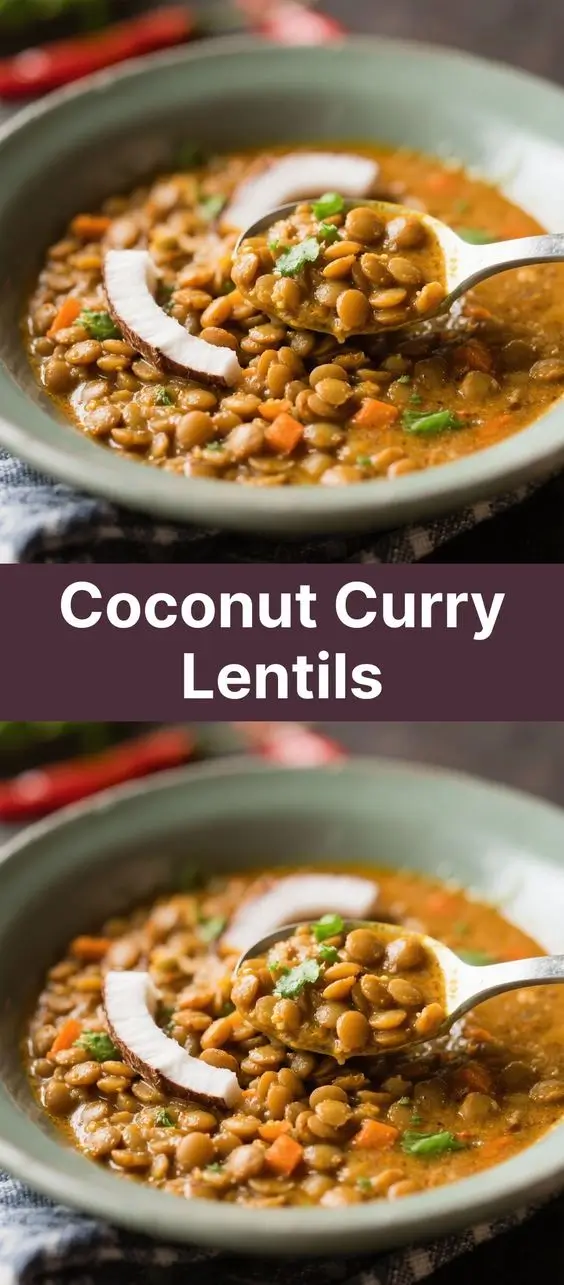
Coconut Curry Lentils: A Creamy, Flavorful Plant-Based Delight
Coconut Curry Lentils are a harmonious blend of earthy lentils, aromatic spices, and rich coconut milk, creating a satisfying dish that’s both nutritious and deeply comforting. This recipe is not only perfect for weeknight dinners but also ideal for meal prepping, as the flavors deepen when stored. Whether you’re a long-time vegetarian or simply exploring plant-based meals, this dish delivers bold taste with minimal effort.
The History of Coconut Curry Lentils
The roots of Coconut Curry Lentils can be traced back to South Asian and Southeast Asian culinary traditions, where lentils (dal) have been a dietary staple for thousands of years. In countries like India, Sri Lanka, Thailand, and Indonesia, lentils are commonly simmered with coconut milk, turmeric, cumin, and other spices to create hearty, nourishing meals. The use of coconut milk in curries dates back centuries in tropical regions where coconuts grow abundantly, providing a creamy, dairy-free alternative to heavy creams and ghee.
In Indian cuisine, various forms of dal—such as red lentils (masoor dal), yellow lentils (toor dal), or green mung beans—are often cooked into soups or stews and spiced with curry leaves, mustard seeds, and ginger. Coastal regions like Kerala and Goa frequently incorporate coconut milk into their curries, giving them a distinct richness and sweetness that balances the heat from chilies and black pepper. Over time, global trade and migration spread these recipes worldwide, leading to fusion versions seen today in Western kitchens.
Modern adaptations of Coconut Curry Lentils often emphasize convenience and accessibility, using pantry staples like canned coconut milk and dried lentils. Today’s version is a celebration of tradition and innovation—a plant-powered meal rooted in ancient wisdom yet perfectly suited to contemporary lifestyles focused on health, sustainability, and flavor.
Ingredients Breakdown
- Red lentils: Also known as masoor dal, red lentils cook quickly and break down easily, forming a creamy base without needing blending. They’re high in protein and fiber and have a mild, slightly sweet flavor that absorbs spices beautifully.
- Coconut milk: Full-fat canned coconut milk adds richness and a velvety texture. It also contains medium-chain triglycerides (MCTs), which some studies suggest may support metabolism and heart health.
- Onion: Yellow or white onions provide a foundational sweetness and depth when sautéed. For extra complexity, you can use shallots or even leeks.
- Garlic: Fresh garlic imparts pungency and warmth. It activates beneficial compounds like allicin, known for its antioxidant properties.
- Ginger: Freshly grated ginger adds zesty heat and aids digestion. Its active compound, gingerol, has anti-inflammatory effects.
- Curry powder: A blend of turmeric, coriander, cumin, fenugreek, cinnamon, and chili, curry powder gives the dish its signature golden hue and warm, earthy aroma.
- Turmeric: Often used in addition to curry powder for color and health benefits. Contains curcumin, a powerful anti-inflammatory agent.
- Cumin seeds (optional): Used for tempering at the beginning, they add a nutty, smoky note typical of South Asian cooking.
- Tomatoes: Canned diced tomatoes or fresh chopped tomatoes add acidity and brightness, balancing the richness of the coconut milk.
- Vegetable broth: Enhances flavor while helping control thickness. Low-sodium versions allow better salt regulation.
- Lime juice: Freshly squeezed lime juice stirred in at the end brightens the entire dish and enhances spice perception.
- Fresh cilantro: Adds a refreshing herbal finish. Can be substituted with Thai basil or parsley if preferred.
- Salt and pepper: To taste. Adjust carefully since coconut milk and broth can already contain sodium.
- Oil: Coconut oil, avocado oil, or olive oil works well for sautéing. Coconut oil complements the overall flavor profile.
Step-by-Step Recipe
- Rinse the lentils: Place 1 cup of red lentils in a fine-mesh strainer and rinse thoroughly under cold water until the water runs clear. This removes excess starch and any debris.
- Sauté aromatics: In a large pot or Dutch oven, heat 2 tablespoons of oil over medium heat. Add 1 teaspoon of cumin seeds (if using) and let them sizzle for 30 seconds until fragrant. Then add 1 finely chopped onion and cook for 5–7 minutes until soft and translucent.
- Add garlic and ginger: Stir in 3 minced garlic cloves and 1 tablespoon of freshly grated ginger. Cook for another 1–2 minutes, stirring constantly to prevent burning.
- Bloom the spices: Add 2 tablespoons of curry powder, 1 teaspoon of ground turmeric, and a pinch of black pepper. Stir continuously for about 1 minute to release essential oils and intensify flavors.
- Incorporate tomatoes: Pour in 1 cup of diced tomatoes (canned or fresh). Simmer for 3–4 minutes, allowing the mixture to thicken slightly and the raw tomato taste to mellow.
- Add lentils and liquids: Stir in the rinsed lentils, followed by 3 cups of vegetable broth and 1 can (13.5 oz) of full-fat coconut milk. Mix well to combine.
- Simmer: Bring the mixture to a boil, then reduce heat to low. Cover partially and let it simmer gently for 20–25 minutes, stirring occasionally. The lentils should become tender and the stew should thicken to a creamy consistency.
- Season and finish: Once cooked, remove from heat. Stir in the juice of one lime and adjust seasoning with salt and pepper to taste. If desired, thin with additional broth if too thick.
- Garnish: Sprinkle generously with chopped fresh cilantro just before serving.
- Serve: Enjoy hot with basmati rice, naan bread, quinoa, or roasted vegetables for a complete meal.
Tips for Perfect Coconut Curry Lentils
- Don’t skip blooming the spices: Cooking the curry powder and turmeric in oil for a minute unlocks their full flavor potential and prevents bitterness.
- Use full-fat coconut milk: Light coconut milk will result in a thinner, less creamy texture. Shake the can well before opening to ensure proper emulsification.
- Watch the heat: Red lentils cook quickly and can turn mushy if overcooked. Keep the simmer gentle and check for doneness around 20 minutes.
- Balance acidity: If the dish tastes flat, a splash more lime juice or a dash of apple cider vinegar can elevate the flavors.
- Prevent sticking: Stir occasionally during cooking, especially toward the end, to avoid scorching on the bottom of the pot.
- Soak lentils? Not necessary: Unlike beans, red lentils do not require soaking. Rinsing is sufficient.
- Make ahead: This dish reheats beautifully and often tastes even better the next day as the spices meld together.
- Freeze for later: Store in airtight containers and freeze for up to 3 months. Thaw overnight in the refrigerator and reheat on the stove with a little water or broth.
Variations and Customizations
One of the greatest strengths of Coconut Curry Lentils is its versatility. Here are several ways to personalize the dish based on your preferences or dietary needs:
- Protein boost: Stir in cooked chickpeas, tofu cubes, or paneer for added texture and protein.
- Vegetable additions: Fold in spinach, kale, sweet potatoes, cauliflower, carrots, or peas during the last 5–10 minutes of cooking for a more nutrient-dense meal.
- Spice level adjustment: Add fresh green chilies, red pepper flakes, or a dash of cayenne for heat. For a milder version, reduce or omit spicy elements entirely.
- Curry variation: Swap standard curry powder for garam masala, Thai red curry paste, or homemade spice blends for a different regional twist.
- Herb swaps: Try mint, Thai basil, or even a bay leaf during cooking for unique aromatic layers.
- Grain-free option: Serve over cauliflower rice or zucchini noodles for a lower-carb alternative.
- Gluten-free assurance: Ensure all ingredients (especially broth and curry powder) are certified gluten-free if needed.
- Oil-free version: Sauté aromatics in water or vegetable broth instead of oil for a whole-food, plant-based approach.
- Creamier texture: Blend half the cooked lentils with an immersion blender or transfer one cup to a regular blender and mix back in for ultra-creamy results.
- Dessert-inspired touch: For a sweeter interpretation, add a pinch of cinnamon, cardamom, and maple syrup—ideal for breakfast served with toast.
Health Considerations and Nutritional Value
Coconut Curry Lentils offer a powerhouse of nutrition, making them an excellent choice for those seeking balanced, wholesome meals. Let’s explore the key health aspects:
Nutritional Highlights (Per Serving, Approximate)
- Calories: ~320 kcal
- Protein: ~18g – Excellent plant-based source supporting muscle repair and satiety.
- Fiber: ~15g – Promotes digestive health, regulates blood sugar, and supports gut microbiome.
- Fat: ~14g – Primarily from coconut milk; includes saturated fats (mainly lauric acid), which may have neutral or beneficial effects on cholesterol profiles in moderation.
- Carbohydrates: ~36g – Complex carbs from lentils provide sustained energy.
- Iron: ~6mg – About 33% of daily needs; pair with vitamin C (like lime juice) to enhance absorption.
- Folate: High content – Essential for DNA synthesis and particularly important during pregnancy.
- Potassium: Supports healthy blood pressure and fluid balance.
- Manganese, Phosphorus, Zinc: Present in significant amounts, contributing to bone health, immunity, and enzyme function.
Health Benefits
- Heart Health: Lentils are linked to reduced LDL cholesterol and improved cardiovascular outcomes due to soluble fiber and polyphenols.
- Blood Sugar Control: Low glycemic index and high fiber content help stabilize insulin levels, beneficial for diabetics.
- Anti-Inflammatory Properties: Turmeric (curcumin), ginger, and garlic all contribute potent anti-inflammatory and antioxidant effects.
- Weight Management: High protein and fiber promote fullness, reducing overall calorie intake.
- Gut Health: Prebiotic fibers in lentils feed beneficial gut bacteria, improving digestion and immune function.
Considerations
- Coconut fat content: While beneficial in moderation, excessive intake of saturated fats from coconut milk may affect lipid profiles in sensitive individuals. Opt for light coconut milk if monitoring fat intake.
- Sodium awareness: Use low-sodium broth and avoid adding extra salt if managing hypertension.
- Gas and bloating: Some people may experience digestive discomfort from lentils. Rinsing well and cooking thoroughly helps reduce oligosaccharides responsible for gas.
- Allergies: Coconut is technically a tree nut, so those with tree nut allergies should consult a healthcare provider before consuming.
Ingredients
- 1 cup red lentils (masoor dal), rinsed and drained
- 2 tablespoons coconut oil or olive oil
- 1 medium yellow onion, finely chopped
- 3 cloves garlic, minced
- 1 tablespoon fresh ginger, grated
- 1 teaspoon cumin seeds (optional)
- 2 tablespoons curry powder (adjust to taste)
- 1 teaspoon ground turmeric
- ½ teaspoon black pepper
- 1 cup diced tomatoes (canned or fresh)
- 3 cups low-sodium vegetable broth
- 1 can (13.5 oz) full-fat coconut milk
- Juice of 1 lime
- Salt to taste
- Fresh cilantro, chopped (for garnish)
Directions
- In a large pot or saucepan, heat the oil over medium heat. Add cumin seeds (if using) and let them sizzle for 20–30 seconds until fragrant.
- Add the chopped onion and sauté for 5–7 minutes, stirring occasionally, until softened and golden.
- Stir in the garlic and ginger, cooking for 1–2 minutes until aromatic.
- Add curry powder, turmeric, and black pepper. Stir constantly for 1 minute to toast the spices.
- Mix in the diced tomatoes and cook for 3–4 minutes, allowing excess liquid to evaporate slightly.
- Add the rinsed lentils, vegetable broth, and coconut milk. Stir well to combine.
- Bring to a boil, then reduce heat to low. Partially cover and simmer for 20–25 minutes, stirring occasionally, until lentils are soft and the curry has thickened to a creamy consistency.
- Remove from heat. Stir in lime juice and season with salt to taste. Adjust spice or acidity if needed.
- Garnish with fresh cilantro and serve warm.
FAQ
Can I use green or brown lentils instead of red?
While possible, green and brown lentils take longer to cook and retain their shape, resulting in a firmer, less creamy texture. You may need to increase cooking time by 10–15 minutes and add more liquid.
Is this recipe gluten-free?
Yes, provided all ingredients (especially curry powder and broth) are certified gluten-free. Always double-check labels.
How long does it keep in the fridge?
Stored in an airtight container, Coconut Curry Lentils will last 4–5 days in the refrigerator.
Can I make this in a slow cooker or Instant Pot?
Absolutely! In a slow cooker: combine all ingredients except lime and cilantro, cook on low for 6–7 hours or high for 3–4. In an Instant Pot: use Saute mode for aromatics, then Pressure Cook on High for 10 minutes with quick release. Finish with lime and herbs.
Why did my coconut milk separate?
Natural separation is common, especially when heated. Simply stir well to recombine. Adding acidic ingredients like tomatoes can also cause slight curdling, but this doesn’t affect safety or taste.
Can I freeze Coconut Curry Lentils?
Yes, it freezes exceptionally well. Cool completely, store in freezer-safe containers, and label with date. Thaw in the fridge overnight and reheat gently on the stove.
Are red lentils the same as split lentils?
Red lentils are typically split and skinned, which is why they cook faster and break down easily. Yes, they are a type of split lentil.
What can I serve with Coconut Curry Lentils?
Excellent pairings include steamed basmati rice, jasmine rice, quinoa, naan, roti, roasted vegetables, or a simple cucumber-tomato salad.
Summary
Coconut Curry Lentils are a creamy, aromatic, and nutrient-rich dish that combines the protein power of lentils with the luxurious texture of coconut milk and the warming depth of traditional spices. Easy to customize, packed with health benefits, and deeply satisfying, this recipe is a must-have in any home cook’s repertoire.