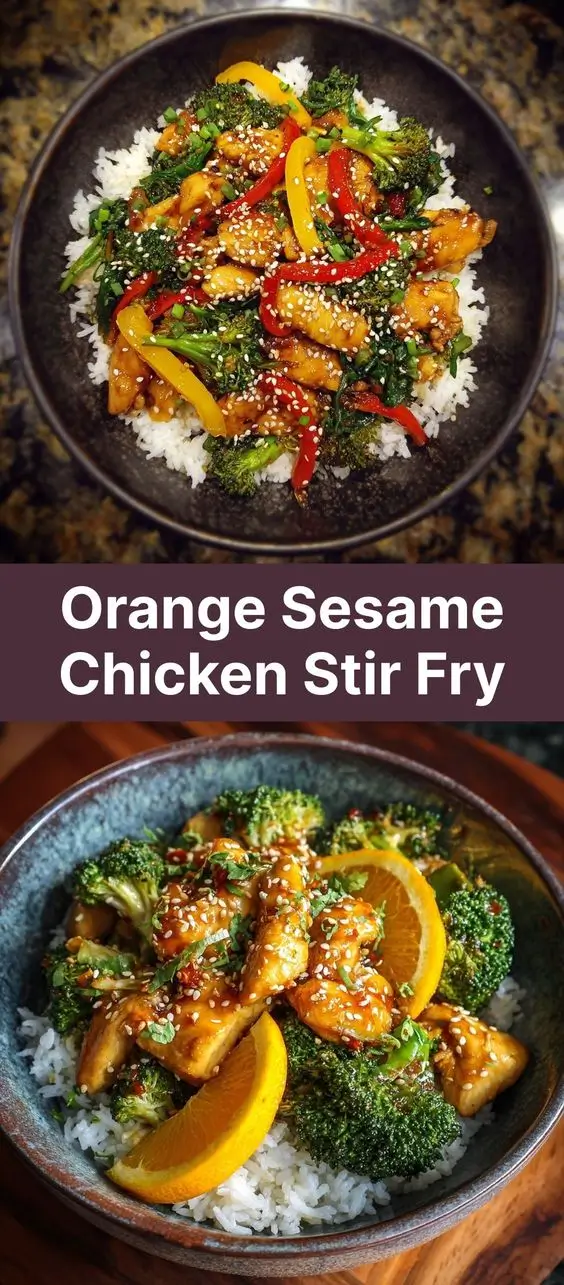
Orange Sesame Chicken Stir Fry: A Zesty, Crunchy Delight from East Meets West
The History: Where Flavor Traditions Collide
The Orange Sesame Chicken Stir Fry is a modern culinary marvel born from the fusion of Chinese cooking techniques and Western flavor preferences. While traditional Chinese cuisine has long embraced stir-frying—cooking food quickly over high heat with minimal oil—the addition of citrus-based sauces like orange is more reflective of American-Chinese gastronomy that evolved in the mid-20th century.
This dish draws inspiration from classic dishes such as General Tso’s Chicken and Orange Chicken, both of which originated in Chinese-American restaurants, particularly in California during the 1970s and 1980s. These recipes were not direct replicas of authentic regional Chinese dishes but rather creative interpretations designed to appeal to American palates—balancing sweet, sour, salty, and umami flavors in bold new ways.
Sesame seeds, on the other hand, have deep roots in Asian culinary traditions. Used for thousands of years in China, Japan, Korea, and Southeast Asia, sesame adds a nutty aroma and satisfying crunch. When paired with the bright acidity of fresh orange juice and zest, it creates a textural and flavor contrast that elevates simple chicken into something extraordinary.
Today, Orange Sesame Chicken Stir Fry stands at the crossroads of cultural adaptation—a testament to how global cuisines evolve through migration, innovation, and shared dining experiences. It’s a staple in home kitchens and takeout menus alike, beloved for its vibrant color, aromatic fragrance, and mouthwatering taste.
Ingredients Breakdown: Building Layers of Flavor
The magic of this dish lies in its carefully balanced ingredients, each contributing distinct textures and tastes that come together in perfect harmony. Let’s explore them one by one:
- Chicken Breast or Thighs: Boneless, skinless chicken breasts are commonly used for their lean texture and mild flavor, making them ideal for absorbing marinades. However, thighs can be substituted for a juicier, more tender result due to their higher fat content.
- Fresh Oranges: Two types of oranges are typically used—one for juicing (like navel or Valencia) and another zest-rich variety (such as blood orange or Cara Cara) for adding aromatic oils without bitterness. The natural sugars caramelize beautifully when cooked, enhancing the glaze.
- Soy Sauce: Provides the essential umami backbone. Use low-sodium soy sauce if you’re watching salt intake, or tamari for a gluten-free alternative.
- Rice Vinegar: Adds tanginess and helps balance the sweetness of the orange components. Its mild acidity cuts through richness and brightens the overall profile.
- Honey or Brown Sugar: Natural sweeteners that contribute to the glossy sauce consistency. Honey offers floral notes, while brown sugar brings molasses depth.
- Garlic and Ginger: Freshly minced garlic and grated ginger form the aromatic base of the stir fry, offering warmth and pungency that complement the citrus notes.
- Cornstarch: Used both to marinate the chicken (for tenderness) and to thicken the sauce slightly, giving it a velvety cling to the meat and vegetables.
- Sesame Oil: A few drops go a long way. Toasted sesame oil imparts a rich, nutty finish—best added at the end to preserve its delicate flavor.
- Vegetables (Bell Peppers, Broccoli, Carrots): Colorful additions that bring freshness, crunch, and nutrients. They also absorb the sauce beautifully during cooking.
- Toasted Sesame Seeds: Both white and black sesame seeds can be used for visual contrast and a delightful crunch. Toasting enhances their nuttiness significantly.
- Green Onions: Sliced thinly for garnish, they add a sharp, oniony pop and vibrant green color.
- Optional Add-ins: Red chili flakes, sriracha, or fresh jalapeño for heat; rice wine or mirin for additional complexity; bok choy or snap peas for extra greens.
Step-by-Step Recipe: Crafting Perfection in Under 30 Minutes
With all your ingredients prepped, this stir fry comes together quickly. Precision and timing are key—have everything ready before turning on the stove!
- Marinate the Chicken: Cut 1 pound of boneless chicken into bite-sized pieces. In a bowl, toss with 1 tablespoon cornstarch, 1 tablespoon soy sauce, 1 teaspoon rice vinegar, and 1 teaspoon grated ginger. Let sit for 15–20 minutes to tenderize and absorb flavor.
- Prepare the Orange Sauce: In a separate mixing bowl, whisk together:
- ½ cup freshly squeezed orange juice (about 1 large orange)
- Zest of 1 orange (avoid the bitter white pith)
- 2 tablespoons honey or brown sugar
- 2 tablespoons soy sauce
- 1 tablespoon rice vinegar
- 1 teaspoon toasted sesame oil
- 1 clove garlic, minced
- 1 teaspoon cornstarch (to thicken)
Set aside.
- Blanch or Steam Vegetables (Optional): For crisp-tender results, briefly blanch broccoli florets and sliced carrots in boiling water for 60–90 seconds, then shock in ice water. Drain well. Alternatively, stir-fry directly later.
- Stir-Fry the Chicken: Heat 1 tablespoon neutral oil (like avocado or canola) in a wok or large skillet over medium-high heat. Add the marinated chicken in a single layer and cook undisturbed for 2–3 minutes until golden brown. Flip and continue cooking until fully done (internal temperature 165°F), about 5 more minutes. Remove and set aside.
- Cook the Aromatics: In the same pan, add a bit more oil if needed. Sauté 1 sliced bell pepper, 1 cup broccoli florets, and ½ cup julienned carrots for 3–4 minutes until just tender-crisp. Push to the side.
- Add Garlic and Ginger: In the center of the pan, add 1 teaspoon grated ginger and 1 minced garlic clove. Stir constantly for 30 seconds until fragrant—do not burn.
- Pour in the Sauce: Give the orange sauce a quick re-whisk and pour it into the center of the pan. Bring to a gentle simmer, stirring continuously. As it heats, the sauce will begin to thicken within 1–2 minutes.
- Combine Everything: Return the cooked chicken to the pan along with any accumulated juices. Toss thoroughly to coat every piece with the glossy orange glaze. Add blanched vegetables now if using. Continue tossing for another 2 minutes until everything is heated through and well-coated.
- Finish with Sesame Seeds and Greens: Remove from heat. Drizzle with an extra ½ teaspoon toasted sesame oil. Sprinkle generously with 2 tablespoons toasted sesame seeds and 2 sliced green onions.
- Serve Immediately: Plate over steamed jasmine rice, brown rice, or cauliflower rice for a low-carb option. Garnish with additional orange zest and sesame seeds for presentation.
Tips for Mastering Your Stir Fry
- Prep Ahead (Mise en Place): Stir fries move fast. Chop all ingredients, measure sauces, and have tools ready before starting.
- Don’t Overcrowd the Pan: Cook chicken in batches if necessary. Overcrowding lowers the temperature and causes steaming instead of searing.
- Use High Heat Wisely: True stir-frying requires high heat to achieve the “wok hei” (breath of the wok)—a smoky, charred aroma. If using a standard stove, get the pan as hot as possible before adding ingredients.
- Control Sauce Thickness: If the sauce becomes too thick, thin it with a splash of water, broth, or orange juice. If too thin, mix ½ teaspoon cornstarch with 1 tablespoon cold water and stir in gradually.
- Balance Sweetness: Taste your orange juice first—some varieties are very sweet, others tart. Adjust honey or sugar accordingly to avoid an overly sugary sauce.
- Toast Your Sesame Seeds: Dry-toast sesame seeds in a small pan over medium heat for 2–3 minutes, shaking frequently until golden and fragrant. This intensifies their flavor dramatically.
- Reserve Some Garnishes: Keep a portion of green onions and sesame seeds aside to sprinkle on top after plating—it enhances visual appeal.
- Acid at the End: For extra brightness, consider a final squeeze of fresh orange juice just before serving.
Variations and Customizations: Make It Your Own
The beauty of Orange Sesame Chicken Stir Fry is its adaptability. Here are some popular twists:
- Vegetarian/Vegan Version: Replace chicken with tofu, tempeh, or seitan. Press and cube firm tofu, then pan-sear until crispy. Use maple syrup instead of honey and ensure soy sauce is vegan-friendly.
- Spicy Kick: Infuse heat with red pepper flakes, diced fresh chili, or a drizzle of chili garlic sauce. You can even add a few dashes of Sichuan peppercorns for numbing spice.
- Gluten-Free Option: Substitute soy sauce with tamari or coconut aminos. Confirm all other ingredients (especially store-bought broths) are certified gluten-free.
- Keto/Low-Carb Adaptation: Omit honey and use a keto-approved sweetener like erythritol or monk fruit. Reduce orange juice quantity and replace part with orange extract and water. Serve over spiralized zucchini or cabbage.
- Different Proteins: Try shrimp, thinly sliced beef, or turkey breast. Adjust cooking times accordingly—shrimp cooks in 2–3 minutes, while beef may need quick searing to remain tender.
- Extra Veggies: Add snow peas, baby corn, mushrooms, bok choy, or water chestnuts for varied textures and nutrition.
- Orange Marmalade Twist: For a shortcut sauce, blend ¼ cup orange marmalade with soy sauce, vinegar, and ginger. The peel adds pleasant bitterness and texture.
- Baked Version: For oven lovers, bake seasoned chicken at 400°F for 20 minutes, then toss with warmed sauce and broil for 2–3 minutes to caramelize. Finish with toasted sesame seeds.
- Meal Prep Friendly: Cook components separately and store in airtight containers. Reheat gently in a skillet with a splash of water to revive the sauce.
Health Considerations and Nutritional Value
When prepared mindfully, Orange Sesame Chicken Stir Fry can be a nutritious and balanced meal. Here’s what you need to know:
Nutrient Highlights:
- High-Quality Protein: Chicken provides lean protein essential for muscle repair, satiety, and metabolic health. One serving (~4 oz chicken) delivers about 25–30 grams of protein.
- Vitamin C Boost: Fresh oranges are rich in vitamin C—an antioxidant crucial for immune function, collagen synthesis, and iron absorption. One medium orange contains over 70 mg of vitamin C (more than daily recommended intake).
- Fiber-Rich Vegetables: Colorful veggies like bell peppers, broccoli, and carrots contribute dietary fiber, promoting digestive health and helping regulate blood sugar levels.
- Healthy Fats: Sesame seeds contain heart-healthy monounsaturated and polyunsaturated fats, along with lignans and phytosterols that may support cholesterol management.
- Antioxidants and Phytonutrients: Compounds like hesperidin in orange peel, sulforaphane in broccoli, and sesamin in sesame seeds offer anti-inflammatory and cellular protection benefits.
Considerations:
- Sugar Content: Depending on the amount of honey or added sugar, the sauce can be moderately high in sugars. To reduce, use less sweetener or opt for natural alternatives. Prioritize whole fruit juice over concentrates.
- Sodium Levels: Soy sauce contributes significant sodium. Using reduced-sodium versions or diluting with water can help. Tamari often has less salt than regular soy sauce.
- Calorie Density: While generally moderate, calories can rise with excessive oil, sugary sauces, or large portions. A typical serving ranges from 350–500 kcal depending on preparation.
- Allergens: Contains sesame seeds (a common allergen). Offer substitutions like sunflower seeds for those with allergies.
- Balanced Plate Tip: Serve with whole grains or legumes for sustained energy and complete amino acids. Pair with a side salad for extra micronutrients.
Estimated Nutritional Information (Per Serving, Serves 4):
| Nutrient | Amount |
|---|---|
| Calories | 420 kcal |
| Protein | 32 g |
| Total Fat | 14 g |
| Saturated Fat | 2.5 g |
| Carbohydrates | 42 g |
| Dietary Fiber | 5 g |
| Sugars | 28 g (natural + added) |
| Sodium | 780 mg |
| Vitamin C | 110% DV |
| Iron | 15% DV |
Note: Values are estimates and may vary based on specific ingredients and portion sizes.
Full Ingredients List
- 1 lb (450g) boneless, skinless chicken breasts or thighs, cut into 1-inch cubes
- 2 large oranges (1 juiced, 1 zested)
- 3 tbsp soy sauce (low-sodium preferred)
- 2 tbsp honey or packed brown sugar
- 1 tbsp rice vinegar
- 1 tsp toasted sesame oil
- 2 cloves garlic, minced
- 1 tbsp fresh ginger, grated
- 2 tbsp cornstarch (divided)
- 2 tbsp neutral oil (avocado, canola, or vegetable)
- 1 red bell pepper, sliced
- 1 cup broccoli florets
- ½ cup carrots, julienned or thinly sliced
- 2 green onions, sliced
- 2 tbsp sesame seeds, toasted
- Cooked rice, for serving
- Optional: red pepper flakes, chili paste, or sriracha to taste
Directions Recap
- In a bowl, combine chicken with 1 tbsp cornstarch, 1 tbsp soy sauce, 1 tsp rice vinegar, and 1 tsp grated ginger. Marinate 15–20 minutes.
- Whisk together orange juice, orange zest, remaining soy sauce, honey, rice vinegar, sesame oil, garlic, and 1 tbsp cornstarch. Set aside.
- Heat oil in a wok or large skillet over high heat. Stir-fry chicken until golden and cooked through. Remove and set aside.
- Add more oil if needed. Stir-fry bell pepper, broccoli, and carrots for 3–4 minutes until crisp-tender.
- Add garlic and ginger; stir-fry 30 seconds until fragrant.
- Pour in orange sauce. Simmer 1–2 minutes until thickened.
- Return chicken to the pan. Toss to coat and heat through.
- Remove from heat. Stir in toasted sesame seeds and green onions.
- Serve immediately over rice, garnished with extra zest and sesame seeds.
FAQ: Frequently Asked Questions
Can I make this ahead of time?
Yes! Prepare the sauce and chop ingredients up to 24 hours in advance. Cooked leftovers keep well in the fridge for 3–4 days. Reheat gently in a skillet with a splash of water to loosen the sauce.
Can I freeze Orange Sesame Chicken?
It’s best enjoyed fresh, but you can freeze it for up to 2 months. Thaw overnight in the refrigerator and reheat slowly. Note: vegetables may soften upon freezing.
Why did my sauce turn out too thick or too thin?
Too thick? Add warm water or orange juice 1 tablespoon at a time. Too thin? Mix ½ tsp cornstarch with 1 tbsp cold water and stir in while simmering.
Can I use bottled orange juice?
Freshly squeezed is always superior in flavor and lacks preservatives. Bottled juice may contain added sugars or citric acid, altering the balance. If using, choose 100% pure, no-sugar-added versions.
What gives the dish its glossy appearance?
The combination of cornstarch and natural fruit sugars creates a light glaze. Avoid boiling too vigorously, which can break down the starch and dull the shine.
Is this recipe authentic Chinese food?
Not traditionally—but authenticity evolves. This dish honors Chinese techniques while embracing global tastes, much like many beloved international recipes.
How do I prevent chewy chicken?
Do not overcook. Use the cornstarch marinade (velveting) to protect proteins. Cutting uniform pieces ensures even cooking.
Can I air fry the chicken?
Absolutely! Toss marinated chicken in a bit of oil and air fry at 375°F for 10–12 minutes, shaking halfway. Then toss with sauce in a pan.
Summary
Orange Sesame Chicken Stir Fry blends vibrant citrus, savory umami, and nutty crunch into a quick, satisfying meal that delights the senses and nourishes the body. Perfect for weeknights or impressing guests, it’s a harmonious fusion of flavor and technique.
With customizable ingredients, health-conscious options, and endless variations, this dish proves that delicious, wholesome eating doesn’t require compromise—just a well-seasoned pan and a sense of adventure.