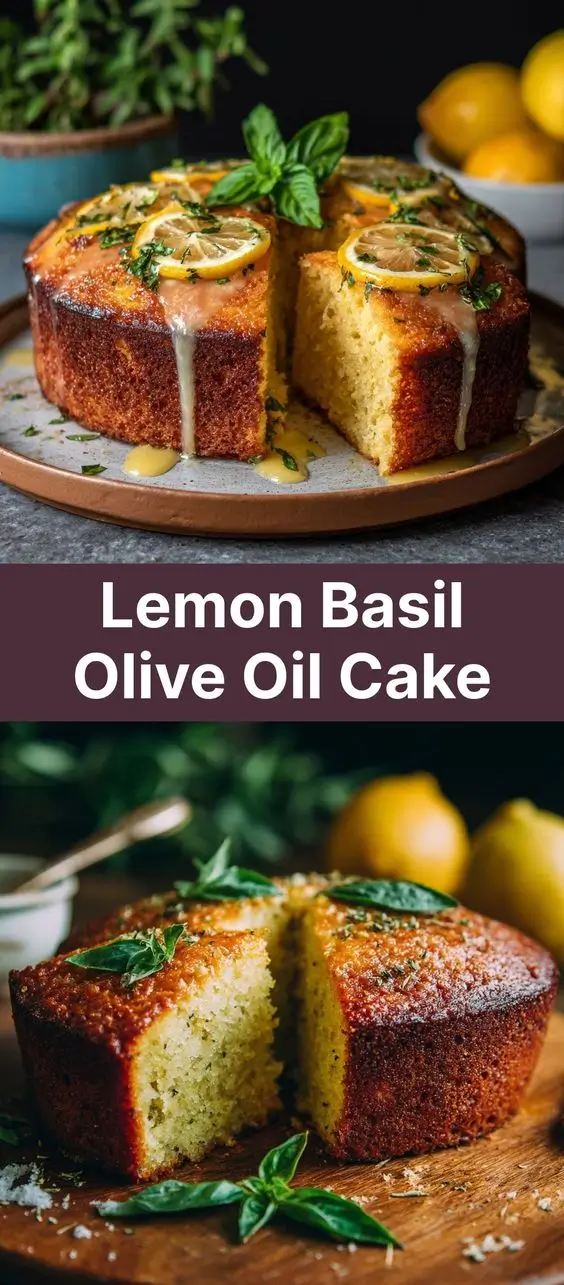
Lemon Basil Olive Oil Cake: A Zesty, Fragrant Delight
Introduction
The Lemon Basil Olive Oil Cake is a harmonious marriage of Mediterranean simplicity and modern culinary elegance. This cake stands out not just for its bright citrus flavor and herbal freshness, but also for its moist, tender crumb achieved through the use of high-quality extra virgin olive oil instead of butter. Unlike traditional cakes that rely on heavy fats, this recipe embraces the healthful richness of olive oil, resulting in a dessert that feels both indulgent and light. The addition of fresh basil introduces an unexpected yet refreshing twist—its subtle peppery aroma complements the lemon beautifully, creating a sophisticated flavor profile perfect for brunches, afternoon teas, or even as a dessert with a scoop of vanilla gelato.
The History
Olive oil-based cakes have deep roots in Mediterranean cuisine, particularly in regions like Italy, Greece, and southern France, where olive oil has long been a staple ingredient. In ancient times, before butter became widely available or affordable, people used olive oil in both savory and sweet preparations. Traditional Italian ciambelline all’olio or Greek portokalopita (orange semolina cake) are early examples of oil-based desserts that highlight local citrus and herbs.
The modern iteration of the olive oil cake gained popularity in the late 20th century, especially as chefs began exploring healthier alternatives to saturated fats. Renowned bakers like Yotam Ottolenghi brought renewed attention to these recipes by combining bold flavors such as citrus, herbs, and nuts with the luxurious texture of olive oil. The inclusion of basil—typically associated with savory dishes—into a dessert context reflects contemporary culinary trends that blur the lines between sweet and savory, offering complex layers of taste.
The Lemon Basil Olive Oil Cake, while not rooted in one specific historical tradition, draws inspiration from this rich tapestry of regional baking practices. It embodies the spirit of rustic refinement, using simple, high-quality ingredients to create something truly special.
Ingredients Breakdown
Understanding each ingredient’s role enhances your ability to master this cake:
- All-Purpose Flour: Provides structure to the cake. You can substitute part of it with almond flour for a nuttier, gluten-free option.
- Baking Powder & Baking Soda: Leavening agents that help the cake rise. Baking soda also reacts with the acidity from the lemon juice and yogurt, improving lift and tenderness.
- Salt: Balances sweetness and enhances overall flavor complexity.
- Extra Virgin Olive Oil: The star fat. Choose a mild, fruity olive oil—not too bitter or pungent—to avoid overpowering the delicate lemon and basil notes.
- Granulated Sugar: Sweetens and contributes to moisture retention. Can be partially replaced with honey or maple syrup, though adjustments may be needed.
- Eggs: Bind ingredients together and add richness. Room temperature eggs blend more smoothly into the batter.
- Whole Milk Yogurt: Adds tanginess, moisture, and helps activate leavening agents. Greek yogurt works well too, but thin it slightly with milk if very thick.
- Fresh Lemons: Used for both zest and juice. The zest contains aromatic oils essential for intense lemon flavor; the juice adds brightness and acidity.
- Fresh Basil: Finely chopped leaves infuse a unique herbal note. Use only fresh basil—dried will not provide the same vibrant flavor.
- Vanilla Extract: Enhances sweetness and rounds out the flavor profile without dominating.
- Confectioners’ Sugar (for glaze): Creates a silky, tart-sweet lemon-basil icing that soaks slightly into the cake.
- Milk or Cream (for glaze): Thins the glaze to drizzling consistency.
Step-by-Step Recipe
Ingredients
- 2 cups (250g) all-purpose flour
- 1 ½ teaspoons baking powder
- ½ teaspoon baking soda
- ¼ teaspoon salt
- ¾ cup (180ml) mild extra virgin olive oil
- 1 ½ cups (300g) granulated sugar
- 3 large eggs, room temperature
- ½ cup (120g) whole milk plain yogurt
- Zest of 2 large lemons
- ¼ cup (60ml) fresh lemon juice (about 2 lemons)
- 1 tablespoon pure vanilla extract
- ⅓ cup (15g) fresh basil leaves, finely chopped
- Optional: 1 teaspoon lemon extract for intensified citrus flavor
For the Glaze
- 1 cup (120g) confectioners’ sugar
- 2–3 tablespoons fresh lemon juice
- 1 teaspoon finely chopped fresh basil
- 1–2 tablespoons milk or cream (as needed)
Directions
- Preheat and Prepare: Preheat oven to 350°F (175°C). Grease a 9-inch bundt pan or 9×5-inch loaf pan thoroughly with olive oil and dust lightly with flour, tapping out excess. Alternatively, line a loaf pan with parchment paper for easy removal.
- Mix Dry Ingredients: In a medium bowl, whisk together flour, baking powder, baking soda, and salt. Set aside.
- Cream Wet Ingredients: In a large mixing bowl, combine olive oil and granulated sugar. Whisk vigorously for 2–3 minutes until the mixture becomes pale and slightly emulsified. This step is crucial for a fluffy texture.
- Add Eggs: Add eggs one at a time, whisking well after each addition until fully incorporated and smooth.
- Incorporate Yogurt and Flavorings: Stir in the yogurt, lemon zest, lemon juice, vanilla extract, and optional lemon extract. Mix until uniform.
- Fold in Basil: Gently fold in the finely chopped fresh basil, ensuring even distribution without bruising the leaves too much.
- Combine Dry and Wet: Gradually add the dry ingredients to the wet mixture, folding gently with a spatula until just combined. Do not overmix—this prevents gluten development and keeps the cake tender.
- Pour and Smooth: Pour the batter into the prepared pan and smooth the top with a spatula. Tap the pan gently on the counter to release air bubbles.
- Bake: Bake for 45–55 minutes (bundt) or 50–60 minutes (loaf), or until a wooden skewer inserted into the center comes out clean or with a few moist crumbs. The cake should spring back when lightly pressed.
- Cool: Let the cake cool in the pan for 15 minutes, then carefully invert onto a wire rack to cool completely before glazing.
- Prepare Glaze: In a small bowl, whisk confectioners’ sugar, lemon juice, chopped basil, and milk until smooth. Adjust thickness by adding more liquid or sugar as needed.
- Glaze and Garnish: Drizzle the glaze over the cooled cake. Allow it to set for 15–20 minutes before slicing. Garnish with edible flowers, lemon slices, or a few small basil leaves for presentation.
Tips
- Use High-Quality Olive Oil: Since olive oil plays a starring role, choose a reputable brand with a balanced, fruity flavor. Avoid overly robust or bitter oils.
- Chop Basil Just Before Adding: Fresh basil oxidizes quickly. Chop it right before folding into the batter to preserve its aroma and color.
- Don’t Overmix: Once you add the flour, mix only until no streaks remain. Overmixing leads to a dense, chewy texture.
- Room Temperature Ingredients: Cold eggs or yogurt can cause the olive oil to seize slightly. Bring everything to room temp for a smooth, cohesive batter.
- Check Doneness Early: Ovens vary. Start checking at 45 minutes with a toothpick. If the top browns too quickly, tent loosely with foil.
- Cool Properly: Cooling in the pan for 15 minutes allows the structure to set. Removing it too soon can cause breakage; leaving it too long can trap steam and make the bottom soggy.
- Enhance Citrus Flavor: For a deeper lemon presence, brush the warm cake with a simple syrup made from equal parts sugar and lemon juice before glazing.
Variations and Customizations
- Gluten-Free Version: Substitute all-purpose flour with a 1:1 gluten-free flour blend containing xanthan gum. Almond flour (½ cup) blended with oat or coconut flour also works but alters texture.
- Dairy-Free Option: Replace yogurt with unsweetened applesauce, mashed banana, or dairy-free yogurt. Ensure the alternative is thick enough to maintain moisture balance.
- Vegan Adaptation: Use flax eggs (1 tbsp ground flaxseed + 3 tbsp water per egg), plant-based yogurt, and replace honey-based sugars if strict. Texture will be denser but still flavorful.
- Nutty Twist: Fold in ½ cup toasted sliced almonds, pistachios, or pine nuts for added crunch and richness.
- Berry Infusion: Gently fold in 1 cup fresh blueberries or raspberries for bursts of juiciness. Toss berries in flour first to prevent sinking.
- Herb Swaps: Try mint instead of basil for a cooler profile, or lavender for a floral touch (use sparingly—¼ tsp dried food-grade lavender max).
- Spiced Variation: Add ½ teaspoon ground cardamom or poppy seeds for an aromatic boost that pairs wonderfully with lemon.
- Mini Cakes: Bake in muffin tins for 20–25 minutes to make individual servings—perfect for parties or gifts.
Health Considerations and Nutritional Value
This cake offers a more nutritious alternative to traditional butter-laden desserts, thanks to the inclusion of olive oil—a source of heart-healthy monounsaturated fats and antioxidants like polyphenols. These compounds have anti-inflammatory properties and may support cardiovascular health when consumed as part of a balanced diet.
While still a treat, the use of olive oil reduces saturated fat content compared to butter-based cakes. Additionally, yogurt contributes protein and probiotics, supporting gut health. The absence of artificial flavors or excessive processing makes this cake a cleaner dessert option.
A typical slice (1/10 of a bundt cake) contains approximately:
- Calories: ~320–360
- Total Fat: 18–20g (mostly unsaturated)
- Saturated Fat: 3–4g
- Carbohydrates: 40–44g
- Sugars: 28–32g (naturally derived from sugar and fruit)
- Protein: 5–6g
- Fiber: 1–2g
- Vitamin C: From lemon juice (~10–15% DV per serving)
- Calcium: Small amounts from yogurt and flour
Note: Nutritional values are estimates and can vary based on substitutions and portion size. Those managing blood sugar levels should consume in moderation due to sugar content. For lower glycemic impact, consider reducing sugar to 1 cup and using a natural non-nutritive sweetener like monk fruit blend.
FAQ
- Can I make this cake ahead of time?
- Yes! This cake actually improves in flavor after a day. Store covered at room temperature for up to 2 days or refrigerate for up to 5 days. Bring to room temperature before serving.
- Can I freeze Lemon Basil Olive Oil Cake?
- Absolutely. Wrap the unglazed cake tightly in plastic wrap and aluminum foil, then freeze for up to 3 months. Thaw overnight in the fridge, bring to room temperature, and glaze before serving.
- Why did my cake turn out dense?
- Overmixing the batter or using cold ingredients are common culprits. Also, expired leavening agents (baking powder/soda) can fail to lift the cake properly.
- Can I omit the basil?
- You can, but you’ll lose the signature herbal nuance. If avoiding basil, increase lemon zest to 3 lemons and add a pinch of thyme or mint for complexity.
- Is this cake suitable for vegans?
- With substitutions (flax eggs, plant yogurt, etc.), yes. See variations above for full guidance.
- What kind of pan should I use?
- A bundt pan gives elegant presentation and even baking. A loaf pan works well too and yields thicker slices. Avoid dark metal pans which can over-brown edges.
- Can I use lime or orange instead of lemon?
- Definitely! Lime basil oil cake is delightfully zesty, while orange brings warmth. Adjust zest and juice quantities accordingly and pair with complementary herbs like thyme or rosemary.
Summary
The Lemon Basil Olive Oil Cake is a radiant fusion of citrus brightness, herbal elegance, and Mediterranean-inspired baking wisdom. Moist, fragrant, and naturally rich, it’s a dessert that delights the senses while embracing wholesome ingredients.