Moist Chocolate Cake: The Ultimate Guide to a Decadent Dessert
The History of Moist Chocolate Cake
The story of chocolate cake begins in the 18th century, when cocoa powder was first introduced to Europe from the Americas. While early forms of chocolate desserts were more akin to dense, spiced drinks or tortes, the modern chocolate cake as we know it evolved during the 19th century. A pivotal moment came in 1765 when chocolate maker John Hanan brought cocoa beans to America and began processing them for baking use. However, it wasn’t until the invention of “Dutch-process” cocoa by Coenraad van Houten in 1828 that chocolate became more soluble and suitable for cakes.
The real breakthrough for moist chocolate cake occurred in the early 20th century with the advent of chemical leavening agents such as baking soda and baking powder. These ingredients allowed bakers to create lighter, fluffier textures while retaining rich chocolate flavor. By the 1930s, boxed cake mixes began appearing on supermarket shelves, further popularizing chocolate cake across American households. Over time, home bakers experimented with adding coffee, buttermilk, sour cream, and oil to enhance moisture and depth—leading to today’s beloved version: the ultra-moist chocolate cake.
This dessert has transcended borders and become a staple at birthdays, weddings, anniversaries, and holidays worldwide. Its universal appeal lies not just in its taste but in its comforting texture—tender, springy, and deeply satisfying. Whether served plain, frosted, or layered with ganache, the moist chocolate cake remains one of the most iconic desserts in culinary history.
Ingredients Breakdown: Why Each One Matters
Creating a truly moist chocolate cake isn’t just about combining ingredients—it’s about understanding how each component contributes to the final texture, flavor, and structure. Let’s dive into the science behind every ingredient:
- All-Purpose Flour: Provides the structural base. It contains gluten-forming proteins that give the cake its shape. Too much flour can lead to dryness, so always spoon and level when measuring.
- Cocoa Powder (Unsweetened): The soul of the chocolate flavor. Use high-quality natural or Dutch-process cocoa depending on your recipe’s leavening system. Dutch-process is less acidic and offers a smoother, deeper taste.
- Sugar (Granulated): Adds sweetness, helps retain moisture, and aids in browning. It also tenderizes the crumb by interfering with gluten development.
- Baking Soda & Baking Powder: Leavening agents that help the cake rise. Baking soda reacts with acidic ingredients (like buttermilk or coffee), while baking powder provides additional lift through double-acting action.
- Salt: Enhances all flavors and balances sweetness. Even a small pinch makes the chocolate taste richer.
- Eggs: Act as emulsifiers, bind ingredients together, add structure, and contribute to leavening. Room-temperature eggs blend more smoothly into the batter.
- Vegetable Oil: Unlike butter, oil remains liquid at room temperature, which leads to a moister crumb. It coats flour proteins better than solid fats, reducing gluten formation and creating tenderness.
- Buttermilk: Adds acidity, activates baking soda, and keeps the cake soft and moist. The lactic acid also enhances shelf life and improves mouthfeel.
- Hot Coffee: Not only intensifies chocolate flavor by unlocking cocoa compounds, but also helps bloom the cocoa powder for maximum richness. Don’t worry—there’s no coffee taste, just deep, complex chocolate notes.
- Vanilla Extract: Rounds out the flavor profile, adding warmth and complexity without overpowering the chocolate.
Step-by-Step Recipe: How to Make the Perfect Moist Chocolate Cake
Ingredients
- 1¾ cups (220g) all-purpose flour
- ¾ cup (65g) unsweetened cocoa powder (preferably Dutch-process)
- 2 cups (400g) granulated sugar
- 1½ tsp baking powder
- 1½ tsp baking soda
- 1 tsp salt
- 2 large eggs, at room temperature
- 1 cup (240ml) whole milk, at room temperature
- ½ cup (120ml) vegetable oil (or melted coconut oil)
- 2 tsp pure vanilla extract
- 1 cup (240ml) hot brewed coffee (not boiling, just freshly made)
Directions
- Preheat Oven & Prepare Pans: Preheat your oven to 350°F (175°C). Grease two 9-inch round cake pans with butter or non-stick spray, then line the bottoms with parchment paper. Dust lightly with cocoa powder to prevent sticking.
- Mix Dry Ingredients: In a large mixing bowl, sift together the flour, cocoa powder, sugar, baking powder, baking soda, and salt. Sifting ensures there are no lumps and evenly distributes leaveners. Whisk thoroughly for even consistency.
- Add Wet Ingredients: In another bowl, whisk the eggs until slightly frothy. Then add the milk, oil, and vanilla extract. Mix until smooth and well combined.
- Combine Wet and Dry: Gradually pour the wet mixture into the dry ingredients. Use a hand mixer or stand mixer on medium speed and beat for about 2 minutes until the batter is smooth, glossy, and free of streaks. Scrape down the sides of the bowl as needed.
- Incorporate Hot Coffee: With the mixer off, slowly pour in the hot coffee. Begin mixing on low speed just until incorporated—this will thin the batter significantly, which is normal. Do not overmix after this step.
- Pour Into Pans: Divide the batter evenly between the prepared pans. Tap each pan gently on the counter a few times to release air bubbles and ensure an even rise.
- Bake: Place pans in the center of the preheated oven. Bake for 30–35 minutes, or until a toothpick inserted into the center comes out clean or with a few moist crumbs. Avoid opening the oven door too early to prevent collapse.
- Cool Properly: Remove cakes from the oven and let them cool in the pans for 10 minutes. Then run a knife around the edges, invert onto wire racks, remove parchment paper, and allow to cool completely before frosting.
- Frost and Serve: Once cooled, frost with your favorite chocolate buttercream, ganache, or whipped cream. For best results, chill the layers briefly before assembling to minimize crumbling.
Tips for Making the Most Moist Chocolate Cake Possible
- Use Oil Instead of Butter: Oil yields a more consistently moist texture because it’s 100% fat and stays liquid at room temperature, whereas butter contains water and solidifies when cool.
- Don’t Overbake: Set your timer for the minimum recommended time and check early. Overbaking is the #1 cause of dry cake.
- Measure Flour Correctly: Spoon flour into the measuring cup and level it off with a knife. Scooping directly packs too much flour, leading to dense, dry results.
- Room Temperature Ingredients: Cold eggs or milk can cause the batter to curdle or bake unevenly. Let everything sit out for 30–60 minutes beforehand.
- Use Real Coffee: Instant coffee dissolved in hot water works too, but freshly brewed coffee delivers superior depth. If you’re sensitive to caffeine, use decaf.
- Double Wrap When Storing: To keep leftover cake moist, wrap unfrosted layers tightly in plastic wrap and store at room temperature for up to 2 days or freeze for up to 3 months.
- Brush With Simple Syrup: For extra insurance against dryness, brush cooled cake layers with a light sugar syrup flavored with vanilla or coffee.
- Avoid Overmixing After Adding Flour: Once flour is added, mix only until combined. Overmixing develops gluten and creates a tough texture.
Variations and Customizations
The beauty of a moist chocolate cake lies in its versatility. Here are some creative ways to personalize it:
- Gluten-Free Version: Replace all-purpose flour with a 1:1 gluten-free baking blend containing xanthan gum. Ensure cocoa powder and other ingredients are certified gluten-free.
- Dairy-Free Option: Substitute buttermilk with almond milk mixed with 1 tbsp vinegar or lemon juice. Use dairy-free margarine or full-fat coconut milk in the frosting.
- Double Chocolate Twist: Fold in 1 cup of semi-sweet chocolate chips or chunks into the batter for melty pockets of chocolate throughout.
- Orange Zest Infusion: Add 1 tbsp finely grated orange zest to the batter for a bright, citrusy contrast that pairs beautifully with dark chocolate.
- Mocha Upgrade: Dissolve 1–2 tsp instant espresso powder in the hot coffee for an intensified mocha flavor.
- Red Wine Chocolate Cake: Replace half the coffee with dry red wine like Cabernet Sauvignon for a sophisticated, velvety twist.
- Mini Cupcakes: Pour batter into lined muffin tins and bake for 18–22 minutes. Perfect for parties and portion control!
- Layered Celebration Cake: Bake three 6-inch layers and stack with chocolate mousse, raspberry jam, or salted caramel for a show-stopping centerpiece.
- Vegan Adaptation: Use flax eggs (1 tbsp ground flaxseed + 3 tbsp water per egg), plant-based milk, and vegan chocolate. Check sugar for bone char-free certification if desired.
Health Considerations and Nutritional Value
While moist chocolate cake is undeniably indulgent, enjoying it mindfully can be part of a balanced lifestyle. Let’s break down what’s inside a typical slice (based on an 8-layer slice of this recipe, without frosting):
| Nutrient | Amount Per Slice |
|---|---|
| Calories | 320 kcal |
| Total Fat | 12g |
| Saturated Fat | 3.5g |
| Cholesterol | 45mg |
| Sodium | 380mg |
| Total Carbohydrates | 50g |
| Dietary Fiber | 2g |
| Sugars | 36g |
| Protein | 5g |
Key Notes:
- Sugar Content: High due to granulated sugar. Consider reducing by ¼ cup if your family prefers less sweet desserts, though this may affect texture slightly.
- Portion Control: Cutting smaller slices allows you to savor the flavor without overindulging. A 1″x3″ piece satisfies most cravings.
- Occasional Treat: This cake is best enjoyed occasionally rather than daily. Pair it with fresh berries or a dollop of Greek yogurt to balance richness.
- Allergens: Contains eggs, milk, wheat, and soy (depending on brand of cocoa). Always label accordingly for guests.
- Antioxidants from Cocoa: Dark cocoa powder is rich in flavonoids, which have antioxidant properties linked to heart health. Choose minimally processed, non-alkalized cocoa when possible.
Frequently Asked Questions (FAQ)
Can I make this cake ahead of time?
Yes! Unfrosted cake layers can be baked a day in advance. Cool completely, wrap in plastic, and store at room temperature. You can also freeze cooled layers for up to 3 months—just thaw wrapped at room temperature before frosting.
Why did my cake sink in the middle?
Common causes include underbaking, opening the oven too soon, too much leavening agent, or overmixing. Make sure your baking powder/soda are fresh and measure accurately.
Can I use milk instead of buttermilk?
You can, but buttermilk’s acidity reacts with baking soda for better rise and texture. If substituting, add 1 tbsp lemon juice or vinegar to 1 cup milk and let sit 5 minutes before using.
Is coffee necessary?
No, but highly recommended. It enhances chocolate flavor without making the cake taste like coffee. If avoiding entirely, replace with hot water or extra buttermilk.
How do I store leftover cake?
Keep frosted cake covered at room temperature for up to 2 days. Refrigerate for longer storage (up to 5 days), but bring to room temperature before serving for best texture.
Can I bake this in a sheet pan?
Absolutely! Pour into a 9×13-inch greased pan and bake for 35–40 minutes. Great for parties and easy cutting.
What frosting goes best with this cake?
Classic chocolate buttercream, silky ganache, cream cheese frosting, or even peanut butter frosting work wonderfully. For something lighter, try stabilized whipped cream.
Can I use cake flour?
You can, but reduce the amount to 1⅔ cups since cake flour is lighter. All-purpose gives a sturdier crumb ideal for layering.
Why is my cake dry?
Most often due to overbaking, too much flour, or using butter instead of oil. Double-check measurements and set timers carefully.
Can I make this recipe eggless?
Yes—try using commercial egg replacers, mashed banana (¼ cup per egg), or applesauce. Texture may vary slightly, becoming denser.
Summary
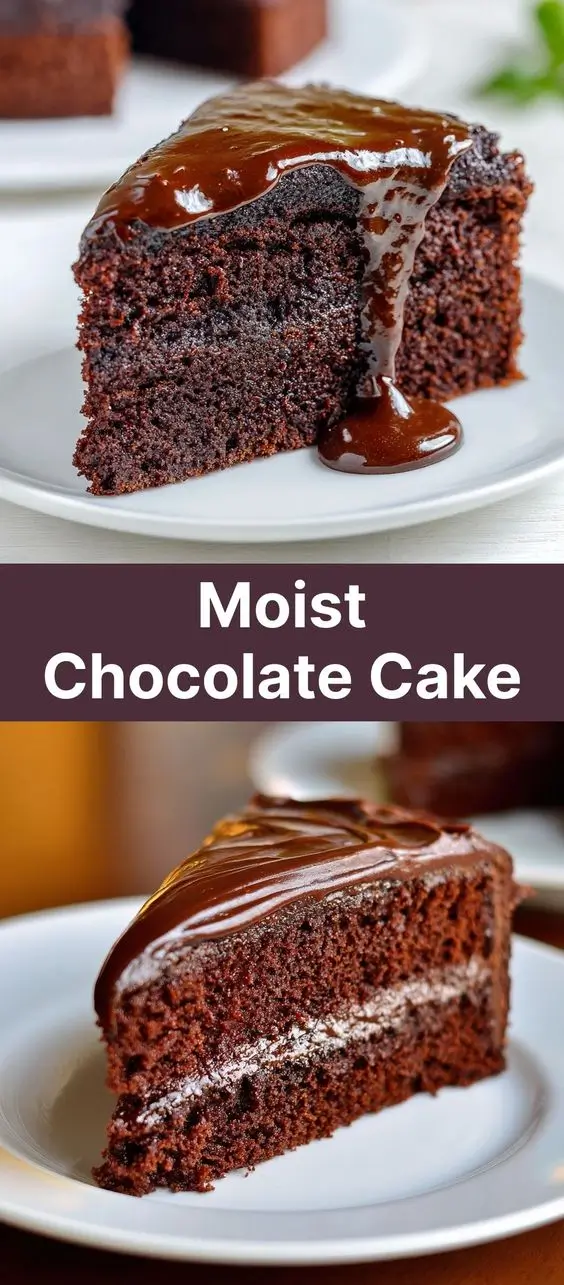
The moist chocolate cake is a timeless dessert that combines rich cocoa, tender crumb, and deep flavor through smart ingredient choices like oil, buttermilk, and hot coffee. With proper technique and attention to detail, anyone can create a bakery-quality treat at home.
Perfect for celebrations or quiet moments alike, this cake delivers comfort in every bite—soft, decadent, and unforgettable when shared with loved ones.