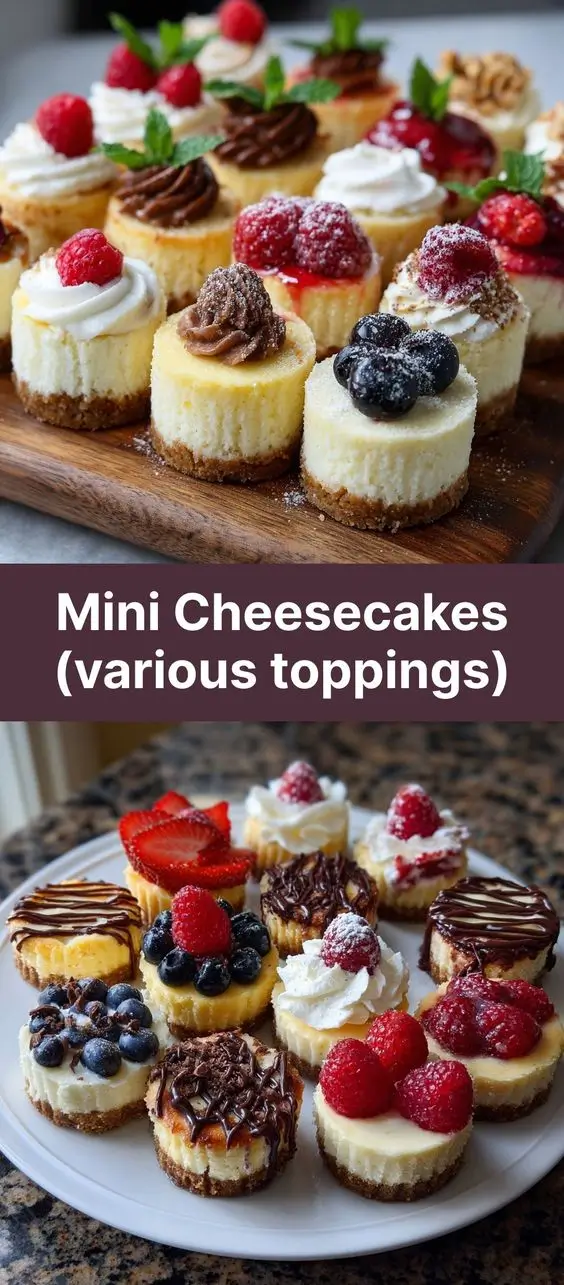
Mini Cheesecakes (Various Toppings)
The History
Cheesecake, in its earliest form, dates back to ancient Greece, where it was served to athletes during the first Olympic Games in 776 BCE. The simple combination of cheese, honey, and flour was prized for its energy-boosting properties. When the Romans conquered Greece, they adopted and spread the recipe throughout their empire, refining it with eggs and baked pastry crusts. Over centuries, cheesecake evolved across Europe—each country adding local twists using regional cheeses like quark in Germany or fromage frais in France.
The modern American cheesecake emerged in the late 19th century with the invention of cream cheese by William Lawrence in New York. This rich, smooth cheese became the cornerstone of the now-iconic New York-style cheesecake. As home baking grew in popularity during the 20th century, mini desserts gained favor for parties and gatherings. Mini cheesecakes—individual portions baked in muffin tins—became a staple at potlucks, weddings, and holiday events due to their portability and elegant presentation. Today, mini cheesecakes are celebrated not only for their creamy texture but also for their versatility, especially when topped with an array of flavorful, colorful toppings ranging from fruit compotes to chocolate ganache and caramel swirls.
Ingredients Breakdown
Creating perfect mini cheesecakes begins with understanding each component of the recipe. Here’s a detailed breakdown:
- Cream Cheese: The star ingredient. Use full-fat, brick-style cream cheese that’s softened to room temperature. Low-fat versions can result in a less creamy texture and may crack during baking.
- Granulated Sugar: Adds sweetness and helps create a smooth batter. It also contributes to browning and structure.
- Eggs: Provide structure and richness. Always use large eggs and add them one at a time to avoid curdling the mixture.
- Sour Cream or Greek Yogurt: Enhances creaminess and adds a slight tang that balances the sweetness. It also prevents cracking.
- Vanilla Extract: Pure vanilla extract deepens flavor and adds warmth. Avoid imitation vanilla for best results.
- Graham Cracker Crumbs: Used for the crust. You can substitute with digestive biscuits, vanilla wafers, or even Oreo crumbs for a chocolate twist.
- Melted Butter: Binds the crust together and adds richness. Unsalted butter is preferred so you can control the salt level.
- Pinch of Salt: Balances sweetness and enhances all flavors.
For toppings (varies by choice):
- Fresh berries (strawberries, raspberries, blueberries)
- Fruit preserves or jam (heated and strained for a glossy finish)
- Chocolate chips or cocoa powder (for chocolate lovers)
- Caramel sauce (homemade or store-bought)
- Lemon curd (bright and tangy)
- Whipped cream or whipped topping (for garnish)
- Nuts (chopped pecans, walnuts, or almonds)
- Edible flowers or mint leaves (for visual appeal)
Step-by-Step Recipe
- Prepare the Muffin Tin: Line a 12-cup standard muffin tin with parchment paper liners or silicone molds. Parchment makes removal easier and gives a clean look.
- Make the Crust: In a bowl, combine 1 ½ cups graham cracker crumbs, ¼ cup granulated sugar, and ½ cup melted unsalted butter. Mix until the texture resembles wet sand. Press about 1–2 tablespoons of the mixture firmly into the bottom of each liner using the back of a spoon or a small glass.
- Chill the Crust: Place the muffin tin in the refrigerator for at least 15 minutes to set the crust while you prepare the filling.
- Preheat Oven: Set oven to 325°F (160°C). This lower temperature ensures even cooking without cracking.
- Beat Cream Cheese: In a large mixing bowl, beat 24 oz (three 8-oz packages) of softened cream cheese with an electric mixer on medium speed until smooth and fluffy (about 2 minutes).
- Add Sugar and Flavor: Gradually add ⅔ cup granulated sugar, beating until incorporated. Scrape down the sides. Add 1 teaspoon vanilla extract and a pinch of salt, then mix again.
- Incorporate Eggs: Add 3 large eggs, one at a time, mixing just until blended after each addition. Overmixing introduces too much air, which can cause cracks.
- Add Sour Cream: Stir in ⅓ cup sour cream or plain Greek yogurt until smooth. This step adds moisture and a subtle tang.
- Fill the Cups: Remove the crusts from the fridge. Divide the batter evenly among the 12 cups, filling each about ¾ full.
- Bake: Place the muffin tin in the center of the oven. Bake for 20–25 minutes, or until the edges are set but the centers still have a slight jiggle (like Jell-O when gently shaken).
- Cool Gradually: Turn off the oven, crack the door open slightly, and let the cheesecakes cool inside for 30 minutes. This prevents sudden temperature changes that lead to cracks.
- Refrigerate: Remove from oven and cool completely at room temperature. Then cover loosely and refrigerate for at least 4 hours, preferably overnight, to fully set.
- Add Toppings: Once chilled, top each mini cheesecake as desired—fruit compote, chocolate drizzle, caramel, or fresh berries.
Tips
- Room Temperature Ingredients: Ensure cream cheese, eggs, and sour cream are at room temperature before mixing. Cold ingredients lead to lumpy batter.
- No Water Bath Needed: Unlike full-sized cheesecakes, mini versions typically don’t require a water bath because they bake quickly and evenly.
- Avoid Overmixing: Mix just until ingredients are combined. Overbeating incorporates excess air, increasing the risk of cracks.
- Use a Scoop: A cookie scoop or measuring spoon ensures even distribution of batter for uniformly sized cheesecakes.
- Check Doneness Carefully: They’re done when the edges are firm but the center jiggles slightly. They’ll continue to set as they cool.
- Easy Removal: If using parchment liners, lift the cheesecakes out by the edges of the paper. For silicone molds, gently push from the bottom.
- Chill Before Serving: Always serve cold for the best texture and flavor release.
Variations and Customizations
One of the greatest joys of mini cheesecakes is their adaptability. Here are some popular variations:
- Strawberry Swirl: Gently swirl 1 tsp of strawberry jam into each unbaked cheesecake before baking. Or top with fresh strawberries and a glaze after chilling.
- Blueberry Lemon: Add 1 tbsp lemon zest to the batter and top with a blueberry compote made by simmering 1 cup blueberries with 2 tbsp sugar and 1 tsp lemon juice.
- Chocolate Lover’s: Mix ¼ cup cocoa powder into the batter or add mini chocolate chips. Top with chocolate ganache (heat ½ cup heavy cream, pour over 1 cup chocolate chips, stir until smooth).
- Salted Caramel: Drizzle store-bought or homemade caramel sauce over each cheesecake and sprinkle with flaky sea salt.
- Oreo Crust: Replace graham crackers with crushed Oreos (filling included) for a chocolatey crust. Pair with plain or chocolate batter.
- Pumpkin Spice: Fold ½ cup pumpkin puree and 1 tsp pumpkin spice into the batter. Top with whipped cream and a dash of cinnamon.
- Peppermint: Add ½ tsp peppermint extract to the batter and top with crushed candy canes and chocolate ganache.
- Tropical: Use coconut graham crackers for the crust and top with mango or pineapple compote and toasted coconut flakes.
- S’mores Style: Graham cracker crust, top with melted chocolate and a toasted marshmallow using a kitchen torch.
- Boozy Variants: Add 1–2 tbsp liqueur like Baileys, Kahlúa, or Grand Marnier to the batter for an adult twist.
Health Considerations and Nutritional Value
While mini cheesecakes are undeniably delicious, they are rich in fat and sugar. A typical mini cheesecake (without toppings) contains approximately:
- Calories: 220–280
- Total Fat: 18–22g (mostly saturated)
- Carbohydrates: 12–16g
- Sugar: 10–14g
- Protein: 4–5g
Health Tips:
- Portion Control: Mini cheesecakes naturally limit serving size, making them a smarter indulgence than sliceable versions.
- Lower-Fat Options: Substitute light cream cheese and low-fat sour cream, though texture may be less luxurious.
- Sugar Substitutes: Use erythritol, monk fruit sweetener, or stevia-based blends to reduce sugar content. Note: Some substitutes may alter texture.
- Gluten-Free: Use gluten-free graham crackers or almond flour for the crust.
- Dairy-Free: Use dairy-free cream cheese alternatives (such as those made from cashews) and vegan butter for the crust.
- High-Protein Version: Add unflavored collagen peptides or protein powder (use recipes designed for this to avoid dryness).
Ingredients
- 24 oz (3 x 8-oz packs) full-fat cream cheese, softened
- ⅔ cup granulated sugar
- 3 large eggs
- ⅓ cup sour cream or plain Greek yogurt
- 1 tsp pure vanilla extract
- Pinch of salt
- 1 ½ cups graham cracker crumbs
- ½ cup unsalted butter, melted
- ¼ cup granulated sugar (for crust)
Optional Toppings (choose one or mix and match):
- Strawberry compote
- Blueberry sauce
- Chocolate ganache
- Caramel drizzle
- Lemon curd
- Whipped cream
- Fresh fruit slices
- Crushed nuts
- Sprinkles or edible glitter (for festive occasions)
Directions
- Line a 12-cup muffin tin with parchment paper liners. Preheat oven to 325°F (160°C).
- To make the crust: Combine graham cracker crumbs, ¼ cup sugar, and melted butter. Press 1–2 tbsp into each liner. Chill for 15 minutes.
- In a large bowl, beat cream cheese until smooth. Add ⅔ cup sugar, vanilla, and salt. Mix until creamy.
- Add eggs one at a time, mixing just until incorporated. Do not overbeat.
- Stir in sour cream until smooth.
- Divide batter evenly among the prepared crusts, filling each about ¾ full.
- Bake for 20–25 minutes until edges are set and centers slightly jiggle.
- Turn off oven, crack the door, and let sit for 30 minutes.
- Cool completely at room temperature, then refrigerate for at least 4 hours or overnight.
- Remove from molds, then decorate with your favorite toppings.
FAQ
Q: Can I make mini cheesecakes ahead of time?
A: Absolutely! They can be made up to 3 days in advance and stored covered in the refrigerator. Add toppings just before serving for best appearance.
Q: Can I freeze mini cheesecakes?
A: Yes. Freeze unfrosted cheesecakes on a tray, then wrap individually in plastic and store in a freezer bag for up to 2 months. Thaw overnight in the fridge before adding toppings.
Q: Why did my mini cheesecakes crack?
A: Cracking is usually due to overbaking, overmixing, or rapid cooling. Using room-temperature ingredients and gradual cooling helps prevent this.
Q: Can I use a different crust?
A: Definitely. Try crushed cookies, pretzels, biscotti, or even a nut-based crust like pecan or almond flour for a keto-friendly option.
Q: How do I get smooth batter?
A: Make sure all ingredients are at room temperature and scrape the bowl frequently. Use a hand mixer or stand mixer for best results.
Q: Are mini cheesecakes supposed to be jiggly when they come out?
A: Yes—the center should jiggle slightly like gelatin. They will firm up as they cool and chill.
Summary
Creamy, dreamy, and endlessly customizable, mini cheesecakes are the perfect bite-sized dessert for any occasion. With a buttery crust, velvety filling, and a world of topping possibilities, they’re as fun to make as they are to eat.