Greek Chicken Gyro Bowls: A Flavorful Mediterranean Delight
Introduction
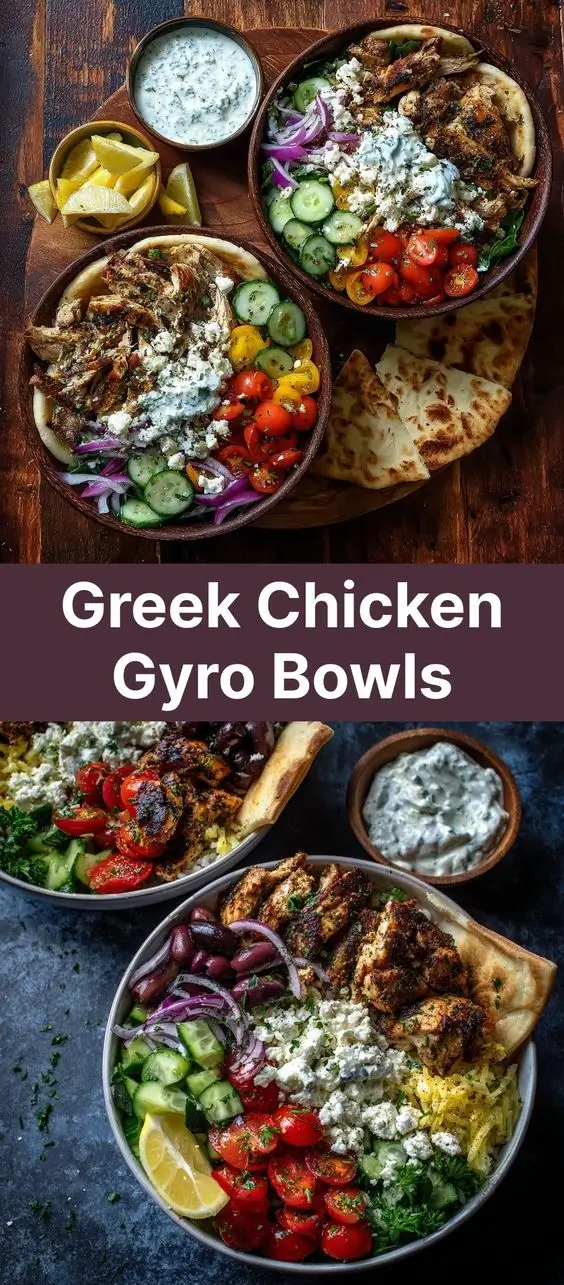
The Greek Chicken Gyro Bowl is a modern, healthy twist on the beloved traditional Greek gyro, reimagined into a nourishing bowl format perfect for lunch or dinner. By deconstructing the classic pita-wrapped gyro and serving its vibrant components in a bowl, you get all the bold Mediterranean flavors—tangy tzatziki, tender marinated chicken, crisp vegetables, and aromatic herbs—without the mess. Ideal for meal prep, family dinners, or impressing guests, this dish brings the sun-drenched tastes of Greece straight to your kitchen table.
The History
The origins of the gyro trace back to ancient Greece, where meats were traditionally roasted on vertical spits, a method influenced by Middle Eastern cuisines such as Turkish döner kebab and Arab shawarma. The word “gyro” comes from the Greek word γύρος (gyros), meaning “turn” or “revolution,” referring to the rotating spit used for cooking. While lamb was historically the meat of choice, modern variations—especially in North America—often feature chicken, pork, or even beef.
The gyro gained widespread popularity in the United States during the 1970s and 1980s, particularly in cities with large Greek-American communities like New York and Chicago. As culinary trends evolved toward healthier, customizable meals, the concept of the “bowl” emerged—popularized by grain bowls and Buddha bowls. The Greek Chicken Gyro Bowl is a product of this evolution: combining the rich heritage of the gyro with contemporary preferences for balanced, nutrient-dense meals served without refined carbs or heavy bread.
Ingredients Breakdown
Creating an authentic and delicious Greek Chicken Gyro Bowl starts with high-quality ingredients that deliver flavor, texture, and nutrition. Here’s a detailed breakdown:
For the Marinated Chicken:
- Chicken Thighs (Boneless, Skinless): Preferred over breasts for their juiciness and ability to absorb marinade deeply. Thighs remain tender even when grilled.
- Olive Oil: Extra virgin olive oil adds richness and helps carry fat-soluble flavors from the herbs and garlic.
- Lemon Juice: Freshly squeezed provides acidity that tenderizes the meat and brightens the overall taste.
- Garlic (Freshly Minced): Essential for depth and pungency, it infuses the chicken with savory notes.
- Dried Oregano: A quintessential Greek herb, oregano delivers earthy, slightly peppery tones.
- Paprika (Smoked or Sweet): Adds color and subtle warmth; smoked paprika enhances complexity.
- Ground Cumin: Offers a warm, slightly nutty undertone common in Mediterranean spice blends.
- Salt & Black Pepper: For seasoning balance and enhancing all other flavors.
For the Tzatziki Sauce:
- Greek Yogurt (Full-Fat): Thick, creamy base with probiotics and tang. Full-fat ensures richness.
- Cucumber (Grated and Drained): English cucumber preferred for fewer seeds. Must be squeezed dry to prevent watery sauce.
- Garlic: Raw garlic gives zing; adjust amount based on preference.
- Fresh Dill: Bright, slightly sweet herb that complements yogurt and cucumber.
- Lemon Juice: Enhances freshness and balances creaminess.
- Olive Oil: A drizzle improves mouthfeel and flavor integration.
- Salt: To bring out all the flavors.
For the Bowl Base & Toppings:
- Quinoa or Rice (Cooked): Quinoa is high in protein and gluten-free; rice offers a more traditional feel.
- Greek Salad Components:
- Tomatoes (Diced): Ripe cherry or vine tomatoes add sweetness and acidity.
- Cucumber (Sliced or Diced): Cool crunch that contrasts the warm chicken.
- Red Onion (Thinly Sliced): Sharp bite mellows when mixed with lemon juice.
- Kalamata Olives: Briny, fruity olives typical in Greek cuisine.
- Feta Cheese (Crumbled): Salty, creamy cheese made from sheep’s milk—essential for authenticity.
- Fresh Herbs (Parsley, Mint): Chopped flat-leaf parsley adds freshness; mint can offer a surprising cool note.
- Lettuce or Baby Spinach (Optional): For added greens and volume.
- Lemon Wedges: For squeezing over the bowl before eating.
- Pita Bread (Warm, Cut into Strips – Optional Side): For those who want a touch of tradition.
Step-by-Step Recipe
Ingredients
- 1.5 lbs (680g) boneless, skinless chicken thighs
- 1/4 cup extra virgin olive oil
- 3 tbsp fresh lemon juice
- 4 cloves garlic, minced
- 1.5 tsp dried oregano
- 1 tsp smoked paprika
- 1/2 tsp ground cumin
- 1 tsp salt
- 1/2 tsp black pepper
- 1 cup cooked quinoa or basmati rice (per serving)
- 2 cups chopped romaine lettuce or baby spinach (optional)
- 1 cup diced tomatoes
- 1 cup diced cucumber
- 1/2 red onion, thinly sliced
- 1/2 cup Kalamata olives, halved
- 1/2 cup crumbled feta cheese
- Fresh parsley and mint, chopped
- Lemon wedges, for serving
Tzatziki Sauce Ingredients
- 1 cup full-fat Greek yogurt
- 1 small cucumber, grated and drained
- 1 clove garlic, finely minced
- 1 tbsp fresh dill, chopped
- 1 tbsp lemon juice
- 1 tbsp olive oil
- Salt to taste
Directions
- Marinate the Chicken: In a large bowl, whisk together olive oil, lemon juice, minced garlic, oregano, paprika, cumin, salt, and pepper. Add chicken thighs and coat thoroughly. Cover and refrigerate for at least 2 hours, preferably overnight for maximum flavor infusion.
- Prepare the Tzatziki: Grate the cucumber and place it in a clean kitchen towel. Squeeze out as much liquid as possible. In a medium bowl, combine the drained cucumber, Greek yogurt, garlic, dill, lemon juice, olive oil, and salt. Mix well, cover, and chill for at least 30 minutes to allow flavors to meld.
- Cook the Chicken: Preheat grill, grill pan, or skillet over medium-high heat. Remove chicken from marinade and shake off excess. Cook for 5–7 minutes per side, depending on thickness, until internal temperature reaches 165°F (74°C) and juices run clear. Let rest for 5 minutes, then slice into thin strips.
- Prepare the Bowl Base: Divide cooked quinoa or rice among serving bowls. Top with a handful of lettuce or spinach if using.
- Assemble the Bowls: Arrange slices of grilled chicken over the grains. Add diced tomatoes, cucumbers, red onions, olives, and crumbled feta. Garnish generously with fresh herbs.
- Add the Tzatziki: Spoon 2–3 tablespoons of chilled tzatziki over each bowl.
- Serve: Serve immediately with lemon wedges on the side for squeezing over the top. Offer warm pita strips on the side for dipping or crumbling into the bowl.
Tips
- Don’t Skip the Marinade Time: Marinating for 6–8 hours (or overnight) significantly improves flavor and tenderness.
- Use a Meat Thermometer: Ensures chicken is safely cooked without drying out.
- Rest the Chicken: Allows juices to redistribute, keeping every bite moist.
- Squeeze Cucumber Dry: Prevents watery tzatziki—this step is crucial!
- Make Ahead: Both the marinade and tzatziki can be prepared 2 days in advance. Cooked chicken stores well for up to 4 days.
- Grill for Smoky Flavor: If possible, use an outdoor grill for authentic charred notes.
- Bowl Temperature Contrast: Serve warm chicken over room-temperature grains and cold toppings for optimal texture experience.
Variations and Customizations
The beauty of the Greek Chicken Gyro Bowl lies in its versatility. Adapt it to suit dietary needs, seasonal produce, or personal taste:
- Vegetarian Version: Replace chicken with grilled halloumi, falafel, or marinated chickpeas.
- Vegan Option: Use dairy-free yogurt for tzatziki (coconut or almond-based), omit feta or use vegan alternative, and skip chicken.
- Low-Carb/Keto: Swap quinoa/rice for cauliflower rice or a bed of leafy greens. Increase healthy fats with avocado slices.
- Gluten-Free: Naturally gluten-free as written—just ensure all packaged ingredients (like spices) are certified GF.
- Spicy Kick: Add a pinch of crushed red pepper flakes to the marinade or serve with harissa or hot sauce.
- Mediterranean Grain Swaps: Try farro, bulgur, or freekeh instead of quinoa for different textures.
- Seasonal Twists: In summer, add fresh bell peppers or grilled zucchini; in winter, roast root vegetables like carrots or beets.
- Protein Alternatives: Substitute chicken with grilled shrimp, lean beef strips, or even turkey gyro-style patties.
Health Considerations and Nutritional Value
The Greek Chicken Gyro Bowl is not only delicious but also nutritionally balanced when prepared with wholesome ingredients. Here’s a breakdown of its health benefits:
Nutritional Highlights (Per Serving, Approximate):
- Calories: ~550–650 kcal (varies by portion size and ingredients)
- Protein: 35–40g – High-quality protein from chicken and Greek yogurt supports muscle repair and satiety.
- Carbohydrates: 45–55g – Primarily complex carbs from quinoa or rice, providing sustained energy.
- Fats: 25–30g – Mostly unsaturated fats from olive oil, olives, and feta, which support heart health.
- Fiber: 6–8g – From vegetables, whole grains, and cucumber, promoting digestive wellness.
- Vitamins & Minerals: Rich in vitamin C (lemon, tomatoes), vitamin A (carotenoids in tomatoes and peppers), calcium (feta, yogurt), iron (chicken, quinoa), and potassium (vegetables).
Health Benefits:
- Heart-Healthy Fats: Olive oil and olives contribute monounsaturated fats linked to reduced cardiovascular risk.
- Probiotics: Fermented Greek yogurt contains beneficial bacteria for gut health.
- Anti-Inflammatory Properties: Garlic, oregano, and lemon contain antioxidants and compounds that may reduce inflammation.
- Blood Sugar Balance: High protein and fiber content help stabilize glucose levels, making this meal suitable for diabetics when portion-controlled.
- Weight Management: Satiating combination of protein, fiber, and healthy fats helps control appetite and reduce snacking.
Considerations:
- Sodium Content: Feta and olives are naturally salty. Reduce sodium by using low-salt feta, rinsing olives, or limiting added salt.
- Dairy Sensitivity: Those sensitive to lactose should choose lactose-free yogurt or omit dairy altogether.
- Portion Control: While nutritious, oversized portions (especially grains and oils) can increase calorie intake significantly.
FAQ
- Can I use chicken breast instead of thighs?
- Yes, but thighs are recommended for better moisture and flavor retention. If using breast, do not overcook and consider brining first.
- How long does the tzatziki last in the fridge?
- Up to 4 days in an airtight container. It may separate slightly—just stir before serving.
- Can I bake the chicken instead of grilling?
- Absolutely. Bake at 400°F (200°C) for 20–25 minutes on a lined baking sheet.
- Is this recipe meal-prep friendly?
- Yes! Store components separately in containers: grains, chicken, chopped veggies, tzatziki. Assemble within 3–4 days.
- Can I freeze the marinated chicken?
- Yes. Freeze raw marinated chicken in zip-top bags for up to 3 months. Thaw in the refrigerator before cooking.
- What can I use instead of quinoa?
- Rice, couscous, farro, bulgur, or even lentils work well as bases.
- Are gyro bowls traditionally Greek?
- While gyros are authentically Greek, the bowl format is a modern, Western adaptation focused on health and convenience.
Summary
The Greek Chicken Gyro Bowl combines succulent marinated chicken, creamy tzatziki, fresh Mediterranean vegetables, and fluffy grains into one satisfying, nutrient-packed meal. Easy to customize, ideal for meal prep, and bursting with authentic flavors, it’s a wholesome celebration of Greek cuisine reimagined for the modern table.