Introduction
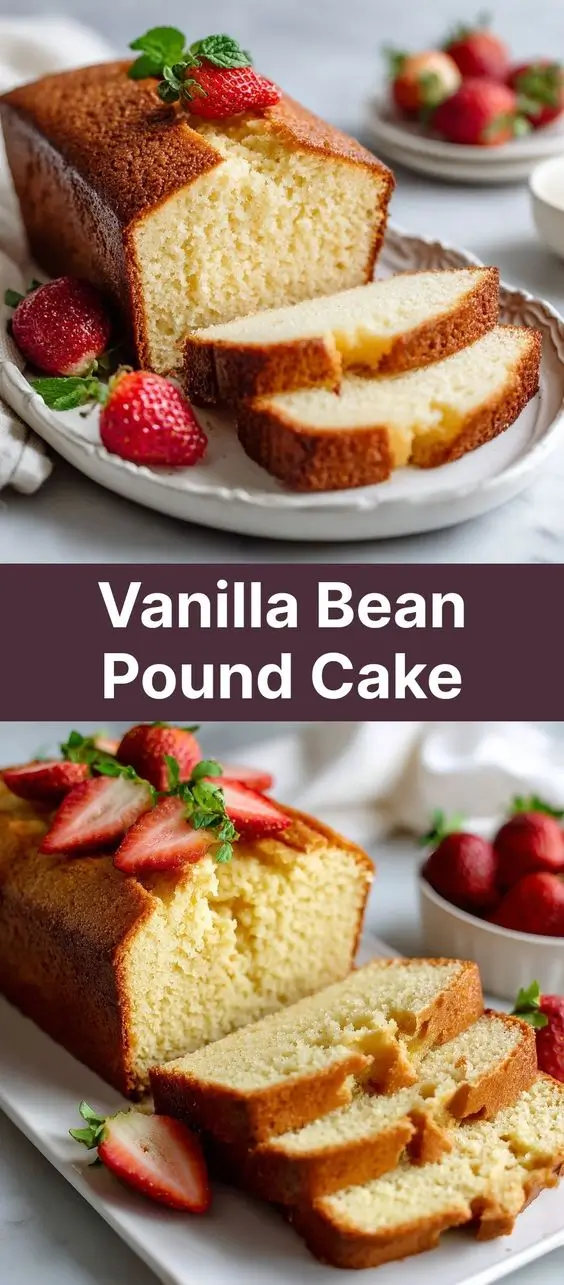
The Vanilla Bean Pound Cake is a timeless classic in the world of baking—an indulgent, buttery dessert that exudes elegance with every bite. With its rich, velvety crumb and fragrant vanilla aroma, this cake stands as a testament to simplicity meeting sophistication. Whether served at a formal tea party, birthday celebration, or enjoyed quietly with a cup of coffee on a rainy afternoon, this pound cake delivers comfort and luxury in equal measure. Unlike artificial vanilla-flavored cakes, the use of real vanilla beans elevates the flavor profile, adding tiny black specks that are not just visually appealing but also indicative of authenticity and quality.
The History
Pound cake traces its origins back to early 18th-century Europe, particularly England, where it was named for its simple, weight-based recipe: one pound each of flour, sugar, butter, and eggs. This straightforward formula made it easy for home bakers to remember and replicate without the need for precise measurements. The first known written recipe for pound cake appeared in “The Art of Cookery Made Plain and Easy” by Hannah Glasse in 1747. As baking techniques evolved and ovens became more accessible, the recipe spread across continents, adapting to local tastes and ingredients.
In America, pound cake became a staple in Southern cuisine, where bakers began experimenting with additions like sour cream, milk, and flavorings such as vanilla and citrus zest to enhance moisture and taste. The introduction of chemical leaveners like baking powder in the 19th century transformed the texture from dense and heavy to tender and airy while maintaining its signature richness. Today, the Vanilla Bean Pound Cake represents a refined evolution of this heritage—a luxurious version that celebrates natural flavors and artisanal baking traditions.
Ingredients Breakdown
- Unsalted Butter (1 cup, 2 sticks): Provides the foundational richness and contributes to a moist, tender crumb. Using unsalted butter allows you to control the salt content precisely.
- Granulated Sugar (1 ¾ cups): Not only sweetens the cake but also helps aerate the batter when creamed with butter, resulting in a lighter texture.
- Large Eggs (5 whole + 3 yolks): Whole eggs contribute structure and emulsification, while extra yolks add extra richness, color, and silkiness to the crumb.
- Pure Vanilla Extract (1 tablespoon): Enhances the overall vanilla flavor, complementing the vanilla bean.
- Vanilla Bean (1 large pod): The star ingredient. Scraping the seeds adds intense, floral, creamy vanilla notes and beautiful speckles throughout the cake.
- All-Purpose Flour (3 cups): Offers structure through gluten formation. Sifted to prevent clumping and ensure even mixing.
- Baking Powder (1 ½ teaspoons): A leavening agent that helps the cake rise gently, giving it a soft lift without compromising density.
- Salt (½ teaspoon): Balances sweetness and enhances all other flavors.
- Sour Cream (1 cup): Adds moisture, tenderness, and a slight tang that rounds out the sweetness. It also improves shelf life.
- Whole Milk (½ cup): Thins the batter slightly for optimal consistency and contributes to a delicate crumb.
Step-by-Step Recipe
- Preheat and Prepare: Preheat your oven to 325°F (165°C). Generously butter a 10-cup Bundt pan or two 9×5-inch loaf pans. Dust with flour, tapping out excess, ensuring every crevice is coated to prevent sticking.
- Extract Vanilla Seeds: Split the vanilla bean lengthwise using a sharp knife. Use the back of the knife to scrape out the tiny black seeds. Reserve both the seeds and the pod for later use.
- Cream Butter and Sugar: In a stand mixer fitted with the paddle attachment, beat the softened butter on medium speed until creamy (about 1 minute). Gradually add granulated sugar and beat on high for 5–7 minutes until light, fluffy, and pale yellow. Scrape down the bowl halfway through.
- Incorporate Eggs: Add eggs one at a time, beating well after each addition. Wait until the egg is fully incorporated before adding the next. Then add the extra yolks the same way. Mix in vanilla extract and scraped vanilla seeds. Pause frequently to scrape the bowl.
- Prepare Dry Ingredients: In a separate bowl, whisk together flour, baking powder, and salt. Mix thoroughly to distribute leavening evenly.
- Alternate Wet and Dry Ingredients: With mixer on low, add one-third of the flour mixture, followed by half the sour cream, then another third of flour, half the milk, remaining flour, remaining sour cream, and finally remaining milk. Mix only until just combined after each addition—do not overmix.
- Infuse Extra Flavor (Optional): For deeper vanilla essence, place the empty vanilla pod into the batter and gently stir it in. Remove it before slicing once the cake is baked and cooled.
- Pour and Smooth: Pour the thick, silky batter into the prepared pan(s). Use an offset spatula to smooth the top evenly, ensuring uniform baking.
- Bake: Place in the center of the preheated oven. Bake for 65–75 minutes for a Bundt pan, or 55–65 minutes for loaf pans, or until a wooden skewer inserted into the center comes out clean with a few moist crumbs. Avoid opening the oven during the first 50 minutes to prevent collapse.
- Cool: Let the cake cool in the pan for 15 minutes. Then invert onto a wire rack to cool completely before slicing. This resting period allows the crumb to set and prevents crumbling.
Tips
- Butter Temperature: Use butter that’s soft but not melted—ideally around 65–70°F. Cold butter won’t cream properly; too warm will break the emulsion.
- Creaming is Key: Do not rush the creaming process. This step incorporates air, which is vital for proper rise and texture.
- Room Temperature Ingredients: Ensure eggs, sour cream, and milk are at room temperature to blend smoothly and avoid curdling.
- Sifting Flour: Always sift dry ingredients to eliminate lumps and ensure even distribution of leavening agents.
- Avoid Overmixing: Once flour is added, mix only until combined. Overmixing develops gluten, leading to a tough cake.
- Oven Accuracy: Use an oven thermometer to verify temperature. Even slight deviations can affect baking time and texture.
- Testing Doneness: Rely on visual cues and the toothpick test. The cake should be golden brown, spring back lightly when touched, and pull away slightly from the edges.
- Storage: Wrap tightly in plastic wrap once cooled. Can be stored at room temperature for up to 3 days, refrigerated for up to 1 week, or frozen for up to 3 months.
Variations and Customizations
- Lemon-Vanilla Swirl: Add 2 tablespoons of lemon zest and swirl in a lemon glaze after baking for a bright, citrusy twist.
- Bourbon Glazed Pound Cake: Drizzle with a warm bourbon-vanilla glaze made from powdered sugar, 2 tablespoons bourbon, 1 teaspoon vanilla, and milk.
- Almond-Vanilla Fusion: Replace ½ cup of flour with almond flour and add 1 teaspoon of almond extract for a nutty complexity.
- Chocolate Chip Vanilla: Fold in 1 cup of high-quality dark chocolate chips for a decadent surprise in every slice.
- Gluten-Free Version: Substitute all-purpose flour with a 1:1 gluten-free baking blend containing xanthan gum. Add an extra tablespoon of milk if batter seems too thick.
- Dairy-Free Option: Replace butter with vegan butter, sour cream with coconut cream, and milk with oat or almond milk.
- Marbled Effect: Reserve 1 cup of batter, mix with cocoa powder and espresso powder, then alternate layers in the pan before baking for a stunning marbled look.
- Fruit-Infused: Top with a compote of macerated strawberries, peaches, or raspberries for a fresh, summery presentation.
Health Considerations and Nutritional Value
While undeniably delicious, traditional Vanilla Bean Pound Cake is high in calories, saturated fat, and sugar due to its rich ingredients. A typical slice (1/12 of a Bundt cake) contains approximately:
- Calories: 480–520
- Total Fat: 28–32g (mostly from butter and egg yolks)
- Saturated Fat: 17–20g
- Cholesterol: 160–180mg
- Carbohydrates: 55–60g
- Sugars: 38–42g
- Protein: 6–8g
- Sodium: 280–320mg
To make a slightly healthier version, consider reducing sugar by ¼ cup (the cake will still be sweet due to the vanilla’s natural perception of sweetness), using light sour cream, substituting one egg with two egg whites, and serving smaller portions. Pairing with fresh fruit or Greek yogurt can balance the indulgence. Individuals managing diabetes, heart health, or weight should consume this cake in moderation.
Ingredients
- 1 cup (2 sticks / 226g) unsalted butter, softened
- 1 ¾ cups (350g) granulated sugar
- 5 large eggs, room temperature
- 3 large egg yolks, room temperature
- 1 tablespoon pure vanilla extract
- 1 large vanilla bean pod
- 3 cups (360g) all-purpose flour, sifted
- 1 ½ teaspoons baking powder
- ½ teaspoon fine sea salt
- 1 cup (240g) full-fat sour cream, room temperature
- ½ cup (120ml) whole milk, room temperature
Directions
- Preheat oven to 325°F (165°C). Generously butter and flour a 10-cup Bundt pan or two 9×5-inch loaf pans. Set aside.
- Split the vanilla bean pod lengthwise and scrape out the seeds using the back of a knife. Set seeds aside; keep the pod.
- In the bowl of a stand mixer fitted with the paddle attachment, beat softened butter on medium speed until smooth (about 1 minute).
- Add sugar gradually and beat on high speed for 5–7 minutes until light, fluffy, and pale. Scrape down sides as needed.
- Add whole eggs one at a time, beating well after each. Add egg yolks one at a time, incorporating fully. Mix in vanilla extract and scraped vanilla seeds.
- In a medium bowl, whisk together sifted flour, baking powder, and salt.
- In a separate container, combine sour cream and milk.
- With mixer on low speed, add one-third of the flour mixture, mix briefly. Add half of the sour cream-milk mixture, mix. Repeat sequence: another third flour, remaining sour cream-milk, final third flour. Mix only until just combined. Do not overmix.
- (Optional) Gently stir in the used vanilla pod to infuse additional flavor during baking. Remove before slicing.
- Pour batter into prepared pan(s) and smooth the top with an offset spatula.
- Bake for 65–75 minutes (Bundt) or 55–65 minutes (loaves), until a skewer inserted in the center comes out clean and the top is golden brown.
- Let cool in pan for 15 minutes. Run a knife around the edges, then invert onto a wire rack. Remove pan and cool completely before slicing.
FAQ
Q: Can I use vanilla paste instead of a vanilla bean?
A: Yes! Vanilla paste offers the same speckled appearance and concentrated flavor. Use 1–2 teaspoons depending on strength.
Q: Why did my cake sink in the middle?
A: Common causes include underbaking, opening the oven too early, overmixing the batter, or inaccurate oven temperature. Always use an oven thermometer and avoid disturbing the cake during baking.
Q: Can I make this cake ahead of time?
A: Absolutely. This cake actually improves in flavor after 24 hours as the vanilla infuses further. Store wrapped at room temperature.
Q: How do I prevent sticking in a Bundt pan?
A: Grease thoroughly with butter or non-stick spray, then dust with flour. For extra insurance, use a baking release spray or a mixture of equal parts flour, shortening, and vegetable oil.
Q: Can I freeze Vanilla Bean Pound Cake?
A: Yes. Wrap the cooled, unglazed cake tightly in plastic wrap and then aluminum foil. Freeze for up to 3 months. Thaw overnight at room temperature.
Q: What’s the best way to slice pound cake?
A: Use a serrated knife with a gentle sawing motion. Wipe the blade between slices for clean cuts. Warm the knife slightly under hot water for smoother results.
Q: Can I bake this in regular round cake pans?
A: Yes. Use three 8-inch round pans and reduce baking time to 35–45 minutes. Adjust accordingly based on your oven.
Summary
The Vanilla Bean Pound Cake is a luxurious, moist dessert that highlights the exquisite flavor of real vanilla beans, offering a rich, buttery crumb with elegant speckles and deep aromatic notes.
Baked to golden perfection and perfect for any occasion, this timeless cake blends tradition and refinement, making it a cherished favorite among bakers and dessert lovers alike.