Introduction
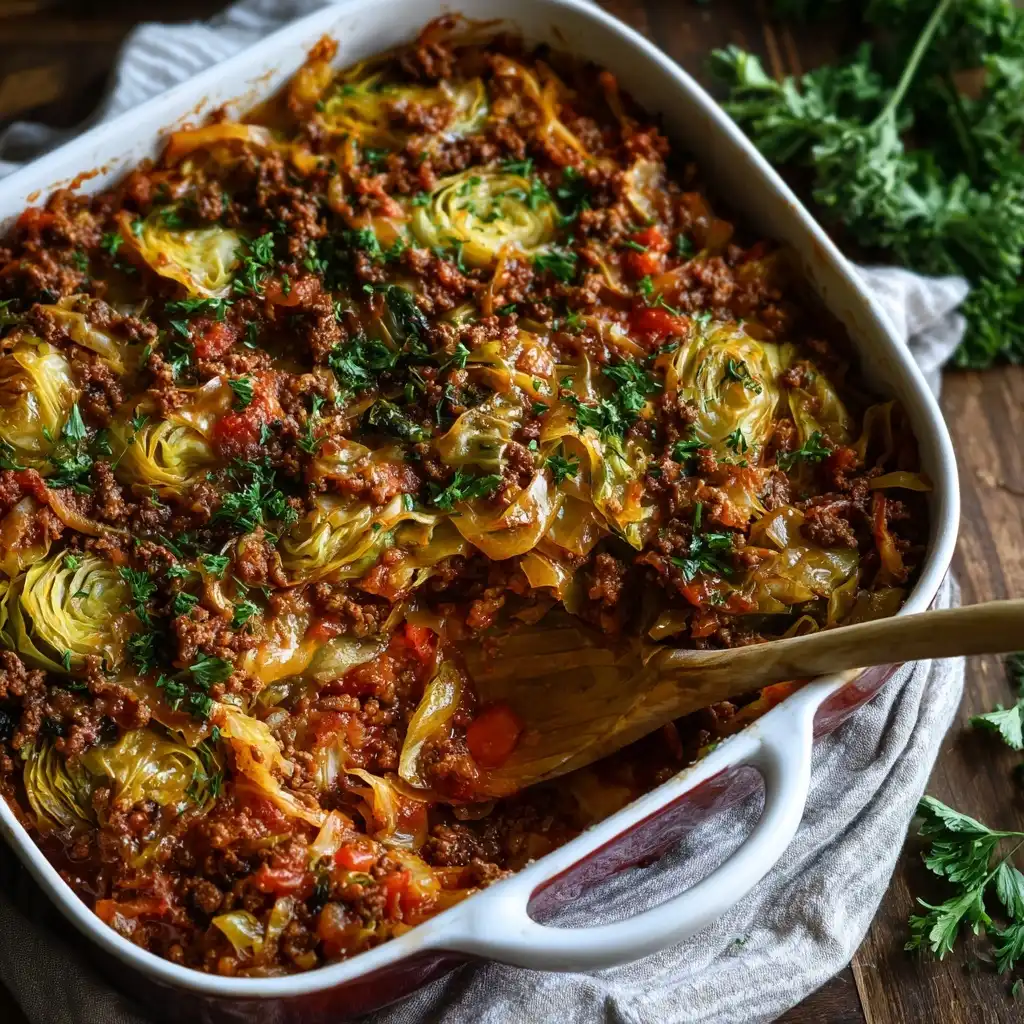
Unstuffed Cabbage Roll Casserole is a beloved, hearty, and time-saving twist on the classic Eastern European comfort dish—cabbage rolls. Instead of laboriously blanching cabbage leaves and rolling each individual portion, this casserole deconstructs the iconic flavors and textures into an easy-to-assemble, one-dish baked masterpiece. It brings together savory ground meat, tenderly cooked rice, aromatic onions and garlic, rich tomato sauce, and sweet-savory notes of brown sugar and apple cider vinegar—all layered or mixed seamlessly and baked until bubbling and golden. Perfect for busy weeknights, potlucks, holiday sideboards, or meal prepping, this casserole delivers all the soul-warming nostalgia of traditional stuffed cabbage—without the fuss. Whether you’re a seasoned home cook or a beginner seeking approachable, flavorful recipes, Unstuffed Cabbage Roll Casserole promises deep satisfaction, minimal cleanup, and generous servings that feed crowds and freeze beautifully.
The History
The origins of cabbage rolls trace back centuries across Eastern Europe, the Balkans, the Middle East, and parts of Asia—where resourceful cooks wrapped spiced meats and grains in preserved or fresh cabbage leaves as a means of stretching ingredients, preserving seasonal produce, and creating nutrient-dense meals. In Ukraine, it’s known as holubtsi; in Poland, sarmale; and in Turkey, sarma. Immigrant communities brought these traditions to North America in the late 19th and early 20th centuries, where adaptations flourished—especially in response to time constraints, ingredient availability, and evolving kitchen technology. The “unstuffed” variation emerged organically in American home kitchens during the mid-20th century, gaining traction through community cookbooks, church fundraisers, and regional newspaper columns. It reflects the broader cultural shift toward convenience without sacrificing authenticity—transforming a labor-intensive heirloom recipe into a streamlined, family-friendly casserole. While purists may debate its pedigree, the unstuffed version has earned its own legacy: a testament to culinary adaptation, intergenerational resilience, and the universal desire for comforting food that honors tradition while embracing practicality.
Ingredients Breakdown
Every element in Unstuffed Cabbage Roll Casserole plays a deliberate role—not just in flavor, but in texture, moisture balance, and structural integrity:
- Ground beef (85/15 or 90/10): Provides rich umami depth and binding structure. A blend with some fat ensures juiciness and prevents dryness during baking.
- Ground pork (optional but highly recommended): Adds tenderness, subtle sweetness, and enhanced mouthfeel. Many traditional holubtsi use a beef-pork mix—this casserole honors that nuance.
- Yellow or white onion: Finely diced for even distribution and foundational aromatic sweetness when sautéed.
- Garlic: Minced fresh (not powdered) for bright, pungent complexity that mellows beautifully during cooking.
- Long-grain white rice (uncooked): Absorbs liquid and thickens the casserole as it bakes—crucial for achieving the ideal creamy-yet-firm texture. Rinsing is optional but helps reduce excess starch if you prefer less clinginess.
- Shredded green cabbage: Fresh, not frozen or pre-salted. Its high water content softens dramatically in the oven, melding seamlessly with the sauce while contributing fiber and mild earthy-sweet notes. For best results, shred by hand or with a box grater—not a food processor—to avoid pulpiness.
- Canned crushed tomatoes or tomato puree: Forms the base of the sauce—rich, tangy, and smooth. Avoid whole tomatoes unless crushed finely, as larger pieces can disrupt consistency.
- Tomato sauce or passata: Adds body and silkiness without overwhelming acidity. Low-sodium varieties give you full control over seasoning.
- Beef or vegetable broth: Enhances savoriness and ensures adequate moisture for rice absorption. Homemade stock adds exceptional depth, but low-sodium store-bought works reliably.
- Brown sugar (light or dark): Balances tomato acidity and echoes the caramelized sweetness found in slow-cooked cabbage rolls. Dark brown sugar contributes molasses warmth; light offers cleaner sweetness.
- Apple cider vinegar: A signature touch—brightening the entire dish with a subtle tang that lifts flavors and mimics the gentle sourness of fermented cabbage or traditional braising liquids.
- Worcestershire sauce: Adds umami richness, anchovy-derived depth, and a whisper of tamarind-like brightness—essential for rounding out the savory profile.
- Paprika (sweet or smoked): Imparts warm aroma and visual appeal. Smoked paprika adds a rustic, campfire-like nuance; sweet paprika keeps it classic and vibrant.
- Dried oregano and thyme: Earthy, floral herbal notes that complement the meat and cabbage without overpowering. Fresh herbs are added at the end for garnish, not mixed in.
- Salt and freshly ground black pepper: Critical for layering seasoning—not just at the end, but at multiple stages (sautéing, mixing, and final adjustment).
- Optional enhancements: A splash of dry white wine (added with aromatics), a tablespoon of tomato paste for concentrated richness, a pinch of red pepper flakes for heat, or a grated tart apple (like Granny Smith) for additional brightness and moisture.
Step-by-Step Recipe
- Preheat & Prep: Position oven rack in the center and preheat to 350°F (175°C). Lightly grease a 9×13-inch (or similar 3-quart) baking dish with butter, olive oil, or non-stick spray. Gather all ingredients and measure seasonings ahead of time for seamless assembly.
- Sauté Aromatics: In a large skillet or Dutch oven over medium heat, warm 1–2 tablespoons of olive oil or neutral oil. Add diced onion and cook until translucent and fragrant (~4–5 minutes), stirring occasionally. Stir in minced garlic and cook for 60 seconds more—just until aromatic, taking care not to burn.
- Brown the Meat: Increase heat to medium-high. Add ground beef and pork (if using). Break apart with a wooden spoon, stirring frequently, until no pink remains and edges begin to crisp slightly (~6–8 minutes). Drain excess fat if desired—but retain ~1 tablespoon for flavor and moisture.
- Build Flavor Base: Stir in tomato paste (if using) and cook for 1–2 minutes to deepen color and sweetness. Then add paprika, dried oregano, thyme, salt, and black pepper. Toast spices briefly (30 seconds) to awaken their essential oils.
- Incorporate Rice & Cabbage: Stir in uncooked rice until fully coated in the meat mixture. Cook for 1 minute to lightly toast the grains—this helps prevent mushiness. Fold in shredded cabbage and stir until evenly distributed and beginning to wilt (about 2 minutes).
- Add Wet Ingredients: Pour in crushed tomatoes, tomato sauce, broth, brown sugar, apple cider vinegar, Worcestershire sauce, and any optional additions (e.g., wine or grated apple). Stir thoroughly to combine—scraping up any browned bits from the pan bottom. Bring mixture to a gentle simmer for 3–4 minutes, allowing flavors to marry and liquid to slightly reduce.
- Taste & Adjust: Remove from heat and taste thoughtfully. Adjust salt, acid (more vinegar), sweetness (more sugar), or herbs as needed. Remember: flavors will mellow and harmonize during baking, so aim for a slightly bolder profile now.
- Transfer & Smooth: Carefully pour the hot mixture into the prepared baking dish. Use a spatula or the back of a spoon to spread evenly and level the surface. Gently press down to eliminate air pockets.
- Bake Covered: Cover tightly with aluminum foil (tent it slightly to prevent sticking to the surface). Bake for 60 minutes—this steams the rice and softens the cabbage while locking in moisture.
- Bake Uncovered: Remove foil and bake uncovered for an additional 20–25 minutes—or until rice is fully tender, liquid is mostly absorbed, and the top develops a delicate golden crust. A toothpick inserted into the center should meet no resistance in the rice grains.
- Rest Before Serving: Let the casserole rest for 15–20 minutes before scooping. This allows residual heat to finish cooking any underdone spots, redistributes juices, and makes serving neater and more cohesive.
- Garnish & Serve: Sprinkle generously with freshly chopped parsley or dill. Optional additions: dollops of sour cream, a drizzle of extra virgin olive oil, crumbled feta or farmer’s cheese, or a scattering of toasted caraway seeds for authentic Eastern European flair.
Tips
- Rice Matters: Use long-grain white rice—not instant, parboiled, or brown—for predictable absorption and texture. Brown rice requires pre-cooking and additional liquid, altering the entire method.
- Cabbage Prep Secret: To reduce excess water release, sprinkle shredded cabbage with ½ teaspoon salt, toss, and let drain in a colander for 10 minutes before adding. Squeeze gently—but don’t over-wring, or you’ll lose valuable flavor compounds.
- No-Stir Baking: Resist the urge to stir during baking—even if you see pooling liquid at the edges. The steam circulation under foil ensures even cooking; stirring disrupts the setting process and may cause uneven doneness.
- Oven Variability: Convection ovens reduce baking time by ~15–20%. If using convection, lower temperature to 325°F and check at 45 minutes covered / 15 minutes uncovered.
- Make-Ahead Magic: Assemble the casserole (through step 10) up to 24 hours ahead. Refrigerate covered. Add 10–15 minutes to covered bake time if starting cold from the fridge.
- Freezing Instructions: Cool completely, then wrap tightly in two layers of plastic wrap + heavy-duty foil. Freeze up to 3 months. Thaw overnight in fridge before baking—or bake frozen: cover and bake at 325°F for 2 hours, then uncover and bake 30–40 minutes more.
- Leftover Reinvention: Transform leftovers into cabbage roll tacos (in warm corn tortillas with avocado crema), stuffed baked potatoes, or a hearty soup base (add broth, carrots, celery, and simmer 20 minutes).
- Acid Balance Tip: If your tomatoes taste overly sharp after baking, stir in ½ teaspoon of honey or maple syrup just before serving—it rounds acidity more gently than sugar alone.
- Texture Troubleshooting: If casserole turns out too wet, broil uncovered for 3–4 minutes at the end. Too dry? Drizzle with 2 tbsp warm broth or tomato juice before resting.
- Layering Option: For visual appeal and textural contrast, try a “layered” version: spread half the mixture, top with half the cabbage shreds, then remaining mixture—and finish with a thin layer of cabbage. Creates delightful pockets of tender-crisp texture.
Variations and Customizations
This casserole is inherently versatile—designed to adapt to dietary needs, pantry limitations, cultural preferences, and seasonal abundance. Here are thoughtfully tested variations:
- Vegetarian/Vegan Version: Replace meat with 1.5 cups cooked brown or green lentils + ½ cup crumbled tempeh or textured vegetable protein (TVP) rehydrated in veggie broth. Use tamari instead of Worcestershire, maple syrup instead of brown sugar, and coconut aminos for umami. Boost umami with 1 tsp nutritional yeast and ½ tsp mushroom powder.
- Low-Carb/Keto Adaptation: Omit rice entirely. Substitute with 1.5 cups riced cauliflower (squeezed dry) + ¼ cup almond flour or psyllium husk to bind. Reduce broth by ¼ cup and add 1 extra egg yolk for cohesion. Bake same duration—cauliflower softens beautifully and absorbs sauce like rice.
- Gluten-Free Assurance: Confirm Worcestershire sauce is GF-certified (many contain malt vinegar); use certified GF broth and tomato products. All other base ingredients are naturally GF—no substitutions needed.
- Instant Pot / Pressure Cooker Method: Sauté aromatics and meat using “Sauté” function. Add all remaining ingredients (except cabbage—add last). Seal and pressure cook on High for 8 minutes, then natural release 10 minutes. Stir in cabbage, seal again, and cook 2 minutes on High with quick release. Transfer to baking dish, top with cheese if desired, and broil 3 minutes.
- Sheet Pan Roast Variation: Spread mixture onto a parchment-lined rimmed sheet pan. Roast at 400°F for 35–40 minutes, stirring once halfway, until edges crisp and center is tender. Yields a rustic, caramelized, restaurant-style finish.
- Smoky Southern Twist: Add 1 tsp chipotle powder + 2 tbsp adobo sauce, replace brown sugar with molasses, and stir in ¼ cup chopped roasted poblano peppers. Top with sharp cheddar before broiling.
- Scandinavian-Inspired: Swap pork for ground veal or lamb; add 1 tsp ground allspice and ½ tsp ground cardamom; replace apple cider vinegar with lingonberry jam (2 tbsp) for tart-sweet complexity.
- Breakfast-for-Dinner Version: After baking, make wells in the casserole and crack eggs into them. Return to oven (350°F) for 12–15 minutes until whites are set. Garnish with dill and crème fraîche.
- Meal-Prep-Friendly Individual Portions: Divide mixture among 6 greased ramekins or oven-safe Mason jars (leave ½-inch headspace). Cover with foil and bake 50 minutes covered, then 15 minutes uncovered. Perfect for grab-and-go lunches.
- Garden-Fresh Summer Edition: Replace half the cabbage with shredded zucchini and yellow squash; add ½ cup chopped fresh basil and 1 cup cherry tomatoes halved—fold in during last 2 minutes of stovetop simmer.
Health Considerations and Nutritional Value
Unstuffed Cabbage Roll Casserole can be both deeply satisfying and nutritionally balanced—with mindful ingredient choices and portion awareness. A standard serving (about 1.5 cups) provides approximately:
- Calories: 320–380 kcal (varies by meat fat % and added cheese)
- Protein: 22–28g — high-quality complete protein from beef/pork supports muscle maintenance and satiety.
- Fiber: 6–8g — primarily from cabbage and tomato skins, supporting digestive health, microbiome diversity, and glycemic control.
- Vitamin K: >100% DV — cabbage is exceptionally rich in vitamin K1, vital for blood clotting and bone metabolism.
- Vitamin C: ~75mg (~85% DV) — retained despite cooking due to cabbage’s resilience and short thermal exposure.
- Folate, Manganese & Potassium: Excellent sources — supporting red blood cell formation, antioxidant enzyme function, and blood pressure regulation.
- Naturally Low in Added Sugar: When made without excess brown sugar, total added sugar stays under 5g per serving—well within WHO daily recommendations.
Dietary Notes:
- Heart-Healthy Option: Use lean ground turkey or chicken, reduce sodium by 30% (rely on herbs/vinegar for flavor), and add 2 tbsp flaxseed meal for omega-3s.
- Diabetic-Friendly: Pair with a side salad (not bread) and monitor portion size. The high fiber and protein content contribute to steady post-meal glucose response.
- Anti-Inflammatory Focus: Boost with turmeric (½ tsp), extra virgin olive oil, and increase garlic to 4 cloves—compounds like allicin and curcumin offer proven cellular protection.
- Food Sensitivity Friendly: Naturally nut-free, soy-free (if using soy-free Worcestershire), and dairy-free (unless garnished). Easily adapted for histamine sensitivity by omitting vinegar and using lemon juice instead.
- Caution Points: High sodium potential if using regular broth and canned tomatoes—opt for “no salt added” versions and rinse canned goods. Those with IBS may benefit from reducing cabbage to 3 cups and adding fennel bulb for gentler digestion.
Overall, this casserole exemplifies how traditional comfort food can align with modern wellness goals—when prepared with intention, whole-food ingredients, and respect for plant-powered nutrition.
Ingredients
- 1 tablespoon olive oil or neutral cooking oil
- 1 medium yellow onion, finely diced (about 1 cup)
- 4 cloves garlic, minced
- 1 pound 85/15 ground beef
- ½ pound ground pork (optional but recommended)
- 1 teaspoon sweet or smoked paprika
- 1 teaspoon dried oregano
- ½ teaspoon dried thyme
- 1 teaspoon kosher salt (plus more to taste)
- ½ teaspoon freshly ground black pepper
- ¾ cup uncooked long-grain white rice (rinsed, optional)
- 1 small head green cabbage (about 1.5 lbs), cored and finely shredded (yielding ~8 cups)
- 1 (28-ounce) can crushed tomatoes (preferably fire-roasted)
- 1 (15-ounce) can tomato sauce
- 1 cup low-sodium beef or vegetable broth
- ¼ cup packed light brown sugar
- 2 tablespoons apple cider vinegar
- 1 tablespoon Worcestershire sauce (GF-certified if needed)
- 1 tablespoon tomato paste (optional, for richer depth)
- Fresh parsley or dill, for garnish
Directions
- Preheat oven to 350°F (175°C). Grease a 9×13-inch baking dish with oil or non-stick spray.
- In a large skillet or Dutch oven over medium heat, warm olive oil. Add diced onion and cook until soft and translucent, about 4–5 minutes. Stir in garlic and cook 1 minute more, until fragrant.
- Increase heat to medium-high. Add ground beef and pork. Cook, breaking up with a wooden spoon, until no pink remains and meat begins to brown at the edges, 6–8 minutes. Drain excess fat, reserving ~1 tablespoon in the pan.
- Stir in tomato paste (if using) and cook 1–2 minutes. Add paprika, oregano, thyme, salt, and pepper; toast 30 seconds.
- Add uncooked rice and stir to coat. Cook 1 minute. Fold in shredded cabbage and cook 2 minutes, stirring frequently, until cabbage begins to soften.
- Pour in crushed tomatoes, tomato sauce, broth, brown sugar, apple cider vinegar, and Worcestershire sauce. Stir well to combine, scraping up any browned bits. Bring to a gentle simmer and cook 3–4 minutes.
- Taste and adjust seasoning—add more salt, vinegar, or sugar as needed. Remove from heat.
- Transfer mixture to prepared baking dish. Smooth top with a spatula.
- Cover tightly with aluminum foil (tent slightly). Bake 60 minutes.
- Remove foil and bake uncovered 20–25 minutes more, until rice is tender, liquid is absorbed, and top is lightly golden.
- Let rest 15–20 minutes before serving. Garnish generously with fresh parsley or dill.
FAQ
- Can I use frozen cabbage?
- Yes—but thaw completely and squeeze out *all* excess water using cheesecloth or paper towels. Frozen cabbage releases significantly more liquid and may result in a soggy casserole if not thoroughly drained.
- Why is my casserole watery?
- Possible causes: too much broth, undrained cabbage, using crushed tomatoes with added water (check label), or skipping the stovetop simmer step. Next time, reduce broth by ¼ cup, salt-and-drain cabbage, and simmer mixture longer before baking.
- Can I make it spicy?
- Absolutely! Add ½ teaspoon red pepper flakes with the dried herbs, 1–2 minced jalapeños with the onions, or a dash of hot sauce to the sauce mixture. For smoky heat, use chipotle powder instead of paprika.
- Is it safe to refrigerate or freeze with raw rice?
- Yes—uncooked rice is stable and actually benefits from slow hydration during baking. Unlike cooked rice (which can become gummy or harbor bacteria when chilled improperly), raw rice poses no safety risk in this context.
- What’s the best way to reheat leftovers?
- For best texture: Place portions in an oven-safe dish, sprinkle with 1 tsp water or broth, cover with foil, and bake at 325°F for 20–25 minutes. Microwave reheating works in 60-second intervals, covered, with a splash of water—but may yield softer texture.
- Can I substitute quinoa or farro for rice?
- Quinoa: Yes—use ½ cup uncooked, rinsed quinoa (cooks faster; reduce covered bake time to 45 minutes). Farro: Not recommended raw—it requires pre-boiling and alters liquid ratios significantly. Stick with rice for reliability.
- Do I need to pre-cook the cabbage?
- No—raw shredded cabbage bakes beautifully, releasing moisture that becomes part of the sauce while retaining subtle texture. Pre-cooking risks over-softening and diminished flavor.
- Can I add cheese?
- Yes! Stir in 1 cup shredded mozzarella, provolone, or Gouda during the last 5 minutes of uncovered baking—or top with ½ cup Parmesan before broiling for 2 minutes.
- How do I know when it’s done?
- The rice should be fully tender (no chalky center), the liquid absorbed or lightly glossy—not soupy—and the edges should pull away slightly from the dish. Insert a fork into the center—it should slide in easily with no resistance.
- Is this dish gluten-free?
- Yes—provided you use certified gluten-free Worcestershire sauce and broth. Always verify labels, as many Worcestershire brands contain malt vinegar derived from barley.
Summary
Unstuffed Cabbage Roll Casserole is a time-honored, flavor-rich reinterpretation of a global comfort classic—transforming the meticulous art of rolling cabbage into an effortlessly assembled, deeply savory, and nutritionally robust one-dish bake.
With its tender cabbage, herb-kissed meat-and-rice filling, and perfectly balanced sweet-tangy tomato sauce, it delivers soul-soothing satisfaction in every bite—while offering endless customization, make-ahead ease, and genuine nourishment for everyday life and special occasions alike.