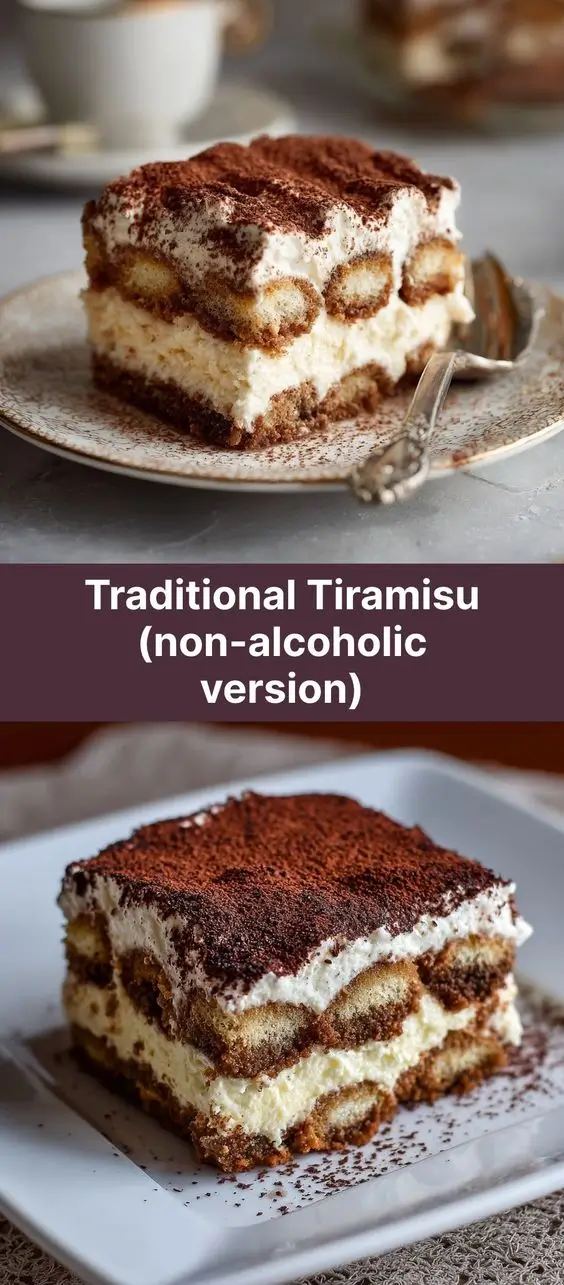
Traditional Tiramisu (Non-Alcoholic Version)
Introduction
Tiramisu is one of the most beloved Italian desserts worldwide, known for its rich layers of coffee-soaked ladyfingers and creamy mascarpone filling. The name “tiramisu” translates to “pick me up” in Italian, a nod to its energizing combination of caffeine and sugar. This classic dessert has become a staple at dinner parties, family gatherings, and fine dining establishments across the globe. While traditional recipes often include liquor such as Marsala wine, rum, or coffee liqueur, this non-alcoholic version preserves all the depth and complexity of flavor without compromising on authenticity. Perfect for children, pregnant women, or anyone avoiding alcohol, this rendition delivers the same luxurious texture and indulgent taste that makes tiramisu so irresistible.
The History
The origins of tiramisu are both rich and debated, with multiple regions of Italy laying claim to its creation. Most food historians agree that modern tiramisu emerged in the late 20th century, likely in the Veneto region, particularly around Treviso. One popular story attributes the dessert to a restaurant called Le Beccherie in the 1960s or 70s, where it was crafted as an elegant after-dinner treat. Others suggest it evolved from older Italian desserts like sbatudin or semifreddo al caffè, which combined eggs, sugar, and coffee. What sets tiramisu apart is the use of mascarpone cheese—a creamy, mild dairy product native to Lombardy—which gives the dessert its signature velvety consistency. Over time, variations have popped up globally, but the essence remains: layers of soft, espresso-dipped ladyfingers layered with sweetened mascarpone cream, finished with cocoa powder. Its popularity soared in the 1980s and 1990s, becoming a symbol of Italian culinary elegance.
Ingredients Breakdown
- Mascarpone Cheese: The star ingredient, mascarpone provides a rich, buttery base with a smooth texture. It’s essential to use high-quality mascarpone for optimal creaminess.
- Eggs: Traditionally, tiramisu uses raw egg yolks for richness and whole eggs are sometimes separated—whites whipped separately for volume. In this version, pasteurized eggs are recommended for safety due to their uncooked nature.
- Sugar: Granulated sugar adds sweetness and helps stabilize the egg yolk mixture. Some variations use powdered sugar for smoother integration.
- Ladyfingers (Savoiardi): These light, dry sponge biscuits absorb liquid well while maintaining structure. They form the foundation of each layer.
- Strong Brewed Coffee: Cooled espresso or strongly brewed coffee replaces the alcohol, infusing the ladyfingers with deep flavor. Decaf can be used if preferred.
- Cocoa Powder: Unsweetened Dutch-processed or natural cocoa is dusted on top for a bittersweet finish and visual appeal.
- Vanilla Extract (optional): A splash enhances aroma and complements the coffee notes without overpowering.
- Chocolate Shavings or Cinnamon (optional garnish): For added presentation flair.
Step-by-Step Recipe
- Prepare the Coffee Mixture: Brew 1½ cups of strong coffee (about 3–4 shots of espresso) and allow it to cool completely. You may chill it in the refrigerator for faster cooling. Avoid using hot coffee, as it can make the ladyfingers soggy and compromise texture.
- Separate the Eggs: Crack 4 large eggs and separate the yolks from the whites. Use a clean bowl for each part to prevent fat contamination when whipping the whites.
- Whip the Yolks: In a heatproof bowl, combine the egg yolks with ½ cup granulated sugar. Place the bowl over a pot of simmering water (double boiler method), stirring constantly for 5–7 minutes until the mixture becomes pale, thick, and reaches about 160°F (71°C) to ensure safety. Remove from heat and continue whisking until cooled to room temperature.
- Add Mascarpone: Gently fold in 16 oz (450g) of cold mascarpone cheese into the yolk mixture until smooth and fully incorporated. Be careful not to overmix, which could lead to curdling. Add 1 teaspoon of vanilla extract if desired.
- Whip the Egg Whites: In a separate clean, dry bowl, beat the egg whites with a pinch of salt until soft peaks form. Gradually add 2 tablespoons of sugar and continue beating until glossy stiff peaks appear. This step adds lightness to the filling.
- Combine Mixtures: Carefully fold the whipped egg whites into the mascarpone mixture in two additions, preserving as much air as possible. The result should be fluffy, smooth, and mousse-like.
- Dip the Ladyfingers: Working quickly, dip each ladyfinger into the cooled coffee for 1–2 seconds per side—just enough to moisten but not disintegrate. Arrange them in a single layer at the bottom of a 9×13 inch dish or individual serving glasses.
- Layer the Cream: Spread half of the mascarpone mixture evenly over the soaked ladyfingers.
- Repeat Layers: Add another layer of briefly dipped ladyfingers, followed by the remaining cream. Smooth the top with a spatula for a clean finish.
- Dust with Cocoa: Sift a generous amount of unsweetened cocoa powder over the final layer using a fine-mesh sieve. For extra elegance, repeat with a second sift just before serving.
- Chill: Cover with plastic wrap and refrigerate for at least 6 hours, preferably overnight. This allows flavors to meld and textures to set properly.
Tips
- Use Fresh Ingredients: Ensure your eggs are fresh and your mascarpone hasn’t been frozen, as freezing alters its texture.
- Don’t Soak Too Long: Over-soaking ladyfingers will turn your tiramisu mushy. Quick dips are key.
- Temperature Matters: Keep mascarpone cold and add it slowly to the warm yolk mixture to avoid separation.
- Double Boiler Safety: Cooking the yolks gently ensures they’re safe to consume while retaining their silky texture.
- Clean Equipment: Any trace of grease or yolk in the egg white bowl can prevent proper whipping.
- Refrigeration Time: Do not skip chilling—this step is crucial for achieving the right firmness and flavor balance.
- Serving Temperature: Serve cold but let sit out for 5–10 minutes before serving for best mouthfeel.
Variations and Customizations
- Decaf Tiramisu: Ideal for evening servings or sensitive individuals, simply substitute regular coffee with decaffeinated espresso.
- Dairy-Free Option: Use plant-based mascarpone alternatives made from cashews or coconut, though texture may vary slightly.
- Vegan Tiramisu: Replace eggs with aquafaba (chickpea brine), which whips beautifully, and use vegan ladyfingers and dairy-free mascarpone.
- Fruit Infusions: Add thin layers of fresh berries like raspberries or strawberries between the layers for a fruity twist.
- Chocolate Lover’s Version: Mix melted dark chocolate into the mascarpone or sprinkle chocolate chips between layers.
- Spiced Tiramisu: Add a pinch of cinnamon, nutmeg, or cardamom to the coffee for warmth and complexity.
- Individual Jars: Layer in mason jars or parfait glasses for elegant, portion-controlled servings perfect for parties.
- Kid-Friendly Twist: Substitute coffee with strong brewed chamomile tea mixed with a bit of maple syrup and vanilla for a sweet, gentle flavor.
Health Considerations and Nutritional Value
While tiramisu is undeniably decadent, understanding its nutritional profile helps in making informed choices. A typical serving (1/12 of a 9×13 pan) contains approximately:
- Calories: 300–350
- Fat: 18–22g (mostly from mascarpone and egg yolks)
- Saturated Fat: 10–12g
- Carbohydrates: 28–32g (mainly from sugar and ladyfingers)
- Protein: 6–8g (from eggs and dairy)
- Sodium: 60–80mg
- Sugar: 20–25g
Considerations:
- Raw Eggs: Although cooking the yolks reduces risk, immunocompromised individuals, pregnant women, and young children should consult a healthcare provider before consuming raw or undercooked eggs. Pasteurized eggs are strongly recommended.
- High Fat Content: Due to mascarpone, this dessert is rich and calorie-dense. Moderation is advised, especially for those managing cholesterol or heart health.
- Sugar Levels: High sugar content means it’s best enjoyed occasionally, particularly for diabetics. Sugar substitutes like erythritol or monk fruit can be tested, though results may vary in texture.
- Caffeine: Even without alcohol, the coffee component contains caffeine (~60–80mg per serving), so avoid late-night servings for children or caffeine-sensitive individuals.
- Balanced Indulgence: Pair with a fruit salad or light herbal tea to balance the meal and aid digestion.
Ingredients
- 4 large eggs, separated (preferably pasteurized)
- ⅔ cup granulated sugar, divided
- 16 oz (450g) mascarpone cheese, cold
- 1½ cups strong brewed coffee or espresso, cooled
- 24–30 ladyfingers (savoiardi)
- ¼ cup unsweetened cocoa powder (Dutch-processed preferred)
- 1 tsp pure vanilla extract (optional)
- Pinch of salt
- Optional: chocolate shavings, cinnamon, or edible gold dust for garnish
Directions
- Brew 1½ cups of strong coffee and set aside to cool completely in the refrigerator.
- In a heatproof bowl, whisk together egg yolks and ½ cup sugar. Set over a saucepan of simmering water (double boiler), stirring continuously for 5–7 minutes until thick, pale, and warm to touch (~160°F).
- Remove from heat and let cool for 5 minutes. Gradually beat in mascarpone until smooth. Stir in vanilla extract if using. Set aside.
- In another bowl, beat egg whites with a pinch of salt until foamy. Gradually add 2 tablespoons sugar and whip until stiff, glossy peaks form.
- Gently fold the whipped egg whites into the mascarpone mixture in two batches, being careful not to deflate the mixture.
- Quickly dip each ladyfinger into the cooled coffee—one second per side—and arrange in a single layer in a 9×13 inch glass dish.
- Spread half of the cream mixture evenly over the ladyfingers.
- Add a second layer of dipped ladyfingers, then top with the remaining cream. Smooth the surface with a spatula.
- Sift cocoa powder generously over the top using a fine sieve. For best appearance, chill for 1 hour, re-sift, and chill again.
- Cover with plastic wrap and refrigerate for at least 6 hours, or ideally overnight.
- Before serving, optionally garnish with chocolate curls, mint leaves, or a sprinkle of cinnamon.
- Slice with a sharp knife dipped in hot water for clean cuts.
FAQ
- Can I make tiramisu ahead of time?
- Absolutely! Tiramisu tastes even better after 24 hours. It can be stored covered in the fridge for up to 4 days.
- Is it safe to eat raw eggs in tiramisu?
- We recommend using pasteurized eggs or heating the yolks to 160°F to reduce any risk of salmonella.
- Can I freeze tiramisu?
- Yes, but texture may change slightly upon thawing. Wrap tightly and freeze for up to 2 months. Thaw in the fridge overnight and re-dust with cocoa before serving.
- Why did my tiramisu turn out runny?
- This usually happens from over-soaking the ladyfingers or adding warm ingredients. Always use cooled components and dip briefly.
- Can I use Greek yogurt instead of mascarpone?
- You can substitute partially, but the flavor and richness will differ significantly. A blend of Greek yogurt and cream cheese may work better than straight yogurt.
- Are there store-bought shortcuts?
- Yes—some use pre-made custard or whipped topping, but homemade versions offer superior taste and authenticity.
- Can I make it without eggs?
- Yes, though the texture changes. Some recipes use whipped heavy cream folded into mascarpone, but stability may decrease.
- What type of coffee is best?
- Espresso or dark roast drip coffee works best. Avoid flavored coffees that might clash with cocoa.
- How do I keep the cocoa powder from getting wet?
- Dust it just before serving, or chill the dessert, dust, chill again, then serve for a crisp, dry finish.
Summary
Traditional non-alcoholic tiramisu delivers all the luxurious flavor and creamy texture of the classic Italian dessert without a drop of liquor—perfect for every palate and occasion.
With layers of espresso-kissed ladyfingers and velvety mascarpone cream, finished with a dusting of cocoa, this timeless treat is sure to impress and satisfy.