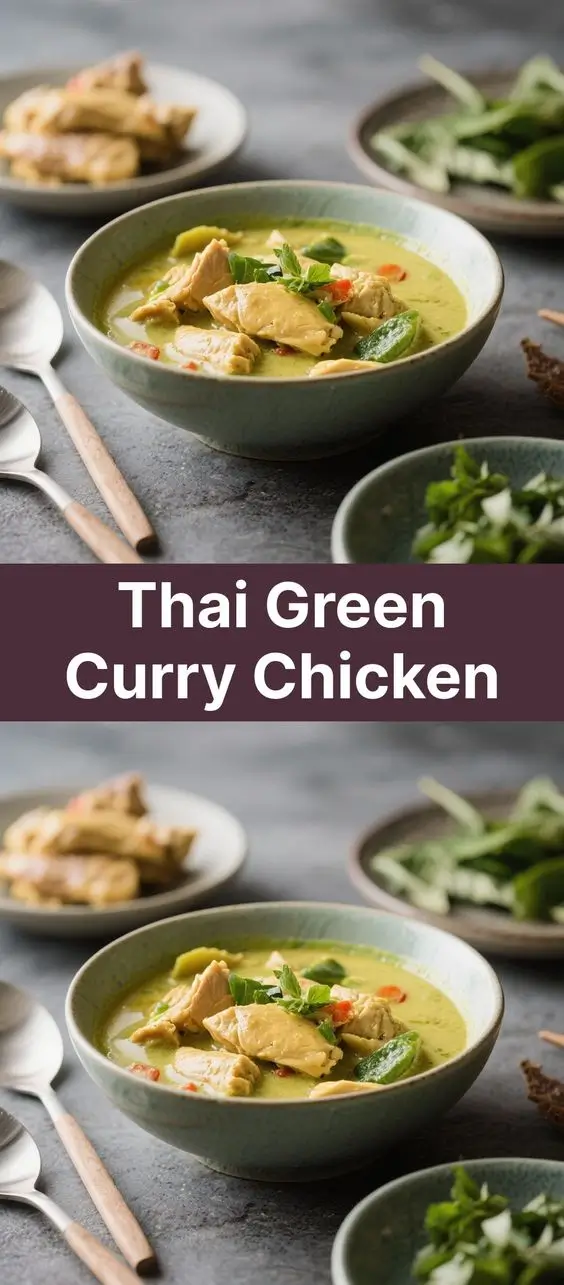
Thai Green Curry Chicken: A Flavorful Journey Through Tradition and Taste
Introduction
Thai Green Curry Chicken, known in Thai as Kaeng Khiao Wan Gai, is one of the most beloved dishes in Thai cuisine. Celebrated for its vibrant green color, aromatic fragrance, and balanced blend of spicy, sweet, salty, and creamy flavors, this dish offers a true taste of Thailand’s culinary artistry. Unlike curries from other parts of the world, Thai green curry relies heavily on fresh herbs, coconut milk, and a complex paste made from green chilies and aromatic spices. Whether served over steamed jasmine rice or enjoyed with roti bread, Thai Green Curry Chicken is a comforting yet exotic meal that brings warmth and depth to any dining table.
The History
The origins of Thai green curry can be traced back to central Thailand, particularly around the Bangkok region, where royal and home kitchens alike perfected the balance of flavors that define Thai cuisine. While curry traditions were influenced by Indian and Malaysian cuisines through trade routes, Thais transformed these concepts into something uniquely their own. The use of fresh green chilies instead of dried red ones gave birth to the “green” variety of curry, distinguishing it from its red and yellow counterparts.
Historically, curries in Thailand were not just meals but reflections of social status, regional availability, and seasonal ingredients. Green curry was considered more refined due to the labor-intensive preparation of the curry paste, which traditionally required pounding ingredients in a stone mortar. Over time, as blenders and food processors became accessible, the dish spread beyond royal courts into everyday homes and street food stalls across Thailand. Today, Thai Green Curry Chicken remains a staple in Thai restaurants worldwide, admired for its complexity and elegance.
Ingredients Breakdown
The magic of Thai Green Curry Chicken lies in its ingredients—each playing a vital role in creating layers of flavor and texture. Here’s a detailed look at what goes into an authentic version:
- Green Curry Paste: The heart of the dish. Traditionally made from fresh green chilies, lemongrass, galangal, kaffir lime peel, garlic, shallots, cilantro roots, cumin, coriander seeds, and shrimp paste. This fragrant blend gives the curry its signature heat and citrusy aroma.
- Chicken: Boneless, skinless chicken thighs or breast are commonly used. Thighs are preferred for their juiciness and ability to absorb flavors.
- Coconut Milk: Full-fat coconut milk provides a rich, creamy base that tempers the spiciness of the curry paste. It’s typically added in two stages—first the thick cream for frying the paste, then the thinner milk for simmering.
- Bell Peppers: Red or green bell peppers add sweetness and crunch, balancing the heat and enhancing the visual appeal.
- Bamboo Shoots: Often included for texture and mild earthiness. Canned bamboo shoots work well and are widely available.
- Thai Eggplant (optional): Small round eggplants commonly used in Thailand; if unavailable, substitute with zucchini or regular eggplant cut into chunks.
- Fish Sauce: Adds umami and saltiness, essential for authentic Thai flavor.
- Palm Sugar (or brown sugar): Balances the heat and salt with a subtle sweetness.
- Kaffir Lime Leaves: Intensely aromatic leaves that infuse the curry with a distinctive citrus perfume.
- Basil: Thai holy basil (kaphrao) or sweet basil is added at the end for freshness and a peppery note.
- Vegetable Oil: For sautéing the curry paste.
Step-by-Step Recipe
- Prepare Ingredients: Cut 1 lb (450g) of chicken into bite-sized pieces. Slice 1 red bell pepper, prepare ½ cup bamboo shoots, and have 3–4 kaffir lime leaves torn in half. Measure out 2 cups coconut milk, separating the thick cream from the thinner liquid if possible.
- Sauté the Curry Paste: Heat 1–2 tablespoons of vegetable oil in a large wok or pot over medium heat. Add 3–4 tablespoons of green curry paste (homemade or store-bought). Stir-fry for 1–2 minutes until highly fragrant—this step “blooms” the spices and deepens the flavor.
- Add Coconut Cream: Pour in the thick part of the coconut milk. Simmer gently for 3–5 minutes, stirring frequently, allowing the oil to separate slightly and the paste to integrate fully into the cream.
- Brown the Chicken: Add the chicken pieces and stir to coat them in the curry mixture. Cook for 4–5 minutes until the outside turns opaque.
- Add Remaining Coconut Milk: Pour in the rest of the coconut milk along with ½ cup water or chicken broth to achieve desired consistency. Bring to a gentle simmer.
- Add Vegetables: Stir in bell peppers, bamboo shoots, and Thai eggplants (if using). Add torn kaffir lime leaves. Simmer for 8–10 minutes until chicken is cooked through and vegetables are tender-crisp.
- Season the Curry: Add 1–2 teaspoons fish sauce, 1 teaspoon palm sugar, and adjust to taste. Remember: the ideal green curry should balance spicy, salty, sweet, and creamy elements.
- Finish with Herbs: Just before removing from heat, stir in a generous handful of fresh Thai basil or sweet basil. Turn off the heat and let sit for 1–2 minutes to preserve the herb’s aroma.
- Serve: Ladle hot over steamed jasmine rice. Garnish with extra basil leaves and a sprinkle of red chili slices for presentation.
Tips
- Use Homemade Curry Paste When Possible: While store-bought pastes are convenient, homemade versions offer superior freshness and control over ingredients. Make a large batch and freeze in ice cube trays for future use.
- Don’t Boil Vigorously: Coconut milk can separate or become oily if boiled too hard. Keep the heat at a gentle simmer.
- Layer the Coconut Milk: Start with the thick cream to fry the paste, then add the thinner milk to extend the sauce. This technique enhances flavor absorption.
- Balance Flavors Gradually: Add fish sauce and sugar in small increments, tasting after each addition. The goal is harmony, not dominance of one flavor.
- Add Vegetables Last: To retain texture and color, add delicate vegetables like bell peppers toward the end of cooking.
- Use Fresh Kaffir Lime Leaves: Dried versions lack potency. If you can’t find fresh, freeze extras when in season—they keep well.
- Let It Rest: Allow the curry to sit for 5–10 minutes after cooking. This helps flavors meld and intensify.
Variations and Customizations
Thai Green Curry Chicken is wonderfully adaptable. Here are some popular variations:
- Vegetarian/Vegan: Replace chicken with tofu, mushrooms, or mixed vegetables. Use vegan fish sauce or soy sauce, and ensure the curry paste is shrimp-free.
- Seafood Green Curry: Substitute chicken with shrimp, scallops, or white fish. Add seafood during the last few minutes of cooking to avoid overcooking.
- Spice Level Adjustment: Reduce the amount of curry paste or remove seeds from green chilies when making your own paste for a milder version. Conversely, add bird’s eye chilies for extra heat.
- Different Proteins: Try with beef, pork, duck, or even quail for unique twists.
- Noodle Version: Serve over rice noodles or glass noodles for a “dry” curry noodle bowl.
- Creamier Texture: Add a spoonful of peanut butter or cashew butter for richness and a slight nutty undertone.
- Regional Twists: In southern Thailand, they might add turmeric or tamarind for tanginess. Northern styles may include forest herbs and wild greens.
Health Considerations and Nutritional Value
While rich and flavorful, Thai Green Curry Chicken can be part of a balanced diet when prepared mindfully:
- Protein Source: Chicken provides lean protein, supporting muscle maintenance and satiety.
- Healthy Fats: Coconut milk contains medium-chain triglycerides (MCTs), which may support metabolism, though it’s high in saturated fat—moderation is key.
- Low Carbohydrates: Naturally low in carbs, especially when served with minimal rice or alternative bases like cauliflower rice.
- Vitamins & Minerals: Bell peppers are rich in vitamin C, while kaffir lime leaves and lemongrass contain antioxidants and anti-inflammatory compounds.
- Sodium Watch: Fish sauce and store-bought curry pastes can be high in sodium. Opt for low-sodium versions or reduce added amounts.
- Calorie Control: To reduce calories, use light coconut milk or dilute with more broth, and increase vegetable content.
Approximate nutritional value per serving (with 1 cup coconut milk and 4 oz chicken, without rice):
- Calories: ~350–400
- Protein: 25–30g
- Fat: 25–30g (mostly from coconut)
- Carbohydrates: 8–12g
- Sodium: 600–900mg (varies with fish sauce)
Ingredients
- 3–4 tbsp Thai green curry paste (homemade or store-bought)
- 1 lb (450g) boneless chicken thighs or breasts, cut into bite-sized pieces
- 2 cups (400ml) full-fat coconut milk (divided)
- 1 red bell pepper, sliced
- ½ cup canned bamboo shoots, drained
- ¼ cup Thai eggplants or zucchini, quartered (optional)
- 3–4 kaffir lime leaves, torn
- 1–2 tsp fish sauce (to taste)
- 1 tsp palm sugar or brown sugar
- 1 tbsp vegetable oil
- ½ cup fresh Thai basil or sweet basil leaves
- Steamed jasmine rice, for serving
- Red chili slices, for garnish (optional)
Directions
- Heat oil in a large pot or wok over medium heat. Add green curry paste and stir-fry for 1–2 minutes until fragrant.
- Add the thick portion of coconut milk (the cream that rises to the top) and simmer for 3–5 minutes, stirring often, until the oil begins to separate.
- Add chicken pieces and cook for 4–5 minutes, stirring to coat with the curry mixture, until lightly browned.
- Pour in the remaining coconut milk and ½ cup water or broth. Stir well and bring to a gentle simmer.
- Add bell peppers, bamboo shoots, optional eggplants, and torn kaffir lime leaves. Simmer for 8–10 minutes, until chicken is cooked and vegetables are tender.
- Season with fish sauce and palm sugar. Taste and adjust seasoning—add more sugar for sweetness, fish sauce for saltiness, or curry paste for heat.
- Turn off heat and stir in fresh basil leaves.
- Serve immediately over hot jasmine rice, garnished with extra basil and chili slices if desired.
FAQ
Can I make Thai Green Curry Chicken ahead of time?
Yes, the flavors often deepen when allowed to sit. Store in an airtight container in the refrigerator for up to 3 days. Reheat gently on the stove to prevent coconut milk from separating.
Can I freeze Thai Green Curry Chicken?
Absolutely. Freeze in portion-sized containers for up to 2 months. Thaw overnight in the fridge and reheat slowly, adding a splash of water or coconut milk if needed.
Is Thai green curry very spicy?
It can be, depending on the paste. Traditional versions use fresh green chilies and can be quite hot. Adjust the amount of paste or deseed the chilies when making your own to control heat.
What’s the difference between green, red, and yellow curry?
The primary difference is the curry paste. Green uses fresh green chilies, red uses dried red chilies, and yellow includes turmeric and spices like cumin and coriander. Green curry tends to be more herbal and slightly sweeter than red.
Where can I find kaffir lime leaves and Thai basil?
These are available in Asian grocery stores, farmers markets, or online. Some nurseries sell kaffir lime plants if you’d like to grow your own.
Can I use canned coconut milk? Is fresh better?
Canned coconut milk works perfectly and is standard in most recipes. Fresh coconut milk is traditional but less practical for home cooks. Just shake the can well before using.
Summary
Thai Green Curry Chicken is a harmonious blend of spicy, creamy, sweet, and aromatic flavors, rooted in centuries of Thai culinary tradition. With tender chicken, fragrant herbs, and a luscious coconut base, it’s a dish that delights the senses and warms the soul.