Introduction
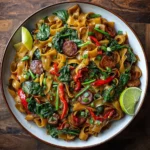
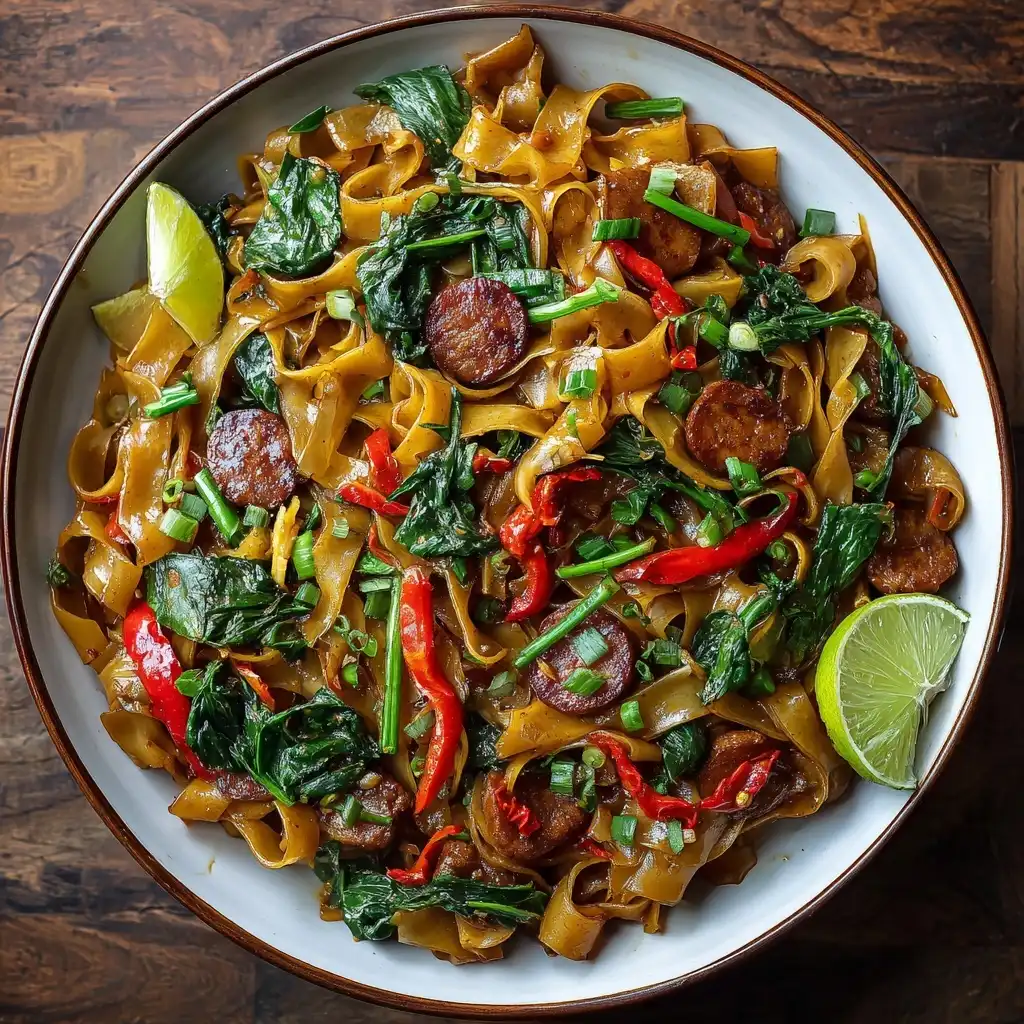
Thai Drunken Noodles—known in Thailand as Pad Kee Mao (ผัดขี้เมา)—are a fiery, aromatic, and deeply flavorful stir-fry that captures the bold soul of Thai street food. Unlike milder Thai noodle dishes like Pad Thai, Drunken Noodles are unapologetically spicy, savory, and herb-forward, featuring wide rice noodles tossed with chilies, garlic, basil, fish sauce, and your choice of protein. The name—often mistranslated as “drunk noodles”—is believed to originate from either the dish’s traditional role as a hangover cure (thanks to its heat, sodium, and umami richness) or from the Thai phrase “kee mao,” meaning “drunkard” or “intoxicated,” evoking the dish’s bold, exhilarating, almost overwhelming sensory impact. Whether enjoyed at a sizzling Bangkok sidewalk stall or recreated in a home kitchen, Pad Kee Mao delivers an electrifying balance of heat, salt, sweet, and fragrance—a true celebration of Thai culinary philosophy: harmony through contrast.
The History
The origins of Pad Kee Mao are rooted in the vibrant, improvisational culture of Thai street cooking, where resourcefulness, regional ingredients, and rapid-fire technique converge. While no single documented “invention date” exists, food historians and Thai culinary anthropologists trace the dish’s emergence to the mid-to-late 20th century, particularly flourishing alongside the rise of urban street food economies in Bangkok and Chiang Mai. Its name has sparked enduring debate: some linguists argue that “kee mao” refers not to alcohol intoxication but to the pungent, heady aroma of holy basil (Ocimum tenuiflorum)—locally called bai grapow—whose scent can be so intense it feels “intoxicating.” Others suggest the dish gained popularity among late-night revelers seeking a restorative, spicy, salty meal after drinking—hence its reputation as a “drunk food.” Still another theory posits that the name is a playful, colloquial exaggeration—like calling something “killer” or “mind-blowing”—emphasizing how boldly flavorful and addictive the dish is. Regardless of etymology, Pad Kee Mao reflects core Thai principles: minimal waste (using day-old noodles), maximum flavor layering (via fermented fish sauce, dried chilies, and fresh herbs), and dynamic texture (chewy noodles, crisp vegetables, tender protein). It stands as a delicious testament to how everyday necessity, cultural nuance, and regional pride combine to create an iconic global favorite.
Ingredients Breakdown
Understanding each ingredient’s role is essential to mastering authentic Pad Kee Mao—not just for taste, but for achieving proper balance and texture:
- Rice Noodles (Sen Yai): Wide, flat, dried or fresh rice noodles (typically ½-inch to ¾-inch wide). Their chewy, slightly slippery texture absorbs sauce without becoming mushy. Dried noodles require soaking; fresh noodles need only a quick blanch. Never substitute spaghetti or ramen—they lack the neutral starch base and structural integrity needed.
- Fish Sauce (Nam Pla): The irreplaceable umami backbone. Premium, first-press Thai fish sauce (e.g., Red Boat, Tiparos, or Squid brand) delivers clean, briny depth—not fishiness. It functions as both seasoning and salt source; low-quality or overly fermented versions introduce off-flavors.
- Dark Soy Sauce: Adds color, subtle sweetness, and molasses-like richness. Used sparingly to avoid bitterness—never substituted with regular soy sauce, which lacks viscosity and caramel notes.
- Oyster Sauce: Contributes glossy sheen, savory-sweet body, and a velvety mouthfeel. Opt for vegetarian oyster sauce if avoiding shellfish, though traditional versions use oyster extract.
- Fermented Bean Curd (optional but traditional): A small cube adds deep, funky, almost cheese-like complexity—common in Northern and Isaan preparations.
- Fresh Thai Bird’s Eye Chilies (Prik Kee Noo): The soul of the heat. Whole, sliced, or pounded—these tiny red chilies pack capsaicin intensity and bright, fruity heat. Quantity is highly adjustable, but authenticity demands their presence.
- Garlic & Shallots: Minced or thinly sliced, they form the aromatic base. Garlic provides pungent warmth; shallots add sweet-onion depth and crisp texture when stir-fried quickly.
- Holy Basil (Bai Gra Prow): Non-negotiable for authenticity. Distinct from sweet or lemon basil, holy basil has purple stems, serrated leaves, and a peppery, clove-anise aroma that intensifies under high heat. It wilts beautifully and releases volatile oils that define the dish’s fragrance.
- Protein: Traditionally pork or chicken, but beef, shrimp, tofu, or even duck are common. Thinly sliced, marinated briefly in soy and cornstarch for tenderness and bite.
- Vegetables: Long beans (cut diagonally), Chinese broccoli (gai lan), baby corn, carrots, or bell peppers—added for crunch, color, and textural contrast. Avoid watery veggies like zucchini or tomato, which release moisture and steam the noodles.
- Neutral High-Smoke-Point Oil: Peanut, vegetable, or refined coconut oil—essential for wok hei (the “breath of the wok”) and preventing sticking during high-heat stir-frying.
Step-by-Step Recipe
- Prep the Noodles: For dried rice noodles, soak in room-temperature water for 45–60 minutes until pliable but still slightly firm (they’ll cook further in the wok). Drain thoroughly and toss with 1 tsp neutral oil to prevent clumping. For fresh noodles, skip soaking—just separate gently and lightly coat with oil.
- Marinate the Protein: Combine 8 oz thinly sliced protein with 1 tbsp light soy sauce, 1 tsp cornstarch, and 1 tsp rice wine or dry sherry. Let sit 15 minutes while prepping other ingredients.
- Prepare Aromatics & Veggies: Mince 4–6 cloves garlic and 3–4 medium shallots. Slice 5–10 Thai bird’s eye chilies (seeds in for max heat; removed for mild). Cut 1 cup long beans into 1½-inch pieces. Blanch beans 30 seconds in boiling water; drain and rinse under cold water to lock in crunch and color. Chop 1 cup holy basil leaves (stems optional).
- Mix the Sauce: In a small bowl, whisk together 3 tbsp fish sauce, 1½ tbsp dark soy sauce, 1 tbsp oyster sauce, 1 tsp palm sugar (or brown sugar), and ¼ tsp white pepper. Set aside. Optional: mash ½ cube fermented bean curd into the sauce for extra depth.
- High-Heat Stir-Fry Sequence: Heat a 14-inch carbon steel wok or heavy-bottomed skillet over maximum heat until smoking. Add 2 tbsp oil. Swirl to coat. Immediately add marinated protein in a single layer—let sear 30 seconds undisturbed, then stir-fry 1–2 minutes until 80% cooked. Remove and set aside.
- Build Flavor Base: Add another 1 tbsp oil to the hot wok. Toss in garlic, shallots, and chilies. Stir-fry 15–20 seconds until fragrant but not browned—this is critical. Burnt garlic turns bitter.
- Add Vegetables: Toss in blanched long beans and any other sturdy vegetables (e.g., sliced carrots or baby corn). Stir-fry 1 minute until crisp-tender.
- Combine & Cook Noodles: Return protein to wok. Add drained noodles. Pour sauce evenly over all. Using two spatulas or tongs, gently lift and fold—never press or stir aggressively—to coat evenly without breaking noodles. Cook 2–3 minutes on high heat, tossing constantly, until noodles are heated through, slightly blistered at edges, and sauce is absorbed (not pooled).
- Finish with Basil: Remove from heat. Immediately scatter holy basil leaves over hot noodles. Toss once or twice—just enough to wilt leaves and release their aroma. Overcooking basil makes it bitter and slimy.
- Serve Immediately: Plate while steaming hot. Garnish with extra chilies, lime wedges, and a light sprinkle of roasted chili flakes or crushed peanuts for contrast.
Tips
- Wok Hei Is Non-Negotiable: Achieve real wok hei—the smoky, charred essence—by using maximum heat, preheating the wok until wisps of smoke rise, and keeping ingredients moving. If your stove lacks BTU power, work in smaller batches and don’t overcrowd the pan.
- Noodle Drainage Is Everything: Excess water = steamed, gummy noodles. After soaking or blanching, spread noodles on a clean kitchen towel and pat *very* dry—or use a salad spinner. Even 1 tsp of water can sabotage texture.
- Prep Mise en Place Religiously: Pad Kee Mao cooks in under 5 minutes. Have every ingredient measured, chopped, and within arm’s reach before heating the wok. No exceptions.
- Chili Control Starts Early: Adjust heat by seeding chilies *before* slicing—and remember: the white ribs and seeds hold 80% of the capsaicin. For family-friendly versions, use 1–2 seeded chilies + ½ tsp crushed red pepper as backup heat.
- Don’t Skip the Sugar: Palm sugar isn’t for sweetness alone—it balances fish sauce’s saltiness, rounds out acidity, and helps caramelize the sauce. Substitute with light brown sugar, but never omit.
- Holy Basil Substitution Warning: Sweet basil lacks the signature clove-pepper notes and wilts too fast. Lemon basil introduces citrus that clashes. If unavailable, use a 50/50 mix of Thai sweet basil and fresh mint—but know it’s a compromise, not a substitute.
- Acid at the End: A final squeeze of fresh lime juice just before serving brightens the entire dish, cutting through richness and lifting aromatics. Never add lime to the hot wok—it will curdle and taste sour.
- Cook in Batches for Crowds: Doubling the recipe in one wok leads to steaming instead of searing. Cook proteins and noodles separately, then combine with sauce and basil at the end.
Variations and Customizations
Pad Kee Mao is inherently adaptable—regional, seasonal, and personal preferences shape countless iterations across Thailand and beyond:
- Regional Twists: In Isaan (Northeastern Thailand), it’s often made with fermented fish paste (pla ra) and sticky rice noodles. In Southern Thailand, turmeric-infused noodles and extra kaffir lime leaves appear. Bangkok versions emphasize holy basil and generous chilies; Chiang Mai leans toward milder heat and added pickled mustard greens.
- Protein Variations: Pork shoulder (thinly sliced against the grain), free-range chicken thigh, grass-fed flank steak, jumbo shrimp (peeled, deveined, tails on), extra-firm tofu (pressed and pan-seared), or even minced pork and squid for a seafood-forward version.
- Vegan/Vegetarian Pad Kee Mao: Replace fish sauce with vegan fish sauce (fermented seaweed + soy), use mushroom oyster sauce, and add crumbled fried tofu or tempeh. Boost umami with dried shiitake soaking liquid and a dash of nutritional yeast.
- Low-Carb/Keto Option: Swap rice noodles for shirataki noodles (rinse well and dry-fry in a pan to remove excess water) or spiralized zucchini (salted, drained, and patted dry). Increase protein and healthy fats (avocado slices, toasted sesame oil).
- “Drunken Noodle Bowl” Fusion: Serve over cauliflower rice or quinoa, topped with pickled daikon, crushed wasabi peas, nori strips, and a drizzle of spicy mayo.
- Breakfast Drunken Noodles: Top with a runny-yolk fried egg, crispy fried shallots, and a splash of chili vinegar.
- Seafood Medley: Combine shrimp, scallops, squid rings, and mussels—add delicate seafood last to avoid overcooking.
- Dessert-Inspired Twist (for adventurous palates): A whisper of grated coconut and star anise in the sauce, finished with toasted coconut flakes—rare but found in some Bangkok dessert cafes experimenting with savory-sweet boundaries.
Health Considerations and Nutritional Value
A 1.5-cup serving (approx. 400g) of homemade Pad Kee Mao with chicken and vegetables contains roughly:
- Calories: 420–480 kcal
- Protein: 28–32g (excellent source; supports muscle repair and satiety)
- Carbohydrates: 52–60g (primarily complex carbs from rice noodles; glycemic load moderated by fiber-rich veggies and healthy fats)
- Fat: 10–14g (mostly unsaturated from cooking oil; minimal saturated fat)
- Fiber: 4–6g (from long beans, broccoli, carrots—supports digestion and gut health)
- Sodium: 950–1,300mg (moderate; easily reduced by using low-sodium fish sauce, halving dark soy, and omitting added salt)
Key Health Highlights:
- Anti-Inflammatory Powerhouse: Thai chilies contain capsaicin (linked to metabolism boost and pain reduction); garlic and shallots offer allicin and quercetin; holy basil is rich in eugenol and rosmarinic acid—potent antioxidants.
- Gut-Friendly Ferments: Traditional fish sauce and fermented bean curd provide naturally occurring probiotics and bioactive peptides that support microbiome diversity.
- No Refined Sugars: Authentic recipes use palm sugar—a low-glycemic, mineral-rich sweetener containing potassium, magnesium, and inulin (a prebiotic fiber).
- Gluten-Free Potential: Naturally GF when made with pure rice noodles and GF-certified fish/oyster sauces (always verify labels—many oyster sauces contain wheat).
- Cautions: Individuals with GERD or IBS may experience discomfort from high spice, garlic, or ferment content. Reduce chilies, omit shallots, or use low-FODMAP substitutions (e.g., green onion tops instead of shallots). Those with hypertension should monitor sodium—opt for reduced-sodium fish sauce and limit added soy.
Ingredients
- 8 oz (225g) dried wide rice noodles (sen yai) or 12 oz fresh
- 8 oz (225g) boneless chicken breast or thigh, thinly sliced
- 3 tbsp premium Thai fish sauce (nam pla)
- 1½ tbsp Thai dark soy sauce
- 1 tbsp oyster sauce (vegetarian option available)
- 1 tsp palm sugar (or light brown sugar), finely grated
- ¼ tsp freshly ground white pepper
- 2 tbsp neutral oil (peanut, vegetable, or refined coconut), divided
- 4–6 cloves garlic, minced
- 3–4 medium shallots, thinly sliced
- 5–10 Thai bird’s eye chilies (prik kee noo), sliced (seeds in or out per preference)
- 1 cup long beans (yardlong beans), cut diagonally into 1½-inch pieces
- 1 cup holy basil leaves (bai gra pow), stems removed
- 1 medium red bell pepper, thinly sliced (optional, for color and crunch)
- Lime wedges and extra chilies, for garnish
Optional Enhancements: ½ cube fermented bean curd, 2 tbsp blanched Chinese broccoli (gai lan), ¼ cup roasted peanuts, 1 tsp chili oil for finishing.
Directions
- Soak dried noodles in room-temperature water for 45–60 minutes until flexible but still slightly resistant to the bite. Drain thoroughly in a colander, then spread on a clean kitchen towel and pat completely dry. Toss with 1 tsp neutral oil to prevent sticking. (Skip soaking for fresh noodles—just separate and lightly oil.)
- In a small bowl, combine chicken slices with 1 tbsp light soy sauce, 1 tsp cornstarch, and 1 tsp rice wine. Marinate 15 minutes.
- Bring a small pot of water to boil. Blanch long beans for 30 seconds. Drain, rinse under cold water, and set aside.
- In another small bowl, whisk together fish sauce, dark soy sauce, oyster sauce, palm sugar, and white pepper. If using fermented bean curd, mash it into the sauce until dissolved.
- Heat a 14-inch wok or heavy skillet over the highest possible heat until smoking. Add 1½ tbsp oil and swirl to coat.
- Add marinated chicken in a single layer. Let sear 30 seconds, then stir-fry 1–2 minutes until 80% cooked. Transfer to a clean plate.
- Add remaining ½ tbsp oil to the hot wok. Immediately add garlic, shallots, and chilies. Stir-fry 15–20 seconds until fragrant and sizzling—but do not let garlic brown.
- Add blanched long beans (and bell pepper, if using). Stir-fry 1 minute until crisp-tender.
- Return chicken to wok. Add drained noodles. Pour sauce mixture evenly over top.
- Using two spatulas or tongs, gently lift, fold, and toss continuously for 2–3 minutes—allowing noodles to blister slightly and absorb sauce. Avoid pressing down; keep heat high.
- Remove from heat. Immediately scatter holy basil leaves over noodles. Toss once or twice just to wilt—do not overmix.
- Serve immediately in warmed bowls, garnished with lime wedges, extra sliced chilies, and optional roasted peanuts or chili oil.
FAQ
- Can I make Pad Kee Mao ahead of time?
- Not recommended—the noodles become soggy and the basil loses aroma. However, you can prep components up to 1 day ahead: soak and drain noodles (store covered in fridge), marinate protein, chop aromatics, and mix sauce. Stir-fry everything within 5 minutes of serving.
- Why are my noodles sticky or gummy?
- Most commonly due to insufficient draining (water dilutes sauce and steams noodles) or overcrowding the wok (lowers temperature, causing steaming instead of searing). Always pat noodles bone-dry and cook in batches if needed.
- Is there a gluten-free version?
- Yes—use certified gluten-free fish sauce (some brands contain wheat hydrolysate), gluten-free oyster sauce (or mushroom-based alternative), and 100% rice noodles. Double-check all labels, as cross-contamination is common.
- What’s the difference between Pad Kee Mao and Pad Kra Pao?
- Pad Kra Pao (“basil stir-fry”) uses the same holy basil and chilies but features minced meat (often pork), is drier and more intensely seasoned, served over jasmine rice, and typically includes a fried egg. Pad Kee Mao uses wide noodles, more sauce, and a broader vegetable profile.
- Can I freeze leftovers?
- Not ideal—noodles turn rubbery and basil oxidizes. Best consumed within 2 hours. If necessary, refrigerate *un-garnished* portions (without basil or lime) for up to 24 hours, then reheat in a wok with 1 tsp oil and fresh basil added at the end.
- My sauce is too salty—how do I fix it?
- Immediately add 1 tsp palm sugar and 1 tsp lime juice to balance. If still overpowering, stir in 1–2 tbsp blanched, shredded cabbage or bean sprouts to dilute and add freshness. Next time, reduce fish sauce by 1 tsp and taste before adding.
- What equipment is essential?
- A heavy, seasoned wok (carbon steel preferred) or a large, heavy-bottomed stainless steel or cast-iron skillet. Nonstick pans cannot withstand the required high heat and won’t develop wok hei. A pair of long-handled metal tongs or two wooden spatulas is also essential for safe, effective tossing.
- How spicy is authentic Pad Kee Mao?
- Authentically, it’s medium to very hot—designed to make you sweat and reach for water or beer. But heat is entirely customizable: start with 2 seeded chilies, taste the sauce, and add more incrementally. Remember—chilies bloom in heat during stir-frying.
Summary
Thai Drunken Noodles (Pad Kee Mao) are a blazing, aromatic, and deeply satisfying stir-fry built on wide rice noodles, fiery chilies, pungent garlic and shallots, umami-rich fish and soy sauces, and the irreplaceable perfume of holy basil—traditionally served sizzling hot as a bold antidote to fatigue, hunger, or even a night of revelry. With meticulous prep, high-heat technique, and respect for authentic ingredients, this dish transforms humble staples into a harmonious, electrifying expression of Thai culinary artistry—spicy, savory, fragrant, and unforgettable.