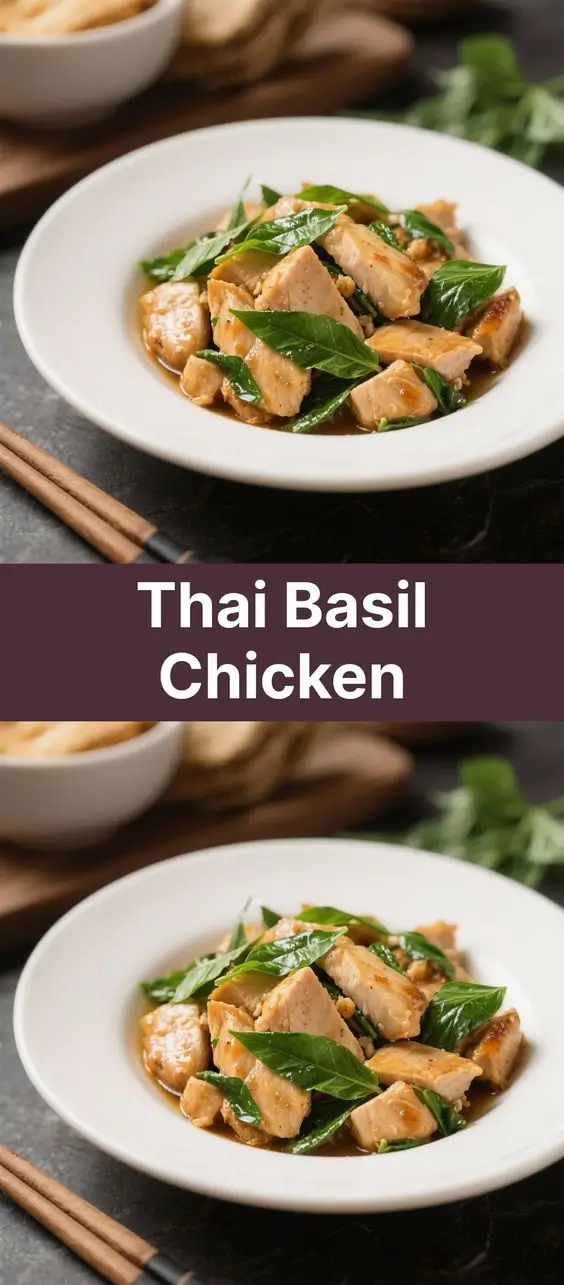
Thai Basil Chicken (Pad Krapow Gai): A Flavorful Journey Through Thailand’s Most Beloved Stir-Fry
Introduction
Thai Basil Chicken, known in Thai as Pad Krapow Gai (ผัดกระเพราไก่), is one of the most iconic and widely loved dishes in Thai cuisine. Found on nearly every street corner in Bangkok and served in homes across the country, this aromatic stir-fry embodies the perfect balance of sweet, salty, spicy, and savory flavors that defines authentic Thai cooking. Quick to prepare, deeply satisfying, and packed with bold ingredients, Pad Krapow Gai has transcended borders, becoming a staple in Thai restaurants around the globe.
More than just a meal, Thai Basil Chicken represents the heart of Thai home cooking — resourceful, flavorful, and adaptable. Whether enjoyed over steaming jasmine rice with a fried egg on top or wrapped in crisp lettuce leaves for a lighter meal, it’s a dish that invites customization while maintaining its rich culinary identity. In this comprehensive guide, we’ll dive into the history, ingredients, techniques, variations, health benefits, and secrets behind crafting the perfect plate of Thai Basil Chicken right in your own kitchen.
The History
The origins of Thai Basil Chicken can be traced back to central Thailand, particularly during the late 19th and early 20th centuries when Chinese culinary influences began merging with traditional Thai flavors. The stir-frying technique used in Pad Krapow Gai is believed to have been introduced by Chinese immigrants who brought woks and high-heat cooking methods to Thailand. Over time, Thais adapted these techniques using local herbs, sauces, and proteins, giving birth to uniquely Thai dishes like this one.
The name “Krapow” refers specifically to holy basil ( Ocimum tenuiflorum), a sacred herb in both Thai and Indian cultures, often used in religious offerings and traditional medicine. Unlike sweet basil or Italian basil, holy basil has a peppery, slightly clove-like flavor that’s essential to the authenticity of the dish. While chicken (“Gai”) is the most common protein today, historically, Pad Krapow was made with minced pork, which remains popular in Thailand.
Originally considered humble street food, Pad Krapow Gai gained widespread popularity due to its affordability, speed of preparation, and explosive flavor profile. It became a go-to meal for workers, students, and families alike. By the mid-20th century, it had cemented its place in Thai culinary culture, appearing in markets, roadside stalls, and eventually upscale restaurants. Today, it’s so ingrained in daily life that many Thais consider it a national comfort food — often eaten at any time of day, especially when craving something quick, spicy, and deeply satisfying.
Ingredients Breakdown
The magic of Thai Basil Chicken lies in the harmony of its components. Each ingredient plays a crucial role in building layers of aroma, heat, umami, and freshness. Let’s explore them in detail:
- Ground Chicken: Traditionally, ground chicken thigh meat is preferred for its juiciness and richer flavor compared to breast. However, lean ground chicken or even a mix of chicken and pork can be used depending on preference.
- Holy Basil (Krapow): This is non-negotiable for authenticity. Holy basil has purple stems, jagged leaves, and a distinctive spicy-clove aroma. It wilts quickly when cooked but imparts an irreplaceable depth. If unavailable, Thai sweet basil can be substituted, though the flavor will differ slightly.
- Garlic: Freshly minced garlic forms the aromatic base of the dish, sautéed until fragrant to build flavor from the start.
- Chilies: Bird’s eye chilies (prik kee noo) are standard, offering intense heat. The number used depends on desired spice level — typically 3–6 for a medium-hot dish. Some versions use dried red chilies, but fresh are preferred for brightness.
- Fish Sauce (Nam Pla): A cornerstone of Thai seasoning, fish sauce provides saltiness and umami. High-quality brands like Tiparos or Squid are recommended for balanced flavor without excessive funkiness.
- Oyster Sauce: Adds a subtle sweetness and deep savory note. Vegetarian oyster sauce (made from mushrooms) can be used for a plant-based version.
- Soy Sauce: Light soy sauce enhances color and saltiness without overpowering; dark soy may be added in small amounts for color and mild molasses-like sweetness.
- Sugar: A touch of palm sugar or white sugar balances the salty and spicy elements, rounding out the overall taste.
- Cooking Oil: Neutral oils like vegetable, canola, or peanut oil work best for high-heat stir-frying.
- Jasmine Rice: The ideal accompaniment — fragrant, fluffy, and slightly sticky — serves as the perfect neutral base.
- Fried Egg (Khai Dao): Optional but highly traditional. A crispy-edged sunny-side-up egg placed on top adds richness and completes the classic presentation.
Step-by-Step Recipe
Ingredients
- 1 lb (450g) ground chicken (preferably thigh meat)
- 2 cups fresh holy basil leaves (stems removed)
- 4 cloves garlic, finely minced
- 3–6 Thai bird’s eye chilies, sliced (adjust to taste)
- 3 tbsp vegetable oil
- 2 tbsp fish sauce
- 1 tbsp oyster sauce
- 1 tsp light soy sauce
- 1 tsp palm sugar (or brown sugar)
- Salt to taste (optional – fish sauce is already salty)
- Steamed jasmine rice, for serving
- 1–2 eggs per serving (for topping)
Directions
- Prep Ingredients: Mince the garlic and slice the chilies. Measure out all sauces and have them ready near the stove. Remove holy basil leaves from stems and rinse gently; pat dry. Prepare jasmine rice if not already cooked.
- Heat the Wok or Pan: Place a wok or large skillet over high heat. Add 2 tablespoons of oil and swirl to coat the surface evenly. Allow the oil to get very hot — almost smoking — before adding aromatics.
- Sauté Garlic and Chilies: Add the minced garlic and sliced chilies to the hot oil. Stir-fry rapidly for about 15–20 seconds until fragrant but not browned. Be careful not to burn, as this will make the dish bitter.
- Cook the Chicken: Add the ground chicken to the wok. Use a spatula to break it apart into small crumbles. Continue stir-frying over high heat for 3–4 minutes, allowing the chicken to brown slightly and release moisture.
- Add Sauces: Pour in the fish sauce, oyster sauce, light soy sauce, and palm sugar. Stir well to combine. Cook for another 1–2 minutes until the sauce reduces slightly and coats the chicken evenly. Taste and adjust seasoning if needed — more fish sauce for saltiness, sugar for sweetness, or chilies for heat.
- Incorporate Holy Basil: Add the holy basil leaves in batches, stirring continuously. The leaves will wilt almost immediately upon contact with the hot mixture. Cook just until they are tender and glossy — about 30 seconds to 1 minute. Do not overcook, as the basil loses its fragrance and turns black.
- Fry the Eggs (Optional): In a separate pan, heat 1 tablespoon of oil over medium-high heat. Crack eggs into the pan and fry until the whites are set and the edges are golden and crispy, about 2–3 minutes. For “khai dao” (crispy fried egg), press down gently with a spatula to ensure even cooking.
- Serve Immediately: Spoon the hot Thai basil chicken over steamed jasmine rice. Top each serving with a fried egg. Serve with additional sliced chilies, lime wedges, and a side of cucumber slices for cooling contrast.
Tips for Perfect Thai Basil Chicken
- Use High Heat: Authentic Pad Krapow relies on the “wok hei” (breath of the wok) — that smoky, seared flavor achieved only through intense heat. Use the highest setting on your stove and avoid overcrowding the pan.
- Don’t Skip the Holy Basil: While substitutes exist, nothing replicates the unique flavor of holy basil. Look for Asian grocery stores or farmers’ markets. Store leftover basil in a damp paper towel inside a sealed container in the fridge for up to 3 days.
- Prep Everything Ahead: Stir-fries move fast. Have all ingredients chopped, measured, and within arm’s reach before turning on the heat.
- Brown the Chicken Slightly: Allow the ground meat to develop some caramelization rather than steaming. Avoid stirring constantly — let it sit briefly to form golden bits.
- Balance the Flavors: The final dish should sing with a balance of salty (fish sauce), sweet (sugar/oyster sauce), spicy (chilies), and herbal (basil). Taste and tweak before serving.
- Serve Immediately: This dish is best eaten fresh off the wok. The textures and aromas diminish quickly upon standing.
- Use a Wok if Possible: A carbon steel wok distributes heat more evenly and allows for better tossing action than a flat skillet.
Variations and Customizations
One of the reasons Thai Basil Chicken is so beloved is its versatility. Here are some delicious twists you can try:
- Protein Swaps: Replace chicken with ground pork (the original version), turkey, beef, shrimp, tofu, or even jackfruit for a vegan option.
- Vegetarian/Vegan Version: Use plant-based ground “meat,” omit fish sauce, and substitute with soy sauce or vegan fish sauce. Use mushroom-based oyster sauce.
- Different Basils: In the absence of holy basil, Thai sweet basil (with smoother leaves and licorice notes) works acceptably. Avoid Italian basil — it becomes bitter when cooked.
- Add Vegetables: Stir in bell peppers, green beans, baby corn, or mushrooms during the last minute of cooking for added texture and nutrition.
- Crispy Shallots or Onions: Garnish with store-bought or homemade crispy shallots for extra crunch and sweetness.
- Noodle Version: Serve over rice noodles or glass noodles instead of rice for a low-carb or gluten-free twist.
- Extra Spicy Kick: Add sambal oelek or sriracha to the sauce, or serve with chili flakes on the side.
- Lettuce Wrap Style: For a lighter, keto-friendly meal, serve the filling in butter lettuce cups with julienned carrots and cucumber.
- Pineapple Addition: Inspired by Southern Thai flavors, add diced pineapple for a sweet-tart contrast that pairs beautifully with the spice.
Health Considerations and Nutritional Value
When prepared mindfully, Thai Basil Chicken can be a nutritious and balanced meal. Let’s examine its health aspects:
Nutritional Highlights (Per Serving, Approximate)
- Calories: ~350–450 kcal (with rice and egg)
- Protein: 25–30g (excellent source from chicken and egg)
- Fat: 15–20g (mostly healthy fats from oil and egg yolk)
- Carbohydrates: 35–45g (primarily from rice)
- Sodium: Moderate to high (due to fish and soy sauces — ~800–1200mg)
Health Benefits
- Lean Protein Source: Ground chicken is lower in saturated fat than red meats and supports muscle maintenance and satiety.
- Holy Basil’s Medicinal Properties: Rich in antioxidants, anti-inflammatory compounds, and adaptogens, holy basil (also called tulsi) has been used in Ayurvedic medicine to reduce stress, support immunity, and aid digestion.
- Low in Added Sugars: When made with minimal sugar, this dish avoids refined sweeteners commonly found in processed foods.
- Gluten-Free Option: Naturally gluten-free if tamari or certified gluten-free sauces are used (regular soy and oyster sauces may contain wheat).
- Rich in Aromatics: Garlic and chilies offer immune-boosting allicin and capsaicin, respectively, which may help metabolism and circulation.
Considerations
- Sodium Content: Fish sauce and soy sauce are high in sodium. To reduce salt, use reduced-sodium versions or decrease quantities and boost flavor with extra garlic, lime juice, or herbs.
- Oil Usage: Using too much oil increases calorie density. Stick to 2–3 tablespoons for the entire recipe and use non-stick cookware if needed.
- Balanced Meal: Pair with extra vegetables or a side salad to increase fiber and micronutrient intake.
- Egg Cholesterol: While dietary cholesterol is less concerning than once thought, those monitoring intake can skip the fried egg or use egg whites.
FAQ
- Can I use regular basil instead of holy basil?
- You can, but the flavor will be noticeably different. Sweet basil lacks the spiciness and clove notes of holy basil. Avoid Italian basil, as it becomes bitter when cooked. If possible, seek out Asian markets or grow holy basil at home.
- Is Thai Basil Chicken spicy?
- Traditionally, yes — it’s meant to have a kick. However, you can control the heat by reducing the number of chilies or removing their seeds. Serve with cooling sides like cucumber or yogurt (untraditional but effective).
- Can I make it ahead of time?
- The dish is best fresh, but you can prep ingredients in advance. Cooked leftovers keep for 2–3 days in the fridge. Reheat gently, adding fresh basil at the end to restore aroma.
- Why is my chicken dry?
- Overcooking or using lean breast meat can lead to dryness. Opt for ground thigh meat and avoid prolonged cooking after adding sauce.
- What’s the difference between Thai basil and holy basil?
- Thai sweet basil has a licorice-anise flavor and stays greener when cooked. Holy basil is more pungent, peppery, and has fuzzy leaves with purple stems. They are not interchangeable, though sometimes confused in Western markets.
- Can I freeze Thai Basil Chicken?
- Yes, though texture may change slightly upon reheating. Freeze without basil if possible, then add fresh when reheating. Best consumed within 1 month.
- What to serve with Thai Basil Chicken?
- Classic pairings include steamed jasmine rice, a fried egg, cucumber slices, and a wedge of lime. Additional sides: som tum (papaya salad), clear soups, or spring rolls.
Summary
Thai Basil Chicken is a vibrant, aromatic stir-fry that captures the essence of Thai cuisine — bold, balanced, and deeply comforting. With its roots in street food culture and a harmony of spicy, savory, and herbal notes, it’s a dish that delights the senses and satisfies the soul.
Easy to customize, rich in flavor, and quick to prepare, Pad Krapow Gai deserves a permanent spot in your weekly rotation — whether you’re cooking for one or feeding a hungry family after a long day.