Introduction
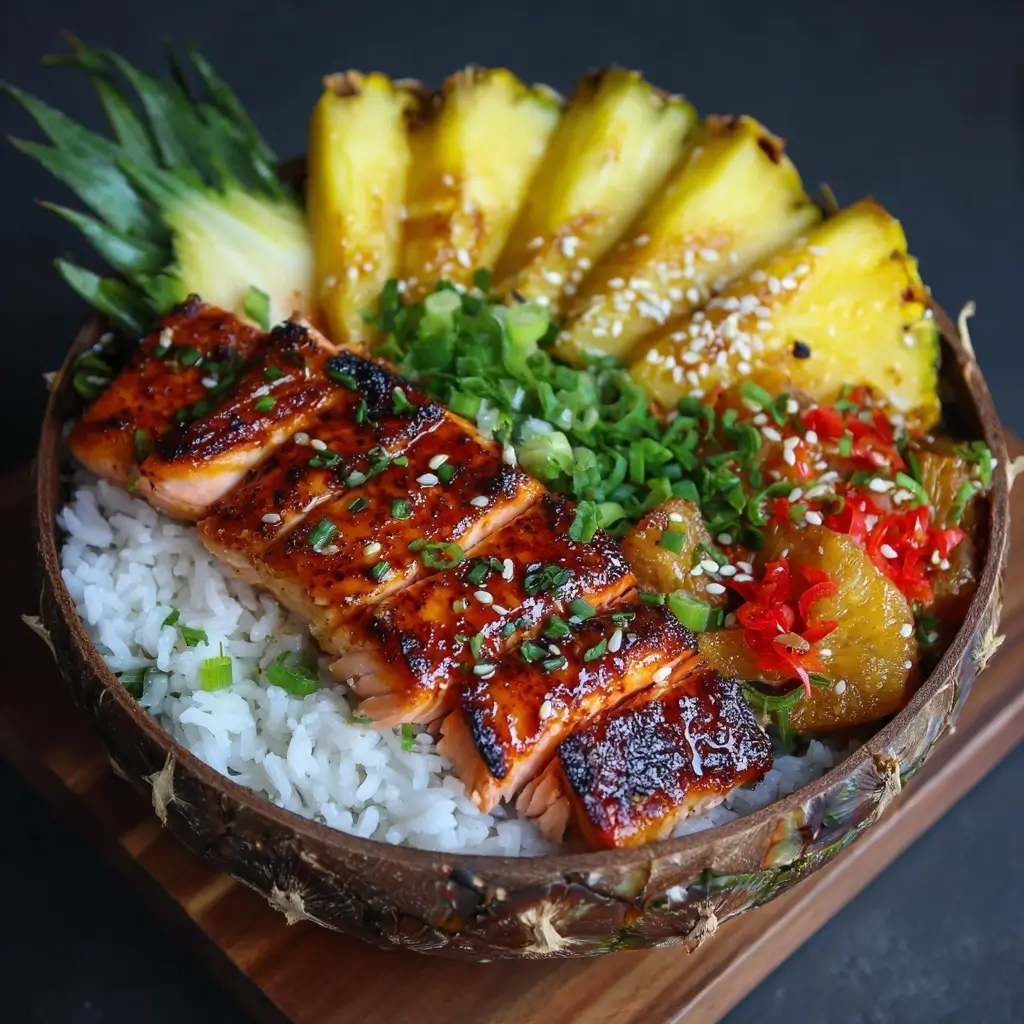
Welcome to a culinary journey that marries the rich umami of Japanese teriyaki with the tropical sweetness of pineapple in a vibrant, nutritious dish: Teriyaki Salmon Pineapple Bowls. This recipe is more than just a meal—it’s an experience that brings together bold flavors, colorful ingredients, and wholesome nutrition. Whether you’re cooking for a weeknight dinner, meal prepping for the week, or impressing guests at a summer gathering, these bowls deliver on all fronts. With flaky salmon glazed in a glossy homemade teriyaki sauce, juicy grilled pineapple, and a medley of fresh vegetables over fluffy rice, each bite offers a perfect harmony of savory, sweet, tangy, and umami notes. Not only is this dish delicious, but it’s also packed with high-quality protein, healthy fats, fiber, and essential vitamins—making it as nourishing as it is satisfying.
The History
The roots of teriyaki trace back to Japan, where the technique originated centuries ago as a method of preserving and enhancing the flavor of fish and meat. The word “teriyaki” itself comes from two Japanese words: teri, meaning luster or shine, referring to the glossy finish of the glaze, and yaki, which means grilled or broiled. Traditionally, fish such as salmon or mackerel was marinated in a mixture of soy sauce, mirin (sweet rice wine), and sake, then grilled over charcoal to create a caramelized, flavorful crust. Over time, teriyaki evolved and spread beyond Japan, particularly through Japanese immigration to Hawaii and North America, where local ingredients began influencing the sauce and preparation methods. In Hawaii, for example, pineapple became a common addition due to its abundance and natural sweetness, complementing the salty-sweet profile of teriyaki perfectly. Today, Teriyaki Salmon Pineapple Bowls are a modern fusion dish, reflecting global tastes and the popularity of bowl-style meals that combine proteins, grains, vegetables, and sauces in one balanced, portable format. This dish honors tradition while embracing innovation, making it a staple in contemporary home kitchens and trendy restaurants alike.
Ingredients Breakdown
The magic of Teriyaki Salmon Pineapple Bowls lies in the careful selection and balance of ingredients, each contributing unique textures, flavors, and nutritional benefits.
- Salmon: Rich in omega-3 fatty acids, high-quality protein, and vitamin D, salmon provides a buttery texture and robust flavor that pairs beautifully with the sweet teriyaki glaze.
- Pineapple: Fresh or grilled pineapple adds natural sweetness, juiciness, and a hint of acidity. It’s packed with vitamin C, manganese, and bromelain—an enzyme known for aiding digestion and reducing inflammation.
- Soy Sauce: The base of the teriyaki sauce, soy sauce contributes deep umami and saltiness. Opt for low-sodium versions if watching salt intake, or use tamari for a gluten-free alternative.
- Mirin: A sweet Japanese rice wine that adds subtle sweetness and helps create the signature glossy sheen of teriyaki sauce.
- Brown Sugar or Honey: Enhances sweetness and aids in caramelization during cooking. Natural sweeteners like honey or maple syrup can be used for refined sugar-free options.
- Rice Vinegar: Adds brightness and balances the richness of the sauce.
- Fresh Ginger and Garlic: These aromatics infuse the sauce with warmth, depth, and complexity, elevating the overall flavor profile.
- Sesame Oil: Used sparingly, it imparts a nutty aroma and enhances the Asian-inspired essence of the dish.
- Green Onions and Sesame Seeds: For garnish, they add color, crunch, and a mild onion flavor that complements the other elements.
- Broccoli and Bell Peppers: Steamed or roasted, these vegetables contribute fiber, antioxidants, and vibrant colors to the bowl.
- Carrots: Julienned or shredded, carrots add sweetness, crunch, and beta-carotene.
- Avocado: Creamy avocado slices bring heart-healthy monounsaturated fats and a luxurious texture.
- Cooked Rice: White, brown, or jasmine rice serves as the hearty base. For lower carbs, cauliflower rice is an excellent substitute.
Step-by-Step Recipe
- Prepare the Teriyaki Sauce: In a small saucepan, combine ½ cup soy sauce, ¼ cup mirin, 2 tablespoons brown sugar (or honey), 1 tablespoon rice vinegar, 1 tablespoon grated fresh ginger, 2 minced garlic cloves, and 1 teaspoon sesame oil. Bring to a gentle simmer over medium heat, stirring until sugar dissolves. In a separate bowl, mix 1 tablespoon cornstarch with 2 tablespoons water to make a slurry. Slowly whisk into the sauce and cook for 2–3 minutes until thickened. Remove from heat and set aside.
- Marinate the Salmon: Place 4 salmon fillets (6 oz each) in a shallow dish. Pour ¼ cup of the prepared teriyaki sauce over them, turning to coat. Let marinate for 15–30 minutes at room temperature (or up to 2 hours in the fridge).
- Cook the Salmon: Preheat oven to 400°F (200°C). Line a baking sheet with parchment paper. Remove salmon from marinade (reserve remaining marinade) and place on the sheet. Bake for 12–15 minutes, or until salmon flakes easily with a fork. For extra glaze, brush with reserved sauce halfway through and broil for 1–2 minutes at the end for a caramelized finish.
- Grill or Sauté the Pineapple: Cut 1 fresh pineapple into rings or chunks. Heat a grill pan or skillet over medium-high. Lightly brush pineapple with oil and cook 2–3 minutes per side until grill marks appear and edges caramelize. Set aside.
- Prepare the Vegetables: Steam broccoli florets for 4–5 minutes until tender-crisp. Sauté sliced bell peppers and carrots in a bit of olive oil or sesame oil for 5–7 minutes until softened but still crunchy. Season lightly with salt and pepper.
- Cook the Rice: Prepare 2 cups of your preferred rice according to package instructions. Fluff with a fork once cooked.
- Assemble the Bowls: In each serving bowl, start with a base of warm rice. Arrange salmon fillet, grilled pineapple, steamed broccoli, sautéed peppers and carrots, and sliced avocado. Drizzle with additional warm teriyaki sauce. Garnish with sliced green onions and toasted sesame seeds.
Tips
- Don’t Overcook the Salmon: Salmon continues to cook slightly after removal from heat. Aim for slightly translucent in the center when removing; it will finish cooking as it rests.
- Use Fresh Ginger and Garlic: Avoid pre-minced versions for superior flavor. Freshly grated ginger has a brighter, spicier kick that elevates the sauce.
- Double the Sauce: Make extra teriyaki sauce and store it in the fridge for up to two weeks. It’s perfect for stir-fries, noodle dishes, or dipping.
- Grill Instead of Bake: For a smokier flavor, grill the salmon and pineapple outdoors or on a stovetop grill pan.
- Toast Sesame Seeds: Lightly toast sesame seeds in a dry pan for 1–2 minutes until golden for enhanced nuttiness.
- Prevent Soggy Bowls: If meal prepping, store components separately and assemble just before eating to maintain texture.
- Balancing Sweetness: Taste the sauce as you go. If too salty, add a splash of water or a bit more sugar. If too sweet, a dash of rice vinegar can balance it.
- Uniform Cutting: Cut vegetables and pineapple into even sizes for consistent cooking.
Variations and Customizations
This dish is incredibly versatile—feel free to adapt it to suit dietary needs, preferences, or what’s in your pantry.
- Protein Swaps: Replace salmon with tuna, chicken breast, shrimp, tofu, or tempeh for different textures and flavors.
- Gluten-Free Option: Use tamari instead of soy sauce and ensure all other ingredients are certified gluten-free.
- Vegan Version: Use firm tofu or portobello mushrooms as the protein, and replace honey with maple syrup or agave.
- Low-Carb/Keto Adaptation: Serve over cauliflower rice or a bed of sautéed greens like spinach or bok choy. Reduce or omit sugar in the sauce, using a keto-friendly sweetener like erythritol.
- Spicy Kick: Add sriracha, red pepper flakes, or a finely chopped chili to the teriyaki sauce for heat.
- Extra Crunch: Top with crispy wonton strips, fried shallots, or crushed peanuts.
- Different Fruits: Mango, peaches, or apples can substitute pineapple for seasonal variety.
- Noodle Bowls: Swap rice for soba, udon, or rice noodles for a different take.
- Herb Variations: Add cilantro, Thai basil, or mint for a fresh herbal twist.
Health Considerations and Nutritional Value
Teriyaki Salmon Pineapple Bowls offer a well-rounded nutritional profile, combining lean protein, healthy fats, complex carbohydrates, and a wide array of vitamins and minerals. Here’s a breakdown per serving (assuming four servings with skin-on salmon, brown rice, and full toppings):
- Calories: Approximately 550–650 kcal
- Protein: 35–40g – Supports muscle repair and satiety.
- Fat: 20–25g – Primarily heart-healthy unsaturated fats from salmon and avocado.
- Omega-3 Fatty Acids: High levels from salmon, supporting brain health, reducing inflammation, and promoting cardiovascular wellness.
- Carbohydrates: 50–60g – Mostly from rice and fruit, providing sustained energy. Choose brown rice or quinoa for added fiber and nutrients.
- Fiber: 6–8g – From vegetables, pineapple, and whole grains, aiding digestion and gut health.
- Vitamin C: Abundant in pineapple, bell peppers, and broccoli—boosts immunity and collagen production.
- Vitamin D: Naturally present in salmon, important for bone health and immune function.
- Potassium and Magnesium: Found in avocado and pineapple, helping regulate blood pressure and muscle function.
Considerations:
- Sodium Content: Traditional soy sauce is high in sodium. To reduce, use low-sodium soy sauce or tamari, and limit added salt.
- Sugar Levels: The sauce contains natural and added sugars. For diabetics or those monitoring sugar, reduce sweetener or use alternatives.
- Mercury in Fish: Salmon is low in mercury and safe for regular consumption, including during pregnancy (2–3 servings per week recommended).
- Allergens: Contains fish and soy. Modify accordingly for allergies.
Overall, this dish supports heart health, metabolic function, and long-lasting energy—ideal for active individuals, fitness enthusiasts, or anyone seeking a balanced, flavorful meal.
Ingredients
- 4 (6 oz) skin-on salmon fillets
- 1 cup soy sauce (low-sodium preferred)
- ½ cup mirin
- 3 tablespoons brown sugar or honey
- 1 tablespoon rice vinegar
- 1 tablespoon cornstarch
- 2 tablespoons water (for slurry)
- 1 tablespoon fresh ginger, grated
- 2 cloves garlic, minced
- 1 teaspoon sesame oil
- 1 fresh pineapple, peeled and cut into rings or chunks
- 2 cups broccoli florets
- 1 red bell pepper, sliced
- 1 yellow bell pepper, sliced
- 1 large carrot, julienned or shredded
- 1 ripe avocado, sliced
- 2 cups cooked brown rice (or white/cauliflower rice)
- 2 green onions, thinly sliced
- 1 tablespoon sesame seeds, toasted
- Olive oil or neutral oil (for grilling)
Directions
- In a small saucepan, combine soy sauce, mirin, brown sugar, rice vinegar, ginger, garlic, and sesame oil. Bring to a simmer over medium heat, stirring until sugar dissolves.
- In a small bowl, mix cornstarch and water to form a smooth slurry. Whisk into the sauce and continue cooking for 2–3 minutes until thickened and glossy. Remove from heat and set aside ¼ cup for marinating salmon. Reserve the rest for serving.
- Place salmon fillets in a shallow dish. Pour ¼ cup teriyaki sauce over them, turning to coat. Marinate for 15–30 minutes at room temperature.
- Preheat oven to 400°F (200°C). Line a baking sheet with parchment paper. Place marinated salmon on the sheet, reserving marinade. Bake for 12–15 minutes until flaky. Optional: broil for 1–2 minutes at the end for a caramelized top.
- While salmon cooks, prepare pineapple. Heat a grill pan over medium-high. Brush pineapple with oil and grill 2–3 minutes per side until charred and tender. Set aside.
- Steam broccoli for 4–5 minutes until bright green and tender. In a skillet, sauté bell peppers and carrots in 1 tsp oil for 5–7 minutes until crisp-tender.
- Cook rice according to package directions.
- To assemble, divide rice among four bowls. Top with salmon, grilled pineapple, broccoli, peppers, carrots, and avocado slices. Drizzle generously with warm teriyaki sauce. Garnish with green onions and sesame seeds.
- Serve immediately and enjoy!
FAQ
Can I make this ahead of time?
Yes! You can marinate the salmon and prepare the sauce up to 2 days in advance. Cook components separately and store in airtight containers in the fridge for up to 4 days. Reheat gently and assemble before serving.
Can I freeze teriyaki salmon?
Yes, cooked salmon freezes well for up to 3 months. Freeze in an airtight container with sauce. Thaw overnight in the fridge and reheat gently to avoid drying out.
Is canned pineapple okay?
Fresh is best for grilling, but canned pineapple (in juice, not syrup) can work in a pinch. Drain well and pat dry to prevent excess moisture.
What if I don’t have mirin?
Substitute with 1 tbsp sugar + ¼ cup dry white wine or rice vinegar. Or use a mix of white grape juice and a splash of vinegar for sweetness and acidity.
Can I air fry the salmon?
Absolutely! Air fry at 375°F for 10–12 minutes, flipping halfway and brushing with sauce toward the end.
Is this dish kid-friendly?
Yes! Kids love the sweet-savory flavor combo. Serve with extra pineapple and skip spicy additions.
How do I keep salmon from sticking?
Ensure the grill or pan is hot and well-oiled. Don’t move the salmon until it releases naturally.
Can I use frozen salmon?
Yes, but thaw slowly in the fridge overnight for best texture. Pat dry before marinating.
Summary
Teriyaki Salmon Pineapple Bowls blend succulent, glazed salmon with sweet grilled pineapple, vibrant vegetables, and fluffy rice in a harmonious fusion of Japanese and tropical flavors. Packed with nutrition and bursting with taste, this dish is perfect for healthy weeknights, meal prep, or entertaining with flair.