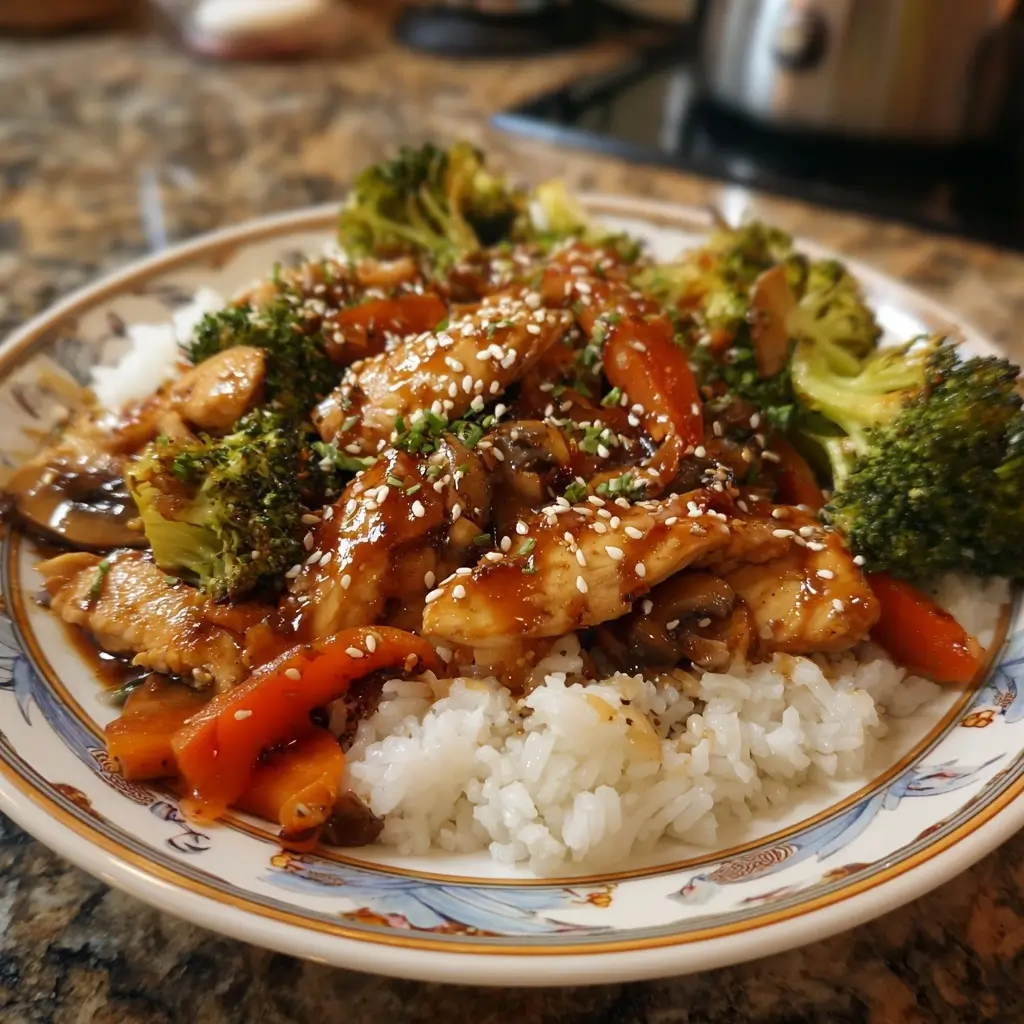
Teriyaki Chicken Stir Fry
Introduction
Teriyaki Chicken Stir Fry is a beloved dish that brings together the savory-sweet essence of Japanese cuisine with the quick, vibrant cooking style of stir frying. Known for its glossy glaze, tender chicken, and colorful medley of vegetables, this dish has become a staple in both home kitchens and restaurants across the globe. Whether you’re looking for a weeknight dinner solution or an impressive meal to serve guests, Teriyaki Chicken Stir Fry delivers bold flavors and satisfying textures in under 30 minutes. Its versatility allows for endless customization, making it ideal for families, meal preppers, and adventurous cooks alike.
The History
The roots of teriyaki trace back to Japan, where “teri” means luster or shine, and “yaki” refers to grilling or broiling. Originally, teriyaki was a cooking technique developed during the Edo period (1603–1868), where fish—such as salmon or mackerel—was grilled with a glaze made from soy sauce, mirin (sweet rice wine), and sake. The sauce caramelized on the surface, giving the dish its signature glossy finish. Over time, the method expanded beyond fish to include meats like chicken, beef, and pork. With Japanese immigration to North America in the 20th century, teriyaki evolved to suit Western palates, often becoming sweeter and thicker. Today’s version of Teriyaki Chicken Stir Fry blends traditional Japanese elements with modern stir-fry techniques influenced by Chinese and American culinary practices, resulting in a fusion favorite known for its balance of sweet, salty, tangy, and umami-rich flavors.
Ingredients Breakdown
The magic of Teriyaki Chicken Stir Fry lies in its harmonious blend of ingredients, each contributing to the overall depth and texture of the dish:
- Chicken Breast or Thighs: Boneless, skinless chicken breasts offer lean protein and a mild flavor, while thighs provide more moisture and richness due to their higher fat content.
- Soy Sauce: The backbone of the teriyaki sauce, providing saltiness and umami. Use reduced-sodium soy sauce if you prefer less salt.
- Low-Sodium Chicken Broth: Adds depth without excessive sodium and helps thin the sauce for even coating.
- Rice Vinegar: Offers a subtle tang that balances the sweetness and enhances freshness.
- Brown Sugar: Gives the sauce its characteristic sweetness and aids in caramelization. Honey or maple syrup can be substituted for similar effect.
- Garlic and Ginger: Freshly minced garlic and grated ginger add aromatic warmth and complexity—essential for authentic flavor.
- Cornstarch: Acts as a thickening agent, creating a smooth, glossy sauce that clings beautifully to the chicken and vegetables.
- Vegetables: Bell peppers, broccoli, carrots, snap peas, mushrooms, onions, and zucchini are common choices. They contribute color, crunch, fiber, and nutrients.
- Oil: Neutral oils like vegetable, canola, or avocado oil are ideal for high-heat stir-frying without overpowering flavors.
- Sesame Oil (optional): A few drops added at the end enhance aroma and give an authentic Asian flair.
- Garnishes: Green onions, sesame seeds, and cilantro elevate presentation and add fresh, nutty, or herbal notes.
Step-by-Step Recipe
- Prepare Ingredients: Cut 1.5 lbs of boneless chicken into bite-sized strips. Chop 3 cups of mixed vegetables (e.g., bell pepper, broccoli, carrots). Mince 3 cloves of garlic and grate 1 tablespoon of fresh ginger.
- Make Teriyaki Sauce: In a bowl, whisk together ½ cup soy sauce, ¼ cup low-sodium chicken broth, 3 tablespoons brown sugar, 1 tablespoon rice vinegar, 1 teaspoon cornstarch, the minced garlic, and grated ginger. Set aside.
- Stir-Fry Chicken: Heat 1 tablespoon of oil in a large wok or skillet over medium-high heat. Add chicken in a single layer and cook for 5–6 minutes, stirring occasionally, until golden and cooked through. Remove and set aside.
- Cook Vegetables: Add another tablespoon of oil to the same pan. Toss in the harder vegetables first (carrots, broccoli) and stir-fry for 2–3 minutes. Then add softer ones (bell peppers, snap peas, mushrooms) and cook for another 2–3 minutes until crisp-tender.
- Combine and Simmer: Return the chicken to the pan. Pour the prepared teriyaki sauce over the mixture. Stir well and bring to a simmer. Cook for 2–4 minutes, stirring frequently, until the sauce thickens and coats everything evenly.
- Finish and Serve: Drizzle with ½ teaspoon of toasted sesame oil (optional). Garnish with sliced green onions and sesame seeds. Serve immediately over steamed white rice, brown rice, quinoa, or cauliflower rice.
Tips
- Uniform Cutting: Cut chicken and vegetables into uniform sizes to ensure even cooking.
- High Heat is Key: Use medium-high to high heat for stir-frying to achieve that perfect sear without steaming the ingredients.
- Don’t Crowd the Pan: Cook in batches if necessary. Overcrowding lowers the temperature and leads to soggy food.
- Prep Ahead: Mise en place is crucial. Have all ingredients chopped, measured, and within reach before you start cooking.
- Thicker Sauce? If the sauce isn’t thick enough, mix 1 teaspoon cornstarch with 1 tablespoon cold water and stir into the simmering sauce.
- Avoid Burning Sugar: Keep an eye on the sauce as it simmers; sugar can burn quickly at high temperatures.
- Fresh Garlic & Ginger: Avoid powdered versions for best flavor. Freshly grated ginger makes a noticeable difference.
- Rest the Chicken: Let the chicken sit 5 minutes after cooking before slicing to retain juices.
Variations and Customizations
One of the greatest strengths of Teriyaki Chicken Stir Fry is its adaptability. Here are some popular variations to inspire your creativity:
- Protein Swaps: Replace chicken with shrimp, thinly sliced beef, tofu, tempeh, or even salmon for different textures and dietary needs.
- Vegetable Medleys: Try bok choy, cabbage, baby corn, water chestnuts, asparagus, or spinach. Seasonal produce works wonderfully.
- Gluten-Free Option: Substitute regular soy sauce with tamari or a certified gluten-free soy sauce.
- Low-Sugar Version: Reduce or replace brown sugar with a natural zero-calorie sweetener like monk fruit or stevia, or use a small amount of erythritol.
- Spicy Kick: Add red pepper flakes, sriracha, chili garlic sauce, or sliced fresh jalapeños to the sauce or stir-fry.
- Pineapple Teriyaki: Incorporate diced pineapple or pineapple juice into the sauce for a tropical twist.
- Noodle Bowl Style: Serve over soba noodles, udon, ramen, or lo mein instead of rice for a heartier meal.
- Meal Prep Friendly: Double the recipe and store portions in airtight containers for up to 4 days. Reheat in a skillet or microwave.
- Kid-Friendly Version: Omit spices, increase veggies, and cut chicken into fun shapes to appeal to younger eaters.
- Instant Pot or Slow Cooker: Cook chicken and sauce on high pressure for 8 minutes, then stir in veggies and sauté separately before combining.
Health Considerations and Nutritional Value
Teriyaki Chicken Stir Fry can be a nutritious and balanced meal when prepared thoughtfully. A typical serving (about 1.5 cups with ½ cup cooked rice) contains approximately:
- Calories: 350–450 kcal
- Protein: 25–35g (supports muscle repair and satiety)
- Carbohydrates: 40–50g (largely from rice and vegetables; choose brown rice for more fiber)
- Fat: 8–12g (mostly healthy fats if using minimal oil)
- Sodium: 700–1000mg (can be reduced by using low-sodium soy sauce and broth)
Key Benefits:
- Rich in lean protein from chicken, aiding in tissue repair and metabolic health.
- Packed with vitamins and antioxidants from colorful vegetables—vitamin C from bell peppers, beta-carotene from carrots, and sulforaphane from broccoli.
- Contains ginger, which has anti-inflammatory and digestive properties.
- Customizable for various diets: keto (serve over cauliflower rice), paleo (use coconut aminos), gluten-free, and low-carb.
Considerations:
- The traditional sauce can be high in sodium and sugar. Monitor intake if managing blood pressure, diabetes, or insulin resistance.
- Cornstarch adds refined carbs; arrowroot powder can be used as an alternative thickener.
- To reduce calories, increase the vegetable-to-chicken ratio and use less oil.
- Beware of store-bought teriyaki sauces, which often contain preservatives, excess sugar, and artificial ingredients. Homemade is healthier and fresher.
Ingredients
- 1.5 lbs boneless, skinless chicken breasts or thighs, cut into 1-inch pieces
- 3 tablespoons soy sauce (low-sodium preferred)
- 2 tablespoons water or low-sodium chicken broth
- 3 tablespoons brown sugar (or honey/maple syrup)
- 1 tablespoon rice vinegar
- 1 teaspoon cornstarch
- 3 cloves garlic, minced
- 1 tablespoon fresh ginger, grated
- 2 tablespoons neutral oil (vegetable, canola, or avocado), divided
- 1 red bell pepper, sliced
- 1 cup broccoli florets
- 1 medium carrot, julienned or thinly sliced
- 1 cup snap peas or snow peas
- ½ cup sliced mushrooms (shiitake or button)
- ½ small onion, sliced
- ½ teaspoon toasted sesame oil (optional)
- Green onions, sliced (for garnish)
- Toasted sesame seeds (for garnish)
- Cooked rice, quinoa, or noodles (for serving)
Directions
- In a small bowl, whisk together soy sauce, chicken broth, brown sugar, rice vinegar, cornstarch, minced garlic, and grated ginger. Set the sauce mixture aside.
- Cut the chicken into uniform bite-sized pieces. Pat dry with paper towels to ensure better browning.
- Heat 1 tablespoon of oil in a large wok or non-stick skillet over medium-high heat. Once hot, add the chicken in a single layer. Cook for 5–6 minutes, turning occasionally, until golden brown and cooked through (internal temperature of 165°F). Remove chicken and set aside.
- Add the remaining 1 tablespoon of oil to the pan. Add carrots and broccoli first—they take longer to cook. Stir-fry for 2–3 minutes.
- Add bell pepper, snap peas, mushrooms, and onion. Continue to stir-fry for another 3–4 minutes until vegetables are bright in color and crisp-tender.
- Return the cooked chicken to the pan. Stir to combine with the vegetables.
- Pour the prepared teriyaki sauce over the mixture. Stir well to coat everything evenly.
- Reduce heat to medium and let the sauce simmer for 2–4 minutes, stirring frequently, until it thickens and becomes glossy.
- Remove from heat. Stir in toasted sesame oil if using.
- Transfer to serving plates or bowls. Garnish with sliced green onions and a sprinkle of sesame seeds.
- Serve immediately over steamed rice or your grain/noodle of choice.
FAQ
Can I make teriyaki sauce ahead of time?
Yes! Prepare the sauce up to 5 days in advance and store it in an airtight container in the refrigerator. Shake or stir well before using.
Can I freeze Teriyaki Chicken Stir Fry?
Yes, though texture may slightly change upon reheating. Freeze in portioned containers for up to 3 months. Reheat gently on the stove with a splash of water or broth.
Why is my sauce too thin/thick?
If too thin, mix 1 tsp cornstarch with 1 tbsp water and stir into simmering sauce. If too thick, add a splash of broth or water.
Is teriyaki sauce gluten-free?
Traditional soy sauce contains wheat. For gluten-free, use tamari or a certified gluten-free soy sauce.
Can I use frozen vegetables?
Yes, but thaw and drain them first to avoid excess moisture. Stir-fry briefly just to heat through.
How do I prevent chicken from drying out?
Don’t overcook. Remove chicken once it reaches 165°F. Marinating for 15–30 minutes in part of the sauce can also help retain moisture.
What can I substitute for rice vinegar?
Apple cider vinegar or white wine vinegar work as substitutes, though the flavor profile will vary slightly.
Can I make this vegetarian or vegan?
Absolutely. Use tofu or tempeh instead of chicken and replace chicken broth with vegetable broth.
Summary
Teriyaki Chicken Stir Fry is a flavorful, quick, and nutritious meal that combines tender chicken, crisp vegetables, and a rich homemade teriyaki glaze. Perfect for busy weeknights or healthy meal prep, it’s a customizable dish that brings restaurant-quality taste to your kitchen.