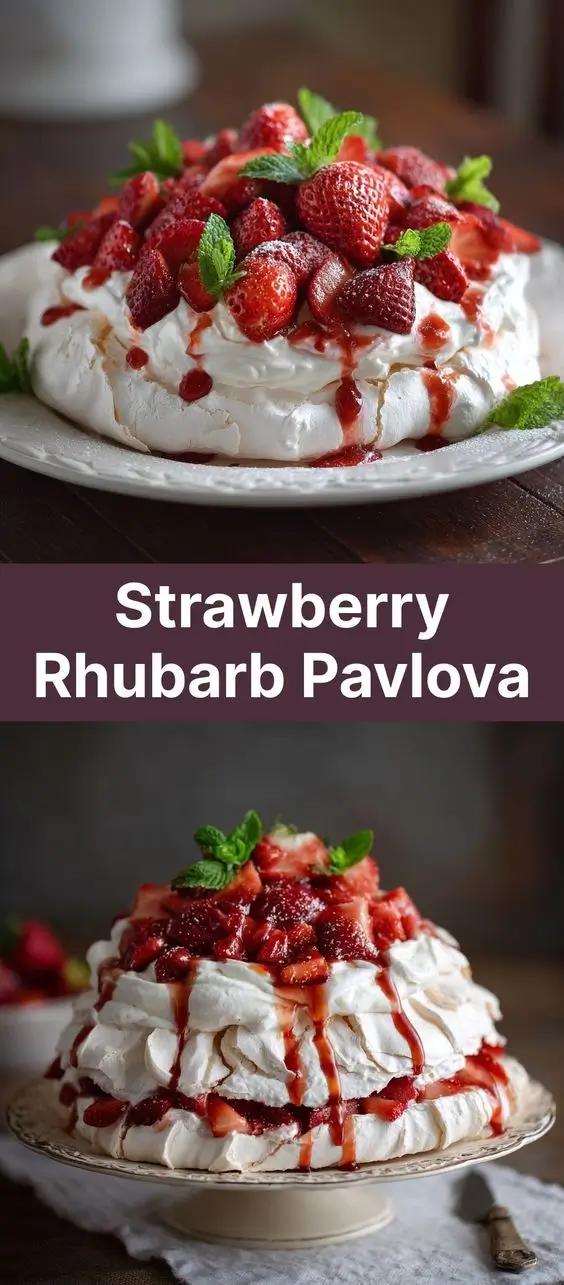
Strawberry Rhubarb Pavlova: A Show-Stopping Dessert of Crisp Meringue and Luscious Fruit
The History: A Sweet Tale from Down Under with a Seasonal Twist
The origins of the pavlova trace back to the culinary rivalry between Australia and New Zealand, both nations claiming it as their own creation. Named after the Russian ballerina Anna Pavlova, who toured both countries in the 1920s, the dessert is said to have been invented in her honor—light, airy, and elegant like her dancing. While the exact origin remains contested, what’s undisputed is the pavlova’s status as a national treasure in both lands.
Traditionally made with crisp meringue, whipped cream, and fresh fruit (often kiwi and passionfruit), the pavlova has evolved across continents and seasons. Enter the Strawberry Rhubarb Pavlova—a stunning adaptation that celebrates the vibrant flavors of spring and early summer. Rhubarb, often mistaken for a fruit but botanically a vegetable, brings a tart punch that perfectly balances the sweetness of strawberries and the sugary meringue base. This version marries European ingredients with Antipodean technique, creating a dessert that’s both nostalgic and refreshingly modern.
In North America, where rhubarb thrives in cooler climates and is affectionately dubbed “pie plant,” the strawberry-rhubarb combo has long been a staple. By fusing this classic duo with the delicate structure of a pavlova, bakers have elevated a humble pie filling into an ethereal, cloud-like confection. Today, Strawberry Rhubarb Pavlova graces dinner parties, holiday tables, and farmers’ market stands, beloved for its striking appearance and complex flavor profile.
Ingredients Breakdown: The Science Behind the Sweetness
Creating the perfect Strawberry Rhubarb Pavlova requires precision and understanding of each ingredient’s role. Every component contributes not just to taste, but also to texture, stability, and visual appeal.
Meringue Base:
- Egg Whites (4 large): The foundation of any meringue. Egg whites are high in protein, which unfolds and forms a stable network when whipped. Room temperature whites incorporate air more efficiently, yielding a lighter foam.
- Granulated Sugar (1 cup / 200g): Added gradually, sugar stabilizes the egg white foam and gives the meringue its signature crisp shell. It also helps retain moisture, preventing the meringue from collapsing.
- Cornstarch (1 tsp): Acts as a buffer against humidity, helping the meringue maintain its structure. It also contributes to a slightly softer interior by reducing brittleness.
- White Vinegar or Lemon Juice (1 tsp): An acid that strengthens the protein bonds in egg whites, increasing volume and stability. It also balances the sweetness with a subtle tang.
- Vanilla Extract (1 tsp): Enhances flavor without overpowering. Pure extract offers depth compared to imitation.
- Salt (¼ tsp): A pinch enhances all other flavors and counteracts excessive sweetness.
Filling & Toppings:
- Heavy Whipping Cream (1½ cups / 360ml): High fat content (at least 36%) ensures it whips into stiff peaks and holds its shape. Chilled cream and bowl yield best results.
- Confectioners’ Sugar (2–3 tbsp): Sweetens the cream subtly while aiding in stabilization. Its cornstarch content also prevents weeping.
- Fresh Strawberries (2 pints / ~500g): Ripe but firm berries provide juiciness and bright acidity. Hulled and sliced, they add color and freshness.
- Rhubarb (3 stalks / ~400g): Choose crisp, pink-to-red stalks. Peeled and diced, rhubarb cooks down into a jammy compote with a sharp bite that cuts through the sweetness.
- Granulated Sugar (⅓ cup / 65g) for compote: Draws out rhubarb’s natural juices and balances tartness.
- Orange Zest (1 tsp) and Juice (1 tbsp): Brightens the compote, adding complexity and citrus notes that complement both fruits.
- Optional Garnishes: Mint leaves, edible flowers, toasted almonds, or a drizzle of balsamic reduction elevate presentation and taste.
Step-by-Step Recipe: Crafting Your Masterpiece
Follow these detailed steps to create a flawless Strawberry Rhubarb Pavlova that will impress even the most discerning palates.
Step 1: Preheat and Prepare
Preheat your oven to 275°F (135°C). Line a large baking sheet with parchment paper. Use a pencil to trace a 9-inch circle on the paper—this will guide your meringue shape. Turn the paper over so the pencil mark is underneath, ensuring no residue touches the food.
Step 2: Make the Rhubarb Compote (Can Be Made Ahead)
- Dice rhubarb into ½-inch pieces. Place in a saucepan with ⅓ cup sugar, orange juice, and zest.
- Cook over medium heat, stirring occasionally, until rhubarb softens and breaks down into a thick compote (about 12–15 minutes).
- Remove from heat and let cool completely. For a smoother texture, lightly mash with a fork or blend briefly. Refrigerate if making ahead.
Step 3: Whip the Meringue
- Ensure your mixing bowl and whisk attachments are impeccably clean and free of grease—any fat will inhibit whipping.
- Add egg whites and begin beating on medium speed until soft peaks form (about 2–3 minutes).
- Gradually add granulated sugar, one tablespoon at a time, waiting 10–15 seconds between additions. Continue beating until mixture is glossy, stiff, and sugar is fully dissolved (test by rubbing a bit between fingers—it should feel smooth, not gritty).
- Reduce speed to low. Add vanilla, vinegar, cornstarch, and salt. Mix for another 30 seconds to incorporate.
Step 4: Shape and Bake
- Transfer meringue to the prepared baking sheet. Starting from the center, spread into the traced circle, building up the edges slightly to form a shallow well—this will hold the cream and fruit.
- Smooth the surface with the back of a spoon, creating gentle swirls for visual interest.
- Bake for 1 hour and 15 minutes. The pavlova should be dry to the touch, pale ivory, and easily lift from the parchment.
- Turn off the oven, crack the door open with a wooden spoon, and let the meringue cool slowly inside for at least 2 hours (or overnight). This prevents cracking and ensures crispness.
Step 5: Whip the Cream
- Chill a mixing bowl and beaters in the freezer for 10 minutes.
- Pour in cold heavy cream and confectioners’ sugar.
- Whip on medium-high until soft to medium-stiff peaks form. Do not over-whip, or the cream will turn grainy or butter-like.
- Cover and refrigerate until ready to assemble.
Step 6: Prepare Strawberries
- Hull strawberries and slice them thinly. For larger berries, quarter them.
- Toss gently with 1 tsp sugar and a splash of lemon juice to enhance flavor and draw out juices. Set aside for 15 minutes.
Step 7: Assemble the Pavlova
- Place the cooled meringue disk on a serving platter.
- Spread whipped cream evenly over the surface, staying within the raised edges.
- Arrange strawberries in an overlapping pattern over the cream.
- Spoon rhubarb compote over and around the strawberries, allowing some to peek through.
- Garnish with mint leaves, a dusting of powdered sugar, or a balsamic glaze drizzle.
Step 8: Serve Immediately
For best texture, serve within 1–2 hours of assembly. The meringue begins to soften once exposed to moisture from the fruit and cream.
Tips: Expert Advice for Pavlova Perfection
- Avoid Humidity: Make pavlova on a dry day. Humid air causes meringue to absorb moisture and become sticky.
- Room Temperature Eggs: Cold eggs don’t whip as well. Separate yolks and whites while cold, then let whites sit at room temp for 30 minutes.
- Gradual Sugar Addition: Adding sugar too quickly deflates the foam. Slow incorporation builds structure.
- No Yolk Contamination: Even a speck of yolk can prevent whites from reaching full volume.
- Use Parchment, Not Wax Paper: Wax paper can melt or stick. Silicone mats work too but may affect browning.
- Test for Doneness: The pavlova should sound hollow when tapped and peel easily from the paper.
- Don’t Open the Oven: During baking and cooling, temperature fluctuations cause cracks.
- Stabilize Cream with Sugar: Confectioners’ sugar contains cornstarch, which helps whipped cream hold up longer.
- Drain Juices: If strawberries release excess liquid, pat them lightly with a paper towel before arranging.
- Assemble Last Minute: Delay topping until just before serving to preserve crunch.
Variations and Customizations: Make It Your Own
The beauty of Strawberry Rhubarb Pavlova lies in its versatility. Here are creative ways to personalize your dessert:
Fruit Variations:
- Raspberry-Rhubarb: Swap strawberries for raspberries for a deeper, earthier flavor.
- Mixed Berry Pavlova: Combine strawberries, blueberries, blackberries, and rhubarb for a colorful medley.
- Grilled Fruits: Lightly grill peaches or pineapple to layer with the compote for a smoky twist.
- Autumn Version: Replace strawberries with poached pears and spiced apples, using cinnamon and cardamom in the compote.
Meringue Twists:
- Colored Meringue: Add a drop of natural food coloring (beet powder for pink) before baking.
- Flavored Meringue: Infuse with citrus zest, almond extract, or a touch of rosewater.
- Mini Pavlovas: Pipe small nests and bake for 30–40 minutes for individual servings.
- Gluten-Free and Keto Options: Naturally gluten-free. For lower sugar, use monk fruit sweetener in compote and whipped cream (test compatibility with meringue).
Cream Alternatives:
- Coconut Cream: Chill a can of full-fat coconut milk overnight; scoop out the solid cream and whip with sugar.
- Yogurt Blend: Mix Greek yogurt with whipped cream for a tangier, lighter filling.
- Curds: Layer lemon or passionfruit curd beneath the whipped cream for extra zing.
Texture Boosters:
- Toasted Nuts: Sprinkle chopped pistachios, almonds, or hazelnuts for crunch.
- Granola: Add a light sprinkle of oat granola for a deconstructed pavlova parfait.
- Chocolate Shards: Place delicate shards of dark chocolate around the edge for contrast.
Health Considerations and Nutritional Value
While undeniably indulgent, Strawberry Rhubarb Pavlova can be enjoyed mindfully with attention to portion size and ingredient choices.
Nutritional Highlights:
- Rhubarb: Low in calories and rich in vitamin K, calcium, and antioxidants. Contains dietary fiber and polyphenols linked to anti-inflammatory benefits.
- Strawberries: Packed with vitamin C, manganese, folate, and powerful antioxidants like anthocyanins. Support heart health and immune function.
- Egg Whites: High-quality protein source with minimal fat and cholesterol (found in yolks).
Nutritional Concerns:
- High Sugar Content: Traditional pavlova contains significant sugar in both meringue and compote. A single serving may exceed 30g of sugar.
- Calorie Density: Heavy cream and sugar contribute to high caloric value—estimate 350–450 calories per generous slice.
- Raw Egg Risk: Although baked, immunocompromised individuals may prefer pasteurized eggs.
- Oxalic Acid in Rhubarb: Leaves are toxic; stalks are safe in moderation. Those with kidney stones may limit intake.
Healthier Modifications:
- Reduce sugar in meringue by ¼ cup (but note: this may affect stability).
- Use natural sweeteners like maple syrup or honey in compote (adjust cooking time as liquids vary).
- Opt for low-fat whipped topping (though texture suffers).
- Serve smaller portions with extra fruit and less cream.
- Balance the meal with a light salad and lean protein.
Ingredients
For the Meringue:
- 4 large egg whites, room temperature
- 1 cup (200g) granulated sugar
- 1 teaspoon cornstarch
- 1 teaspoon white vinegar or fresh lemon juice
- 1 teaspoon pure vanilla extract
- ¼ teaspoon fine sea salt
For the Rhubarb Compote:
- 3 stalks rhubarb (about 400g), trimmed and diced
- ⅓ cup (65g) granulated sugar
- 1 tablespoon fresh orange juice
- 1 teaspoon finely grated orange zest
For the Filling and Garnish:
- 1½ cups (360ml) heavy whipping cream, chilled
- 2–3 tablespoons confectioners’ sugar
- 2 pints (about 500g) fresh strawberries, hulled and sliced
- 1 teaspoon granulated sugar (for macerating strawberries)
- 1 tablespoon fresh lemon juice (optional, for strawberries)
- Fresh mint leaves, edible flowers, or toasted nuts for garnish (optional)
Directions
- Prepare Baking Setup: Preheat oven to 275°F (135°C). Line a baking sheet with parchment paper. Trace a 9-inch circle with a pencil and flip the paper over.
- Cook Rhubarb Compote: In a saucepan, combine diced rhubarb, ⅓ cup sugar, orange juice, and zest. Simmer over medium heat for 12–15 minutes until soft and jam-like. Cool completely.
- Make Meringue: In a grease-free bowl, beat egg whites until soft peaks form. Gradually add 1 cup sugar, one tablespoon at a time, beating until glossy and stiff. Mix in cornstarch, vinegar, vanilla, and salt on low speed.
- Shape and Bake: Spoon meringue into the traced circle, forming a nest with raised edges. Smooth with a spatula. Bake 75 minutes until dry and pale. Turn off oven, crack door, and cool completely (2+ hours).
- Whip Cream: Chill bowl and beaters. Whip cream and confectioners’ sugar until medium peaks form. Refrigerate.
- Prepare Strawberries: Toss sliced strawberries with 1 tsp sugar and lemon juice. Let sit 15 minutes to release juices.
- Assemble: Place meringue on a platter. Spread whipped cream over the base. Arrange strawberries, then spoon rhubarb compote on top.
- Garnish and Serve: Decorate with mint, flowers, or nuts. Serve immediately or within 2 hours.
FAQ
Can I make pavlova ahead of time?
Yes! Bake the meringue up to 2 days in advance. Store in an airtight container at room temperature. Prepare compote and slice fruit 1 day ahead; keep refrigerated. Assemble no more than 2 hours before serving.
Why did my meringue crack?
Cracking can result from over-beating, rapid temperature changes, or opening the oven. Some cracks are normal and can be hidden with cream and fruit.
Can I freeze pavlova?
Unfilled meringue can be frozen for up to 1 month. Thaw at room temperature. Avoid freezing assembled pavlova—cream and fruit will weep.
Is pavlova gluten-free?
Yes, traditional pavlova contains no gluten. Always verify labels on vanilla and food colorings if allergies are a concern.
Can I use frozen rhubarb?
Yes, but thaw and drain excess liquid first. Frozen rhubarb may yield a softer compote but works well in flavor.
What if my meringue sticks to the parchment?
It may not have baked long enough or cooled properly. Ensure full drying time in the turned-off oven. Silicone mats reduce sticking.
How do I know when meringue is done?
It should be dry, crisp, and lift easily. Tap the bottom—it should sound hollow. Interiors should be marshmallow-soft.
Summary
Strawberry Rhubarb Pavlova is a breathtaking dessert that combines a crisp, airy meringue base with luscious whipped cream and a vibrant mix of sweet strawberries and tangy rhubarb compote. Elegant enough for special occasions yet simple in its homemade charm, it captures the essence of seasonal baking at its finest.