Introduction
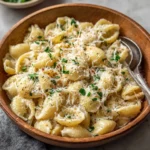
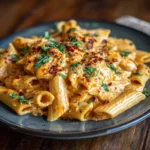
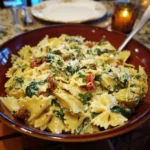
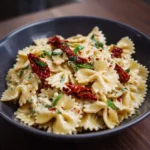
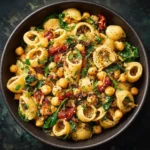
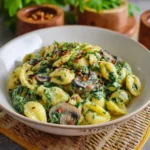
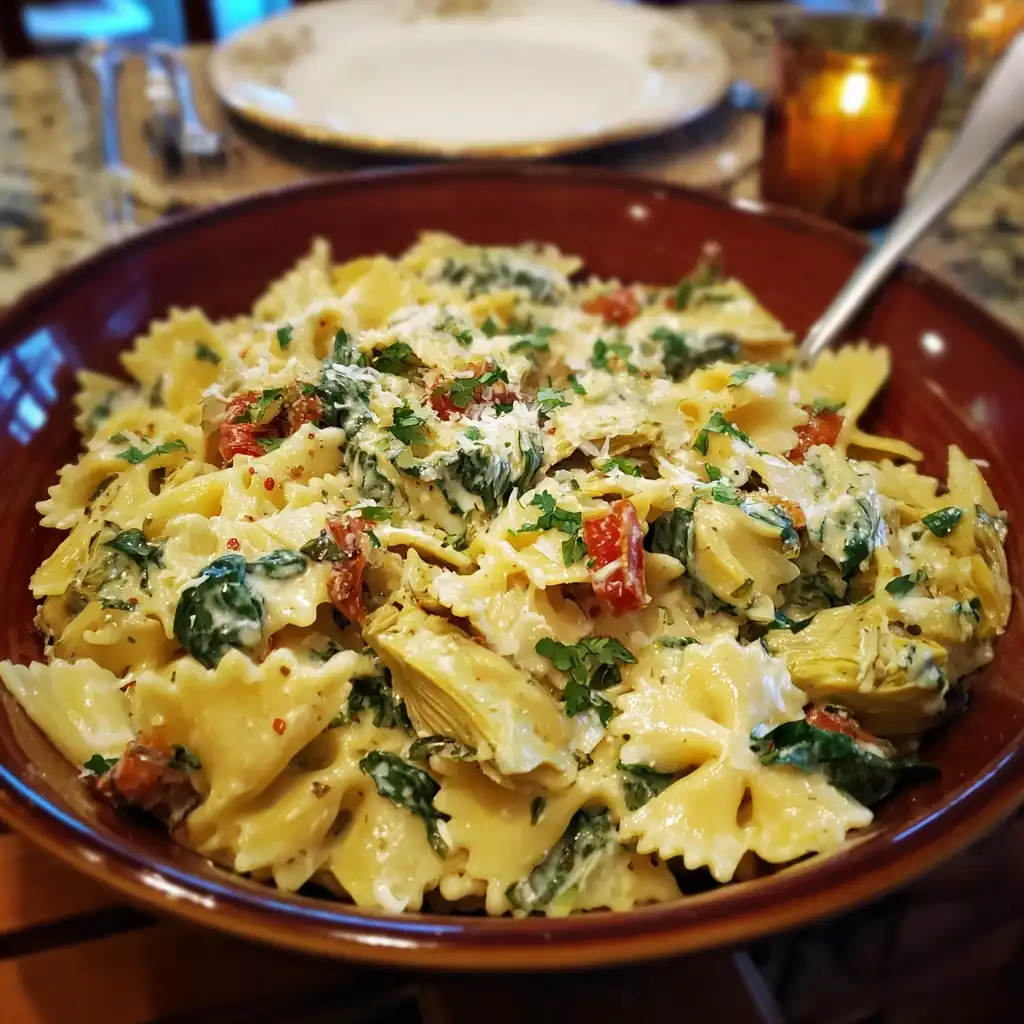
Spinach Artichoke Pasta is a luxurious, creamy, and deeply comforting dish that marries the earthy richness of fresh spinach with the briny, tender sweetness of artichoke hearts—all enveloped in a velvety, herb-kissed sauce and tossed with perfectly al dente pasta. Far more than just a crowd-pleasing appetizer repurposed as a main course, this dish represents the elegant fusion of Mediterranean flavors and American comfort food sensibilities. Whether served at a cozy family dinner, a holiday gathering, or a relaxed weeknight meal, Spinach Artichoke Pasta delivers bold flavor, satisfying texture, and visual appeal—vibrant green flecks of spinach, silvery-green artichoke pieces, golden shreds of cheese, and glossy ribbons of pasta glistening under a light dusting of herbs and red pepper flakes. Its versatility, make-ahead potential, and ability to straddle the line between indulgent and nourishing make it a perennial favorite across kitchens of all skill levels.
The History
The origins of Spinach Artichoke Pasta trace back—not directly, but spiritually—to the iconic Spinach Artichoke Dip, which first emerged in the United States in the 1950s–60s as part of the mid-century wave of creamy, baked, party-ready appetizers. While its exact birthplace remains debated (with strong claims from both California and the Midwest), the dip gained national prominence after appearing in Woman’s Day magazine in 1987 and later becoming a staple at Super Bowl parties, potlucks, and deli counters nationwide. Its foundational trio—spinach, marinated artichokes, and cream cheese or sour cream—proved irresistibly adaptable. Chefs and home cooks soon began deconstructing the dip: swapping chips for crusty bread, adding garlic and lemon zest for brightness, and ultimately, transforming it into a full-fledged entrée by integrating it with hot, starchy pasta. By the early 2000s, food blogs and culinary magazines were regularly featuring “Spinach Artichoke Pasta Bake” and “Stovetop Spinach Artichoke Pasta,” signaling its evolution from appetizer to centerpiece. Today, it reflects broader culinary trends—plant-forward yet dairy-embracing, globally inspired (artichokes hailing from the Mediterranean, spinach cultivated worldwide since ancient Persia), and rooted in pantry-friendly, scalable cooking. It stands as a testament to how American home cooking continually reinvents itself by elevating familiar ingredients into something both nostalgic and freshly inventive.
Ingredients Breakdown
Every exceptional Spinach Artichoke Pasta begins with thoughtful ingredient selection—each component playing a distinct, irreplaceable role in flavor, texture, and balance:
- Pasta: A sturdy, ridged short-cut like fusilli, cavatappi, or penne rigate is ideal—it grips the thick, creamy sauce without slipping away. Whole wheat or legume-based pastas add fiber and protein while maintaining structural integrity when cooked al dente. Avoid overly delicate shapes (e.g., angel hair) that can become mushy or overwhelmed.
- Fresh Spinach: Preferred over frozen for its bright, clean, slightly sweet vegetal notes and superior texture. When wilted properly, it retains subtle bite and vibrant color—never slimy or bitter. Baby spinach is optimal; mature leaves require stem removal and longer wilting time.
- Artichoke Hearts: Marinated artichoke hearts (packed in water or brine—not oil, unless excess oil is thoroughly drained) offer tangy depth and tender-crisp texture. Quartered or coarsely chopped, they distribute evenly and provide bursts of savory-sour complexity. Frozen or canned plain artichokes work in a pinch—but marinated versions contribute essential acidity and seasoning that elevate the entire dish.
- Aromatics: Yellow onion and garlic form the foundational flavor base. Sautéed slowly until translucent and fragrant—not browned—they lend sweetness and umami without sharpness. A small shallot can be added for nuance.
- Cream Base: A trifecta of dairy ensures luxurious mouthfeel without heaviness: full-fat ricotta (for mild tang and silky body), grated Parmigiano-Reggiano (for salty, nutty umami and natural thickening), and a splash of whole milk or half-and-half (to adjust consistency and prevent splitting). Some recipes use cream cheese or mascarpone for extra richness—but these can mute brightness if overused.
- Herbs & Seasonings: Fresh lemon zest and juice are non-negotiable—they cut through richness and lift every bite. Dried oregano and crushed red pepper flakes add Mediterranean warmth and gentle heat. Fresh parsley or basil stirred in at the end provides aromatic freshness and visual contrast.
- Optional Enhancements: A tablespoon of white wine (Sauvignon Blanc or Pinot Grigio) deglazes the pan and adds subtle acidity; toasted pine nuts or slivered almonds contribute crunch and toasty depth; a drizzle of high-quality extra virgin olive oil before serving amplifies aroma and sheen.
Step-by-Step Recipe
- Prep & Parboil Pasta: Bring a large pot of well-salted water (2 tbsp kosher salt per 4 quarts) to a rolling boil. Add 12 oz (340g) short-cut pasta and cook for 1 minute less than package instructions—typically 8–9 minutes for al dente. Reserve 1 cup of starchy pasta water, then drain pasta thoroughly (do not rinse).
- Sauté Aromatics: In a deep 12-inch skillet or Dutch oven, heat 2 tbsp extra virgin olive oil over medium-low heat. Add 1 finely diced yellow onion and sauté gently for 5–6 minutes until soft and translucent. Stir in 4 minced garlic cloves and ½ tsp red pepper flakes; cook 1 minute more until fragrant—do not let garlic brown.
- Wilt Spinach: Increase heat to medium. Add 10 oz (285g) fresh baby spinach in batches, stirring constantly until each addition wilts (about 30 seconds per batch). Once fully wilted and reduced to ~2 cups, season lightly with salt and remove from heat. Transfer to a colander, press gently to remove excess liquid, then roughly chop.
- Prepare Artichokes: Drain 14 oz (400g) marinated artichoke hearts, pat dry with paper towels, and quarter or coarsely chop. Reserve 1 tbsp of the marinade for deglazing (optional but recommended).
- Build Cream Sauce: Return skillet to low heat. Add reserved artichoke marinade (or 1 tbsp dry white wine), scraping up browned bits. Let simmer 30 seconds. Reduce heat to low. Whisk in 1 cup whole-milk ricotta, ¾ cup freshly grated Parmigiano-Reggiano, ¼ cup whole milk, 1 tsp lemon zest, and juice of ½ lemon. Stir continuously for 2–3 minutes until smooth, warm, and just beginning to thicken—do not boil.
- Combine & Finish: Return wilted spinach and drained artichokes to sauce. Gently fold in cooked pasta. Add reserved pasta water ¼ cup at a time, stirring vigorously, until sauce clings luxuriously to noodles (typically ½–¾ cup needed). Taste and adjust: more lemon for brightness, salt for depth, red pepper for heat, black pepper for warmth.
- Final Touches: Remove from heat. Stir in ¼ cup chopped fresh flat-leaf parsley and 2 tbsp torn fresh basil (if using). Optional: top with extra grated Parmigiano, a drizzle of olive oil, and a sprinkle of lemon zest. Serve immediately while steaming hot and glossy.
Tips
- Never skip salting the pasta water generously—it’s the only chance to season the pasta itself. Underseasoned water = bland foundation.
- Drain and dry artichokes thoroughly—excess moisture dilutes the sauce and creates separation. A quick press with paper towels makes a dramatic difference in creaminess.
- Reserve pasta water before draining—its starch is nature’s perfect emulsifier. Add it gradually; too much at once will thin the sauce beyond recovery.
- Use freshly grated cheese only—pre-grated Parmesan contains anti-caking agents (like cellulose) that inhibit melting and create graininess.
- Wilt spinach off the heat first—then return to pan—to avoid overcooking and bitterness. Overheated spinach turns olive-gray and loses vibrancy.
- Let ricotta come to room temperature before adding to warm (not hot) sauce—cold ricotta can cause curdling.
- Undercook pasta intentionally—it finishes cooking in the hot sauce, absorbing flavor and preventing mush.
- Add fresh herbs and citrus at the very end—heat dulls their volatile oils and bright notes.
- For restaurant-level silkiness, pass the finished sauce through a fine-mesh sieve before combining with pasta—this eliminates any ricotta lumps and creates an ultra-refined texture.
- Make ahead? Yes—with caveats: Cook pasta, cool completely, toss with 1 tsp olive oil to prevent sticking, and refrigerate up to 2 days. Prepare sauce separately (without pasta or spinach); reheat gently, then combine and finish with fresh greens and lemon.
Variations and Customizations
This recipe is gloriously adaptable—whether you’re accommodating dietary needs, exploring global flavors, or simply craving variety:
- Dairy-Free / Vegan: Replace ricotta with blended silken tofu + 1 tbsp nutritional yeast + 1 tsp lemon juice; use cashew cream (soaked raw cashews + water + garlic + lemon, blended ultra-smooth); swap Parmigiano for vegan “parm” (nutritional yeast + walnuts + garlic powder + salt); garnish with hemp seeds instead of cheese.
- Gluten-Free: Use certified GF pasta (brown rice, quinoa, or lentil-based hold up best); ensure artichokes are packed in GF-certified brine (some brands use vinegar derived from gluten grains).
- Protein-Packed: Fold in 1 cup cooked shredded chicken, flaked wild-caught salmon, pan-seared shrimp, or crumbled plant-based sausage (like Beyond Meat Italian). Add just before final toss to retain tenderness.
- Mediterranean Twist: Add ¼ cup pitted kalamata olives, 2 tbsp capers, 1 tsp dried oregano, and substitute feta for half the Parmigiano. Finish with oregano and a drizzle of lemon-infused olive oil.
- Roasted Vegetable Upgrade: Toss artichokes and 1 cup chopped broccoli florets with olive oil, salt, and garlic powder; roast at 425°F (220°C) for 20 minutes until caramelized. Use roasted veggies in place of raw/wilted spinach for deeper, sweeter notes.
- Lighter Version: Replace half the ricotta with low-fat cottage cheese (blended smooth); use 1% milk; increase spinach to 14 oz; add 1 tbsp white wine vinegar for tang; top with toasted sunflower seeds instead of cheese.
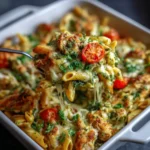
- Baked Gratinee Style: Transfer sauced pasta to a buttered 9×13 baking dish. Top with ½ cup panko breadcrumbs mixed with 2 tbsp melted butter, 2 tbsp grated pecorino, and 1 tsp dried thyme. Bake at 375°F (190°C) for 20–25 minutes until golden and bubbling at edges.
- Spicy Arrabbiata-Inspired: Sauté 1 finely diced Fresno chili with onions; add 2 tbsp tomato paste with garlic; stir in ¼ cup crushed San Marzano tomatoes before building sauce. Garnish with fresh basil and chili oil.
- Herb Garden Delight: Infuse olive oil with rosemary and thyme before sautéing onions; stir in 2 tbsp chopped chives, 1 tbsp tarragon, and 1 tsp lemon verbena at the end.
- Kid-Friendly Mild: Omit red pepper flakes entirely; add 1 tbsp honey or maple syrup to balance acidity; mix in ¼ cup shredded mozzarella for extra meltiness and mildness.
Health Considerations and Nutritional Value
A single 1.5-cup serving (made with whole wheat pasta, full-fat ricotta, and moderate cheese) offers a balanced, nutrient-dense profile:
- Calories: ~480–520 kcal — substantial enough for satiety without being excessive.
- Protein: ~22–26g — primarily from ricotta, Parmigiano, and pasta; supports muscle maintenance and prolonged fullness.
- Fiber: ~6–8g — thanks to whole wheat pasta and spinach; promotes digestive health, stabilizes blood sugar, and feeds beneficial gut microbiota.
- Vitamins & Minerals: Exceptionally rich in vitamin K (1,000+ mcg — >1,200% DV from spinach, vital for bone and cardiovascular health), folate (B9 — supports cellular repair and prenatal health), vitamin A (as beta-carotene — for vision and immunity), iron (non-heme, enhanced by lemon’s vitamin C), and calcium (from dairy and fortified pasta).
- Healthy Fats: Monounsaturated fats from olive oil and modest saturated fats from dairy support hormone production and nutrient absorption—especially fat-soluble vitamins A, D, E, and K.
- Low Added Sugar: Naturally sugar-free aside from trace amounts in artichokes; no refined sugars required.
- Considerations: Sodium content can run high (~650–850mg/serving) due to cheese, artichoke brine, and added salt—reduce by using low-sodium artichokes, omitting added salt during cooking, and rinsing brine thoroughly. For those managing cholesterol, opt for part-skim ricotta and reduce Parmigiano by 25%. Those with IBS may find large servings of cruciferous vegetables (artichokes) or high-FODMAP ingredients (garlic, onion) triggering—swap for garlic-infused oil and green onion tops only.
- Functional Benefits: Spinach’s nitrates may support healthy blood pressure; artichoke leaf extract has been studied for liver-supportive and bile-stimulating properties; lemon zest contains limonene, a potent antioxidant linked to reduced oxidative stress.
Ingredients
- 12 oz (340 g) short-cut pasta (fusilli, penne rigate, or cavatappi)
- 2 tbsp extra virgin olive oil
- 1 medium yellow onion, finely diced (~1 cup)
- 4 garlic cloves, minced
- ½ tsp crushed red pepper flakes (adjust to taste)
- 10 oz (285 g) fresh baby spinach, washed and stemmed
- 14 oz (400 g) marinated artichoke hearts, well-drained and patted dry
- 1 cup whole-milk ricotta cheese, room temperature
- ¾ cup freshly grated Parmigiano-Reggiano cheese (not pre-grated)
- ¼ cup whole milk or half-and-half
- Zest and juice of 1 large lemon (about 1 tsp zest, 2 tbsp juice)
- 1 tsp fine sea salt (plus more for pasta water)
- Freshly ground black pepper
- ¼ cup chopped fresh flat-leaf parsley
- 2 tbsp torn fresh basil leaves (optional but recommended)
- Extra grated Parmigiano and lemon zest for garnish
Directions
- Bring 4–5 quarts of water to a vigorous boil in a large stockpot. Add 2 tablespoons kosher salt. Add pasta and cook, stirring occasionally, until 1 minute shy of al dente (check package timing; usually 8–9 minutes). Reserve 1 cup of starchy pasta water, then drain pasta in a colander. Do not rinse.
- While pasta cooks, heat olive oil in a deep 12-inch skillet or Dutch oven over medium-low heat. Add diced onion and sauté gently for 5–6 minutes until soft and translucent. Stir in minced garlic and red pepper flakes; cook 1 minute more until fragrant—do not brown.
- Increase heat to medium. Add spinach in three batches, stirring constantly until each batch wilts (about 30 seconds per batch). Once fully wilted and reduced, season lightly with salt, then transfer to a colander. Press firmly with the back of a spoon or clean hands to remove excess liquid. Roughly chop and set aside.
- Drain artichokes thoroughly. Pat dry with paper towels. Quarter or coarsely chop.
- Return skillet to low heat. If using, add reserved artichoke marinade (or 1 tbsp dry white wine) and scrape up browned bits. Simmer 30 seconds. Reduce heat to lowest setting. Whisk in ricotta, grated Parmigiano, milk, lemon zest, lemon juice, 1 tsp salt, and several grinds of black pepper. Stir constantly for 2–3 minutes until warmed through and smoothly emulsified—do not boil.
- Add wilted spinach and chopped artichokes to sauce. Stir gently to combine. Add drained pasta and stir to coat. Begin adding reserved pasta water ¼ cup at a time, stirring vigorously after each addition, until sauce is luxuriously creamy and clings to pasta (usually ½–¾ cup total). Sauce should shimmer—not pool or separate.
- Remove from heat. Stir in parsley and basil. Taste and adjust: more lemon for brightness, salt for savoriness, black pepper for warmth, red pepper for heat.
- Divide among warmed bowls. Garnish generously with extra grated Parmigiano, a final sprinkle of lemon zest, and a drizzle of high-quality olive oil. Serve immediately.
FAQ
- Can I use frozen spinach?
- Yes—but thaw completely, squeeze *aggressively* in a clean kitchen towel to remove every drop of water (frozen spinach holds ~4x more water than fresh), and use only 1.5 cups packed (not 10 oz). Expect milder flavor and slightly softer texture.
- Why does my sauce look broken or grainy?
- Most often caused by overheating the ricotta (curdles above 160°F/71°C), using cold ricotta straight from the fridge, or adding pre-grated cheese with anti-caking agents. Solution: whisk sauce over low heat only, bring ricotta to room temp, grate cheese yourself, and strain sauce through a fine-mesh sieve before tossing.
- Can I make this ahead and reheat?
- Absolutely—but reheat gently. Store components separately: cooled pasta (tossed with 1 tsp oil), sauce (refrigerated), and chopped spinach/artichokes (refrigerated). Reheat sauce with 1–2 tbsp milk over low heat, then combine with pasta and greens. Add fresh lemon and herbs after reheating.
- What’s the best pasta to use—and why not spaghetti?
- Ridged, tubular, or twisted shapes (penne, fusilli, campanelle) trap creamy sauce in their nooks. Long, smooth strands like spaghetti or linguine can’t grip the thick mixture effectively, resulting in sauce pooling at the bottom of the bowl.
- My dish tastes bland—what went wrong?
- Underseasoning is the #1 culprit. Ensure pasta water is *salty like the sea*, taste sauce before adding pasta (it should be slightly overseasoned), and finish with bright acid (lemon) and fresh herbs. Also, low-quality or old Parmigiano lacks umami punch—buy authentic, refrigerated, block-form cheese.
- Can I freeze Spinach Artichoke Pasta?
- Not recommended. Dairy-based sauces (especially ricotta) separate and become watery or grainy upon freezing and thawing. However, the *uncombined* sauce (without pasta or greens) freezes well for up to 2 months—thaw overnight in fridge, reheat gently with splash of milk, then toss with freshly cooked pasta and wilted spinach.
- How do I keep it vegetarian but still hearty?
- Add ½ cup cooked white beans (cannellini or Great Northern) or 1 cup sautéed sliced cremini mushrooms for earthy umami and textural heft. Nutritional yeast (1–2 tbsp) boosts cheesy depth without dairy.
- Is there a low-carb version?
- Yes! Swap pasta for spiralized zucchini (zoodles), blanched shirataki noodles, or konjac rice. Sauté zoodles 1–2 minutes just to soften—don’t overcook. Add to warm sauce at the very end to prevent sogginess. Yield: ~6–7 cups zoodles replaces 12 oz pasta.
- Why does my dish turn grey or dull green?
- Overcooking spinach (especially with alkaline water or excessive heat) causes chlorophyll breakdown. Always wilt quickly off direct high heat, use fresh spinach (not wilted or yellowed), and add lemon juice—which helps preserve vibrant green pigment through acid stabilization.
- Can I use canned artichokes in water instead of marinated?
- You can—but you’ll lose crucial flavor dimension. Compensate by adding 1 tsp capers, ½ tsp Dijon mustard, 1 tbsp chopped sun-dried tomatoes (oil-packed, drained), and an extra ½ tsp lemon zest to the sauce. Rinse canned artichokes well to remove metallic taste.
Summary
Spinach Artichoke Pasta is a masterclass in balancing creamy indulgence with vibrant, nutrient-rich vegetables—transforming two humble pantry staples into a sophisticated, deeply satisfying, and endlessly customizable weeknight triumph.
With its roots in retro dip culture and its evolution into a modern, health-conscious, globally inspired entrée, this dish proves that comfort food need not sacrifice flavor, nutrition, or culinary creativity—and that the simplest combinations, executed with care, yield extraordinary results.