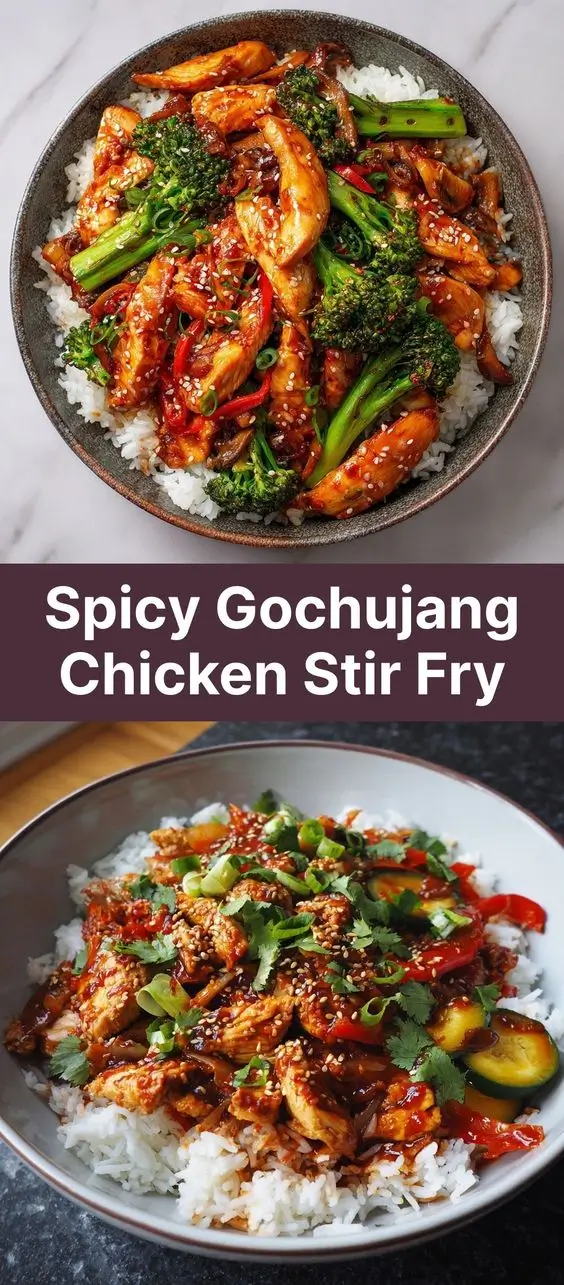
Spicy Gochujang Chicken Stir Fry: A Flavorful Korean-Inspired Delight
The History
The roots of Spicy Gochujang Chicken Stir Fry trace back to the rich culinary traditions of Korea, where bold flavors and fermented ingredients define much of the cuisine. Gochujang, the star ingredient in this dish, is a deep red chili paste that has been used in Korean cooking for centuries—dating as far back as the 18th century during the Joseon Dynasty. Originally developed as a way to preserve food and enhance flavor, gochujang is made from glutinous rice, fermented soybeans, red chili powder, and salt. Its umami-rich, spicy-sweet profile makes it an essential component in many Korean dishes such as bibimbap, tteokbokki, and bulgogi.
While traditional Korean recipes often feature gochujang in stews or marinades, modern fusion cooking has embraced its versatility by incorporating it into quick stir-fries like this one. The concept of stir-frying chicken with gochujang emerged globally through the rise of Korean-inspired street food and home-cooked meals popularized by food bloggers and chefs around the world. Today’s Spicy Gochujang Chicken Stir Fry reflects a harmonious blend of traditional Korean taste and contemporary global palates—offering heat, depth, and balance all in one sizzling pan.
Ingredients Breakdown
To create a truly authentic yet approachable version of Spicy Gochujang Chicken Stir Fry, each ingredient plays a vital role in building layers of flavor, texture, and aroma:
- Chicken Breast or Thighs: Boneless, skinless chicken breasts are lean and widely used, but thighs offer more juiciness and richness due to their higher fat content. Both work well depending on your preference.
- Gochujang Paste: This fermented Korean chili paste delivers complex heat, sweetness, and savory depth. Look for it in glass jars at Asian grocery stores or the international aisle of supermarkets.
- Soy Sauce: Adds saltiness and umami; use low-sodium soy sauce if you’re watching salt intake.
- Minced Garlic: Fresh garlic provides a pungent kick that enhances the overall savoriness.
- Fresh Ginger: Grated or finely minced ginger introduces warmth and brightness, balancing the spice.
- Honey or Brown Sugar: A touch of sweetness helps counteract the heat of gochujang and promotes caramelization when stir-fried.
- Rice Vinegar or Apple Cider Vinegar: Adds acidity to brighten the sauce and cut through the richness.
- Sesame Oil: Used both in the marinade and finishing oil, it contributes a nutty, aromatic finish characteristic of East Asian dishes.
- Vegetables: Common choices include bell peppers (red and green), onions, carrots, broccoli florets, zucchini, mushrooms, and snap peas—adding color, crunch, and nutrition.
- Cooking Oil: High smoke-point oils like vegetable, canola, or avocado oil are ideal for high-heat stir-frying.
- Cornstarch (Optional): Tossing chicken in cornstarch before cooking creates a light crust and helps thicken the sauce slightly.
- Green Onions and Sesame Seeds: For garnish—adds freshness and visual appeal.
- Water or Chicken Broth: Helps loosen the sauce and ensure even coating over the ingredients.
Step-by-Step Recipe
- Prepare the Chicken: Cut 1 pound (450g) of boneless chicken into thin bite-sized strips. Pat dry with paper towels to ensure proper browning.
- Make the Marinade: In a bowl, combine 3 tablespoons gochujang paste, 2 tablespoons soy sauce, 1 tablespoon honey (or brown sugar), 1 tablespoon rice vinegar, 1 teaspoon sesame oil, 2 cloves minced garlic, and 1 teaspoon grated fresh ginger. Mix well until smooth.
- Marinate the Chicken: Add the chicken pieces to the marinade and toss to coat evenly. Let sit for at least 15–20 minutes at room temperature, or up to 2 hours in the refrigerator for deeper flavor infusion.
- Prep the Vegetables: While the chicken marinates, slice 1 red bell pepper, 1 yellow bell pepper, 1 small onion, 1 carrot (julienned), and 1 cup broccoli florets. Keep them ready in a large bowl.
- Heat the Pan: Place a large wok or wide skillet over medium-high heat. Add 1–2 tablespoons of neutral oil (like vegetable or canola).
- Cook the Chicken: Once the oil shimmers, add the marinated chicken in a single layer. Cook undisturbed for 2–3 minutes to allow searing, then stir-fry for another 4–5 minutes until fully cooked through and lightly caramelized. Remove and set aside.
- Stir-Fry the Vegetables: In the same pan, add a bit more oil if needed. Add the harder vegetables first (carrots, broccoli) and stir-fry for 2 minutes. Then add softer ones (bell peppers, onions) and cook for another 3–4 minutes until crisp-tender.
- Combine Everything: Return the cooked chicken to the pan. Pour in any remaining marinade and ¼ cup water or chicken broth. Stir well and simmer for 2–3 minutes until the sauce thickens slightly and coats everything evenly.
- Adjust Seasoning: Taste and adjust—add a splash more soy sauce for saltiness, honey for sweetness, or a pinch of red pepper flakes for extra heat.
- Finish and Serve: Drizzle with ½ teaspoon toasted sesame oil. Garnish generously with sliced green onions and a sprinkle of toasted sesame seeds.
Tips
- Don’t Overcrowd the Pan: Cooking in batches ensures the chicken browns instead of steams, enhancing flavor through the Maillard reaction.
- Use Fresh Gochujang: Old or expired gochujang can lose potency and develop off-flavors. Check the expiration date and smell it—it should be earthy, spicy, and slightly sweet.
- Balance the Heat: If the dish turns out too spicy, stir in a little more honey or serve with plain steamed rice to mellow the burn.
- Velveting the Chicken (Pro Tip): For restaurant-quality tender chicken, marinate it with 1 teaspoon baking soda and 1 tablespoon water for 15 minutes, rinse, pat dry, then proceed with the recipe. This technique, known as “velveting,” keeps proteins juicy during high-heat cooking.
- Double the Sauce: If serving four or more people, consider doubling the sauce mixture to ensure every bite is flavorful.
- Prep Ahead: Chop all ingredients beforehand—stir-frying moves fast, so having everything ready (“mise en place”) is key.
- Keep Vegetables Crisp: Avoid overcooking veggies; they should retain a slight crunch for optimal texture.
Variations and Customizations
One of the greatest strengths of Spicy Gochujang Chicken Stir Fry is its adaptability. Whether you’re catering to dietary needs, seasonal produce, or adventurous taste buds, here are some creative twists:
- Protein Swaps: Replace chicken with thinly sliced beef (for a bulgogi-style twist), pork, shrimp, tofu, tempeh, or even edamame for a vegetarian/vegan option.
- Gluten-Free Version: Use tamari or coconut aminos instead of soy sauce, and confirm your gochujang brand is gluten-free (some contain barley). Serve with quinoa or cauliflower rice.
- Low-Carb/Keto Option: Omit honey or substitute with monk fruit syrup, reduce carrots and bell peppers (moderate carbs), and increase leafy greens like bok choy or kale.
- Extra Heat Lovers: Add gochugaru (Korean red pepper flakes), sriracha, or a diced Thai chili to intensify the fire.
- Creamy Twist: Stir in a spoonful of peanut butter or tahini for a richer, nuttier sauce reminiscent of Korean-Mexican fusion tacos.
- Pineapple Addition: Toss in fresh pineapple chunks for a sweet-and-spicy tropical flair.
- Noodle Integration: Turn it into a full meal by tossing the stir-fry with udon, soba, ramen, or rice noodles. Reheat everything together with a splash of broth.
- Sheet Pan Roast: For easier cleanup, skip the stove and roast marinated chicken and vegetables on a sheet pan at 425°F (220°C) for 20–25 minutes, flipping halfway.
Health Considerations and Nutritional Value
Spicy Gochujang Chicken Stir Fry can be a nutritious and balanced meal when prepared thoughtfully. Here’s what you need to know about its health profile:
- High Protein: Chicken breast is an excellent source of lean protein, supporting muscle repair and satiety.
- Antioxidant-Rich Ingredients: Bell peppers, broccoli, and carrots provide vitamins A, C, and K, along with fiber and antioxidants like beta-carotene and lutein.
- Fermented Benefits: Gochujang contains beneficial microbes due to its fermentation process, potentially aiding gut health—though pasteurized versions may have fewer live cultures.
- Healthy Fats: Sesame oil offers monounsaturated fats and antioxidant sesamol, which may support heart health in moderation.
- Sodium Watch: Soy sauce and gochujang are naturally high in sodium. To reduce salt content, opt for reduced-sodium soy sauce and limit added salt elsewhere.
- Sugar Content: Gochujang and honey contribute natural sugars. Diabetics or those limiting sugar should monitor portion sizes or use alternative sweeteners.
- Calorie Control: A typical serving (about 1.5 cups) ranges from 300–400 calories, depending on oil usage and accompaniments. Serving over brown rice adds fiber, while cauliflower rice reduces carbs.
- Allergens: Contains soy and sesame. May contain gluten depending on gochujang and soy sauce brands—always check labels for allergen warnings.
Ingredients
- 1 lb (450g) boneless, skinless chicken breasts or thighs, sliced into thin strips
- 3 tbsp gochujang paste (adjust to taste)
- 2 tbsp soy sauce (or tamari for gluten-free)
- 1 tbsp honey or packed brown sugar
- 1 tbsp rice vinegar (or apple cider vinegar)
- 1 tsp toasted sesame oil (plus extra for finishing)
- 2 cloves garlic, minced
- 1 tsp fresh ginger, grated
- 1 red bell pepper, sliced
- 1 yellow bell pepper, sliced
- 1 medium onion, sliced
- 1 medium carrot, julienned or thinly sliced
- 1 cup broccoli florets
- 2–3 tbsp cooking oil (vegetable, canola, or avocado)
- ¼ cup water or chicken broth
- 2 green onions, sliced (for garnish)
- 1 tsp toasted sesame seeds (for garnish)
- (Optional) 1 tbsp cornstarch for coating chicken
Directions
- In a medium bowl, whisk together gochujang, soy sauce, honey, rice vinegar, sesame oil, garlic, and ginger until a smooth sauce forms.
- Add chicken strips to the sauce and mix thoroughly. Marinate for 15–20 minutes at room temperature, or refrigerate for up to 2 hours.
- Meanwhile, prepare all vegetables and keep them grouped by cooking time (hard vs. soft).
- Heat 1–2 tablespoons oil in a large wok or non-stick skillet over medium-high heat until shimmering.
- Add marinated chicken in a single layer and cook without stirring for 2–3 minutes to develop a golden sear. Stir-fry for another 4–5 minutes until cooked through. Transfer to a plate.
- Add another teaspoon of oil if needed. Begin stir-frying the harder vegetables (carrots, broccoli) for 2 minutes.
- Add softer vegetables (bell peppers, onions) and continue cooking for 3–4 minutes until vibrant and crisp-tender.
- Return chicken to the pan. Pour in any leftover marinade and add ¼ cup water or broth. Stir well.
- Simmer for 2–3 minutes, allowing the sauce to thicken and cling to the ingredients.
- Taste and adjust seasoning—add more honey for sweetness, vinegar for tang, or soy sauce for saltiness.
- Remove from heat. Finish with a drizzle of sesame oil.
- Garnish with green onions and sesame seeds.
- Serve immediately over steamed white rice, brown rice, quinoa, or cauliflower rice.
FAQ
Q: Can I make this ahead of time?
A: Yes! You can marinate the chicken and chop the vegetables the night before. Fully cooked stir-fry can be stored in the fridge for up to 3 days. Reheat gently in a skillet with a splash of water to refresh the sauce.
Q: Is gochujang very spicy?
A: Gochujang has moderate heat—it’s more of a slow-building warmth than instant fire. It balances spiciness with sweetness and umami. Start with 1–2 tablespoons if you’re sensitive to spice.
Q: Can I freeze Spicy Gochujang Chicken Stir Fry?
A: Yes, though texture may change slightly upon thawing. Freeze in airtight containers for up to 2 months. Reheat on the stove for best results.
Q: Where can I buy gochujang?
A: Most major supermarkets carry it in the international or Asian foods section. Korean brands like Chung Jung One, Sempio, or Mother-in-Law’s Kimchi are reliable. Available online via Amazon or specialty Asian grocers.
Q: What can I use instead of gochujang?
A: There’s no perfect substitute, but a mix of sriracha + miso paste + a bit of sugar comes closest. Alternatively, use doubanjiang (Chinese chili bean paste) with adjustments for salt and sweetness.
Q: Why did my sauce turn out too thick or too thin?
A: Too thick? Add more water or broth. Too thin? Simmer longer or mix ½ teaspoon cornstarch with 1 tablespoon cold water and stir in to thicken.
Q: Can I make this vegetarian?
A: Absolutely! Swap chicken for extra-firm tofu, tempeh, or seitan. Press tofu well before marinating to absorb flavors better.
Q: How do I prevent the chicken from drying out?
A: Don’t overcook it. Remove chicken once it reaches 165°F (74°C). Using chicken thighs or velveting technique also helps retain moisture.
Summary
Spicy Gochujang Chicken Stir Fry brings together fiery depth, savory umami, and vibrant textures in a quick weeknight-friendly meal rooted in Korean tradition. Packed with bold flavors and adaptable to countless variations, it’s a modern favorite that satisfies spice lovers and curious cooks alike.