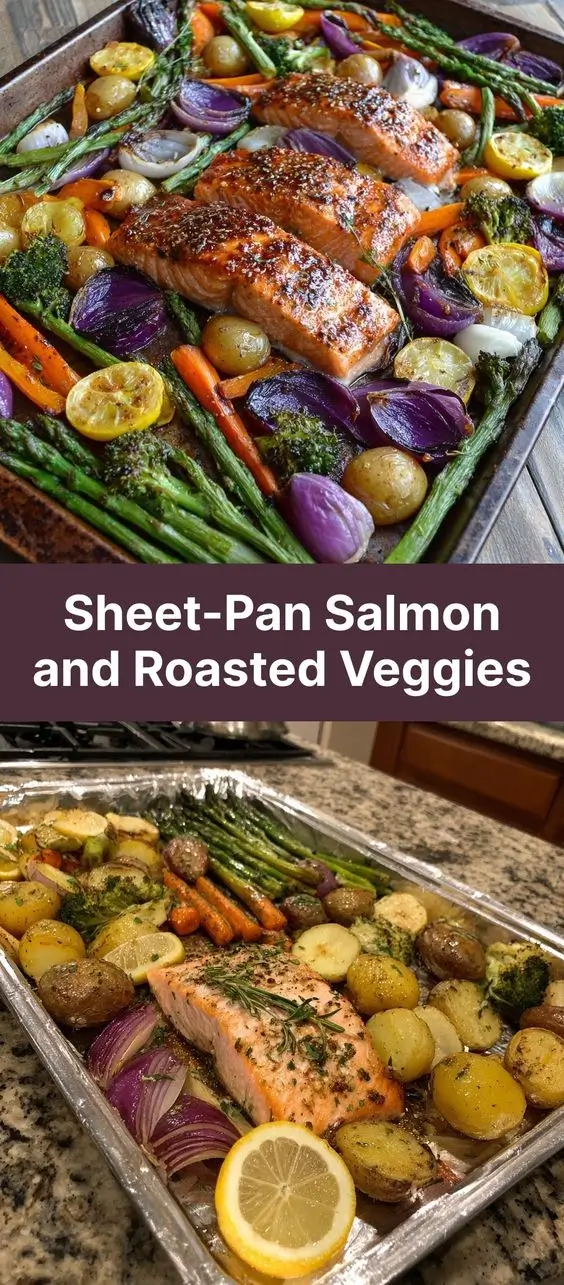
Sheet-Pan Salmon and Roasted Veggies: A Complete Guide to the Perfect Weeknight Dinner
Introduction
If you’re searching for a healthy, flavorful, and incredibly easy weeknight dinner, look no further than Sheet-Pan Salmon and Roasted Veggies. This one-pan wonder combines tender, flaky salmon fillets with an array of colorful vegetables, all roasted to perfection under high heat. Not only does this dish deliver on taste and nutrition, but it also minimizes cleanup—making it a favorite among busy families, health enthusiasts, and home cooks of all levels.
The beauty of this recipe lies in its simplicity and versatility. With just a few quality ingredients and minimal prep time, you can create a restaurant-quality meal that’s packed with omega-3 fatty acids, fiber, antioxidants, and essential vitamins. Whether you’re cooking for one or feeding a family of four, this sheet-pan method ensures even cooking, maximum flavor, and a satisfying balance of protein and plant-based nutrients.
The History
While there isn’t a specific documented origin for “Sheet-Pan Salmon and Roasted Veggies,” the concept stems from centuries-old traditions of roasting fish and vegetables together over open flames or in ovens. In Nordic and Mediterranean cultures, cooking seafood alongside seasonal produce has long been a staple practice. The modern version, however, gained widespread popularity in the early 2010s as food bloggers and culinary influencers embraced the “one-pan” trend.
This movement was fueled by the growing demand for quick, nutritious meals that align with busy lifestyles. Cookbooks like One Pan, Two Plates by Carla Snyder and viral recipes from sites like Smitten Kitchen and Cookie and Kate helped cement the sheet-pan dinner as a modern classic. Today, it’s a go-to strategy in kitchens across North America and beyond—especially for those seeking low-effort, high-reward dishes that support clean eating, meal prepping, and balanced diets.
Ingredients Breakdown
The success of this dish hinges on using fresh, high-quality ingredients. Each component plays a vital role in building layers of flavor, texture, and nutrition. Here’s a detailed look at what goes into a perfect Sheet-Pan Salmon and Roasted Veggies meal:
- Salmon Fillets: Opt for wild-caught salmon when possible—it tends to have a richer flavor, firmer texture, and higher omega-3 content than farmed varieties. Look for skin-on fillets for added moisture during roasting.
- Olive Oil: Extra virgin olive oil is ideal for its heart-healthy monounsaturated fats and robust flavor. It helps crisp the veggies and keeps the salmon moist.
- Lemon: Fresh lemon juice and zest brighten the entire dish, cutting through the richness of the salmon and enhancing vegetable flavors.
- Garlic: Minced fresh garlic adds depth and aromatic complexity. Roasting mellows its sharpness while boosting umami notes.
- Dried Herbs: Thyme, rosemary, and oregano are excellent choices. They stand up well to high heat and infuse the oil and veggies with earthy warmth.
- Fresh Herbs (optional): Parsley or dill added after roasting brings freshness and color.
- Vegetables: A mix of hearty, oven-friendly vegetables ensures even cooking. Common picks include:
- Broccoli florets – high in vitamin C and fiber
- Red bell peppers – sweet, colorful, rich in antioxidants
- Zucchini or yellow squash – tender with mild flavor
- Red onion – adds sweetness and char when roasted
- Cherry tomatoes – burst with juicy acidity
- Carrots – bring natural sweetness and vibrant color
- Asparagus – elegant and tender-crisp when not overcooked
- Salt and Pepper: Essential for seasoning. Use kosher salt for better control and freshly ground black pepper for aroma.
- Honey or Maple Syrup (optional): A small drizzle can balance acidity and enhance caramelization, especially on root vegetables.
Step-by-Step Recipe
Follow these detailed steps to achieve perfectly cooked salmon and crisp-tender vegetables every time.
- Preheat the Oven: Set your oven to 400°F (200°C). This temperature ensures the vegetables roast evenly without burning and allows the salmon to cook gently yet thoroughly.
- Prepare the Baking Sheet: Line a large rimmed baking sheet with parchment paper or lightly grease it with olive oil to prevent sticking. A non-stick silicone mat also works well.
- Chop the Vegetables: Cut all vegetables into uniform sizes—about 1-inch pieces—to ensure even cooking. Harder veggies like carrots should be sliced thinner than softer ones like zucchini.
- Toss the Vegetables: In a large bowl, combine the chopped vegetables with 2–3 tablespoons of olive oil, 2 minced garlic cloves, 1 teaspoon dried thyme, salt, and pepper. Toss until evenly coated.
- Arrange on Pan: Spread the vegetables in a single layer on the prepared baking sheet. Avoid overcrowding; use two pans if necessary. Overcrowding leads to steaming instead of roasting.
- Roast Initial Batch: Place the pan in the preheated oven and roast for 10–12 minutes. This head start ensures the vegetables are nearly done by the time the salmon finishes.
- Prepare the Salmon: While veggies roast, pat the salmon fillets dry with paper towels. Season both sides with salt, pepper, and a pinch of garlic powder. Drizzle lightly with olive oil and squeeze fresh lemon juice over the top. Sprinkle with lemon slices or herbs if desired.
- Add Salmon to Pan: After the initial 10–12 minutes, remove the pan from the oven. Push the vegetables to the outer edges or make space in the center. Place salmon fillets skin-side down (if applicable) in the middle of the pan.
- Return to Oven: Place the sheet back in the oven and continue roasting for 12–15 minutes, depending on the thickness of the fillets. The salmon is done when it flakes easily with a fork and reaches an internal temperature of 145°F (63°C).
- Optional Broil: For extra browning, switch the oven to broil for the last 1–2 minutes. Watch closely to avoid burning.
- Rest and Garnish: Remove the pan from the oven and let the salmon rest for 2–3 minutes. This helps retain moisture. Squeeze additional lemon juice over everything and sprinkle with fresh chopped parsley or dill.
- Serve: Serve directly from the pan or transfer to individual plates. Great alongside quinoa, brown rice, or crusty bread for soaking up juices.
Tips
- Uniform Cutting: Keep veggie pieces consistent in size so they cook evenly. If mixing soft and hard vegetables, consider adding delicate ones like cherry tomatoes halfway through.
- Don’t Skip Pre-Roasting: Starting the vegetables before adding the salmon prevents undercooked veggies and overcooked fish.
- Use High Heat: Roasting at 400°F or higher promotes caramelization and develops deep flavor through the Maillard reaction.
- Check Doneness Early: Ovens vary, and salmon cooks quickly. Start checking at 10 minutes to avoid dryness.
- Skin-On vs. Skin-Off: Skin helps protect the flesh and retains moisture. You can serve with skin or peel it off after cooking.
- Non-Reactive Pans: Avoid aluminum pans if using acidic ingredients like lemon in excess—they can react and impart metallic taste. Stainless steel or heavy-duty rimmed baking sheets are best.
- Rotate the Pan: Halfway through cooking, rotate the pan 180 degrees for even heat distribution, especially in older ovens.
- Make Ahead: Chop vegetables up to a day in advance and store in airtight containers. Assemble just before roasting for optimal texture.
Variations and Customizations
This recipe is highly adaptable based on dietary preferences, seasonal availability, and cultural influences. Here are some creative twists to try:
- Mediterranean Style: Add kalamata olives, artichoke hearts, and feta cheese after roasting. Swap herbs for oregano and mint.
- Asian-Inspired: Replace olive oil with sesame oil, add grated ginger, soy sauce or tamari, and a splash of rice vinegar. Top with green onions and sesame seeds.
- Spicy Version: Toss veggies with smoked paprika, cayenne, or chili flakes. Marinate salmon in sriracha-honey glaze before roasting.
- Dairy-Free & Paleo: Naturally compliant! Just ensure any added sauces are free from dairy and refined sugars.
- Vegan Option: Substitute salmon with marinated tofu or tempeh. Press tofu first, then coat with miso, maple, and tamari before roasting.
- Low-Carb/Keto: Focus on non-starchy vegetables like broccoli, cauliflower, zucchini, and asparagus. Increase healthy fat with avocado oil or ghee.
- Herb Crust: Create a crust for the salmon using a mixture of breadcrumbs (or almond flour for gluten-free), parsley, lemon zest, and garlic. Press onto fillets before roasting.
- Citrus Twist: Use orange or grapefruit segments instead of lemon. Pair with shallots and thyme for a sophisticated flavor profile.
- Root Vegetable Blend: In colder months, swap summer veggies for sweet potatoes, parsnips, turnips, and beets. Toss with rosemary and a touch of maple syrup.
Health Considerations and Nutritional Value
Sheet-Pan Salmon and Roasted Veggies isn’t just delicious—it’s a powerhouse of nutrition. Here’s why this dish deserves a regular spot in your meal rotation:
- Rich in Omega-3 Fatty Acids: Salmon is one of the best sources of EPA and DHA, which support brain function, reduce inflammation, and promote heart health.
- High-Quality Protein: A 6-ounce salmon fillet provides about 34 grams of complete protein, aiding muscle repair and satiety.
- Fiber-Rich Vegetables: Depending on the mix, this dish can deliver 5–8 grams of dietary fiber per serving, supporting digestive health and blood sugar regulation.
- Antioxidant Powerhouse: Colorful vegetables provide beta-carotene (carrots), lycopene (tomatoes), anthocyanins (red cabbage), and vitamin C (bell peppers)—all combat oxidative stress.
- Heart-Healthy Fats: Olive oil contributes monounsaturated fats linked to reduced LDL cholesterol and improved cardiovascular outcomes.
- Low in Refined Carbs: When served without grains, this meal is naturally low in carbohydrates, making it suitable for keto, paleo, and diabetic-friendly diets.
- Vitamin D Source: Salmon is one of the few natural food sources of vitamin D, crucial for immune function and bone health.
- Mercury Concerns: While salmon is generally low in mercury compared to other fish like tuna or swordfish, pregnant women and young children should still consume it in moderation (2–3 servings per week recommended by FDA).
- Sustainability Note: Choose salmon certified by organizations like MSC (Marine Stewardship Council) or Seafood Watch to support environmentally responsible fishing practices.
Nutrition Facts (Approximate per Serving – serves 4)
| Nutrient | Amount |
|---|---|
| Calories | 380 kcal |
| Total Fat | 22g |
| Saturated Fat | 4g |
| Cholesterol | 95mg |
| Sodium | 420mg |
| Total Carbohydrates | 18g |
| Dietary Fiber | 6g |
| Sugars | 7g |
| Protein | 34g |
| Vitamin D | 18mcg (90% DV) |
| Calcium | 80mg |
| Iron | 3.2mg |
| Potassium | 1100mg |
Note: Values may vary based on ingredient choices, portion size, and oil quantity.
Ingredients
- 4 (6 oz) salmon fillets, skin-on preferred
- 2 tablespoons extra virgin olive oil (plus more for drizzling)
- Juice and zest of 1 lemon
- 3 cloves garlic, minced
- 1 teaspoon dried thyme (or 1 tbsp fresh)
- 1/2 teaspoon smoked paprika (optional)
- Salt and freshly ground black pepper, to taste
- 2 cups broccoli florets
- 1 red bell pepper, sliced
- 1 yellow squash, sliced into half-moons
- 1 cup cherry tomatoes
- 1 red onion, cut into wedges
- 1 medium carrot, sliced diagonally
- 10–12 asparagus spears, trimmed
- Fresh parsley or dill, for garnish
- Lemon slices, for serving
Directions
- Preheat oven to 400°F (200°C). Line a large rimmed baking sheet with parchment paper.
- In a large bowl, toss all chopped vegetables with olive oil, half the minced garlic, thyme, smoked paprika (if using), salt, and pepper. Mix until evenly coated.
- Spread vegetables in a single layer on the baking sheet. Roast for 10–12 minutes to get a head start on cooking.
- While vegetables roast, prepare salmon: pat fillets dry, season with salt, pepper, remaining garlic, lemon juice, and zest. Drizzle lightly with olive oil.
- Remove pan from oven. Push vegetables to the sides to create space in the center. Place salmon fillets skin-side down in the middle.
- Return pan to oven and roast for 12–15 minutes, or until salmon is opaque and flakes easily with a fork.
- For a golden finish, broil on high for 1–2 minutes (optional, watch carefully).
- Remove from oven and let rest 2–3 minutes. Garnish with fresh herbs, additional lemon juice, and lemon slices.
- Serve warm, straight from the pan. Optional sides: quinoa, wild rice, or a simple arugula salad.
FAQ
- Can I use frozen salmon?
- Yes, but thaw it completely in the refrigerator overnight before cooking. Cooking frozen salmon may result in uneven texture and excess moisture.
- How do I prevent the salmon from sticking?
- Use parchment paper or a silicone baking mat. Also, avoid moving the salmon too soon—let it develop a light sear before attempting to lift it.
- Can I cook everything at the same time?
- You can, but the vegetables may end up undercooked or the salmon overdone. The staggered method ensures both components are perfect.
- What can I do with leftovers?
- Store in an airtight container in the fridge for up to 3 days. Reheat gently in the oven or enjoy cold in salads or grain bowls.
- Is this recipe gluten-free?
- Yes, as written. Always check labels on any added sauces or seasonings to confirm.
- Can I grill this instead?
- Absolutely! Use a grill basket for veggies and a cedar plank or foil packet for the salmon to prevent sticking.
- Why is my salmon dry?
- Overcooking is the most common cause. Remove salmon as soon as it reaches 145°F internally or flakes easily. Carryover cooking continues after removal from heat.
- Can I freeze this dish?
- We don’t recommend freezing once cooked—salmon can become mushy upon thawing. However, you can freeze raw marinated salmon separately for up to 3 months.
Summary
Sheet-Pan Salmon and Roasted Veggies is a nutritious, flavorful, and effortless meal that combines omega-3-rich salmon with a rainbow of roasted vegetables—all cooked on one pan for easy cleanup.
Perfect for weeknights, meal prep, or healthy dining, this versatile recipe supports various diets and can be customized endlessly with global flavors and seasonal produce.