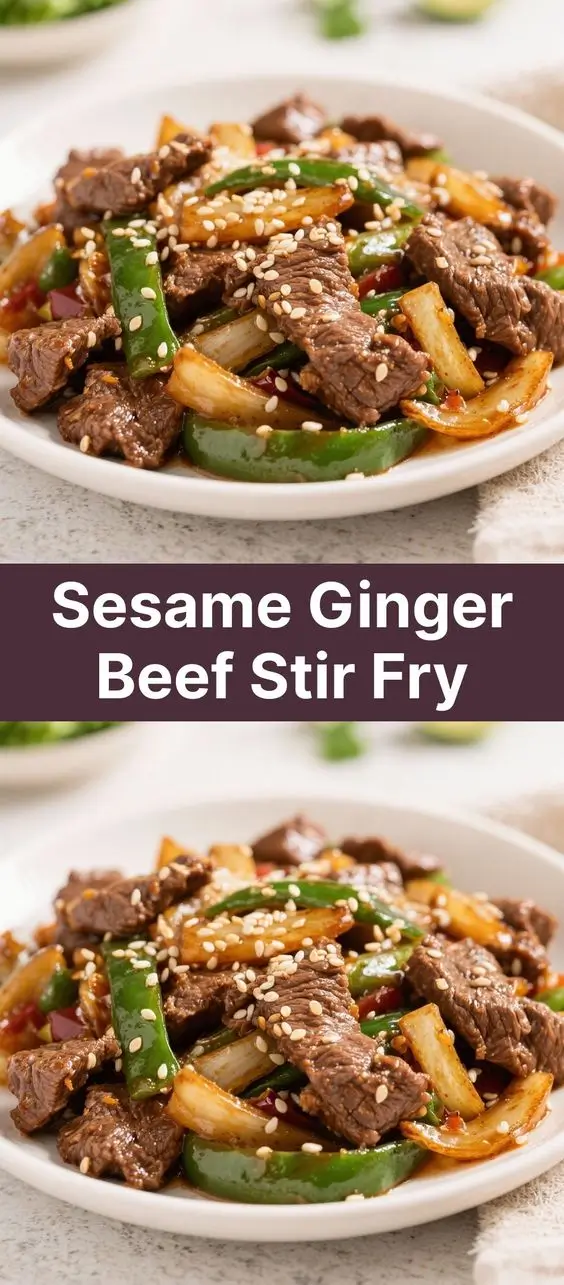
Sesame Ginger Beef Stir Fry: A Flavorful Journey Through Taste and Tradition
Introduction
Sesame Ginger Beef Stir Fry is a vibrant, aromatic dish that captures the essence of Asian-inspired cuisine with its bold flavors, tender beef, and fragrant spices. Revered for its perfect balance of savory, sweet, tangy, and umami notes, this stir fry has become a staple in both home kitchens and restaurants worldwide. Whether you’re cooking for a quick weeknight dinner or impressing guests with an elegant meal, Sesame Ginger Beef Stir Fry delivers satisfaction in every bite. Its versatility, speed of preparation, and rich flavor profile make it a go-to recipe for food lovers seeking comfort with a gourmet twist.
The History
The origins of stir-frying can be traced back over 2,000 years to ancient China, where the wok was first developed as a cooking vessel during the Han Dynasty. The technique allowed for efficient, high-heat cooking using minimal oil—ideal for preserving nutrients while enhancing flavor. As Chinese culinary traditions spread across Asia and eventually the globe, regional adaptations emerged, incorporating local ingredients and tastes.
Sesame Ginger Beef Stir Fry, in particular, evolved from Cantonese and Sichuan styles of cooking, where ginger and sesame oil were frequently used to add depth and warmth to meat dishes. With the rise of Chinese-American cuisine in the 20th century, dishes like this gained popularity in Western countries, often modified to suit local palates—slightly sweeter, less spicy, but still deeply flavorful. Today, Sesame Ginger Beef Stir Fry stands as a beloved fusion of traditional techniques and modern convenience, representing the global appreciation for quick, healthy, and delicious meals.
Ingredients Breakdown
The magic of Sesame Ginger Beef Stir Fry lies in the harmony of its ingredients. Each component plays a crucial role in building layers of flavor and texture:
- Beef (sirloin, flank steak, or ribeye): Lean yet tender cuts are ideal for quick cooking. Thinly sliced against the grain ensures melt-in-your-mouth results.
- Fresh ginger: Adds a warm, slightly spicy zing that is central to the dish’s character. Grated or finely minced, it infuses the sauce with aromatic brightness.
- Garlic: Complements ginger with its pungent depth, forming the aromatic base of the stir fry.
- Soy sauce: Provides saltiness and umami. Low-sodium versions help control salt intake without sacrificing flavor.
- Hoisin sauce: Contributes sweetness and a rich, complex molasses-like flavor that binds the sauce together.
- Rice vinegar: Offers a mild acidity that brightens the overall taste and balances the richness of the beef.
- Sesame oil: A small amount adds a nutty, toasted aroma that defines the dish. Use sparingly—it’s potent!
- Brown sugar or honey: Enhances caramelization and rounds out sharp flavors.
- Cornstarch: Used both to marinate the beef (for tenderness) and to thicken the sauce into a glossy glaze.
- Vegetables (bell peppers, broccoli, snap peas, carrots): Add color, crunch, and nutrition. They absorb the sauce beautifully while maintaining texture.
- Toasted sesame seeds: Provide a final touch of nuttiness and visual appeal when sprinkled on top.
- Green onions: Offer a fresh, oniony bite and pop of color upon serving.
Step-by-Step Recipe
- Prepare Ingredients: Slice 1 lb (450g) of beef into thin strips, about ¼ inch thick. Cut vegetables into uniform pieces for even cooking. Mince 3 cloves of garlic and grate a 1-inch piece of fresh ginger.
- Marinate the Beef: In a bowl, combine beef with 1 tbsp soy sauce, 1 tsp cornstarch, and 1 tsp sesame oil. Let sit for 15–20 minutes to tenderize and flavor the meat.
- Make the Sauce: In another bowl, whisk together ¼ cup soy sauce, 3 tbsp hoisin sauce, 2 tbsp rice vinegar, 1 tbsp brown sugar, 1 tsp grated ginger, 1 minced garlic clove, 1 tsp cornstarch, and ¼ cup water. Set aside.
- Stir Fry the Beef: Heat 1 tbsp vegetable oil in a large wok or skillet over high heat. Add beef in a single layer and sear for 1–2 minutes per side until browned but not fully cooked. Remove and set aside.
- Cook the Vegetables: In the same pan, add another teaspoon of oil if needed. Toss in chopped bell peppers, broccoli florets, and sliced carrots. Stir fry for 3–4 minutes until crisp-tender.
- Combine Everything: Return the beef to the pan. Give the sauce a quick stir (to recombine cornstarch) and pour it over the beef and vegetables. Stir constantly for 2–3 minutes until the sauce thickens and coats everything evenly.
- Finish and Serve: Remove from heat. Stir in a final drizzle of ½ tsp toasted sesame oil. Garnish with sliced green onions and a sprinkle of toasted sesame seeds. Serve immediately over steamed rice, quinoa, or noodles.
Tips
- Prep Ahead: Chop all ingredients before heating the pan—stir frying moves fast!
- High Heat is Key: Use the highest setting on your stove to achieve a proper sear and prevent steaming.
- Don’t Crowd the Pan: Cook beef in batches if necessary to avoid overcrowding, which leads to soggy meat.
- Velveting the Beef: For extra tenderness, some chefs use a mixture of egg white and cornstarch to “velvet” the beef before cooking—a traditional Chinese technique.
- Use Fresh Ginger: Avoid ground ginger; fresh is essential for authentic flavor and zesty kick.
- Toast Your Sesame Seeds: Lightly toast them in a dry pan for 1–2 minutes to unlock deeper nutty notes.
- Balancing Flavors: Taste your sauce before adding—adjust sweetness, saltiness, or acidity as needed.
- Leftover Magic: This dish reheats well and often tastes better the next day as flavors meld further.
Variations and Customizations
Sesame Ginger Beef Stir Fry is incredibly adaptable. Here are popular ways to tailor it to your taste or dietary needs:
- Vegetarian/Vegan Version: Substitute beef with tofu, tempeh, or seitan. Use maple syrup instead of honey and ensure hoisin is vegan-friendly.
- Low-Carb/Keto: Replace sugar with a keto-approved sweetener like erythritol, and serve over cauliflower rice.
- Spicy Kick: Add red pepper flakes, sriracha, or a sliced fresh chili to the sauce for heat.
- Different Proteins: Try chicken, shrimp, or thinly sliced pork for variety.
- Gluten-Free: Use tamari or coconut aminos instead of soy sauce, and verify hoisin is gluten-free (or make your own).
- Noodle Bowl Style: Toss the stir fry with soba, udon, or rice noodles for a heartier meal.
- Add Mushrooms: Shiitake or oyster mushrooms bring earthy umami that complements the beef.
- Pineapple Addition: For a tropical twist, add diced pineapple—its natural enzymes enhance sweetness and tenderness.
- Broth-Enhanced: For a saucier version, increase liquid with a splash of low-sodium beef broth.
Health Considerations and Nutritional Value
Sesame Ginger Beef Stir Fry can be a nutritious addition to a balanced diet when prepared thoughtfully. Here’s what you need to know:
- Protein Power: Beef is rich in high-quality protein, iron, zinc, and B vitamins—especially B12, vital for nerve function.
- Healthy Fats: Sesame oil contains heart-healthy monounsaturated and polyunsaturated fats, along with antioxidants like sesamol.
- Ginger Benefits: Known for anti-inflammatory and digestive properties, ginger may help reduce nausea and muscle pain.
- Low in Carbs (when adjusted): Without rice, this dish is moderate in carbs. Using low-sugar sauces keeps it diabetes-friendly.
- Sodium Watch: Soy sauce and hoisin can be high in sodium. Opt for reduced-sodium versions and control portion sizes.
- Fiber Boost: Loaded with colorful vegetables, this dish provides fiber, vitamins A, C, and K, and phytonutrients.
- Calorie Control: A typical serving (without rice) ranges from 300–400 calories, depending on oil and sauce amounts.
- Iron Absorption: Pair with vitamin C-rich veggies (like bell peppers) to enhance non-heme iron absorption from plant sources, especially in vegetarian versions.
For those managing cholesterol, choose leaner cuts of beef and limit added oils. Overall, this stir fry exemplifies how flavorful food can also support wellness.
Ingredients
- 1 lb (450g) flank steak or sirloin, thinly sliced
- 3 tbsp soy sauce (low-sodium preferred)
- 1 tbsp cornstarch
- 1 tsp toasted sesame oil (for marinating)
- 2 tbsp vegetable oil (divided)
- 1 tbsp fresh ginger, grated
- 3 cloves garlic, minced
- 1 red bell pepper, sliced
- 1 cup broccoli florets
- 1 medium carrot, julienned
- ½ cup snap peas
- ¼ cup hoisin sauce
- 2 tbsp rice vinegar
- 1 tbsp brown sugar or honey
- ¼ cup water
- 2 green onions, sliced
- 1 tsp toasted sesame seeds
Directions
- In a medium bowl, combine sliced beef with 1 tablespoon soy sauce, 1 teaspoon cornstarch, and 1 teaspoon sesame oil. Mix well and let marinate for 15–20 minutes at room temperature.
- While beef marinates, prepare all vegetables and set aside. In a separate bowl, whisk together remaining 2 tablespoons soy sauce, hoisin sauce, rice vinegar, brown sugar, grated ginger, minced garlic, 1 teaspoon cornstarch, and water. Stir until smooth and no lumps remain.
- Heat a large wok or heavy skillet over high heat. Add 1 tablespoon vegetable oil and swirl to coat. Add marinated beef in a single layer and cook for 1–2 minutes per side until browned but not fully cooked. Remove beef and set aside.
- Add remaining 1 teaspoon oil to the same pan. Immediately add bell pepper, broccoli, carrot, and snap peas. Stir fry for 3–4 minutes, tossing frequently, until vegetables are bright and crisp-tender.
- Return beef to the pan. Stir the sauce again and pour it over the beef and vegetables. Cook for 2–3 minutes, stirring constantly, until the sauce thickens into a glossy coating.
- Remove from heat. Drizzle with remaining ½ teaspoon toasted sesame oil (optional, for fragrance). Transfer to a serving plate and garnish with sliced green onions and toasted sesame seeds.
- Serve hot over steamed jasmine rice, brown rice, or noodles of choice.
FAQ
Q: Can I make this ahead of time?
A: Yes! You can prep ingredients up to a day in advance. Store beef and vegetables separately in the fridge. Cook just before serving for best texture.
Q: How do I store leftovers?
A: Keep in an airtight container in the refrigerator for up to 4 days. Reheat in a skillet over medium heat to preserve texture—avoid microwaving if possible.
Q: Can I freeze Sesame Ginger Beef Stir Fry?
A: It freezes well for up to 3 months. Thaw overnight in the fridge and reheat gently on the stove. Note: vegetables may soften slightly upon freezing.
Q: Why did my sauce turn out too thick or too thin?
A: Sauce thickness depends on cornstarch activation. If too thick, add a splash of water. If too thin, mix ½ tsp cornstarch with 1 tbsp cold water and stir into simmering sauce.
Q: Can I use frozen vegetables?
A: While fresh is best, you can use frozen—but thaw and drain well to prevent excess moisture. Add them later in cooking to avoid mushiness.
Q: Is hoisin sauce necessary?
A: It adds signature sweetness and depth, but you can substitute with a mix of peanut butter, soy sauce, and a bit of molasses or maple syrup.
Q: What cut of beef is best for stir fry?
A: Tender cuts like flank steak, sirloin, ribeye, or tenderloin work best. Avoid tough cuts that require slow cooking.
Q: Can I cook this in the oven?
A: Not recommended—the high-heat sear and rapid cooking are essential for stir fry texture. Use stovetop or electric wok only.
Summary
Sesame Ginger Beef Stir Fry is a harmonious blend of tender beef, crisp vegetables, and a richly flavored sauce infused with ginger, garlic, and sesame. Quick to make, endlessly customizable, and packed with bold umami, it’s a modern classic that brings restaurant-quality taste to your kitchen.