Introduction
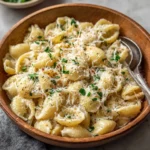
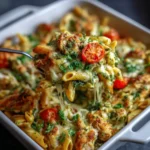
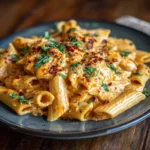
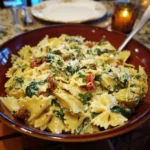
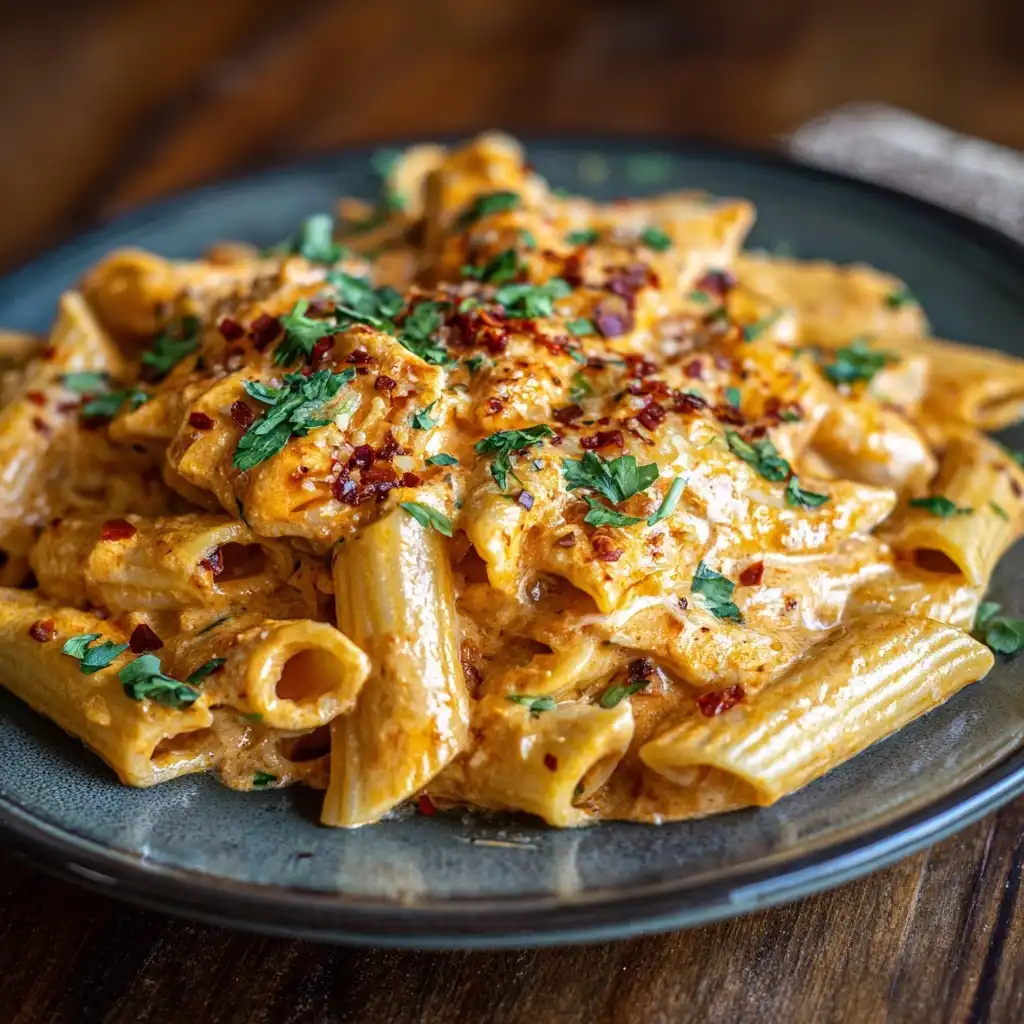
Roasted Red Pepper Alfredo is a luscious, velvety twist on the classic Italian-American comfort dish—Alfredo sauce—elevated with the smoky-sweet depth of fire-roasted red peppers. Unlike traditional Alfredo, which relies solely on butter, heavy cream, and Parmesan for richness, this version introduces vibrant color, nuanced sweetness, subtle char, and a gentle earthiness that transforms the sauce from simple indulgence into a sophisticated, restaurant-worthy experience. Whether tossed with fettuccine, draped over grilled chicken, or used as a luxurious dip for crusty bread, Roasted Red Pepper Alfredo delivers bold flavor without overwhelming heat—making it universally appealing to adults and children alike. Its creamy texture remains luxuriously smooth, while the roasted peppers add natural complexity and a hint of Mediterranean flair, bridging Italian tradition with modern, globally inspired sensibilities.
The History
The origins of Roasted Red Pepper Alfredo trace back not to ancient Rome or even mid-20th-century New York, but rather to the culinary evolution of American-Italian cuisine in the late 1980s and early 1990s—a period marked by growing access to gourmet ingredients, increased home roasting techniques, and a rising fascination with roasted vegetables. While classic Alfredo sauce (named after Roman restaurateur Alfredo di Lelio, who popularized his butter-and-cheese pasta in the early 1900s) remained a staple, chefs and home cooks began experimenting with flavor infusions to add dimension and visual appeal. Roasted red peppers—long cherished in Spanish romesco, Greek dips, and Middle Eastern muhammara—emerged as an ideal candidate: their caramelized sugars complement dairy’s richness, their low acidity balances cream’s fat, and their vivid hue makes dishes instantly photogenic. By the early 2000s, roasted red pepper Alfredo appeared on menus across California bistrots, upscale chain restaurants like The Cheesecake Factory and Olive Garden, and eventually in mainstream cookbooks and food magazines. Its rise paralleled the “gourmet pantry” movement, where jarred roasted peppers became a kitchen essential—not just for antipasti platters, but as foundational flavor builders. Today, it stands as a testament to how thoughtful ingredient layering can honor tradition while inviting innovation.
Ingredients Breakdown
Every exceptional Roasted Red Pepper Alfredo begins with intentionality—not just in selection, but in understanding *why* each component matters:
- Roasted Red Peppers: The soul of the sauce. Opt for fire-roasted varieties packed in water (not oil or brine) to avoid greasiness or excessive sodium. Jarred peppers are convenient, but for peak flavor, roast fresh bell peppers yourself: blister skins over open flame or under a broiler until blackened, steam in a covered bowl, then peel and seed. This yields deeper smokiness and brighter sweetness than most commercial options. Piquillo peppers (Spanish) or Italian cubanelles offer even more nuanced fruitiness and less bitterness.
- Heavy Cream (36–40% fat): Non-negotiable for authentic Alfredo texture and stability. Lower-fat alternatives (half-and-half, whole milk, or coconut milk) will thin the sauce, cause separation during reduction, and lack the unctuous mouthfeel that defines true Alfredo. The high fat content emulsifies seamlessly with cheese and butter, creating a glossy, cohesive base that clings to pasta without pooling.
- Unsalted Butter: Adds both richness and “lift”—its milk solids contribute nutty depth when gently cooked, and its water content helps regulate temperature to prevent curdling. Unsalted allows precise sodium control, especially important since Parmesan and roasted peppers may contain salt.
- Freshly Grated Parmigiano-Reggiano: Not pre-grated! Block-aged Parmigiano-Reggiano (minimum 24 months) contains natural enzymes and crystalline structure that melt smoothly into cream, lending umami, salty tang, and granular texture. Avoid domestic “Parmesan” substitutes—they’re often cellulose-laden, overly salty, and fail to melt evenly, resulting in graininess or stringiness.
- Garlic: Fresh, minced—not powder or paste. Sautéed gently in butter until fragrant (not browned), it adds aromatic backbone without sharp raw bite. Roasted garlic (cloves roasted until soft and sweet) is a sublime variation for deeper, mellower notes.
- Onion (optional but recommended): A small amount of finely diced yellow or sweet onion sautéed until translucent adds savory-sweet complexity and body—acting as a flavor bridge between peppers and cheese.
- White Wine (optional but transformative): A splash of dry white wine (Pinot Grigio or Sauvignon Blanc) deglazes the pan, lifts fond, and introduces bright acidity to cut through richness. Alcohol cooks off, leaving only aromatic lift and balance.
- Nutmeg: A whisper—freshly grated—enhances dairy’s warmth and rounds out the pepper’s earthiness. It’s not “spicy”; it’s aromatic synergy.
- Black Pepper: Freshly cracked, added at the end. Heat degrades volatile oils in pepper; finishing ensures bright, floral pungency.
- Sea Salt (to taste): Added judiciously *after* cheese incorporation, as Parmigiano-Reggiano varies widely in salt content. Always taste before seasoning.
Step-by-Step Recipe
- Prep the Peppers: Drain jarred roasted red peppers well; pat dry with paper towels to remove excess moisture (critical—water causes splitting). For fresh-roasted peppers: peel, deseed, and roughly chop. Reserve 1–2 tablespoons of liquid if using jarred (for adjusting consistency later).
- Sauté Aromatics: In a heavy-bottomed stainless steel or enameled Dutch oven (avoid nonstick for better fond development), melt 2 tbsp unsalted butter over medium-low heat. Add ¼ cup finely diced yellow onion and cook until soft and translucent (~4 minutes). Stir in 2 medium cloves minced garlic and cook 60 seconds—just until fragrant, not browned.
- Build Flavor Base: If using, add ¼ cup dry white wine. Simmer gently 2–3 minutes, scraping up browned bits, until nearly evaporated.
- Incorporate Peppers: Add roasted red peppers (½ cup, chopped fine or puréed—see Tips) and stir to coat. Cook 2 minutes to deepen flavor and evaporate residual water.
- Add Cream & Simmer: Pour in 1 ½ cups cold heavy cream. Bring to a gentle simmer over medium-low heat—do not boil vigorously. Reduce heat as soon as small bubbles appear at edges. Simmer uncovered 5–7 minutes, stirring occasionally, until cream reduces slightly and thickens to a light coating consistency.
- Emulsify with Butter: Whisk in remaining 3 tbsp cold butter, one tablespoon at a time, allowing each to fully incorporate before adding the next. This gradual process stabilizes the emulsion and prevents greasiness.
- Introduce Cheese: Remove pan from heat. Gradually whisk in 1 ¼ cups freshly grated Parmigiano-Reggiano (about 4 oz), a small handful at a time, whisking vigorously after each addition until completely smooth and glossy. Never return to direct heat after cheese is added—residual heat is sufficient. Overheating causes proteins to seize and separate.
- Season & Finish: Stir in a generous pinch of freshly grated nutmeg, ½ tsp freshly cracked black pepper, and a tiny pinch of sea salt (start with ⅛ tsp—taste first!). If sauce is too thick, whisk in reserved pepper liquid or a splash of warm cream (1 tsp at a time). For ultra-smooth texture, carefully purée with an immersion blender directly in the pot (5–10 seconds only—over-blending warms sauce and risks breaking).
- Rest & Serve: Let sauce rest off heat for 3–5 minutes to allow flavors to meld and texture to settle. Stir gently before serving over hot, well-drained pasta (reserve ¼ cup starchy pasta water to adjust consistency if needed).
Tips
- Texture Control: For silky-smooth sauce, purée roasted peppers *before* adding to the pan—either with a food processor or immersion blender. Leaving them chunky creates rustic charm but may yield uneven distribution unless finely minced.
- Cream Temperature Matters: Always add cold cream to aromatics. Warm or room-temp cream heats too quickly, increasing risk of scorching or premature separation.
- Whisk, Don’t Stir: Use a balloon whisk—not a spoon—for cheese incorporation. Its wire loops create maximum surface agitation, ensuring rapid, even melting and preventing clumping.
- Pasta Water Is Magic: When tossing with pasta, add reserved starchy water (1 tbsp at a time) to loosen sauce and help it cling. The starch acts as a natural binder and gloss enhancer.
- No-Reheat Rule: Roasted Red Pepper Alfredo does not reheat well on the stove—it tends to break. To refresh leftovers, gently warm in a double boiler or microwave at 50% power in 15-second bursts, stirring thoroughly between intervals. Stir in 1 tsp cold cream per cup of sauce to restore emulsion.
- Acid Balance: If sauce tastes flat or overly rich, brighten with ¼ tsp fresh lemon juice—or a tiny splash of white wine vinegar—added at the very end. This isn’t “lemony,” just perceptibly lifted.
- Batch Scaling: This recipe doubles beautifully—but never triple. Larger volumes increase risk of scorching and uneven emulsification. Make two separate batches for large gatherings.
- Garnish Thoughtfully: Top with extra grated Parmigiano, a drizzle of high-quality extra-virgin olive oil, fresh basil ribbons, or toasted pine nuts for textural contrast and aromatic lift.
Variations and Customizations
This versatile sauce welcomes creative adaptation while preserving its core identity:
- Smoky Chipotle Alfredo: Add 1 tsp finely minced chipotle in adobo (plus ½ tsp adobo sauce) with the roasted peppers for deep, slow-building heat and mesquite smoke. Pair with cilantro and lime zest.
- Herb-Infused: Stir in 2 tbsp fresh chopped herbs at the end—basil for sweetness, parsley for brightness, or chives for mild onion nuance. Avoid dried herbs unless infused in warm cream for 10 minutes and strained.
- “Pink” Vegan Alfredo (Dairy-Free): Replace heavy cream with full-fat canned coconut milk (chilled, solid cream scooped off top), butter with refined coconut oil, and Parmesan with nutritional yeast + white miso paste (1 tbsp) + lemon juice (½ tsp) for umami depth. Blend roasted peppers with soaked raw cashews for creaminess.
- Protein-Packed: Fold in shredded rotisserie chicken, flaked wild-caught salmon, or pan-seared scallops *after* sauce is finished—never cook proteins directly in the sauce, which would toughen them.
- Vegetable-Forward: Sauté 1 cup sliced mushrooms and ½ cup baby spinach with the onions and garlic. Or stir in roasted zucchini, eggplant, or cherry tomatoes post-sauce for seasonal freshness.
- Spaghetti Squash or Zoodle Version: Toss warm roasted spaghetti squash strands or lightly sautéed zucchini noodles with sauce immediately before serving—no draining needed, as they absorb excess moisture beautifully.
- Stuffed Shells or Manicotti: Use as filling mixed with ricotta and egg—add ¼ cup shredded mozzarella for extra melt and browning.
- Soup Integration: Thin with additional broth to create a velvety Roasted Red Pepper Alfredo Soup—garnish with croutons and chive oil.
Health Considerations and Nutritional Value
While Roasted Red Pepper Alfredo is undeniably indulgent, mindful preparation unlocks meaningful nutritional benefits beyond pure comfort:
- Vitamin C Powerhouse: Roasted red peppers contain up to 3x more vitamin C than raw—heat increases bioavailability of antioxidants like lycopene and capsanthin (the pigment giving peppers their red hue), which support heart health and cellular protection.
- Calcium & Protein Synergy: Parmigiano-Reggiano is among the highest naturally occurring sources of calcium (≈330 mg per ¼ cup), plus complete protein (10 g per ounce) and bone-supportive vitamin K2 (menaquinone-7), especially in traditionally aged varieties.
- Healthy Fat Profile: Butter provides butyrate—a short-chain fatty acid shown to support gut barrier integrity and reduce intestinal inflammation—while the monounsaturated fats in high-quality olive oil garnish (if used) contribute cardiovascular benefits.
- Low-Carb & Gluten-Free Friendly: Naturally gluten-free, it adapts effortlessly to keto, paleo (with ghee instead of butter), or low-carb lifestyles when served over spiralized vegetables, shirataki noodles, or cauliflower rice.
- Mindful Modifications: Reduce saturated fat by substituting ¼ cup of the heavy cream with unsweetened almond or oat milk *only after* initial reduction (never at the start); use grass-fed butter and organic peppers to minimize pesticide load; boost fiber with whole-grain or legume-based pasta.
- Portion Awareness: A standard serving is ¾ cup sauce per 2 oz (dry weight) pasta. Over-saucing dilutes flavor and increases caloric density unnecessarily. Serve alongside a large arugula salad with lemon vinaigrette to enhance satiety and nutrient diversity.
- Allergen Notes: Contains dairy (milk, butter, cheese) and potential gluten if served with wheat pasta. Nut-free, soy-free, and egg-free in its base form—ideal for many common restrictions.
Ingredients
- 2 tbsp unsalted butter, plus 3 tbsp cold, cubed
- ¼ cup finely diced yellow onion
- 2 medium garlic cloves, minced
- ¼ cup dry white wine (optional but recommended)
- ½ cup roasted red peppers (jarred or homemade), well-drained and patted dry
- 1 ½ cups cold heavy cream (36–40% fat)
- 1 ¼ cups freshly grated Parmigiano-Reggiano (aged minimum 24 months)
- ¼ tsp freshly grated nutmeg
- ½ tsp freshly cracked black pepper
- Pinch of fine sea salt (to taste, after cheese is added)
- Optional garnishes: extra grated Parmigiano, fresh basil, toasted pine nuts, high-quality EVOO
Directions
- Heat a heavy-bottomed saucepan or Dutch oven over medium-low heat. Add 2 tbsp unsalted butter and swirl to melt.
- Add diced onion and sauté until soft and translucent, about 4 minutes. Stir in minced garlic and cook 60 seconds until fragrant—do not brown.
- If using, pour in white wine. Simmer 2–3 minutes, scraping up any browned bits, until mostly evaporated.
- Add roasted red peppers and stir to combine. Cook 2 minutes to concentrate flavor and drive off moisture.
- Pour in cold heavy cream. Bring to a gentle simmer over medium-low heat—watch closely for small bubbles at the edges. Reduce heat as needed to maintain a bare simmer. Cook uncovered 5–7 minutes, stirring occasionally, until slightly thickened.
- Remove from heat. Whisk in cold cubed butter, one tablespoon at a time, allowing full incorporation before adding the next.
- Gradually whisk in grated Parmigiano-Reggiano, a small handful at a time, whisking vigorously after each addition until completely smooth and glossy. Do not return to heat.
- Stir in nutmeg, black pepper, and a tiny pinch of sea salt. Taste and adjust salt only if needed.
- For ultra-smooth texture, briefly purée with an immersion blender (5 seconds max). Let rest 3–5 minutes.
- Toss with hot, drained pasta (reserve ¼ cup starchy water). Adjust consistency with pasta water or reserved pepper liquid as needed. Serve immediately, garnished to preference.
FAQ
- Can I use roasted red pepper hummus instead of whole peppers?
- No—hummus contains tahini, lemon, garlic, and stabilizers that will destabilize the emulsion and impart competing flavors. Stick to plain roasted red peppers only.
- Why does my sauce look greasy or separate?
- Most commonly caused by overheating after cheese is added, using pre-grated cheese (anti-caking agents inhibit melting), or adding cold cheese to hot cream. Always remove from heat before cheese, grate fresh, and whisk vigorously.
- Can I freeze Roasted Red Pepper Alfredo?
- Not recommended. Dairy-based emulsions break down upon freezing and thawing—resulting in grainy, watery, or oily separation. Best made fresh and consumed within 3 days refrigerated.
- What pasta shape works best?
- Fettuccine is classic, but wider ribbons like pappardelle or tagliatelle hold sauce luxuriously. Short shapes like campanelle, fusilli, or casarecce trap creamy nooks. Avoid delicate pastas like angel hair—they’ll get overwhelmed.
- Can I make it ahead for a dinner party?
- Yes—with strategy: prepare sauce completely, cool slightly, cover surface directly with parchment, and refrigerate up to 2 days. Reheat *very* gently in a double boiler, whisking constantly, and finish with a splash of cold cream and extra Parmigiano to refresh texture.
- Is there a lower-calorie version that still tastes great?
- A “lighter” version exists—but it’s not traditional Alfredo. Try blending roasted peppers with low-sodium vegetable broth, silken tofu, nutritional yeast, and a touch of Dijon mustard for creaminess and umami—though texture and richness will differ significantly.
- My sauce is too spicy—how do I fix it?
- If you added heat (like chipotle), stir in 1 tsp cold mascarpone or cream cheese to mellow and round out. A pinch of sugar (¼ tsp) also counterbalances capsaicin. Never add water—it breaks emulsion.
- Can I use Romano instead of Parmigiano?
- Romano is sharper and saltier—use half Romano, half Parmigiano for complexity, or stick with Parmigiano for balanced, nutty sweetness. Avoid all-Romano—it overwhelms the pepper’s subtlety.
Summary
Roasted Red Pepper Alfredo is a masterclass in balancing bold, smoky-sweet roasted peppers with the timeless luxury of slow-emulsified cream, butter, and aged Parmigiano-Reggiano—creating a sauce that’s vibrantly hued, deeply flavorful, and irresistibly creamy.
With careful attention to ingredient quality, temperature control, and emulsion technique, it transforms weeknight pasta into a memorable, restaurant-caliber experience—rich in both tradition and thoughtful, modern nuance.