Introduction
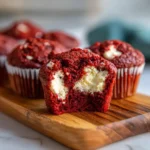
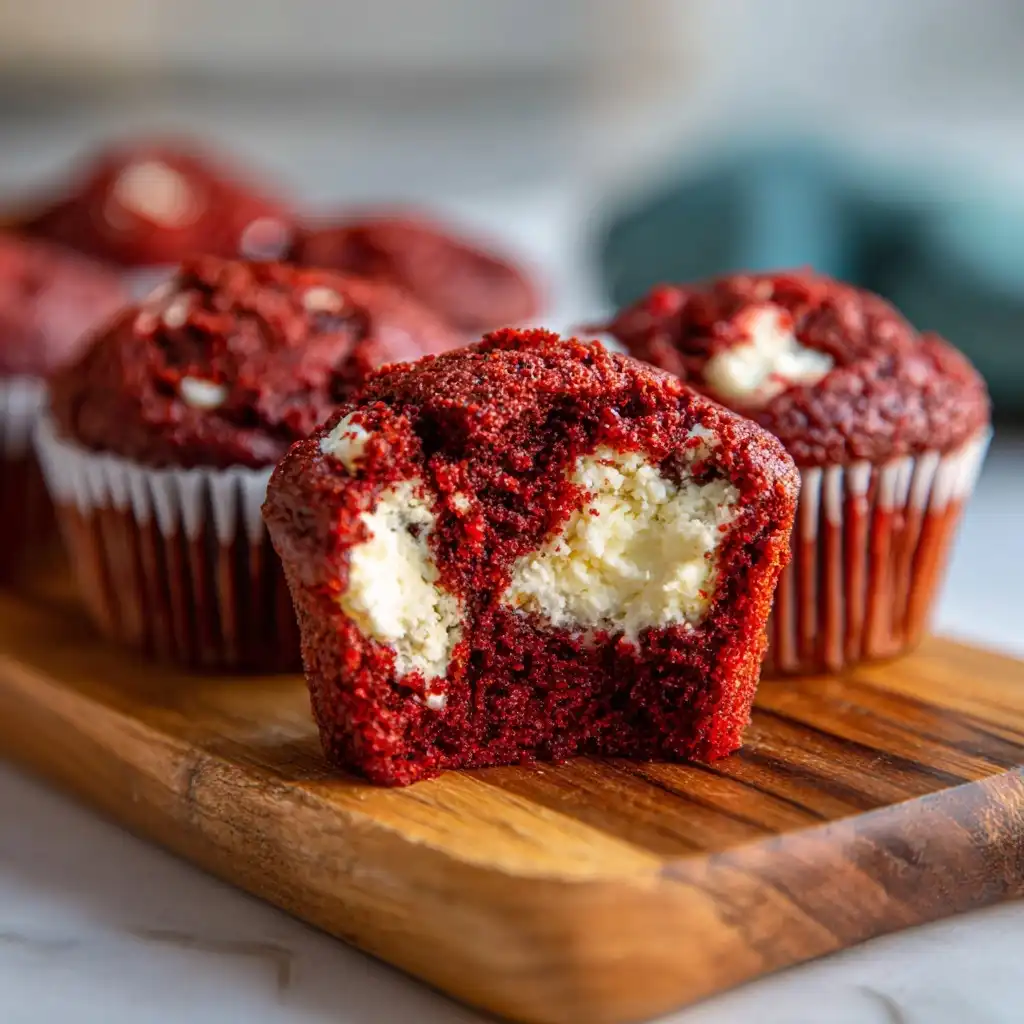
Red Velvet Cream Cheese Muffins are the luxurious, bakery-worthy fusion of two beloved American classics: the velvety richness of red velvet cake and the tangy, luscious creaminess of New York–style cream cheese filling. These muffins strike a perfect balance—moist, tender, and delicately chocolaty with a subtle cocoa depth, vibrant crimson hue, and an unmistakable buttermilk tang—all crowned with a decadent, swirlable core of sweetened cream cheese that bakes into a soft, cloud-like pocket of pure indulgence. Unlike standard muffins, they deliver the elegance of a gourmet dessert in handheld, portion-controlled form—ideal for weekend breakfasts, afternoon tea, holiday brunches, or even as an elegant dessert served warm with a dollop of crème fraîche or vanilla bean ice cream. Their visual drama (that signature ruby-red crumb) paired with their sophisticated flavor profile makes them a showstopper that’s surprisingly approachable to bake at home—with no fancy equipment required.
The History
The origins of red velvet cake trace back to the early 20th century, with documented recipes appearing as early as the 1920s—though its true roots may extend even further into Victorian-era “velvet cakes,” known for their fine, tender crumb achieved through the use of cake flour and acidic ingredients like vinegar or buttermilk. The distinctive red color was originally a natural byproduct: anthocyanin pigments in non-Dutched (natural) cocoa reacted with acidic components (buttermilk, vinegar, and baking soda), yielding a subtle rosy tint. As food science evolved—and especially after World War II—red food coloring became increasingly common, both to intensify the hue and to compensate for the rise of alkalized (Dutch-processed) cocoa, which lacks the necessary acidity for the natural reaction. The iconic pairing with cream cheese frosting emerged in earnest in the mid-20th century, popularized by institutions like the Waldorf-Astoria Hotel and later cemented in pop culture by Southern bakeries and chain restaurants. Transforming this beloved duo into muffin form is a more recent innovation—gaining traction in the 2010s alongside the artisanal muffin movement, where bakers began reimagining classic cakes as elevated, texturally complex, single-serve treats. Red Velvet Cream Cheese Muffins represent a thoughtful evolution: preserving the soul of tradition while embracing modern expectations for convenience, visual appeal, and layered flavor experiences—all baked into a perfectly domed, bakery-style package.
Ingredients Breakdown
Every ingredient in these muffins plays a precise, functional role—no element is merely decorative or traditional. Understanding *why* each is included deepens both success and customization potential:
- All-Purpose Flour (unbleached): Provides essential gluten structure without overwhelming density. A small portion can be substituted with cake flour for an even more delicate crumb—but avoid 100% cake flour, as it lacks the strength needed to support the cream cheese center.
- Natural Unsweetened Cocoa Powder (NOT Dutch-processed): Critical for both flavor and the authentic red velvet reaction. Natural cocoa is acidic and reacts with baking soda and buttermilk to produce lift, tenderness, and the faint reddish undertone—even before food coloring is added. Dutch-processed cocoa will mute both color development and leavening efficacy.
- Granulated Sugar: Sweetens, tenderizes, and aids in browning and moisture retention. Fine granulation ensures smooth incorporation—avoid coarse sugars like turbinado unless dissolved first.
- Brown Sugar (light or dark): Adds molasses-derived complexity, moisture, and subtle caramel notes. Dark brown sugar contributes deeper flavor; light offers milder sweetness and softer texture.
- Baking Soda & Baking Powder: A dual-leavening system. Baking soda reacts immediately with the buttermilk’s acid for initial lift and pH adjustment (enhancing color), while baking powder provides secondary, heat-activated rise for optimal dome formation and consistent crumb.
- Buttermilk (full-fat, cultured): The cornerstone of red velvet’s signature tang and tenderness. Its acidity activates leaveners, tenderizes gluten, and contributes to the moist, fine-grained texture. Shelf-stable buttermilk powder reconstituted with milk works in a pinch—but fresh, cultured buttermilk yields superior flavor and consistency.
- Neutral Oil (like canola, grapeseed, or refined coconut oil): Ensures unparalleled moisture and tenderness—oil remains liquid at room temperature, unlike butter, preventing dryness. It also creates a smoother batter that readily accepts food coloring and swirls beautifully with cream cheese.
- Eggs (large, room temperature): Provide structure, emulsification, and richness. Room temperature eggs incorporate more evenly and help stabilize the batter’s emulsion—critical when folding in the dense cream cheese layer.
- White Vinegar or Apple Cider Vinegar: Reinforces acidity for maximum leavening and color enhancement. It also brightens flavor and balances sweetness—never omit, even if using ample buttermilk.
- Red Food Coloring (liquid, gel, or paste): While optional for authenticity, high-quality red food coloring (especially concentrated gels like AmeriColor Super Red or Chefmaster) delivers the vibrant, photogenic hue expected of red velvet. Liquid coloring adds excess moisture and dilutes intensity; paste/gel gives vivid color with minimal volume impact.
- High-Quality Full-Fat Cream Cheese (brick-style, not spreadable): Must be cold (40–45°F) and well-drained (pat dry with paper towels if slightly weepy). Spreadable or low-fat versions contain stabilizers, gums, and excess water that cause leakage, curdling, or greasiness during baking. Full-fat cream cheese melts luxuriously into a creamy, stable pocket.
- Powdered Sugar (confectioners’ sugar): Used exclusively in the cream cheese filling—not granulated—to ensure smooth, lump-free consistency and proper viscosity for clean swirling. Sift before mixing to prevent grittiness.
- Vanilla Extract (pure, not imitation): Enhances all other flavors and adds aromatic warmth. Mexican or Tahitian vanilla adds nuanced floral notes; Madagascar bourbon vanilla offers classic richness.
- Salt (fine sea salt or kosher): Balances sweetness, enhances cocoa’s depth, and sharpens overall flavor perception. Too little results in flat, cloying muffins; too much overpowers. Precision matters.
Step-by-Step Recipe
- Prep & Preheat: Line a standard 12-cup muffin tin with premium parchment liners (or grease-and-flour if using silicone cups). Position oven rack in the center third. Preheat oven to 375°F (190°C). This higher initial temperature encourages rapid oven spring and a pronounced dome—essential for bakery-style appearance.
- Whisk Dry Ingredients: In a large bowl, thoroughly whisk together 1¾ cups (210g) all-purpose flour, ¼ cup (20g) natural unsweetened cocoa powder, 1 tsp baking soda, 1½ tsp baking powder, 1 tsp fine sea salt, and 1½ cups (300g) granulated sugar. Whisk for at least 45 seconds to fully aerate and evenly distribute leaveners—this prevents bitter pockets or uneven rise.
- Cream Wet Base: In a separate large bowl, combine 1 cup (240ml) full-fat buttermilk, ⅔ cup (160ml) neutral oil, 2 large eggs (room temperature), 2 tsp pure vanilla extract, 1 tbsp white vinegar, and 1 tsp red food coloring (or up to 1½ tsp for intense color). Whisk vigorously for 60–90 seconds until fully emulsified and slightly frothy—no streaks of oil or separated liquid.
- Combine Batter: Pour the wet mixture into the dry ingredients. Use a flexible silicone spatula to fold gently—do not overmix. Fold just until no dry flour remains, about 15–20 strokes. A few small lumps are ideal; overmixing develops gluten, leading to tough, tunnelled muffins. Let batter rest for 10 minutes at room temperature—this hydrates the flour fully and relaxes gluten for ultimate tenderness.
- Prepare Cream Cheese Filling: While batter rests, beat 8 oz (227g) cold full-fat brick cream cheese on medium speed for 30 seconds until softened but still cool. Add ⅓ cup (40g) sifted powdered sugar, 1 tsp vanilla, and a pinch of salt. Beat on medium-low for 45 seconds—just until smooth and homogenous. Overbeating incorporates air and causes spreading/leakage. Transfer to a piping bag fitted with a wide round tip (½-inch diameter) or use a sturdy zip-top bag with one corner snipped.
- Fill Muffin Cups: Spoon ~3 tablespoons (60g) of red velvet batter into each lined cup—filling each ~⅔ full. Gently tap the pan once on the counter to settle batter and release air bubbles.
- Swirl in Cream Cheese: Pipe a generous 1½–2 tablespoons (40–45g) of cream cheese filling directly into the center of each batter-filled cup. Do not touch the sides—keep filling centered. Then, using a toothpick or thin skewer, make 2–3 gentle figure-eight motions through the center to create a marbled swirl. Avoid over-swirling—it should remain distinct, not fully blended.
- Top & Bake: Sprinkle each muffin generously with flaky sea salt (Maldon recommended) and/or a tiny pinch of freeze-dried raspberry powder for tart contrast. Immediately place pan in preheated oven. Bake for 18–22 minutes, rotating pan halfway through. Muffins are done when tops are deeply domed, edges are set, and a toothpick inserted just beside the cream cheese center (not into it) comes out clean or with moist crumbs—do not test directly in the cream cheese, as it will always be soft.
- Cool Strategically: Remove pan from oven and let muffins cool in the tin for 5 minutes exactly. This sets the structure and prevents collapse. Then carefully transfer to a wire rack. Cool for at least 25 minutes before serving—this allows internal steam to escape and the cream cheese center to fully set into its luxurious, spoonable texture. Serve warm for peak decadence.
Tips
- Temperature Is Non-Negotiable: Cold cream cheese + room-temperature eggs + chilled buttermilk = stable emulsion and clean swirls. Warm ingredients cause the cream cheese to melt prematurely and bleed.
- Color Consistency Matters: Gel/paste food coloring yields more predictable, vibrant results than liquid. If your batter looks pale after mixing, add color drop-by-drop, stirring well between additions—over-coloring can impart bitterness.
- Don’t Skip the Rest: That 10-minute batter rest isn’t optional—it dramatically improves crumb tenderness and reduces tunneling. Set a timer.
- Measure Flour Correctly: Spoon flour into measuring cup and level with a knife—don’t scoop directly from the bag (which compacts flour and adds up to 25% extra). For precision, weigh flour (210g).
- Line With Parchment, Not Paper: Standard paper liners often peel or tear when removing warm, moist muffins. Premium parchment liners (like If You Care or Reynolds) hold up beautifully and release cleanly.
- Rotate Pan Mid-Bake: Ovens have hot spots. Rotating ensures even browning and uniform dome height across all 12 muffins.
- Underbake Slightly, Not Over: Pull muffins at 18 minutes and check—if unsure, wait 1 more minute. Overbaked muffins dry out rapidly, and the cream cheese center becomes rubbery instead of creamy.
- Patience Pays Off: Resisting the urge to bite into a hot muffin preserves texture integrity. That 25-minute cool allows starches to fully set and cream cheese to firm without hardening.
- Use a Scale for Cream Cheese: Measuring by weight ensures consistent filling volume—critical for balanced flavor and structural integrity.
- Freeze for Freshness: Fully cooled muffins freeze exceptionally well for up to 3 months in an airtight container with parchment between layers. Thaw overnight in fridge, then warm at 325°F for 5 minutes before serving.
Variations and Customizations
These muffins serve as a stunning canvas for creativity—while preserving their core identity. All variations maintain the foundational red velvet batter and cold cream cheese technique:
- White Chocolate–Red Velvet: Fold ½ cup (85g) finely chopped high-cocoa white chocolate into the batter before portioning. Adds sweet, buttery notes and melty pockets.
- Black Cocoa “Midnight Velvet”: Replace half the natural cocoa (2 tbsp) with black cocoa powder—intensifies color to near-black burgundy and deepens chocolate flavor with espresso-like roast notes.
- Lemon-Zested Velvet: Add 1 tbsp finely grated lemon zest to the wet ingredients and substitute 1 tbsp buttermilk with fresh lemon juice. Brightens the profile and cuts richness elegantly.
- Spiced Velvet (Chai-Infused): Steep 2 chai tea bags in the warm buttermilk for 10 minutes, then chill before using. Add ½ tsp ground cardamom and ¼ tsp ground ginger to dry ingredients.
- Boozy Velvet: Replace 1 tbsp buttermilk with 1 tbsp high-quality bourbon or amaretto. Adds warmth and complexity—reduce vinegar by ½ tsp to balance acidity.
- Gluten-Free Velvet: Substitute flour blend (Bob’s Red Mill 1-to-1 or King Arthur Measure for Measure) + ½ tsp xanthan gum. Ensure cocoa and baking powder are certified GF. Texture will be slightly denser but still moist.
- Vegan Velvet: Use flax eggs (2 tbsp ground flax + 6 tbsp water, rested 10 min), full-fat coconut yogurt for buttermilk, refined coconut oil, and vegan cream cheese (Kite Hill or Miyoko’s). Add ¼ tsp apple cider vinegar to yogurt for tang.
- Mini Velvet Muffins: Fill a 24-cup mini muffin tin ¾ full. Reduce bake time to 11–14 minutes. Perfect for parties or portion control—yields ~36.
- Stuffed Velvet (Double-Cream-Cheese Core): After swirling, press a ½-inch cube of cold cream cheese into the center of each muffin before baking—creates a molten heart within the swirl.
- Maple-Pecan Velvet: Toast ⅔ cup pecans; fold into batter. Replace granulated sugar with 1¼ cups (250g) maple sugar and add 1 tbsp pure maple syrup to wet ingredients.
Health Considerations and Nutritional Value
While undeniably indulgent, mindful preparation can enhance nutritional balance without sacrificing authenticity. A standard-sized Red Velvet Cream Cheese Muffin (approx. 115g) contains roughly:
- Calories: 320–360 kcal
- Total Fat: 16–19g (9–11g saturated, primarily from cream cheese and oil)
- Carbohydrates: 42–46g (32–36g sugars, including naturally occurring lactose and added sugars)
- Protein: 4–5g (from eggs, dairy, and minimal flour protein)
- Fiber: 1–1.5g (low unless whole wheat pastry flour or added psyllium is used)
- Sodium: 280–340mg (moderate; easily reduced by cutting salt by 25% and using low-sodium baking powder)
Key Considerations:
- Sugar Awareness: The recipe uses 1½ cups granulated sugar—a substantial amount. For reduction, replace up to ¼ cup with monk fruit/erythritol blends (tested brands: Lakanto or Swerve), but note texture may be slightly drier. Never eliminate all sugar—it’s vital for tenderness and browning.
- Fat Quality: Using heart-healthy oils (avocado or high-oleic sunflower) instead of canola supports better lipid profiles. Full-fat dairy contributes satiety and nutrient absorption (fat-soluble vitamins A/D/E/K).
- Food Coloring Notes: Natural alternatives (beetroot powder, hibiscus extract) yield muted, earthy pinks—not the classic red—and may alter flavor. Artificial red dyes (Red #40) are FDA-approved but controversial; many bakers opt for natural options despite visual trade-offs.
- Dairy Sensitivity: Lactose-intolerant individuals may tolerate these well due to buttermilk’s lower lactose content and fermentation—but cream cheese remains high in lactose. Lactase enzyme supplements taken prior to eating can aid digestion.
- Gluten & Allergen Notes: Contains gluten, dairy, and eggs. Always verify labels on baking powder, food coloring, and cocoa for hidden allergens or cross-contamination warnings.
- Mindful Enjoyment: These muffins are best viewed as occasional treats—not daily staples. Pairing with Greek yogurt or a green salad transforms them into a satisfying, balanced brunch. Portion control (choosing one instead of two) and savoring slowly enhance satisfaction and reduce overall intake.
Ingredients
For the Red Velvet Muffin Batter:
- 1¾ cups (210g) unbleached all-purpose flour
- ¼ cup (20g) natural unsweetened cocoa powder (not Dutch-processed)
- 1½ tsp aluminum-free baking powder
- 1 tsp baking soda
- 1 tsp fine sea salt
- 1½ cups (300g) granulated sugar
- 1 cup (240ml) full-fat cultured buttermilk, cold
- ⅔ cup (160ml) neutral oil (canola, grapeseed, or refined coconut)
- 2 large eggs, room temperature
- 2 tsp pure vanilla extract
- 1 tbsp white vinegar or apple cider vinegar
- 1–1½ tsp concentrated red food coloring (gel or paste preferred)
For the Cream Cheese Filling:
- 8 oz (227g) full-fat brick cream cheese, cold (Philadelphia or Kraft recommended)
- ⅓ cup (40g) sifted powdered sugar
- 1 tsp pure vanilla extract
- Pinch of fine sea salt
For Finishing:
- Flaky sea salt (e.g., Maldon), for sprinkling
- (Optional) Freeze-dried raspberry powder or crushed pistachios
Directions
- Preheat oven to 375°F (190°C). Line a 12-cup standard muffin tin with parchment paper liners. Set aside.
- In a large bowl, whisk together flour, cocoa powder, baking powder, baking soda, salt, and granulated sugar until fully combined and aerated—about 45 seconds.
- Pour wet mixture into dry ingredients. Using a flexible silicone spatula, fold gently just until no dry flour remains—approximately 15–20 strokes. Small lumps are acceptable. Cover bowl and let batter rest at room temperature for 10 minutes.
- Meanwhile, prepare cream cheese filling: In a stand mixer or with hand mixer, beat cold cream cheese on medium speed for 30 seconds until pliable but still cool. Add powdered sugar, vanilla, and salt. Beat on medium-low for 45 seconds—just until smooth. Do not overbeat. Transfer to piping bag with ½-inch round tip (or zip-top bag with corner snipped).
- Spoon ~60g (3 tbsp) batter into each liner—filling each ~⅔ full. Tap pan firmly once on counter.
- Pipe 40–45g (1½–2 tbsp) cream cheese filling into the center of each cup. Using a toothpick, make 2–3 gentle figure-eight motions to swirl—do not overmix.
- Sprinkle each muffin top with a generous pinch of flaky sea salt. Optional: dust lightly with freeze-dried raspberry powder.
- Bake for 18–22 minutes, rotating pan halfway through, until tops are deeply domed, edges are set, and a toothpick inserted beside (not into) the cream cheese center comes out clean or with moist crumbs.
- Let muffins cool in pan for exactly 5 minutes. Carefully transfer to a wire rack. Cool for at least 25 minutes before serving. Best enjoyed warm or at room temperature.
FAQ
- Can I make these ahead and freeze them?
- Yes! Cool completely, wrap individually in plastic wrap, then place in a freezer-safe bag or container. Freeze up to 3 months. To serve: thaw overnight in refrigerator, then warm at 325°F for 5–7 minutes—or enjoy straight from freezer (they defrost beautifully at room temp in ~2 hours).
- Why did my cream cheese sink or leak out?
- Most commonly caused by: (1) cream cheese too warm or overbeaten, (2) batter too thin (excess buttermilk or oil), (3) overfilling cups (batter must support the weight), or (4) opening oven door too early. Always use cold, full-fat brick cheese and follow portion guidelines precisely.
- Can I use Dutch-process cocoa?
- Not recommended. Dutch-process cocoa is alkalized and neutral in pH, eliminating the acid reaction needed for proper leavening and natural color enhancement. Your muffins will be denser, less vibrant, and lack authentic tang. Stick with natural cocoa.
- My muffins turned brown instead of red—what went wrong?
- Several factors: insufficient food coloring, using Dutch-process cocoa, too much baking soda (which darkens cocoa), or baking at too low a temperature for too long. Also verify your buttermilk is fresh and properly acidic—spoiled buttermilk won’t react correctly.
- Can I make these without food coloring?
- Absolutely—you’ll get a lovely, rich mahogany-brown “velvet” muffin with all the same flavor and texture. It won’t be “red velvet” visually, but it’s equally delicious and often preferred by those avoiding dyes.
- Why do you use both baking soda AND baking powder?
- This dual system ensures optimal rise: baking soda reacts instantly with buttermilk/vinegar for early lift and pH adjustment (enhancing color and tenderness), while baking powder provides sustained, heat-activated lift for height and crumb stability—especially important with the dense cream cheese center.
- Can I substitute sour cream for buttermilk?
- Yes—but adjust liquid: use ¾ cup full-fat sour cream + ¼ cup whole milk to mimic buttermilk’s consistency and acidity. Sour cream alone is too thick and may yield gummy texture.
- How do I prevent muffin tops from peeling off the liners?
- Use high-quality parchment liners (not wax paper), avoid over-greasing, and never pull muffins out while hot. Let cool in pan 5 minutes, then transfer. If sticking persists, lightly spray liners with nonstick spray before filling.
- Can I add mix-ins like chocolate chips?
- Yes—but limit to ½ cup (85g) and toss chips in 1 tsp flour before folding in. More than that weighs down batter and interferes with cream cheese integrity. Mini chips integrate more evenly than standard.
- What’s the best way to store leftovers?
- Store cooled muffins in an airtight container at room temperature for up to 2 days, or refrigerate for up to 5 days. Reheat individual muffins at 325°F for 4–5 minutes to restore moisture and warmth. Do not refrigerate unfrosted—they’ll dry out faster.
Summary
Red Velvet Cream Cheese Muffins are a masterclass in balance—where vibrant, cocoa-kissed velvet batter meets a luxuriously cool, tangy-sweet cream cheese core, all baked to golden-domed perfection with a tender, moist crumb and unforgettable visual allure.
Rooted in vintage baking science and elevated by modern technique, they’re surprisingly simple to execute yet endlessly customizable—offering