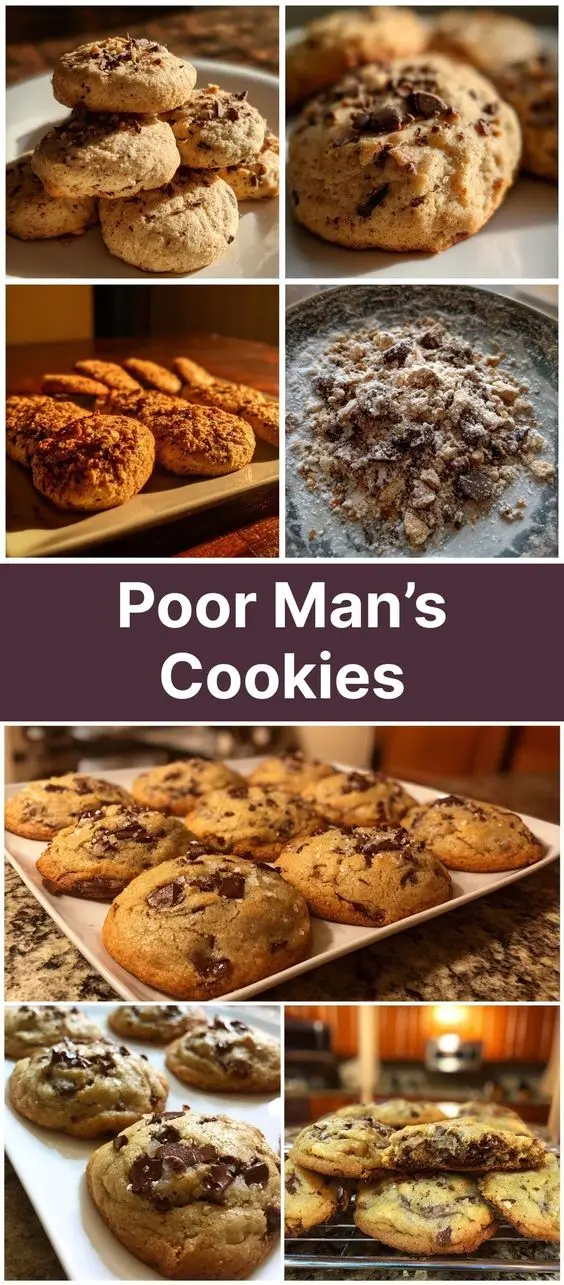
Poor Man’s Cookies: A Simple, Nostalgic Treat
Poor Man’s Cookies are a humble yet satisfying dessert that originated during times of economic hardship—particularly the Great Depression in the United States. As families struggled to stretch their food budgets, resourceful cooks turned pantry staples into sweet treats with minimal ingredients and effort. These cookies didn’t require eggs, butter, or even an oven in some versions, making them accessible to nearly everyone. The name “Poor Man’s Cookies” reflects both their affordability and their role as a comfort food for those who couldn’t afford traditional desserts. Today, they remain a nostalgic favorite, cherished for their simplicity, chewy texture, and rich molasses flavor.
The History Behind Poor Man’s Cookies
The roots of Poor Man’s Cookies trace back to the early 20th century, especially the 1930s and 1940s, when many American households faced financial strain. With sugar, butter, and eggs being expensive or scarce, cooks improvised using what was on hand: flour, baking soda, cinnamon, molasses, and shortening (or lard). These ingredients were shelf-stable, inexpensive, and often already present in most kitchens.
Originally shared through community cookbooks, handwritten recipe cards, and word of mouth, Poor Man’s Cookies became symbolic of resilience and ingenuity. They were particularly popular among rural families, homemakers, and wartime rationers. Some variations were made entirely on the stovetop, eliminating the need to heat an oven—a clever way to conserve fuel.
Over time, these cookies evolved slightly, but their essence remained unchanged: a soft, spiced, molasses-sweetened treat that could be whipped up in minutes with minimal cleanup. In recent years, there’s been a resurgence of interest in Depression-era recipes, driven by frugal living trends, historical curiosity, and the desire for wholesome, no-frills foods.
Ingredients Breakdown: What Makes These Cookies Work
The beauty of Poor Man’s Cookies lies in their simplicity and accessibility. Let’s examine each ingredient and its role in creating this beloved treat:
- All-Purpose Flour: The structural base of the cookie. It provides gluten formation (when mixed with liquid), giving the cookies their shape and slight chewiness. You can substitute whole wheat flour for a nuttier taste and added fiber, though the texture will be denser.
- Baking Soda: A leavening agent that reacts with the acidic components (molasses and vinegar) to create air bubbles, helping the cookies rise slightly and become tender.
- Ground Cinnamon: Offers warmth and depth. Cinnamon is central to the signature flavor profile of these cookies, evoking memories of gingerbread and holiday spices.
- Salt: Balances sweetness and enhances overall flavor. Even a small amount makes a noticeable difference.
- Shortening (e.g., Crisco) or Butter: Adds richness and tenderness. Shortening keeps the cookies softer and extends shelf life; butter adds more flavor but may make them spread more. Some traditional recipes use lard for authenticity.
- White Sugar: Provides sweetness and contributes to browning. While brown sugar can be used, white sugar gives a cleaner sweetness that lets molasses shine.
- Molasses: The star ingredient. It adds deep caramel-like sweetness, moisture, and color. Unsulphured molasses is recommended for the best flavor (avoid blackstrap, which is too bitter).
- Vinegar (usually white): Reacts with baking soda to help the dough rise. Its acidity also mimics buttermilk, tenderizing the flour proteins for a softer texture.
- Hot Water: Dissolves and blends the ingredients smoothly, activates the leavening reaction, and creates steam in the oven for lift. Using hot (not boiling) water ensures proper mixing without cooking the flour prematurely.
Optional add-ins include raisins, chopped nuts, coconut flakes, or oats—though purists argue that true Poor Man’s Cookies should contain only the essential ingredients.
Step-by-Step Recipe: How to Make Classic Poor Man’s Cookies
Ingredients
- 1 cup all-purpose flour
- 1/2 teaspoon baking soda
- 1 teaspoon ground cinnamon
- Pinch of salt
- 1/3 cup shortening (or softened butter)
- 1/2 cup granulated sugar
- 1/3 cup molasses
- 1 teaspoon white vinegar
- 1/2 cup hot water (just off the boil)
Directions
- Preheat your oven to 350°F (175°C). Line a baking sheet with parchment paper or lightly grease it.
- In a medium bowl, whisk together the flour, baking soda, cinnamon, and salt. Set aside.
- In a large mixing bowl, cream together the shortening and sugar until smooth and well combined. This doesn’t require extensive beating—just enough to blend.
- Add the molasses and vinegar to the shortening mixture and stir until uniformly mixed. The texture will be thick and sticky.
- Slowly pour in the hot water while stirring continuously. The mixture will become lighter in color and thinner in consistency. This step is crucial—it starts the chemical reaction between the vinegar and baking soda and helps emulsify the fat and water.
- Gradually add the dry ingredients to the wet mixture, stirring gently until a soft, sticky dough forms. Do not overmix—just combine until no flour streaks remain.
- Let the dough rest for 5–10 minutes. This allows the flour to fully hydrate and makes the dough easier to handle.
- Drop by rounded tablespoons onto the prepared baking sheet, spacing them about 2 inches apart. These cookies don’t spread much, so you can place them closer than usual if needed.
- Bake for 10–12 minutes, or until the edges are set and the tops look dry. The centers should spring back lightly when touched.
- Remove from the oven and let cool on the baking sheet for 3–5 minutes before transferring to a wire rack. They firm up as they cool.
- Enjoy warm or at room temperature. Store leftovers in an airtight container at room temperature for up to 5 days.
Tips for Perfect Poor Man’s Cookies Every Time
- Use hot, not boiling, water: Boiling water may begin to cook the flour or destabilize the fat. Aim for just below boiling (around 200°F).
- Don’t skip the vinegar: Even though it seems odd, the acid is essential for activating the baking soda and creating lift.
- Handle the dough gently: Overmixing can develop gluten, leading to tough cookies. Mix just until combined.
- Cool slightly before removing: These cookies are very soft when first out of the oven. Letting them set prevents breakage.
- Check your molasses: Use high-quality unsulphured molasses like Grandma’s or Brer Rabbit. Blackstrap molasses has a harsh, bitter taste and is not suitable here.
- Adjust thickness: For thicker cookies, chill the dough for 20 minutes before scooping. For flatter, crispier versions, bake a minute or two longer.
- Double the batch: These keep well and freeze beautifully. Freeze baked cookies between layers of parchment or freeze unbaked dough balls and bake as needed.
Variations and Customizations
While the original Poor Man’s Cookie is minimalist by design, modern bakers enjoy putting their own spin on the classic. Here are some creative variations:
- Oatmeal Poor Man’s Cookies: Stir in 1/2 cup old-fashioned oats for extra texture and heartiness.
- Raisin or Date Version: Add 1/3 cup raisins, chopped dates, or currants for a fruity twist.
- Nutty Upgrade: Fold in 1/4 cup chopped walnuts or pecans for crunch and richness.
- Coconut Flair: Mix in 1/3 cup shredded coconut (sweetened or unsweetened) for tropical notes.
- Spice Boost: Add 1/4 teaspoon each of ground ginger, nutmeg, and cloves for a gingerbread-like flavor.
- Gluten-Free Option: Substitute the all-purpose flour with a 1:1 gluten-free baking blend. Ensure the blend contains a binder like xanthan gum.
- Vegan Adaptation: Already naturally egg-free, these cookies are easily vegan if you use plant-based shortening and ensure your sugar is vegan-certified.
- Stovetop No-Bake Version: For a Depression-era twist, mix the cooked syrup (molasses, sugar, water, shortening) with dry ingredients and drop by spoonfuls to set—similar to fudge. Not technically baked, but still called “cookies” in some regions.
Health Considerations and Nutritional Value
Poor Man’s Cookies are not marketed as health food, but understanding their nutritional profile helps in enjoying them mindfully.
Nutrition Facts (per cookie, based on 24 cookies per batch):
- Calories: ~80–90
- Total Fat: 3g (mostly from shortening)
- Saturated Fat: 1.5g
- Cholesterol: 0mg (if using vegetable shortening)
- Sodium: 60–80mg
- Total Carbohydrates: 13–15g
- Sugars: 9–10g (primarily from sugar and molasses)
- Protein: 1g
- Fiber: 0.5g
Pros:
- No eggs required—great for those with allergies.
- Molasses contains iron, calcium, magnesium, and potassium in small amounts.
- Can be made dairy-free and vegan with simple substitutions.
- Low in protein and fat, making them light snacks (in moderation).
Cons:
- High in refined sugar and low in fiber unless modified.
- Uses processed shortening, which may contain trans fats (choose non-hydrogenated brands).
- Not suitable for low-carb, keto, or diabetic diets without major alterations.
To make a healthier version:
- Replace half the sugar with coconut sugar or maple syrup.
- Use melted coconut oil instead of shortening.
- Add ground flaxseed or oat flour to boost fiber.
- Reduce sugar by 1–2 tablespoons if preferred less sweet.
Frequently Asked Questions (FAQ)
Q: Why are they called “Poor Man’s Cookies”?
A: The name reflects their origin during times of poverty and scarcity, when people used inexpensive, readily available ingredients to make a sweet treat without luxury items like eggs or butter.
Q: Can I make these cookies without molasses?
A: Molasses is essential for authentic flavor and texture. Substitutes like honey or maple syrup will change the taste significantly and may alter the chemistry of the dough.
Q: Why does the recipe use vinegar?
A: Vinegar reacts with baking soda to produce carbon dioxide, helping the cookies rise and become tender. It also balances sweetness and enhances shelf life.
Q: Can I freeze Poor Man’s Cookies?
A: Yes! Bake and cool completely, then freeze in an airtight container for up to 3 months. Thaw at room temperature or warm briefly in the oven.
Q: My dough is too runny—what went wrong?
A: This usually happens if too much water is added or if the flour measurement was inaccurate. Always use the spoon-and-level method for flour. If the dough is too thin, gradually mix in a tablespoon of flour until it thickens.
Q: Are Poor Man’s Cookies the same as molasses cookies?
A: They are similar but simpler. Traditional molasses cookies often include eggs, butter, and sometimes ginger. Poor Man’s Cookies omit eggs and rely on chemical leavening and hot water for rise.
Q: Can I make these gluten-free?
A: Yes! Use a trusted 1:1 gluten-free flour blend. Results may vary slightly in texture, but they’ll still be delicious.
Q: How do I make bigger or smaller cookies?
A: Adjust baking time accordingly. Larger cookies (2-tbsp scoops) may need 13–15 minutes; smaller ones (teaspoon-sized) take 8–9 minutes.
Summary
Poor Man’s Cookies are a testament to culinary creativity under constraint—delicious, spiced molasses treats made with basic pantry staples and no eggs. Simple to make, nostalgic in flavor, and endlessly adaptable, they’re a timeless dessert for any era.