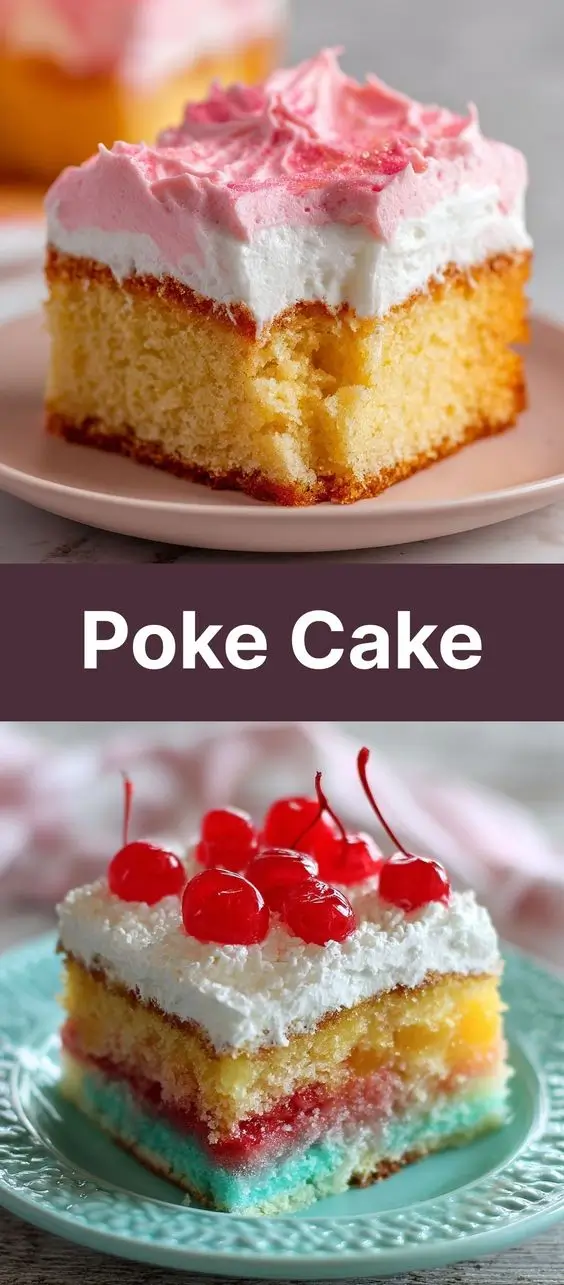
The Ultimate Guide to Poke Cake: A Moist, Flavorful Dessert Sensation
Introduction
Poke cake is a beloved dessert that has captured the hearts (and taste buds) of millions across the United States and beyond. Known for its moist texture, simple preparation, and endless flavor possibilities, poke cake is the perfect fusion of convenience and indulgence. The name “poke” comes from the method used in its creation—poking holes into a freshly baked cake and then pouring a liquid mixture over it, allowing the flavors to soak deep into the crumb. The result? A rich, gooey, and incredibly satisfying dessert that feels homemade yet requires minimal effort.
Whether you’re a seasoned baker or someone who rarely ventures into the kitchen, poke cake offers a fail-proof way to impress guests at parties, potlucks, holidays, or even as a weeknight treat. Its versatility allows for endless customization based on season, occasion, or personal preference. In this comprehensive guide, we’ll dive into every aspect of poke cake—from its historical roots to detailed recipes, ingredient breakdowns, health considerations, and expert tips to ensure your poke cake turns out perfectly every time.
The History
The origins of poke cake trace back to the 1970s in the United States, during an era when convenience baking became increasingly popular. With the rise of boxed cake mixes and canned or pre-packaged ingredients, home cooks were eager for quick, reliable desserts that still tasted homemade. Jell-O, a brand synonymous with gelatin desserts, played a pivotal role in the birth of the poke cake phenomenon.
In the early ’70s, Jell-O launched a marketing campaign encouraging consumers to combine their flavored gelatin with boxed yellow cake mix. The idea was simple: bake the cake, poke holes in it while still warm, pour melted gelatin over the top, and let it set. The gelatin would seep into the cake, creating a colorful, jiggly, and moist interior. This innovation quickly caught on, becoming a staple at family gatherings and church socials.
Over time, the concept evolved. Bakers began experimenting beyond gelatin, using sweetened condensed milk, fruit fillings, pudding mixes, caramel, and even alcoholic syrups. Regional variations emerged, and poke cake became a canvas for creativity. Today, it’s celebrated not only for its nostalgic charm but also for its adaptability to modern tastes and dietary preferences.
Ingredients Breakdown
One of the reasons poke cake remains so popular is the simplicity and accessibility of its ingredients. Most components can be found in a standard pantry or local grocery store. Here’s a detailed look at each element commonly used in poke cakes:
Cake Base
- Boxed Cake Mix: Most traditional recipes start with a boxed mix (e.g., yellow, white, chocolate, or devil’s food). These provide consistent texture and reduce prep time. However, scratch-made cakes work equally well.
- Water, Oil, and Eggs: Standard wet ingredients required to prepare the cake batter. Some recipes substitute oil with melted butter for richer flavor.
Filling (The “Poke” Component)
- Flavored Gelatin: Classic choice—adds color and fruity tang. Common flavors include strawberry, cherry, raspberry, or lime.
- Sweetened Condensed Milk: Often used in tropical versions (like key lime or coconut), it adds creaminess and sweetness.
- Instant Pudding Mix: Mixed with milk, it creates a thick, custard-like layer inside the cake. Vanilla, banana, chocolate, or cheesecake flavors are popular.
- Fruit Fillings: Canned pie fillings (cherry, blueberry, apple) or fresh purees add natural fruit flavor and moisture.
- Dulce de Leche or Caramel: For decadent versions, especially in Mexican-inspired or dessert bar-style poke cakes.
- Liqueurs or Extracts: Rum, Kahlúa, amaretto, or vanilla extract can enhance depth in adult-friendly recipes.
Topping
- Whipped Topping: Cool Whip or freshly whipped cream provides lightness and balances the richness.
- Yogurt or Mascarpone: Used in lighter or more sophisticated variations.
- Fresh Fruit: Strawberries, kiwi, bananas, or berries add freshness and visual appeal.
- Toasted Coconut, Nuts, or Chocolate Shavings: For added texture and gourmet flair.
Step-by-Step Recipe: Classic Strawberry Jell-O Poke Cake
This version is a timeless favorite—bright, juicy, and incredibly moist. Follow these steps for foolproof results.
Ingredients
- 1 box (15.25 oz) yellow cake mix
- 3 large eggs
- 1 cup water
- 1/3 cup vegetable oil
- 1 package (3 oz) strawberry-flavored gelatin
- 1/2 cup boiling water
- 1 tub (8 oz) frozen whipped topping, thawed (or 1 1/2 cups fresh whipped cream)
- 1 cup fresh strawberries, sliced (optional)
- Additional whole strawberries for garnish
Directions
- Preheat Oven: Set oven to 350°F (175°C). Grease and flour a 9×13-inch baking pan or line it with parchment paper.
- Prepare Batter: In a large bowl, combine cake mix, water, oil, and eggs. Beat with a hand mixer or whisk until smooth and no lumps remain, about 2 minutes.
- Bake: Pour batter into the prepared pan and bake for 28–33 minutes, or until a toothpick inserted in the center comes out clean.
- Poke Holes: As soon as the cake comes out of the oven, use the handle of a wooden spoon or a chopstick to poke holes all over the surface. Space them about 1 inch apart, making sure they go nearly to the bottom.
- Dissolve Gelatin: In a small bowl, stir the dry gelatin mix into boiling water. Whisk for 2 minutes until fully dissolved.
- Pour Over Cake: Slowly pour the hot gelatin mixture over the warm cake, ensuring it seeps into the holes. Let the cake cool in the pan for 15 minutes, then transfer to the refrigerator to chill for at least 2 hours—or overnight for best results.
- Add Topping: Once chilled, spread the whipped topping evenly over the cake. Decorate with sliced or whole strawberries.
- Serve: Cut into squares and serve cold. Store leftovers covered in the fridge for up to 4 days.
Tips for the Perfect Poke Cake
- Poke While Hot: Always poke the holes immediately after removing the cake from the oven. Warm cake absorbs liquids better.
- Use Enough Holes: Don’t skimp—more holes mean more flavor distribution.
- Don’t Overbake: Slightly underbaking by 1–2 minutes keeps the cake extra moist before adding liquid.
- Cool Before Topping: Adding whipped cream too soon may cause melting. Ensure the cake is completely chilled first.
- Layer Flavors: Combine gelatin AND pudding for complex flavor and texture (e.g., lemon gelatin + vanilla pudding).
- Drizzle Creatively: Use caramel, chocolate syrup, or fruit coulis on top for visual appeal.
- Chill Thoroughly: Minimum 2 hours, but ideally 4+ hours or overnight for maximum absorption.
Variations and Customizations
Poke cake is a blank canvas. Here are some popular and innovative variations to inspire your next creation:
Key Lime Coconut Poke Cake
- Use a white or yellow cake mix.
- Replace water in batter with coconut milk for tropical flavor.
- After baking, poke and pour a mixture of sweetened condensed milk and key lime juice (1/2 cup each).
- Top with whipped cream, toasted coconut flakes, and lime zest.
Chocolate Peanut Butter Swirl
- Bake a chocolate cake mix.
- Poke holes and pour warm chocolate fudge sauce or melted peanut butter mixed with heavy cream.
- Swirl in some Nutella before chilling.
- Top with whipped cream, chopped peanuts, and chocolate shavings.
Strawberry Cheesecake
- Use a vanilla or white cake base.
- After poking, pour a mixture of melted strawberry gelatin and a cooled cheesecake pudding (instant mix with milk).
- Top with whipped cream, fresh strawberries, and graham cracker crumbs.
Tiramisu Poke Cake
- Use a chocolate or devil’s food cake.
- Poke and drizzle with strong brewed coffee mixed with a splash of Kahlúa.
- Add a layer of mascarpone cheese filling (mascarpone + sugar + vanilla).
- Dust with cocoa powder before serving.
Red Velvet Raspberry
- Bake red velvet cake mix.
- After poking, pour raspberry gelatin or a mix of raspberry preserves and water.
- Top with cream cheese frosting and fresh raspberries.
Seasonal Ideas
- Summer: Lemon-lime, peach cobbler, or mango-passionfruit.
- Fall: Pumpkin spice with spiced glaze and whipped cream.
- Winter: Peppermint (crushed candy canes in chocolate cake), eggnog-flavored.
- Spring: Lemon-blueberry, floral lavender-honey, or pastel rainbow gelatin layers.
Health Considerations and Nutritional Value
While undeniably delicious, traditional poke cake is high in sugar, refined carbohydrates, and saturated fats—especially when made with full-fat dairy, sweetened condensed milk, and processed toppings. However, with mindful modifications, it can be adapted to suit various dietary needs.
Nutritional Profile (Classic Version, per slice):
- Calories: ~350–450
- Total Fat: 12–18g
- Saturated Fat: 4–6g
- Carbohydrates: 60–70g
- Sugars: 45–55g
- Protein: 3–5g
- Sodium: 300–400mg
Healthier Modifications
- Reduce Sugar: Use sugar-free gelatin and low-sugar cake mixes. Substitute part of the sugar with stevia or monk fruit in scratch recipes.
- Whole Grains: Replace half the flour with whole wheat pastry flour or almond flour (adjust liquid as needed).
- Healthier Fats: Swap oil with unsweetened applesauce or mashed banana (in non-chocolate versions).
- Dairy Alternatives: Use coconut whipped cream, almond milk-based pudding, or cashew cream.
- Fruit-Powered Sweetness: Rely on mashed ripe bananas, dates, or fruit purees instead of added sugars.
- Portion Control: Serve smaller slices and pair with fresh fruit or a side salad to balance the meal.
Dietary Adaptations
- Gluten-Free: Use certified gluten-free cake mix and check all other ingredients (gelatin, pudding) for cross-contamination.
- Dairy-Free: Choose plant-based alternatives for milk, butter, and whipped topping.
- Vegan: Use flax eggs, vegan cake mix, agar-agar instead of gelatin, and coconut cream.
Frequently Asked Questions (FAQ)
Can I make poke cake ahead of time?
Absolutely! Poke cake actually benefits from being made 1 day in advance. The longer it chills, the more the flavors meld and absorb.
Can I freeze poke cake?
Yes, but with caution. Freeze before adding whipped topping. Wrap tightly in plastic and foil. Thaw in the fridge, then add topping just before serving. Texture may soften slightly.
Why is my poke cake soggy?
Too much liquid or underbaked cake can cause sogginess. Stick to recommended amounts and ensure proper baking time. Also, avoid over-pouring—use a measuring cup.
Can I use fresh fruit instead of gelatin?
Fresh fruit alone won’t penetrate well. Instead, cook fruit into a compote or jam, strain excess liquid, and use that as the soaking mixture.
What size pan should I use?
A standard 9×13-inch pan is ideal. Using a smaller pan increases thickness and may affect absorption; larger pans may dry out edges.
Can I skip the boxed mix?
Yes! Use your favorite homemade cake recipe. Just ensure it bakes to a similar density—too dense or too light may affect liquid absorption.
How long does poke cake last?
Stored covered in the refrigerator, it lasts 3–5 days. Discard if it develops an off smell, mold, or slimy texture.
Can I make mini poke cakes?
Definitely. Use muffin tins or individual ramekins. Adjust baking time to 15–20 minutes and poke with a skewer. Great for portion control!
Summary
Poke cake is a versatile, easy-to-make dessert that combines a soft baked cake with flavorful, soaked-in fillings for a moist and indulgent treat. With endless variations and simple preparation, it’s perfect for beginners and experts alike.