Introduction
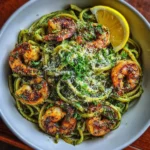
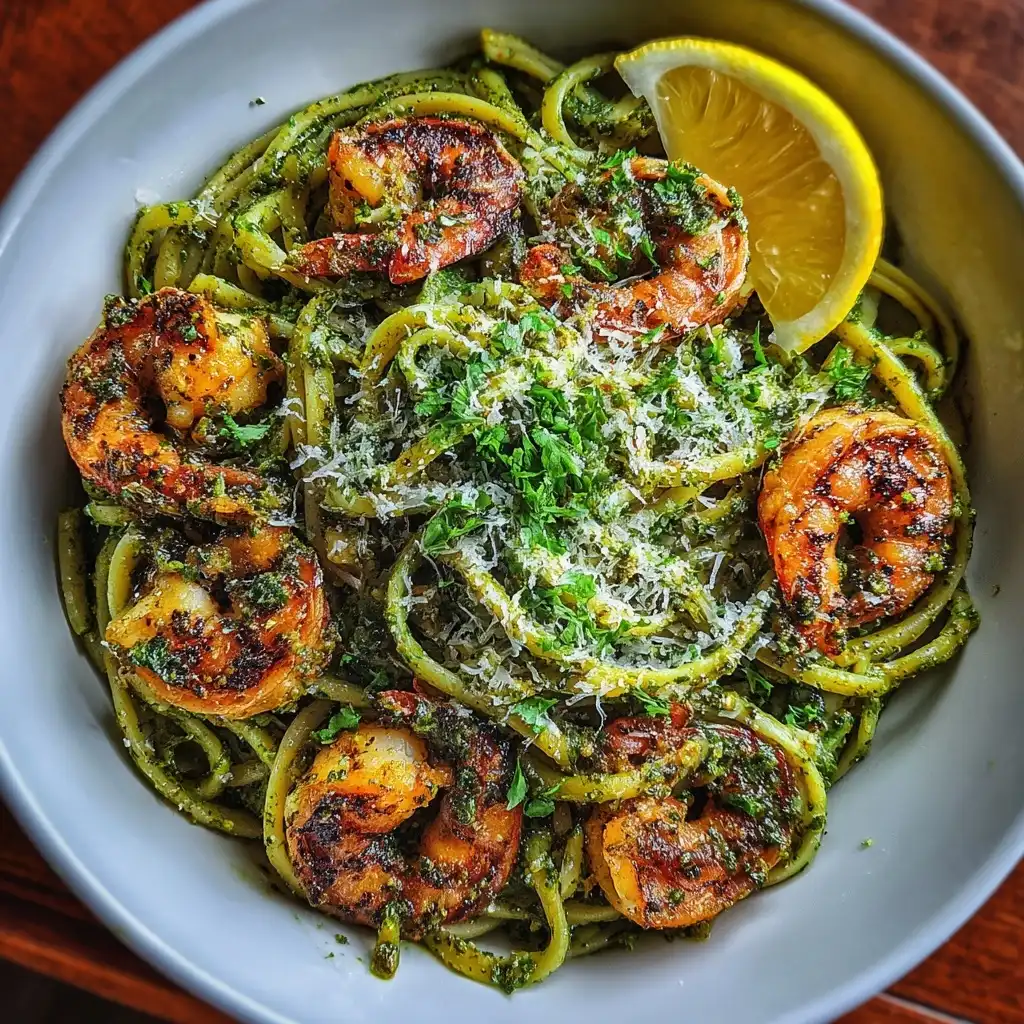
Pesto Shrimp Pasta is a vibrant, restaurant-worthy dish that marries the bold, herbaceous freshness of classic basil pesto with the sweet, tender succulence of perfectly cooked shrimp—all elegantly draped over al dente pasta. It’s a celebration of simplicity and flavor: minimal ingredients, maximum impact. Whether you’re preparing a weeknight dinner for two, hosting a summer gathering, or seeking a light yet satisfying meal that feels indulgent without being heavy, this dish delivers elegance in under 25 minutes. Its bright green hue, aromatic garlic-and-basil fragrance, and subtle nuttiness from pine nuts make it as visually stunning as it is delicious—and its versatility invites endless creativity in the kitchen.
The History
While pesto itself traces its roots to Genoa in the Liguria region of northwestern Italy—where it was traditionally pounded by hand using a marble mortar and wooden pestle (hence the name “pesto,” from the Italian verb *pestare*, meaning “to crush or pound”)—the fusion of pesto with seafood is a more modern, globally inspired evolution. Traditional Genovese pesto (*Pesto alla Genovese*) was historically paired with trofie or trenette pasta and often served with boiled potatoes and green beans—a humble, seasonal coastal meal. Shrimp, however, wasn’t a staple in historic Ligurian pesto preparations; fresh local fish like anchovies or baccalà were more common. The marriage of shrimp and pesto gained traction in the late 20th century, particularly in American and Australian coastal cuisines, where chefs began experimenting with Mediterranean flavors and abundant local shellfish. By the early 2000s, food magazines, cooking shows, and later, food blogs and social media platforms amplified its popularity—celebrating its speed, adaptability, and photogenic appeal. Today, Pesto Shrimp Pasta stands as a beloved hybrid: honoring Italian tradition while embracing global pantry diversity and contemporary culinary values like freshness, balance, and efficiency.
Ingredients Breakdown
Every exceptional Pesto Shrimp Pasta begins with thoughtfully selected, high-quality components—each playing a distinct sensory role:
- Fresh Basil Leaves: The soul of the pesto. Look for vibrant, deep green, unwilted leaves with a strong, sweet-anise aroma. Avoid yellowing or bruised leaves, as they impart bitterness. Organic is ideal—basil readily absorbs pesticides.
- Pine Nuts: Provide rich, buttery depth and textural contrast. Toast them lightly before blending to unlock their full nutty aroma—but watch closely, as they burn easily. Alternatives include walnuts (earthy, budget-friendly), pistachios (vibrant green hue + mild sweetness), or slivered almonds (crisp, neutral).
- Garlic: Raw garlic adds pungent brightness; roasting it first yields mellow, caramelized complexity. For a gentler bite, blanch cloves in boiling water for 30 seconds before use.
- Extra-Virgin Olive Oil: Not just fat—it’s flavor. Choose a robust, peppery, fruit-forward oil from Italy, Greece, or California. Cold-pressed and early-harvest varieties lend grassy, artichoke-like notes essential to authentic pesto character.
- Grated Parmigiano-Reggiano: Adds umami depth, saltiness, and granular richness. Authentic DOP-certified cheese is aged minimum 24 months—avoid pre-grated “Parmesan” blends containing cellulose or fillers.
- Fresh Shrimp: Opt for wild-caught, sustainably sourced (MSC or ASC certified) shrimp—preferably Gulf white, Atlantic pink, or Pacific spot prawns. Size matters: 21/25 or 26/30 count per pound offers ideal tenderness and quick cook time. Devein thoroughly and pat *extremely* dry—moisture is the enemy of sear.
- Pasta: Long, slender shapes like spaghetti, linguine, or bucatini cling beautifully to pesto. Short shapes like fusilli, casarecce, or orecchiette trap sauce in their nooks. Whole wheat, chickpea, or lentil pasta add fiber and protein—just adjust cooking time and reserve extra starchy water.
- Lemon: Freshly squeezed juice and zest cut through richness, lift herbal notes, and add a sun-kissed brightness that balances the oil and cheese. Never skip—the acidity is non-negotiable for balance.
- Red Pepper Flakes (optional): A whisper adds gentle heat and dimension—not spice for spice’s sake, but resonance.
Step-by-Step Recipe
- Prep the Pesto (10 minutes): In a food processor or high-speed blender, combine 2 cups packed fresh basil leaves (stems removed), ⅓ cup toasted pine nuts, 2 medium garlic cloves (peeled), ½ tsp coarse sea salt, and a pinch of black pepper. Pulse 5–6 times until coarsely chopped. With the motor running, slowly drizzle in ½ cup extra-virgin olive oil in a thin, steady stream until emulsified and glossy—about 30 seconds. Scrape down sides. Add ½ cup freshly grated Parmigiano-Reggiano and 1 tsp lemon juice; pulse 2–3 times just to combine. Transfer to a bowl, cover surface directly with plastic wrap (to prevent oxidation/browning), and set aside. Reserve 1 tbsp for garnish.
- Cook the Pasta (12 minutes): Bring a large pot of well-salted water (it should taste like the sea—approx. 2 tbsp kosher salt per 6 quarts) to a rolling boil. Add 12 oz pasta and stir immediately to prevent sticking. Cook 1–2 minutes *less* than package instructions for al dente texture. Before draining, reserve 1 cup of starchy pasta water—this liquid gold is essential for binding and silkiness.
- Prepare the Shrimp (8 minutes): While pasta cooks, pat 1 lb peeled, deveined shrimp completely dry with paper towels. Toss with 1 tbsp olive oil, ½ tsp salt, ¼ tsp black pepper, and a pinch of red pepper flakes (if using). Heat a large stainless steel or cast-iron skillet over medium-high heat until shimmering hot (test with a drop of water—it should skitter and evaporate instantly). Add shrimp in a single layer—do not overcrowd; cook in batches if needed. Sear undisturbed for 1½–2 minutes until golden and lightly caramelized on the first side. Flip and cook 1–1½ minutes more until opaque and just curled into a loose C-shape—overcooking leads to rubbery texture. Immediately transfer to a clean plate and tent loosely with foil.
- Combine & Finish (3 minutes): Return the empty skillet to low heat. Add drained pasta, cooked shrimp, and all but 2 tbsp of the prepared pesto. Using tongs, gently toss to coat. Gradually add reserved pasta water, 2 tbsp at a time, tossing continuously until sauce becomes glossy, creamy, and clings luxuriously to each strand—typically 4–6 tbsp total. Avoid adding too much at once; you want cohesion, not soup. Off heat, stir in 1 tbsp fresh lemon juice and 1 tsp finely grated lemon zest. Taste and adjust seasoning—more salt? More lemon? A final drizzle of raw olive oil?
- Serve Immediately: Divide among warmed shallow bowls. Top with reserved pesto, extra grated Parmigiano-Reggiano, a few whole basil leaves, a crack of black pepper, and a light dusting of flaky sea salt (like Maldon). Serve with lemon wedges on the side.
Tips
- Toast Nuts Like a Pro: Spread pine nuts on a dry skillet over medium-low heat. Shake pan constantly for 2–3 minutes until fragrant and pale gold—not brown. Transfer immediately to a cool plate to halt cooking.
- Dry Shrimp = Golden Shrimp: Wet shrimp steams instead of sears. Pat *twice*: once after rinsing, again right before oiling.
- Low & Slow Finishing: Never add pesto to high heat—it will turn bitter and separate. Always combine off the burner or over lowest possible heat.
- Starchy Water Is Your Secret Weapon: The starch acts as an emulsifier, helping oil and cheese bind seamlessly with pasta water for a velvety, restaurant-quality sheen.
- Undercook Pasta Intentionally: It continues to cook slightly from residual heat and when tossed with hot shrimp and pesto. Err on the side of too firm rather than mushy.
- Use Room-Temp Pesto: Cold pesto won’t integrate smoothly. Let it sit out 10 minutes before combining.
- Reserve Lemon Zest First: Zest lemons *before* juicing—they’re easier to grate when cold and firm.
- Don’t Rinse Pasta: Rinsing washes away precious surface starch needed for sauce adhesion.
- Rest Shrimp Briefly: Letting shrimp rest 2 minutes after cooking allows juices to redistribute—no dry bites.
- Season in Layers: Salt the water, season the shrimp, and finish with flaky salt—each step builds dimension.
Variations and Customizations
This recipe is a canvas—adaptable to dietary needs, seasonal availability, pantry constraints, and personal preference:
- Vegan Pesto Shrimp Pasta: Swap shrimp for marinated and pan-seared king oyster mushrooms (sliced thick, brushed with tamari + maple + smoked paprika) or crispy baked tofu cubes. Use vegan parmesan (nutritional yeast + cashews + lemon + garlic powder) and ensure olive oil is certified vegan.
- Gluten-Free Version: Use certified GF pasta—brown rice, quinoa, or lentil-based options work beautifully. Boil in separate water to avoid cross-contamination. Increase starchy water slightly, as GF pasta releases less starch.
- Low-Carb/Keto Adaptation: Replace pasta with spiralized zucchini (“zoodles”), shirataki noodles, or spaghetti squash. Sauté zoodles separately for 1–2 minutes just until tender-crisp; toss gently with warm pesto and shrimp to avoid sogginess.
- Herb Swaps: Try 50% basil + 50% baby spinach for milder flavor and deeper green color—or substitute ⅓ with fresh mint (refreshing with shrimp) or arugula (peppery kick).
- Protein Variations: Substitute shrimp with scallops (dry well, sear 90 seconds per side), grilled chicken breast (sliced thin), flaked salmon (warm, not hot), or even white beans for vegetarian heartiness.
- Roasted Vegetable Additions: Fold in blistered cherry tomatoes, roasted asparagus tips, sautéed zucchini ribbons, or caramelized fennel for added texture and earthy sweetness.
- Creamy Twist: Stir in 2–3 tbsp mascarpone, crème fraîche, or full-fat coconut milk (for dairy-free) at the end for luxurious, velvety richness.
- Spicy Arrabbiata-Style: Add 1 finely minced fresno chili or ½ tsp Calabrian chili paste to the pesto, or finish with pickled jalapeño ribbons.
- Summer Garden Edition: Top with heirloom cherry tomatoes, shaved fennel, microgreens, and edible flowers (nasturtiums or pansies) for a farmers’ market flourish.
- Meal Prep Friendly: Cook pasta and shrimp separately; store pesto in an airtight jar topped with ½ inch olive oil (prevents browning). Assemble and reheat gently in skillet with splash of broth or water—add lemon zest fresh.
Health Considerations and Nutritional Value
Pesto Shrimp Pasta is inherently nutrient-dense when prepared mindfully—offering a balanced synergy of lean protein, heart-healthy fats, complex carbohydrates, antioxidants, and phytonutrients. A standard serving (1⅓ cups cooked pasta + ½ cup shrimp + 3 tbsp pesto + 1 tsp olive oil) provides approximately:
- Calories: ~580–650 kcal (moderate and satiating)
- Protein: ~32 g (shrimp contributes 20 g high-quality complete protein; pasta adds ~12 g)
- Healthy Fats: ~28 g (primarily monounsaturated from olive oil and pine nuts; includes omega-3 ALA from basil and walnuts if substituted)
- Fiber: ~4–6 g (from whole grain or legume pasta; boost further with added vegetables)
- Vitamins & Minerals: Rich in vitamin K (basil, parsley if added), vitamin A (shrimp, basil), vitamin C (lemon, basil), selenium (shrimp), calcium (Parmigiano), magnesium (nuts, greens), and polyphenols (olive oil, basil).
Key Health Highlights:
- Heart-Healthy Profile: Olive oil’s oleocanthal has anti-inflammatory properties comparable to ibuprofen; shrimp’s astaxanthin (a carotenoid antioxidant) combats oxidative stress; garlic supports healthy blood pressure and cholesterol metabolism.
- Low in Added Sugar & Refined Carbs: Naturally sugar-free and customizable to low-glycemic index pasta choices.
- Anti-Inflammatory Powerhouse: Basil contains eugenol and rosmarinic acid; lemon zest is rich in limonene; pine nuts offer magnesium and zinc—all supporting cellular repair and immune resilience.
- Dietary Considerations: Naturally low-FODMAP if garlic-infused oil is used instead of raw garlic and lactose-free (Parmigiano-Reggiano contains negligible lactose due to aging). Easily adapted for pescatarian, Mediterranean, or Weight Watchers (SmartPoints® ~12–14 per serving).
- Cautions: High sodium content can accumulate if oversalting pasta water, using pre-salted shrimp, or adding excess cheese—monitor intake if managing hypertension. Those with shellfish allergies must avoid shrimp entirely (substitute with white fish or plant proteins). Pine nuts may trigger allergic reactions in sensitive individuals.
Ingredients
- 2 cups packed fresh basil leaves, stems removed (about 2 large bunches)
- ⅓ cup raw pine nuts
- 2 medium garlic cloves, peeled
- ½ teaspoon fine sea salt, plus more to taste
- ¼ teaspoon freshly ground black pepper
- ½ cup extra-virgin olive oil (high quality), plus more for drizzling
- ½ cup freshly grated Parmigiano-Reggiano cheese (DOP-certified preferred)
- 1 teaspoon fresh lemon juice
- 12 ounces dried pasta (spaghetti, linguine, or fusilli recommended)
- 1 pound large shrimp (21/25 or 26/30 count), peeled, deveined, tails optional
- 1 tablespoon olive oil (for shrimp)
- ½ teaspoon additional sea salt (for shrimp)
- ¼ teaspoon additional black pepper (for shrimp)
- Pinch of red pepper flakes (optional)
- 1 large lemon (for zest and juice)
- Flaky sea salt (Maldon or similar), for finishing
- Additional grated Parmigiano-Reggiano and fresh basil leaves, for garnish
Directions
- In a food processor, combine basil, pine nuts, garlic, ½ tsp salt, and ¼ tsp black pepper. Pulse 5–6 times until coarsely chopped.
- With the motor running, slowly drizzle in ½ cup olive oil in a thin, steady stream until smooth and emulsified—about 30 seconds. Scrape down sides as needed.
- Add ½ cup grated Parmigiano-Reggiano and 1 tsp lemon juice. Pulse 2–3 times just to combine. Transfer to a bowl, press plastic wrap directly onto surface, and set aside.
- Bring 6 quarts water to a rolling boil. Add 2 tbsp kosher salt. Add pasta and cook, stirring occasionally, until 1–2 minutes shy of al dente. Reserve 1 cup starchy pasta water, then drain pasta—do not rinse.
- Pat shrimp extremely dry with paper towels. In a bowl, toss with 1 tbsp olive oil, ½ tsp salt, ¼ tsp black pepper, and red pepper flakes (if using).
- Heat a large skillet over medium-high heat until very hot. Add shrimp in a single layer. Sear 1½–2 minutes per side until opaque and lightly golden. Remove immediately to a plate; tent with foil.
- Return same skillet to low heat. Add drained pasta, shrimp, and all but 2 tbsp of pesto. Toss gently with tongs.
- Add reserved pasta water 2 tbsp at a time, tossing continuously, until sauce is glossy and coats pasta evenly—usually 4–6 tbsp.
- Off heat, stir in juice of ½ lemon and 1 tsp finely grated lemon zest. Taste and adjust seasoning.
- Divide into bowls. Top with reserved pesto, extra Parmigiano, whole basil leaves, flaky salt, and lemon wedges.
FAQ
- Can I make the pesto ahead of time?
- Yes! Homemade pesto keeps beautifully for up to 5 days refrigerated (with oil layer on top) or 6 months frozen in ice cube trays. Thaw overnight in fridge and stir well before use.
- Why does my pesto turn brown?
- Oxidation—exposure to air causes basil’s chlorophyll to degrade. Prevent it by covering pesto surface directly with plastic wrap, storing under a thin layer of olive oil, or adding ½ tsp lemon juice to stabilize color.
- Can I use bottled lemon juice?
- Fresh is strongly recommended—bottled lacks volatile citrus oils and brightness, resulting in flat, one-dimensional flavor. The zest alone makes a dramatic difference.
- My sauce is too thick/thin—how do I fix it?
- Too thick? Add 1 tbsp warm pasta water at a time while tossing. Too thin? Return to low heat and toss 30 seconds to evaporate excess moisture—or stir in 1 tsp extra grated cheese to thicken.
- Can I use frozen shrimp?
- Absolutely—but thaw *completely* in the fridge overnight, then pat *extremely* dry. Never cook frozen shrimp directly—it releases water and steams instead of searing.
- What’s the best pasta shape for pesto?
- Ribbed or hollow shapes like fusilli, casarecce, or trofie trap pesto best. Long pastas like linguine provide elegant surface area for clinging. Avoid delicate shapes like angel hair—they get overwhelmed.
- Is traditional pesto raw? Can I cook it?
- Authentic pesto is uncooked to preserve fresh, volatile aromatics. Heating it above 140°F degrades basil’s flavor compounds and causes separation. Always fold in off heat.
- Can I double this recipe for a crowd?
- Yes—with caveats: Cook pasta in batches to avoid temperature drop; sear shrimp in multiple small batches for proper browning; keep finished pasta covered with damp towel to retain warmth and moisture.
- How do I reheat leftovers without ruining the texture?
- Gently rewarm in a skillet over low heat with 1–2 tsp broth, water, or olive oil—stir constantly. Avoid microwaving uncovered, which dries out shrimp and makes pesto greasy.
- What wine pairs best with Pesto Shrimp Pasta?
- A crisp, mineral-driven white: Vermentino from Sardinia, Sauvignon Blanc from New Zealand, or a dry Rosé from Provence. For red lovers, try a chilled, low-tannin Pinot Noir.
Summary
Pesto Shrimp Pasta is a luminous, fast-cooking masterpiece that honors Italian tradition while embracing global freshness—featuring vibrant basil pesto, sweet seared shrimp, and perfectly textured pasta bound together with lemon-kissed, garlicky elegance. It’s nutritionally balanced, endlessly adaptable, and delivers gourmet satisfaction with pantry-friendly simplicity—proof that extraordinary flavor doesn’t require complexity, just intention, quality, and care.