Introduction
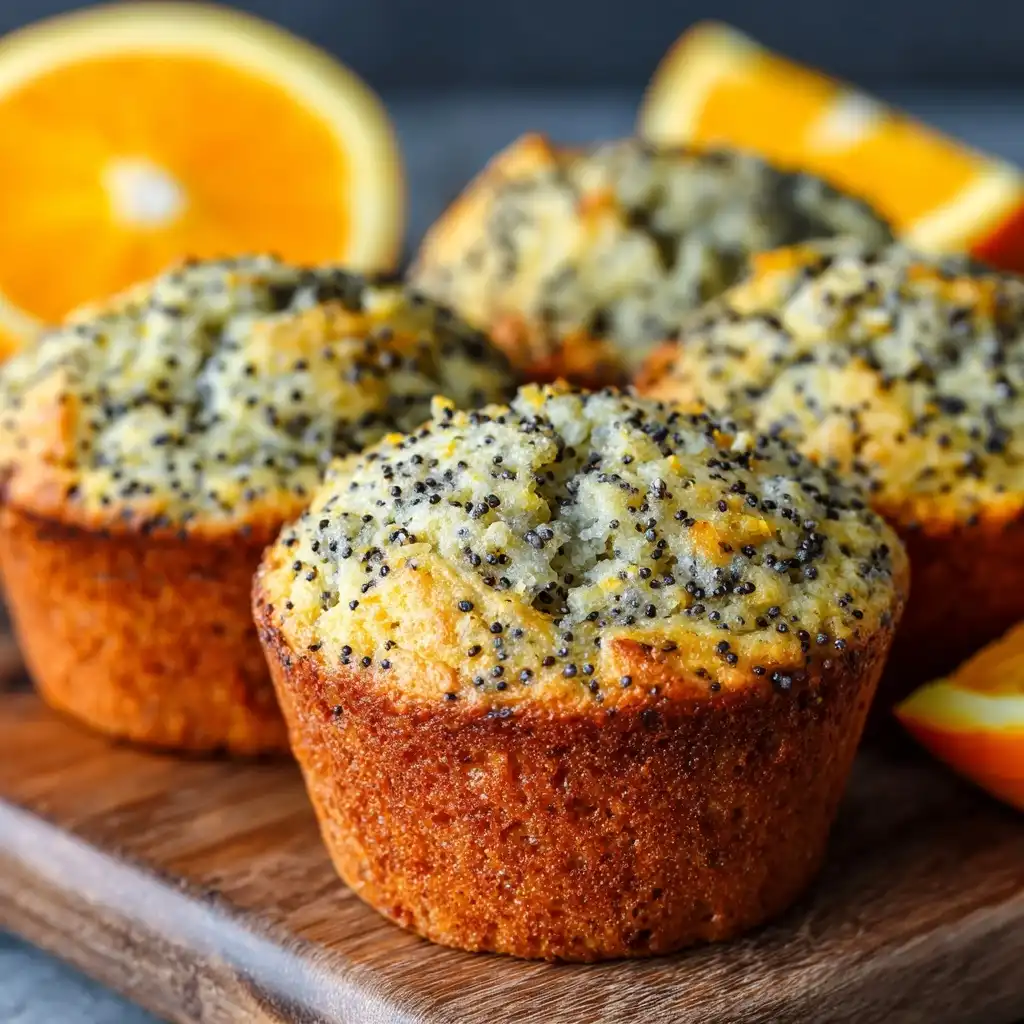
Orange Poppy Seed Muffins are a beloved classic—bright, zesty, tender, and delicately speckled with tiny black poppy seeds that add both visual charm and a subtle nutty crunch. These muffins strike the perfect balance between citrusy freshness and comforting baked goodness, making them ideal for weekend brunches, afternoon tea, packed lunches, or even as an elegant dessert served with whipped cream and fresh berries. Their vibrant orange aroma fills the kitchen as they bake, evoking sunshine, spring mornings, and homemade warmth. Whether you’re a seasoned baker or a beginner eager to master a foolproof muffin recipe, this version delivers consistent results: domed tops, moist crumb, gentle tang, and just the right amount of sweetness without overwhelming the delicate citrus notes.
The History
Poppy seeds have been used in baking for over 3,000 years—traced back to ancient Sumerian, Egyptian, and Minoan civilizations, where they were prized not only for flavor but also for oil extraction and symbolic meaning (often associated with fertility, sleep, and remembrance). In European baking traditions—particularly in Central and Eastern Europe—poppy seed fillings became staples in strudels, rolls, and cakes. Meanwhile, citrus-infused baked goods gained prominence in the Mediterranean and later in colonial American kitchens, where oranges (initially a luxury) were preserved, zested, and juiced to add brightness to dense, butter-rich batters. The marriage of orange and poppy seed likely emerged in mid-20th-century American home baking—popularized by community cookbooks, women’s magazines like Better Homes & Gardens and Good Housekeeping, and the rise of convenient, pre-packaged poppy seeds in U.S. grocery stores. By the 1970s and ’80s, Orange Poppy Seed Muffins had secured their place on diner menus, bakery display cases, and church social tables across North America—celebrated for their approachable elegance and pantry-friendly ingredients. Today, they remain a timeless staple—reimagined in gluten-free, vegan, and low-sugar iterations while retaining their signature sunny soul.
Ingredients Breakdown
Understanding each ingredient’s role is key to mastering these muffins—not just following a list, but appreciating how components interact to build texture, flavor, moisture, and structure:
- Granulated Sugar: Provides sweetness, aids in browning, and helps create tenderness by interfering with gluten formation. A portion is also reserved for the turbinado sugar topping—adding sparkle and delicate crunch.
- Brown Sugar (optional but recommended): Adds depth, molasses notes, and extra moisture retention. Its acidity also gently activates baking soda if used alongside baking powder.
- All-Purpose Flour: The structural backbone. For best results, spoon-and-level (never scoop!) to avoid compaction. For lighter texture, some bakers substitute up to 25% with cake flour or pastry flour.
- Baking Powder & Baking Soda: Double-acting leaveners ensure reliable lift. Baking powder handles most of the rising, while a small amount of baking soda (activated by orange juice’s acidity) enhances browning and tenderness.
- Poppy Seeds: Not merely decorative—they contribute a mild, earthy, sesame-like flavor and a pleasant, gritty contrast to the soft crumb. Whole seeds hold up best during baking; ground poppy seeds can make muffins overly dense. Always use fresh, fragrant seeds—stale ones taste flat and dusty.
- Fresh Orange Zest: The aromatic powerhouse—contains volatile citrus oils concentrated in the colorful outer peel. Microplane-grated zest delivers maximum fragrance without bitter pith. Never substitute dried zest; it lacks vibrancy and complexity.
- Fresh Orange Juice: Adds bright acidity, natural sugars, and liquid volume. Strain well to remove pulp if you prefer a smoother batter—but retain some fine pulp for added texture and flavor intensity. Bottled juice lacks nuance and may contain preservatives that dull flavor.
- Butter (unsalted, melted & cooled): Imparts richness, mouthfeel, and flakiness. Melted (not browned) butter integrates smoothly and encourages a tender, cake-like crumb—unlike creamed butter, which creates more air pockets and a slightly drier texture. Cooling prevents cooking the eggs upon mixing.
- Eggs (large, room temperature): Bind ingredients, add structure via proteins, and contribute to leavening and emulsification. Room-temperature eggs blend more evenly into the batter, preventing separation.
- Whole Milk or Buttermilk: Adds moisture, fat, and slight acidity (especially buttermilk), which further tenderizes gluten and enhances rise. Low-fat milk works but yields less luxurious texture. Non-dairy alternatives (oat, soy, or full-fat coconut milk) can be substituted 1:1 with success.
- Vanilla Extract (pure, not imitation): Rounds out the citrus profile with warm, floral sweetness—acting as a flavor bridge between orange and butter.
- Salt (fine sea or kosher): Essential for balancing sweetness and amplifying all other flavors—even in small amounts, it makes the orange taste brighter and the butter richer.
- Turbinado or Demerara Sugar (for topping): Coarse crystal sugar adds visual appeal, textural contrast, and a gentle caramelized crunch that complements the citrus notes beautifully.
Step-by-Step Recipe
This meticulously tested method prioritizes consistency, ease, and optimal texture—no mixer required, minimal cleanup, and foolproof results every time:
- Preheat & Prep: Position oven rack in the center. Preheat oven to 400°F (200°C). Line a standard 12-cup muffin tin with parchment paper liners (or grease thoroughly with butter or non-stick spray). Parchment liners prevent sticking *and* make removal effortless—critical for delicate, tender muffins.
- Zest & Juice Oranges: Using a microplane grater, finely zest 2 large navel or Valencia oranges (yielding ~2 tbsp packed zest). Then juice them to yield exactly ½ cup (120 ml) of strained juice. Set both aside separately.
- Dry Ingredients: In a large bowl, whisk together 2 cups (250g) all-purpose flour, 1 cup (200g) granulated sugar, ¼ cup (50g) light brown sugar (firmly packed), 2 tsp baking powder, ¼ tsp baking soda, 1 tsp fine sea salt, and 3 tbsp (30g) poppy seeds. Whisk for at least 45 seconds to fully aerate and evenly distribute leaveners and seeds.
- Wet Ingredients: In a medium bowl, whisk together the cooled melted butter (½ cup / 115g), eggs (2 large), orange juice (½ cup), orange zest (2 tbsp), vanilla extract (1 tsp), and milk (½ cup / 120ml). Whisk until completely smooth and emulsified—no streaks of butter or separated egg.
- Combine Gently: Pour the wet mixture over the dry ingredients. Using a silicone spatula or wooden spoon, fold *just until no dry flour remains*—approximately 12–15 strokes. Do NOT overmix. Batter will be thick, slightly lumpy, and glossy. Overmixing develops gluten, leading to tough, tunnelled, or peaked muffins instead of tender domes.
- Rest the Batter (Optional but Recommended): Let batter sit at room temperature for 15 minutes. This allows the flour to fully hydrate, poppy seeds to plump slightly, and leaveners to begin gentle activation—resulting in better rise and more even crumb.
- Fill the Cups: Divide batter evenly among 12 lined muffin cups—fill each about ¾ full (roughly ¼ cup per muffin). Use an ice cream scoop or measuring cup for uniformity. Smooth tops lightly with the back of a spoon if desired.
- Add Topping: Sprinkle each muffin generously with turbinado sugar (about ½ tsp per muffin)—press gently so it adheres.
- Bake: Place tin in preheated oven. Bake at 400°F (200°C) for 5 minutes—this initial high heat ensures rapid oven spring and beautiful doming. Then, *without opening the oven*, reduce temperature to 350°F (175°C) and continue baking for 15–18 minutes, or until a toothpick inserted into the center of a center muffin comes out clean or with moist crumbs (no wet batter). Total bake time: 20–23 minutes.
- Cool Properly: Remove tin from oven. Let muffins cool in the pan for exactly 5 minutes—this sets the structure and prevents collapse. Then transfer carefully to a wire rack to cool completely (at least 30 minutes) before serving. Cutting too soon releases steam and yields gummy texture.
Tips
- Measure Flour Accurately: Too much flour = dry, dense muffins. Use the “spoon-and-level” method: fluff flour in bag, spoon into measuring cup, then level with straight edge. Never scoop directly from bag—it packs flour and adds up to 25% extra.
- Use Fresh Citrus: Refrigerated oranges yield more juice and brighter zest. Roll them firmly on the counter before zesting to break down internal membranes.
- Don’t Skip the Rest: That 15-minute rest improves texture dramatically—moisture absorption is more complete, resulting in a more cohesive, velvety crumb and reduced risk of tunnels.
- High-Heat Start Is Non-Negotiable: The 5-minute blast at 400°F triggers immediate leavening action before the batter sets—creating tall, rounded crowns. Skipping this step leads to flat, squat muffins.
- Rotate Pan Mid-Bake (If Needed): If your oven has hot spots, rotate the tin 180° halfway through the 350°F phase for even browning.
- Check Doneness Correctly: Insert toothpick into the *centermost* muffin—not one near the edge—and wiggle gently. If it emerges with a few moist, golden crumbs (not wet batter), they’re done. Overbaking dries them out instantly.
- Cool Completely Before Storing: Trapped steam condenses inside containers and makes muffins soggy. Always cool fully on a wire rack first.
- Freeze Smartly: Once fully cooled, wrap individual muffins tightly in plastic wrap, then place in a freezer bag. Freeze up to 3 months. Thaw at room temperature or gently reheat in a 325°F oven for 8–10 minutes.
- Revive Stale Muffins: Slice in half, toast lightly, and top with orange-honey butter or mascarpone whipped with orange zest.
- Make-Ahead Batter Option: Prepare dry and wet mixes separately up to 24 hours ahead. Store dry mix covered at room temp; refrigerate wet mix. Combine just before baking.
Variations and Customizations
These muffins are incredibly versatile—adaptable to dietary needs, seasonal produce, pantry constraints, and personal preferences—without sacrificing integrity or delight:
- Gluten-Free: Substitute 1:1 gluten-free all-purpose flour blend (with xanthan gum included, e.g., King Arthur or Bob’s Red Mill). Add ½ tsp xanthan gum if your blend doesn’t include it. Increase milk by 1–2 tbsp for optimal moisture.
- Vegan: Replace eggs with 2 flax eggs (2 tbsp ground flaxseed + 6 tbsp water, rested 10 min); use plant-based butter (e.g., Miyoko’s or Earth Balance) and unsweetened oat or soy milk. Add ½ tsp apple cider vinegar to mimic buttermilk tang.
- Reduced-Sugar: Reduce granulated sugar to ⅔ cup and omit brown sugar entirely. Compensate with 1 extra tbsp orange zest and 1 tsp orange blossom water for enhanced flavor perception.
- Whole Grain: Substitute ½ cup (60g) of flour with white whole wheat flour or oat flour. Soak oats in milk for 10 minutes beforehand for tenderness.
- Lemon-Orange Blend: Replace half the orange zest/juice with lemon for a sharper, more complex citrus profile—ideal with blueberries or raspberries.
- Orange-Cranberry: Fold in 1 cup fresh or frozen (unthawed) cranberries—toss in 1 tsp flour first to prevent sinking. Add 1 tbsp orange liqueur (Cointreau or Grand Marnier) to wet mix for sophistication.
- Maple-Orange: Replace brown sugar with pure maple syrup (reduce milk by 2 tbsp) and add 1 tsp maple extract. Top with candied orange peel.
- Nutty Crunch: Stir in ½ cup chopped toasted walnuts or pecans with poppy seeds. Toasting intensifies flavor and prevents bitterness.
- Spiced Orange: Add ½ tsp ground cardamom, ¼ tsp ground ginger, and a pinch of freshly grated nutmeg to dry ingredients—wonderful with yogurt glaze.
- Mini Muffins: Fill mini muffin tins ⅔ full. Bake at 400°F for 3 minutes, then 350°F for 9–11 minutes. Yields ~36. Perfect for parties or portion control.
- Muffin Tops Only: Spoon batter into greased, oversized muffin top pan (or use a quarter-sheet pan with parchment). Bake same temp/time as regular muffins but check at 12 minutes. Crispy edges, soft centers—ideal for snacking.
- Streusel-Topped: Mix ¼ cup flour, ¼ cup brown sugar, 2 tbsp cold butter, 1 tsp cinnamon, and 1 tbsp poppy seeds. Sprinkle generously before baking.
Health Considerations and Nutritional Value
While Orange Poppy Seed Muffins are a treat—not a health food—they can be part of a balanced diet when enjoyed mindfully and customized thoughtfully. Here’s a realistic nutritional perspective based on a standard recipe yielding 12 regular muffins (per muffin, approx.):
- Calories: ~280–320 kcal — moderate for a baked good; lower than many coffee shop muffins (which often exceed 500+ kcal).
- Carbohydrates: ~42–46g total, including ~24–28g naturally occurring sugars (from orange juice, brown sugar, granulated sugar) and ~1g fiber. Poppy seeds contribute ~1g fiber and healthy fats per serving.
- Fats: ~10–12g, primarily unsaturated (from butter and poppy seeds), plus ~6g saturated fat. Using avocado oil or light olive oil instead of butter reduces saturated fat by ~3g per muffin.
- Protein: ~4–5g — modest but valuable from eggs and milk. Boost with Greek yogurt in batter or a protein-packed glaze.
- Vitamins & Minerals: Rich in vitamin C (from fresh orange juice/zest), calcium (milk), iron and magnesium (poppy seeds), and B vitamins (eggs, whole grains in variations). Poppy seeds are one of the richest plant sources of calcium—1 tbsp provides ~130mg (~13% DV).
- Poppy Seed Note: While culinary poppy seeds contain trace amounts of opium alkaloids (morphine, codeine), levels are extremely low (<0.5 mg per tbsp) and pose no psychoactive risk. However, they *can* trigger false positives on sensitive urine drug screens—consumption within 24–48 hours prior to testing may require explanation. Roasting or thorough washing does not eliminate this risk entirely, though baking reduces alkaloid concentration.
- Dietary Notes: Naturally cholesterol-free if made vegan; naturally nut-free (verify poppy seed source if severe allergy concerns exist—cross-contact is rare but possible); easily dairy-free or egg-free with substitutions. Low-FODMAP compliant if using lactose-free milk and limiting orange juice to 2 tbsp per muffin (consult Monash app guidelines).
- Mindful Enjoyment Tips: Pair with Greek yogurt or cottage cheese for protein balance; savor slowly with herbal tea; enjoy as part of breakfast rather than dessert to align with circadian metabolism; freeze extras to prevent overconsumption.
Ingredients
- 2 cups (250g) all-purpose flour, spooned & leveled
- 1 cup (200g) granulated sugar
- ¼ cup (50g) light brown sugar, firmly packed
- 2 tsp aluminum-free baking powder
- ¼ tsp baking soda
- 1 tsp fine sea salt
- 3 tbsp (30g) fresh poppy seeds
- ½ cup (115g) unsalted butter, melted & cooled to lukewarm
- 2 large eggs, room temperature
- ½ cup (120ml) freshly squeezed orange juice, strained
- 2 tbsp finely grated orange zest (from ~2 large oranges)
- ½ cup (120ml) whole milk or buttermilk, room temperature
- 1 tsp pure vanilla extract
- Turbinado or demerara sugar, for topping (about 6 tsp total)
Directions
- Preheat oven to 400°F (200°C). Line a 12-cup muffin tin with parchment liners or grease thoroughly.
- Grate orange zest and squeeze juice; set both aside separately.
- In a large bowl, whisk together flour, granulated sugar, brown sugar, baking powder, baking soda, salt, and poppy seeds until fully combined and aerated (~45 sec).
- In a medium bowl, whisk melted butter, eggs, orange juice, orange zest, milk, and vanilla until smooth and emulsified.
- Pour wet ingredients over dry. Gently fold with a spatula until *just combined*—no dry streaks remain, but batter remains slightly lumpy (~12–15 strokes).
- Let batter rest at room temperature for 15 minutes.
- Divide evenly among 12 muffin cups (fill ¾ full). Sprinkle each with ~½ tsp turbinado sugar, pressing lightly.
- Bake at 400°F for 5 minutes. Without opening oven, reduce heat to 350°F and bake 15–18 more minutes, until toothpick inserted in center comes out clean.
- Cool in pan 5 minutes, then transfer to wire rack to cool completely before serving.
FAQ
- Why do my muffins sink in the middle?
- Most commonly caused by underbaking, opening the oven too early, or overmixing. Ensure toothpick test is accurate, avoid opening oven before 18 minutes total, and mix *only* until combined.
- Can I use bottled orange juice?
- You can—but expect diminished brightness and complexity. Fresh juice contains natural enzymes and volatile oils that define the flavor. If using bottled, choose 100% pure, not-from-concentrate, and add ½ tsp orange extract to compensate.
- My batter seems too thick—is that normal?
- Yes! This is a deliberately thick, scoopable batter—not pourable like pancake batter. It should mound softly when scooped. If it’s stiff and crumbly, you’ve likely added too much flour.
- Can I make these ahead for a party?
- Absolutely. Bake day-before, cool completely, store airtight at room temp. Reheat at 325°F for 10 minutes before serving—or serve at room temp with honey-orange butter.
- How do I prevent poppy seeds from sinking?
- Do not overmix (they’ll settle in overworked batter), and ensure your batter has proper viscosity—too thin = sinking. The 15-minute rest also helps seeds hydrate and suspend more evenly.
- Are these muffins suitable for kids?
- Yes—mildly sweet, naturally flavored, and free of artificial additives. For toddlers, omit turbinado topping or crush it finely to avoid choking hazard.
- Can I add blueberries?
- Yes! Gently fold in 1 cup fresh or frozen (unthawed) blueberries tossed in 1 tsp flour. Reduce orange juice by 1 tbsp to account for berry moisture.
- Why use both baking powder AND baking soda?
- Baking powder provides primary lift; baking soda reacts with orange juice’s acidity to enhance browning, tenderness, and flavor development—creating a more nuanced, restaurant-quality crumb.
- My muffins are dry—what went wrong?
- Overbaking is #1 cause. Also check: too much flour, using low-fat milk or egg whites only, skipping the butter (substituting applesauce/oil changes texture), or cooling in a covered container.
- Can I bake these in jars or ramekins?
- Yes! Use 6 oz oven-safe jars or 4-inch ramekins. Fill ¾ full. Bake at 400°F for 6 min, then 350°F for 22–26 min. Cool 10 min in vessel before removing.
Summary
Orange Poppy Seed Muffins are a luminous fusion of ancient seed tradition and modern citrus artistry—tender, fragrant, and endlessly adaptable, with a crumb that’s moist yet sturdy, bright yet deeply comforting.
From precise ingredient science to mindful baking techniques and thoughtful customization options, this guide empowers bakers of all levels to create muffins that aren’t just delicious, but consistently exceptional—worthy of celebration, sharing, and returning to again and again.