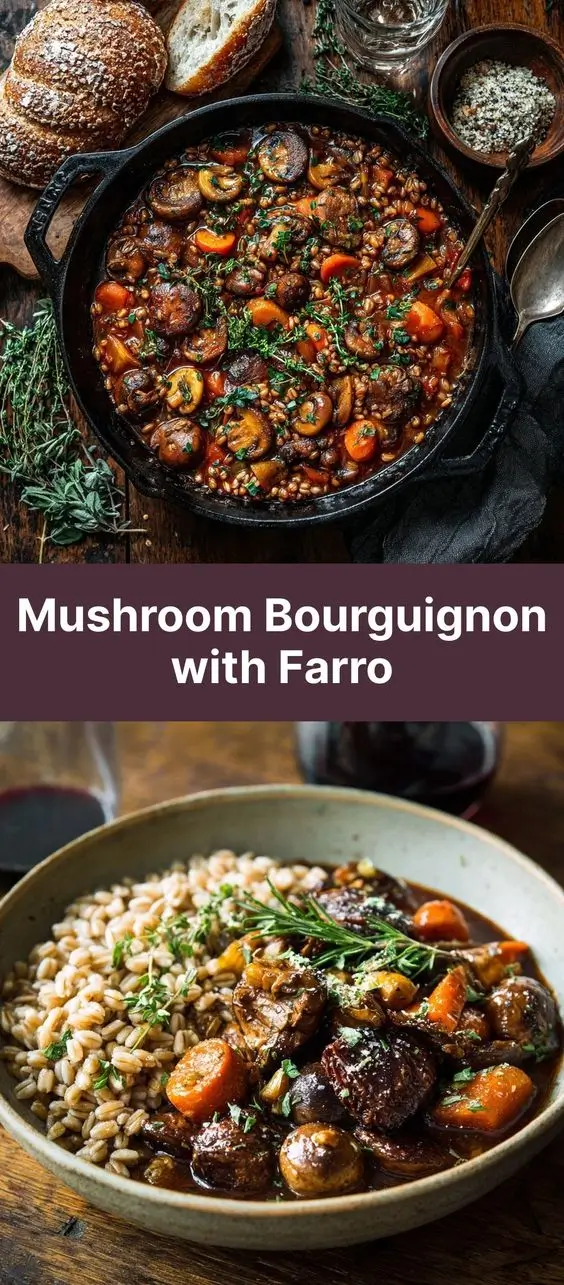
Mushroom Bourguignon with Farro: A Hearty, Wholesome Twist on a French Classic
Indulge in the rich, velvety depths of Mushroom Bourguignon served over nutty, chewy farro—a dish that transforms the traditional French Boeuf Bourguignon into a deeply satisfying vegetarian masterpiece. This plant-based adaptation captures the soul of Burgundy cuisine while celebrating earthy mushrooms and whole grains, making it perfect for cozy dinners, elegant gatherings, or meal prep that tastes even better the next day. With layers of umami, slow-simmered wine sauce, and aromatic vegetables, this recipe brings the comfort of classic French cooking to your table without compromise.
The History: From Beef to Mushrooms—A Vegetarian Evolution
Boeuf Bourguignon, also known as Beef Burgundy, originated in the Burgundy region of eastern France. Traditionally, it was a humble peasant stew made by slowly braising tough cuts of beef in red wine, often Pinot Noir from local vineyards, along with onions, garlic, carrots, and herbs. The long cooking process tenderized the meat and melded the flavors into a deeply savory, complex sauce.
Over time, this rustic dish gained international acclaim, especially after Julia Child introduced it to American audiences in her seminal cookbook Mastering the Art of French Cooking. As plant-based diets have grown in popularity, chefs and home cooks alike began reimagining the dish using hearty mushrooms as the star protein. Portobello, cremini, and shiitake mushrooms offer a meaty texture and robust flavor that stand up beautifully to the red wine reduction, making Mushroom Bourguignon a worthy successor to its carnivorous counterpart.
Pairing it with farro—an ancient grain with origins tracing back to Etruscan and Roman civilizations—adds another historical layer. Farro (specifically emmer wheat) was a staple grain in ancient Mediterranean diets, prized for its high fiber, nutty taste, and ability to hold structure in stews and salads. Today, it serves as an ideal base for Mushroom Bourguignon, absorbing the luxurious sauce while adding wholesome texture and nutrition.
Ingredients Breakdown: Why Each Component Matters
- Mixed Mushrooms (Portobello, Cremini, Shiitake): These varieties bring different textures and depths. Portobellos are meaty and robust, cremini add earthiness, and shiitakes contribute a smoky, umami punch. Together, they mimic the complexity of slow-cooked beef.
- Dry Red Wine (Pinot Noir or Burgundy): Essential for building the sauce’s foundation. Choose a wine you’d drink—its quality directly affects the final taste. The tannins and fruit notes balance the richness.
- Fresh Thyme and Bay Leaves: Classic French aromatics that infuse the stew with herbal warmth. Thyme is particularly complementary to mushrooms.
- Tomato Paste: Adds depth, acidity, and helps thicken the sauce. It also contributes to the Maillard reaction when sautéed, enhancing browning and flavor development.
- Garlic and Shallots: Provide aromatic sweetness and pungency. Shallots caramelize beautifully, adding subtle onion-like notes without overpowering.
- Pearl Onions: Small, sweet, and tender, these add visual appeal and a delicate bite. Frozen pearl onions save prep time without sacrificing quality.
- Carrots and Celery (Mirepoix Base): Form the flavor foundation of many French dishes. They bring sweetness, texture, and balance to the umami-rich mushrooms.
- Vegetable Stock: Use high-quality, low-sodium stock to control salt levels. Homemade or artisanal brands enhance depth.
- All-Purpose Flour: Used sparingly to thicken the stew. For gluten-free, substitute with rice flour or cornstarch slurry.
- Olive Oil and Butter (Optional): Olive oil for sautéing; butter can be added at the end for extra richness (use vegan butter if desired).
- Cooked Farro: Chewy, nutty, and full of protein and fiber. Acts as a hearty base that soaks up the sauce.
- Fresh Parsley: Brightens the dish with a fresh, herbaceous finish when sprinkled on top before serving.
- Soy Sauce or Tamari (Optional): A splash enhances umami without making the dish taste salty—especially useful in vegetarian cooking where depth is key.
Step-by-Step Recipe: Crafting the Perfect Mushroom Bourguignon with Farro
Ingredients
- 1.5 lbs (680g) mixed mushrooms (portobello, cremini, shiitake), cleaned and cut into 1-inch pieces
- 3 tbsp olive oil (divided)
- 1 cup dry red wine (Pinot Noir or Burgundy)
- 4 cups vegetable stock (low-sodium preferred)
- 1 large shallot, finely chopped
- 4 cloves garlic, minced
- 1 cup frozen or fresh pearl onions, peeled
- 2 medium carrots, diced
- 2 celery stalks, diced
- 3 tbsp tomato paste
- 2 tsp fresh thyme leaves (or 1 tsp dried)
- 2 bay leaves
- 3 tbsp all-purpose flour (or gluten-free alternative)
- 1 tbsp soy sauce or tamari (optional, for umami boost)
- Salt and freshly ground black pepper, to taste
- 2 cups cooked farro (about ¾ cup uncooked)
- 2 tbsp unsalted butter or vegan butter (optional)
- ¼ cup fresh parsley, chopped
Directions
- Cook the Farro: In a medium pot, combine ¾ cup rinsed farro with 2¼ cups water or broth. Bring to a boil, then reduce heat to low, cover, and simmer for 25–30 minutes until tender but chewy. Drain any excess liquid and set aside. (Can be done ahead of time.)
- Brown the Mushrooms: Heat 2 tablespoons olive oil in a large Dutch oven or heavy-bottomed pot over medium-high heat. Working in batches to avoid crowding, add mushroom pieces in a single layer. Sauté for 5–7 minutes per batch, allowing them to sear and develop a deep brown crust. Do not stir too often—let them caramelize. Transfer each batch to a plate and set aside.
- Sauté the Aromatics: Reduce heat to medium. Add remaining 1 tablespoon olive oil. Add shallot, carrots, and celery. Cook for 6–8 minutes, stirring occasionally, until softened and lightly golden. Add garlic and cook for 1 minute more until fragrant.
- Add Tomato Paste and Flour: Stir in tomato paste and cook for 2 minutes to deepen flavor. Sprinkle flour over the vegetables and stir well to coat, cooking for another minute to remove raw flour taste.
- Deglaze with Wine: Slowly pour in red wine, scraping the bottom of the pot to lift any browned bits (this is flavor gold!). Simmer for 5 minutes, allowing the alcohol to evaporate and the mixture to reduce slightly.
- Build the Stew: Return the browned mushrooms and any accumulated juices to the pot. Add vegetable stock, pearl onions, thyme, bay leaves, and soy sauce (if using). Stir well, bring to a gentle simmer, then reduce heat to low.
- Simmer Slowly: Cover partially and let the stew simmer gently for 45–60 minutes, stirring occasionally. The longer it simmers, the richer the flavor. If the stew becomes too thick, add a splash of stock or water.
- Finish and Season: Remove bay leaves. Taste and season generously with salt and pepper. For extra richness, stir in butter (optional). If desired, thicken further with a cornstarch slurry (1 tsp cornstarch + 1 tbsp water) if the sauce is too thin.
- Serve: Spoon a generous portion of warm farro into each bowl. Ladle Mushroom Bourguignon over the top. Garnish with chopped parsley and an extra twist of black pepper.
Tips for Success: Mastering Your Mushroom Bourguignon
- Don’t Rush the Sear: Browning the mushrooms in batches is crucial. Crowding the pan causes them to steam instead of sear, robbing the dish of deep flavor.
- Use Fresh Herbs When Possible: Fresh thyme has a brighter, more nuanced flavor than dried. Substitute 1 tablespoon fresh for every 1 teaspoon dried.
- Wine Quality Matters: Avoid “cooking wine”—it contains salt and preservatives. Use a dry, drinkable red wine like Pinot Noir, Merlot, or Côtes du Rhône.
- Make It Ahead: Like most stews, Mushroom Bourguignon tastes even better the next day. Prepare it a day in advance and reheat gently on the stove.
- Thicken Smartly: If the sauce is too thin after simmering, mix 1 tsp cornstarch with 1 tbsp cold water and stir into the bubbling stew. Simmer for 2–3 minutes to thicken.
- Boost Umami: Add a splash of soy sauce, a few soaked and blended dried mushrooms, or a pinch of nutritional yeast for deeper savoriness.
- Farro Texture: Undercook farro slightly if planning to store leftovers—it will absorb more sauce upon reheating.
- Skim Excess Oil: If fat rises to the surface during simmering, skim it off with a spoon for a cleaner-tasting sauce.
Variations and Customizations: Make It Your Own
- Vegan Version: Omit butter and use olive oil throughout. Ensure your wine is vegan (some are fined with animal products).
- Gluten-Free Option: Replace all-purpose flour with rice flour or a gluten-free blend. Use tamari instead of soy sauce.
- Add Lentils or Beans: Stir in 1 cup cooked green lentils or white beans for extra protein and heartiness.
- Different Grains: Swap farro for barley, brown rice, quinoa, or mashed potatoes for varied textures.
- Smoky Twist: Add a dash of smoked paprika or use smoked shiitake mushrooms for a campfire-like depth.
- Herb Variations: Try rosemary (use sparingly) or tarragon for a different aromatic profile.
- Creamy Finish: Stir in a splash of coconut milk or cashew cream for a silky, luxurious texture.
- Spicy Kick: Add a pinch of red pepper flakes when sautéing aromatics.
- Roasted Garlic: Use a head of roasted garlic instead of raw for a sweeter, mellower flavor.
- Wild Mushroom Upgrade: Use foraged or gourmet mushrooms like chanterelles, morels, or oyster mushrooms for a special occasion.
Health Considerations and Nutritional Value
Mushroom Bourguignon with Farro is not only delicious but also packed with nutrients that support overall wellness:
- Low in Saturated Fat: Naturally cholesterol-free and low in unhealthy fats, especially when prepared with minimal oil and no butter.
- High in Fiber: Farro provides about 8 grams of fiber per cooked cup, promoting digestive health and satiety. Mushrooms and vegetables add additional fiber.
- Rich in Plant-Based Protein: Farro offers around 6–8 grams of protein per serving, while mushrooms contribute essential amino acids.
- Antioxidant Powerhouse: Mushrooms contain selenium, ergothioneine, and other antioxidants linked to reduced inflammation and immune support.
- Heart-Healthy: Whole grains like farro are associated with lower risk of heart disease due to their fiber, magnesium, and lignan content.
- Low Glycemic Index: Farro and mushrooms have a low GI, helping maintain steady blood sugar levels—ideal for diabetics or those managing insulin sensitivity.
- Iron and B Vitamins: Farro is a good source of iron, niacin, and B6, supporting energy metabolism and brain function.
Nutritional Estimate (per serving, serves 6):
- Calories: ~320
- Protein: 9g
- Fat: 10g (mostly healthy fats)
- Carbohydrates: 48g
- Fiber: 8g
- Sugar: 6g (natural, from vegetables and wine)
- Sodium: 400–600mg (adjustable based on stock and soy sauce)
Note: Values may vary depending on ingredients used and portion size. For lower sodium, use homemade or low-sodium stock and omit added salt.
Frequently Asked Questions (FAQ)
Can I make Mushroom Bourguignon in a slow cooker?
Yes! After browning mushrooms and sautéing vegetables, transfer everything to a slow cooker. Cook on low for 6–8 hours or high for 3–4 hours. Add farro just before serving or serve on the side.
Can I freeze this dish?
Absolutely. Cool completely and store in airtight containers for up to 3 months. Reheat gently on the stove with a splash of water or stock. Farro may absorb more liquid when frozen, so adjust accordingly.
What wine should I use?
Choose a dry red wine with moderate tannins and bright acidity—Pinot Noir is ideal. Avoid sweet wines like Merlot blends unless specified. Never use “cooking wine.”
Is farro gluten-free?
No, farro is a type of wheat and contains gluten. Substitute with quinoa, brown rice, or gluten-free barley for a GF version.
Can I use dried mushrooms?
Yes! Soak ½ cup dried porcini or wild mushrooms in hot water for 20 minutes. Strain the liquid (reserve for stock) and chop the mushrooms. Add both to the stew for intense umami.
Why is my stew too watery?
Simmer uncovered for 10–15 minutes to reduce. Alternatively, thicken with a cornstarch slurry or a beurre manié (equal parts soft butter and flour kneaded together, whisked in at the end).
Can I skip the wine?
You can, but you’ll lose depth. Substitute with extra vegetable stock plus 1 tbsp red wine vinegar or balsamic vinegar for acidity.
How do I prevent mushy mushrooms?
Avoid overcrowding the pan when browning. High heat and space allow moisture to evaporate, creating a sear rather than steam.
Summary
Mushroom Bourguignon with Farro is a luxurious, plant-based reinterpretation of the French classic, featuring deeply seared mushrooms in a rich red wine sauce infused with herbs, vegetables, and umami depth. Served over nutty farro, it delivers a satisfying, nutritious, and elegant meal that’s perfect for weeknights or entertaining.