Mocha Espresso Cupcakes: A Decadent Fusion of Coffee and Chocolate
The History of Mocha Espresso Cupcakes
The origins of mocha espresso cupcakes can be traced back to the rich culinary traditions of both coffee culture and American baking. While cupcakes themselves have been a beloved treat since the 19th century—originally called “light cakes” or “cup cakes” because they were baked in individual ceramic cups—the fusion with coffee flavoring is a more modern innovation. The term “mocha” refers to a blend of chocolate and coffee, inspired by Mokha, a port city in Yemen historically famous for exporting some of the world’s finest coffee beans, often with natural chocolatey undertones.
As specialty coffee gained popularity in the late 20th century, bakers began experimenting with incorporating espresso and coffee extracts into desserts to enhance depth and complexity. The mocha flavor profile quickly became a favorite in cakes, brownies, and eventually cupcakes. Mocha espresso cupcakes emerged as a sophisticated dessert option—ideal for brunches, afternoon tea parties, and coffee-themed gatherings. Their rise in popularity was further fueled by gourmet bakeries and food bloggers who celebrated the bold yet balanced taste of coffee-chocolate pairings.
Today, mocha espresso cupcakes are a staple in artisanal bakeries and home kitchens alike, combining the moist tenderness of classic cupcakes with the aromatic richness of freshly brewed espresso and high-quality cocoa. They represent a harmonious marriage of two universally loved flavors, elevated through careful technique and premium ingredients.
Ingredients Breakdown: What Makes These Cupcakes Special
The magic of mocha espresso cupcakes lies not just in their flavor but in the thoughtful selection and interaction of ingredients. Each component plays a vital role in achieving that perfect balance between fudgy chocolate depth and bright, invigorating coffee notes.
- All-Purpose Flour: Provides the structural base of the cupcakes. It gives them a tender crumb while maintaining enough stability to hold the moist batter.
- Unsweetened Cocoa Powder: High-quality Dutch-process or natural cocoa powder adds deep chocolate flavor without excessive sweetness. For a richer taste, sift it with dry ingredients to avoid clumps.
- Instant Espresso Powder: This concentrated coffee source intensifies the mocha flavor. Even a small amount dramatically enhances the aroma and complexity of the cupcakes. You can substitute with finely ground dark roast coffee, though espresso powder dissolves better.
- Baking Soda & Baking Powder: These leavening agents work together—one activated by acid, the other by heat—to give the cupcakes a light, airy rise without collapsing.
- Salt: Enhances all other flavors, balancing sweetness and highlighting the bitterness of both chocolate and coffee.
- Granulated Sugar: Sweetens the batter and helps retain moisture. Some recipes use a combination of white and brown sugar for added depth.
- Large Eggs: Act as emulsifiers, binding the wet and dry ingredients while contributing to structure and richness.
- Vegetable Oil (or Melted Butter): Oil yields a moister texture than butter, which is ideal for cupcakes meant to stay soft for days. However, melted butter adds a richer mouthfeel and subtle dairy note.
- Vanilla Extract: Complements the chocolate and coffee with warm, floral undertones. Always use pure extract for best results.
- Buttermilk: Adds acidity, which reacts with baking soda for optimal rise, and contributes to an ultra-tender crumb. Its tanginess also cuts through the richness of chocolate.
- Strong Brewed Coffee or Espresso: Freshly brewed espresso or strong coffee enhances the mocha flavor from within. Contrary to belief, it doesn’t make the cupcakes taste bitter—it actually deepens the chocolate perception.
For the frosting:
- Unsalted Butter: Should be at room temperature for smooth creaming. European-style butter with higher fat content creates a silkier frosting.
- Powdered Sugar (Confectioners’ Sugar): Sweetens and thickens the frosting. Sifting is essential to prevent lumps.
- Unsweetened Cocoa Powder: Reinforces the chocolate element in the frosting.
- Instant Espresso Powder or Cold Espresso Shot: Amplifies the coffee kick in the icing. Use real espresso for a glossy, flavorful finish.
- Heavy Cream or Milk: Adjusts consistency for piping perfection—adds smoothness without thinning too much.
- Semi-Sweet or Dark Chocolate (melted): Optional addition for a ganache-like texture and intense flavor.
- Kahlúa or Other Coffee Liqueur (optional): For adult versions, this liqueur adds complexity and a slight boozy warmth.
Step-by-Step Recipe: How to Make Perfect Mocha Espresso Cupcakes
Ingredients
For the Cupcakes:
- 1 ½ cups (190g) all-purpose flour
- ¾ cup (75g) unsweetened cocoa powder (Dutch-process preferred)
- 1 tsp baking soda
- ½ tsp baking powder
- ½ tsp salt
- 2 tsp instant espresso powder
- 1 cup (200g) granulated sugar
- ½ cup (100g) packed light brown sugar
- 2 large eggs, room temperature
- ½ cup (120ml) vegetable oil (or melted unsalted butter)
- 2 tsp pure vanilla extract
- 1 cup (240ml) buttermilk, room temperature
- ½ cup (120ml) hot brewed espresso or strong coffee
For the Mocha Espresso Buttercream Frosting:
- 1 cup (230g) unsalted butter, softened
- 3 ½ cups (420g) powdered sugar, sifted
- ⅓ cup (30g) unsweetened cocoa powder, sifted
- 2 tbsp instant espresso powder (or ¼ cup cold espresso)
- 2–3 tbsp heavy cream or whole milk
- 1 tsp vanilla extract
- Pinch of salt
- 2 oz (60g) semi-sweet chocolate, melted and cooled slightly (optional)
- 1–2 tbsp Kahlúa (optional)
Directions
- Preheat oven and prepare pans: Preheat your oven to 350°F (175°C). Line two standard muffin tins with 24 paper cupcake liners. Spray lightly with non-stick spray if desired for easier removal.
- Combine dry ingredients: In a large mixing bowl, whisk together flour, cocoa powder, baking soda, baking powder, salt, and instant espresso powder until fully blended. Ensure there are no lumps—this step is crucial for even texture.
- Mix wet ingredients: In another bowl, beat granulated sugar, brown sugar, eggs, oil, and vanilla extract on medium speed until smooth and slightly pale, about 2 minutes. Do not overbeat at this stage.
- Incorporate buttermilk: With mixer on low, alternate adding the dry mixture and buttermilk in three additions, starting and ending with dry ingredients. Mix only until just combined after each addition to avoid overmixing, which leads to tough cupcakes.
- Add hot espresso: Carefully pour in the hot brewed espresso. Gently fold by hand using a rubber spatula until the batter is uniform and smooth. The heat will help bloom the cocoa and espresso powders, enhancing flavor development.
- Fill liners: Divide the batter evenly among the prepared cupcake liners, filling each about ⅔ full. Overfilling may cause overflow during baking.
- Bake: Place tins in the center of the preheated oven. Bake for 18–22 minutes, rotating halfway through, until a toothpick inserted into the center comes out clean or with moist crumbs (not wet batter).
- Cool: Allow cupcakes to cool in the pan for 5 minutes before transferring to a wire rack to cool completely. Never frost warm cupcakes—they’ll melt the frosting and become soggy.
- Make the frosting: In a stand mixer fitted with the paddle attachment, beat softened butter on medium speed until creamy (about 2 minutes). Gradually add sifted powdered sugar and cocoa powder, mixing on low to avoid clouding.
- Enhance flavor: Add instant espresso powder (or cold espresso), vanilla, salt, and optional Kahlúa. Beat on medium-high until fluffy, scraping down sides as needed.
- Adjust consistency: Add heavy cream one tablespoon at a time until desired spreadable or pipeable texture is reached. For a richer frosting, mix in melted and slightly cooled chocolate.
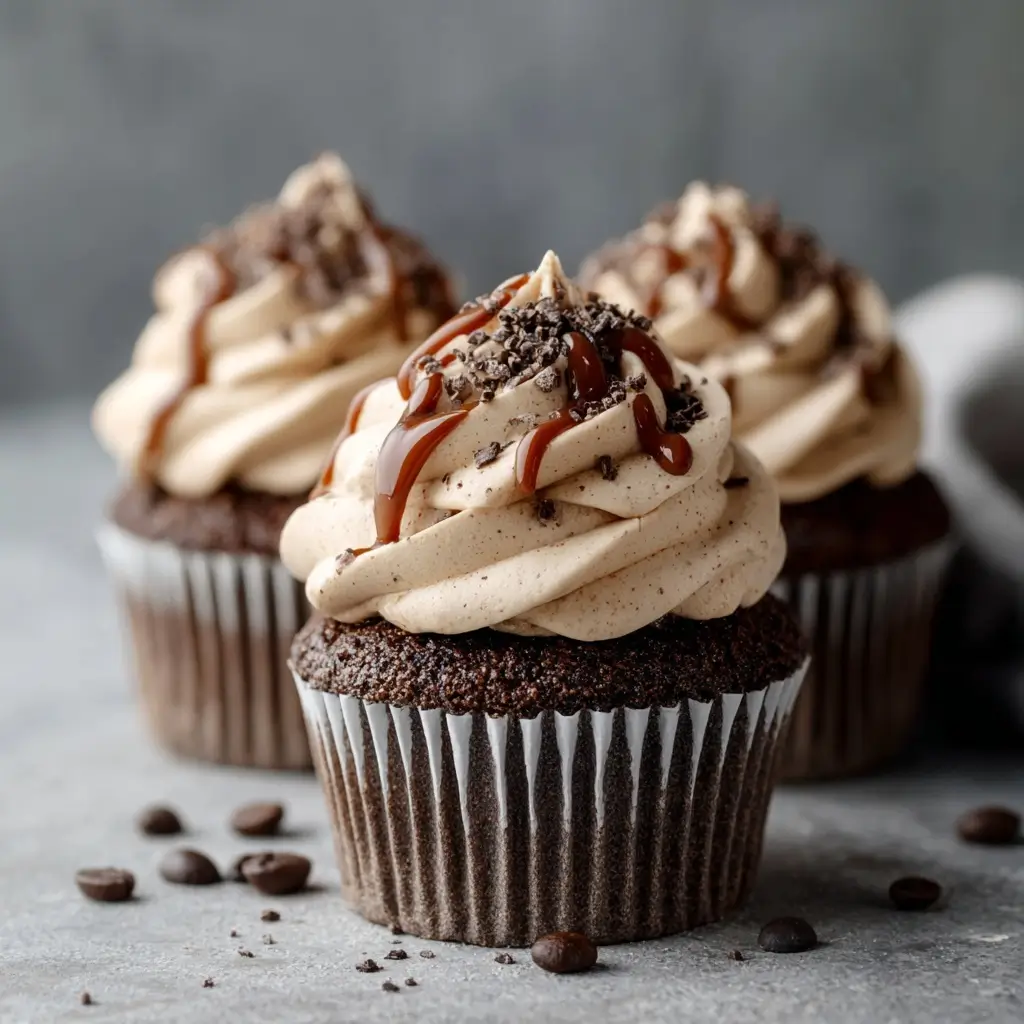
- Frost cupcakes: Once cupcakes are completely cool, fit a piping bag with a star tip (e.g., Wilton 1M) and swirl frosting generously on top. Alternatively, spread with a knife for a rustic look.
- Garnish (optional): Top with chocolate curls, espresso beans, crushed biscotti, cocoa nibs, or a dusting of cocoa or powdered sugar for visual appeal and extra flavor contrast.
Expert Tips for Success
- Use quality ingredients: Opt for real espresso powder and high-fat cocoa. Cheap substitutes dull the flavor profile.
- Room temperature matters: Cold eggs or buttermilk can curdle the batter when mixed with oil and sugar. Let ingredients sit out for 30–60 minutes before starting.
- Don’t overmix: Once flour is added, mix only until incorporated. Overmixing develops gluten, leading to dense, chewy cupcakes instead of soft ones.
- Hot liquid infusion: Adding hot coffee helps “bloom” the cocoa and espresso, releasing their full aroma and taste—don’t skip this step!
- Proper cooling: Cool cupcakes completely before frosting. If short on time, place them in the fridge for 15 minutes—but ensure no condensation forms.
- Frosting texture: If frosting is too stiff, add more cream. Too runny? Chill briefly or add more powdered sugar. Ideal consistency holds its shape when piped.
- Storage: Store unfrosted cupcakes airtight at room temperature for up to 2 days or freeze for up to 3 months. Frosted cupcakes keep well refrigerated for 5 days; bring to room temperature before serving for best texture.
Variations and Customizations
Mocha espresso cupcakes are incredibly versatile. Here are some creative ways to customize them:
- Gluten-Free Version: Replace all-purpose flour with a 1:1 gluten-free flour blend containing xanthan gum. Add an extra ½ tsp baking powder for lift.
- Dairy-Free Option: Use plant-based butter, coconut milk (in place of buttermilk), and almond or oat milk in the frosting. Substitute buttermilk by mixing 1 cup non-dairy milk with 1 tbsp lemon juice or vinegar and letting it sit for 5 minutes.
- Vegan Adaptation: Combine gluten-free/dairy-free swaps with flax eggs (1 tbsp ground flax + 3 tbsp water per egg). Use vegan chocolate and check labels on cocoa and sugar.
- Mini Mocha Cupcakes: Use a mini muffin tin and reduce baking time to 10–12 minutes. Perfect for parties or tasting platters.
- Stuffed Center: Fill the center with a piece of chocolate-covered espresso bean, a square of dark chocolate, or a dollop of Nutella before baking for a gooey surprise.
- Layered Flavor: Infuse the batter with orange zest or cinnamon for a twist. Pair with an orange-mocha frosting for a citrus-coffee-chocolate medley.
- Alcohol-Infused: Add 1–2 tbsp Baileys, Tia Maria, or Spiced Rum to the batter or frosting for an indulgent adult version.
- Cake Batter Variation: Double the recipe to make an 8-inch or 9-inch layer cake. Layer with mocha buttercream and ganache for a show-stopping dessert.
- Ice Cream Sandwich Style: Slice cooled cupcakes horizontally, sandwich with coffee ice cream, roll edges in mini chocolate chips—freeze again before serving.
- Decorative Themes: Perfect for weddings, barista-themed birthdays, or office celebrations. Decorate with edible gold leaf, latte art piping, or fondant coffee cups.
Health Considerations and Nutritional Value
While mocha espresso cupcakes are undeniably decadent, understanding their nutritional content allows for mindful enjoyment. On average, one standard mocha espresso cupcake (without oversized frosting) contains approximately:
- Calories: 320–380 kcal
- Total Fat: 16–20g (mostly from butter, oil, and chocolate)
- Saturated Fat: 8–10g
- Cholesterol: 50–60mg
- Sodium: 180–220mg
- Carbohydrates: 48–55g
- Sugars: 35–40g (primarily from granulated, brown, and powdered sugars)
- Protein: 3–4g
- Caffeine: ~40–60mg per cupcake (depending on espresso concentration)
Considerations:
- Caffeine Sensitivity: These cupcakes contain real espresso and may affect children or individuals sensitive to caffeine. Reduce or omit espresso powder if needed.
- Sugar Content: High in added sugars. For lower sugar options, consider using monk fruit sweetener blends or erythritol-based powdered sugar alternatives (note: texture may vary).
- Heart Health: Due to saturated fats and sodium, enjoy in moderation if managing blood pressure or cholesterol.
- Balanced Indulgence: Pair with fresh berries, Greek yogurt, or a green salad to balance a dessert course nutritionally.
- Portion Control: Serve smaller portions or make mini cupcakes to reduce calorie intake while still enjoying the flavor.
Frequently Asked Questions (FAQ)
- Can I make these cupcakes without espresso powder?
- Yes, though you’ll lose some intensity. Substitute with 1 tbsp instant coffee granules or simply increase the cocoa powder slightly. Using strongly brewed coffee in place of water also helps.
- Why did my cupcakes sink in the middle?
- This can happen due to underbaking, opening the oven too early, overmixing the batter, or inaccurate oven temperature. Use an oven thermometer and avoid peeking during the first 15 minutes.
- Can I freeze mocha espresso cupcakes?
- Absolutely! Freeze unfrosted cupcakes in an airtight container for up to 3 months. Thaw overnight in the fridge, then bring to room temperature before frosting.
- How far in advance can I bake these?
- You can bake the cupcakes 2 days ahead and store covered at room temperature. Frost the day of serving for best appearance. Frosted cupcakes last 5 days refrigerated.
- Can I use decaf coffee?
- Yes! Use decaffeinated espresso powder and brewed decaf coffee for a caffeine-free version suitable for kids or evening events.
- My frosting is too runny. How do I fix it?
- Add more sifted powdered sugar, ¼ cup at a time, until thickened. Alternatively, chill the frosting for 15–20 minutes and rewhip.
- Can I make these into muffins?
- You can, but reduce sugar slightly (by ¼ cup) and omit frosting for a breakfast-friendly version. Add chopped nuts or chocolate chips for texture.
- Is buttermilk necessary?
- It’s highly recommended for tenderness and rise, but you can make a substitute: mix 1 cup milk with 1 tbsp vinegar or lemon juice and let sit for 5 minutes.
Summary
Mocha espresso cupcakes are a luxurious blend of rich chocolate and bold coffee flavors, offering a moist, tender crumb and an unforgettable aromatic experience. Whether enjoyed with morning coffee or served as an elegant dessert, they’re a timeless treat that celebrates the synergy of two beloved indulgences.